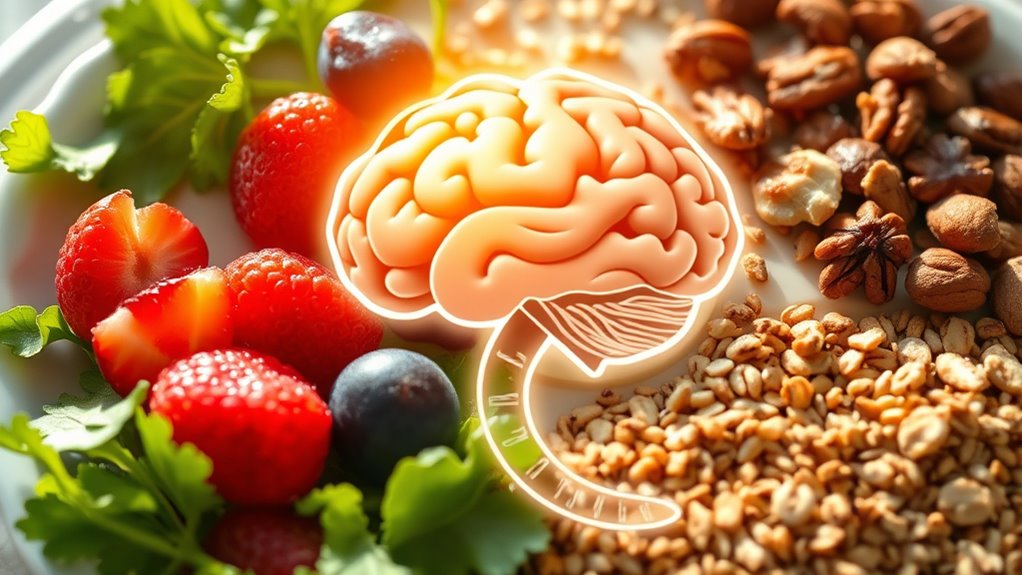

Your diet directly impacts your gut microbiome, which in turn influences your mental health through neurochemical signaling and the gut-brain axis. Eating more fiber, fermented foods, and nutrient-rich options promotes beneficial bacteria that produce mood-boosting chemicals like serotonin and dopamine. An imbalanced diet can disrupt this communication, leading to stress, mood swings, and mental fog. To discover how your food choices can support a healthier mind, explore further steps you can take today.

Turn your wind-down time into listening time
- Thousands of audiobooks, podcasts and originals
- Listen on your phone, tablet or Echo — also offline
- Cancel anytime
Key Takeaways
- Diet shapes gut microbiome diversity, which influences neurochemical production impacting mood and mental health.
- Consuming fiber-rich and fermented foods promotes beneficial bacteria that support neurotransmitter synthesis.
- A healthy microbiome communicates with the brain via the vagus nerve, promoting calmness and emotional balance.
- Poor diet with processed foods reduces microbiome diversity, impairing gut-brain signaling and increasing stress and mood swings.
- Nutrition-driven microbiome health enhances mental resilience, cognitive function, and overall emotional well-being.

Have you ever wondered how your gut and brain communicate? It’s a fascinating connection that influences your mood, mental clarity, and overall well-being. At the heart of this communication is the microbiome, a complex community of trillions of microorganisms living in your digestive system. The diversity of this microbiome, known as microbiome diversity, plays a critical role in regulating neurochemical signaling, the process through which your gut sends messages to your brain. When your microbiome is balanced and diverse, it produces a variety of neurochemicals like serotonin, dopamine, and gamma-aminobutyric acid (GABA), which can directly impact your mood and cognitive function. These chemicals are often called “neurotransmitters,” and they travel through your bloodstream or neural pathways, shaping how you feel and think.
Your diet has a powerful influence on this delicate system. Consuming a diverse range of fiber-rich foods, such as fruits, vegetables, whole grains, and fermented products like yogurt or kefir, can boost microbiome diversity. When you feed your gut with these healthy foods, you’re encouraging the growth of beneficial bacteria that produce neurochemicals essential for mental health. Conversely, diets high in processed foods, sugar, and unhealthy fats can reduce microbiome diversity, leading to a disruption in neurochemical signaling. This imbalance can contribute to feelings of anxiety, depression, and mental fog.
The gut-brain connection isn’t just about chemicals; it also involves direct communication through the vagus nerve, a major neural highway connecting your gut to your brain. When your microbiome is healthy and diverse, it sends positive signals along this pathway, promoting a calm and balanced mental state. On the other hand, a less diverse microbiome can impair this signaling, leading to increased stress responses and mood swings. Your diet influences these processes by shaping the microbial community and the neurochemical signals it produces, creating a feedback loop that can either enhance or hinder your mental health.
Understanding the importance of microbiome diversity and neurochemical signaling helps you see how essential your dietary choices are for mental wellness. By eating a variety of nutrient-dense foods, you support a thriving, diverse microbiome that communicates effectively with your brain. This can lead to improved mood, greater resilience against stress, and a sharper mind. Ultimately, nurturing your gut through mindful eating isn’t just about digestion; it’s about fostering a healthier, happier mind from the inside out.
As an affiliate, we earn on qualifying purchases.
Frequently Asked Questions
Can Specific Foods Improve Mental Health Through the Gut-Brain Axis?
Yes, certain foods can improve your mental health through the gut-brain axis. Eating fermented foods like yogurt or sauerkraut introduces probiotics that support good gut bacteria, which can boost your mood. Additionally, consuming prebiotic fibers found in garlic, onions, and bananas nourishes beneficial gut microbes. By including these foods in your diet, you may enhance your mental well-being and reduce stress naturally.
How Long Does It Take to See Mental Health Benefits From Dietary Changes?
You might notice mental health improvements within a few weeks, but it varies due to individual differences. While some see quick changes, others need several months, making timing expectations unpredictable. Think of your gut as a garden: with consistent care, benefits bloom over time, not overnight. The key is patience and persistence, understanding that individual variability influences how quickly diet changes positively impact your mental well-being.
Are Probiotics Effective in Reducing Anxiety and Depression Symptoms?
Probiotic strains can be effective in reducing anxiety and depression symptoms, especially when used as part of mental health supplementation. You might notice improvements within a few weeks, but the effectiveness depends on the specific strains and your individual response. Look for products with well-studied probiotic strains like Bifidobacterium and Lactobacillus. Consistency is key, and combining probiotics with a balanced diet can enhance their benefits for your mental health.
Does Gut Health Influence Cognitive Decline or Neurodegenerative Diseases?
Think of your gut microbiome as the control tower for your brain’s health; it critically influences cognitive decline and neurodegenerative pathways. When your gut’s balance is off, harmful bacteria can promote inflammation, accelerating neurodegeneration. Maintaining a healthy gut through diet helps protect against these pathways, supporting brain health. So, yes, your gut health plays an essential role in delaying or reducing risks of neurodegenerative diseases.
Can Gut Microbiota Composition Predict Mental Health Disorders?
Yes, your gut microbiota composition can help predict mental health disorders. Higher microbiota diversity generally links to better mental well-being, while imbalances may signal risks. Researchers also examine genetic markers alongside microbiota profiles to improve prediction accuracy. By analyzing these factors, you might better understand your mental health risks and take proactive steps, such as dietary changes, to support a healthier gut and mind.
As an affiliate, we earn on qualifying purchases.
Conclusion
Remember, your diet directly impacts your mental health through the gut-brain axis. Some might think they can’t change their habits, but small, consistent choices matter. By nourishing your gut with fiber-rich foods and probiotics, you support better mood and clarity. Don’t underestimate the power of what you eat—your mental well-being is linked to your gut health. Making mindful dietary changes can truly transform your overall happiness and resilience over time.
As an affiliate, we earn on qualifying purchases.
As an affiliate, we earn on qualifying purchases.
Fall Picks
fall essentials
As an affiliate, we earn on qualifying purchases.