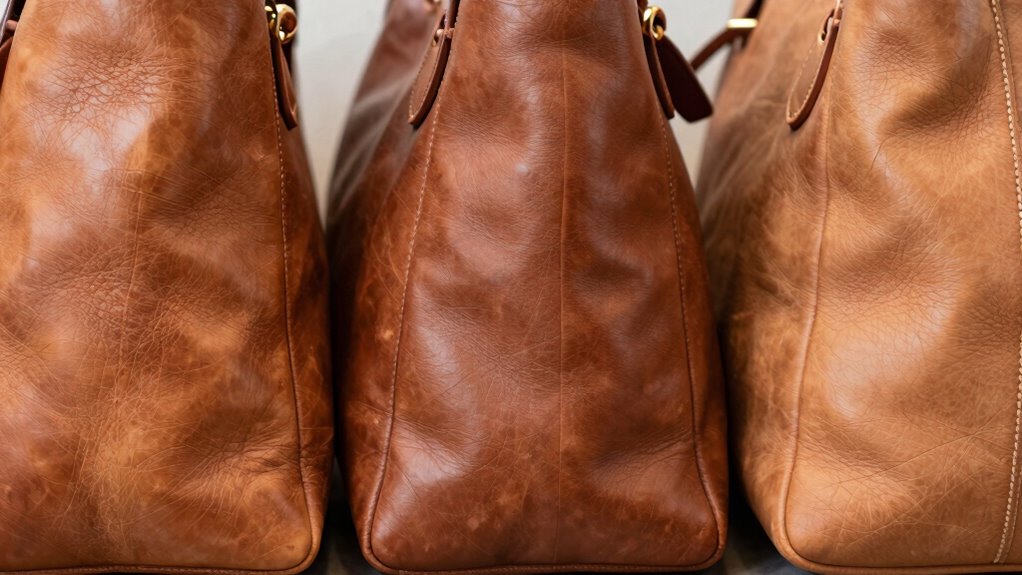
When choosing a leather bag, full‑grain leather offers the most durability, develops a beautiful patina, and retains natural textures, making it ideal for daily use. Top‑grain leather is slightly processed for a smooth finish but still high quality, while genuine leather is the most affordable but tends to wear faster and lacks natural grain. To spot the differences and find the best fit for you, keep exploring beyond the basics.
Key Takeaways
- Full‑grain leather is the highest quality, most durable, and develops a rich patina over time, making it ideal for long-lasting bags.
- Top‑grain leather is slightly processed, smoother, and less durable than full‑grain but still offers good quality and appearance.
- Genuine leather is lower quality, often bonded or embossed, and tends to wear faster, making it less suitable for long-term use.
- Full‑grain and top‑grain leathers are more expensive due to their premium quality and craftsmanship, while genuine leather is more affordable.
- Authenticating leather involves examining texture, surface imperfections, and aging characteristics to distinguish between full‑grain, top‑grain, and genuine.

Morriloom Brown Genuine Leather Work Tote Bags For Women Large Tote Bag With Zipper Real Leather Purse With Compartment Vintage Handbags Womens Designer Shoulder And Handbags For Travel Everyday
- Premium Full Grain Leather: Natural textured, sustainable, ages beautifully
- Vintage Rustic Design: Aged look with timeless appeal
- Padded Laptop Compartment: Fits 13-15.6 inch laptops securely
As an affiliate, we earn on qualifying purchases.
As an affiliate, we earn on qualifying purchases.
What Are Full‑Grain, Top‑Grain, and Genuine Leather?
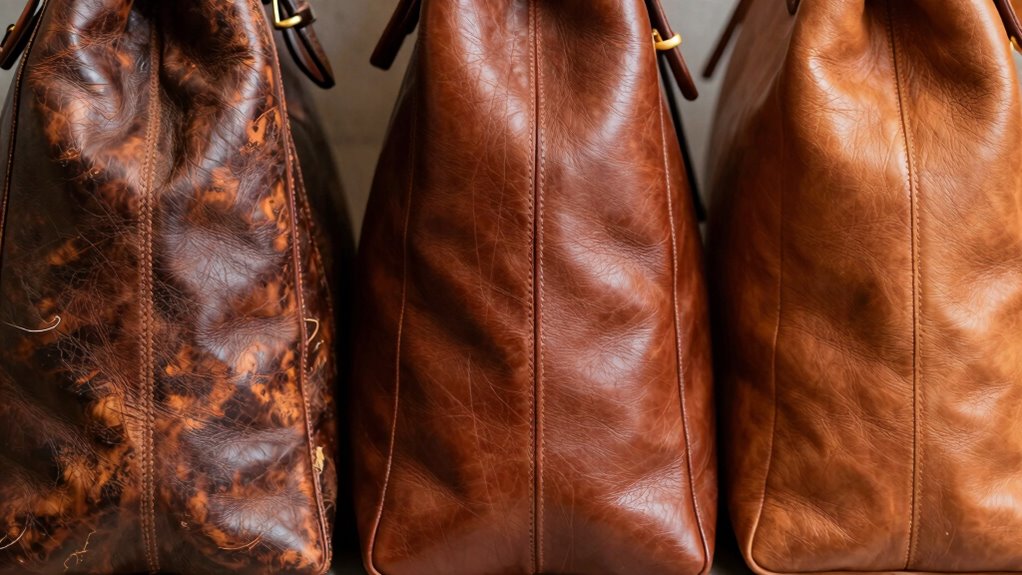
Have you ever wondered what makes certain leather bags more durable or luxurious than others? It all starts with leather processing and sourcing. Full‑grain leather comes from the top layer of the hide, which is minimally processed, retaining the natural grain and strength. This type of leather preserves the hide’s original texture and imperfections, making it highly durable. Top‑grain leather is slightly more processed; the surface is sanded or buffed to remove imperfections, offering a smooth finish while still maintaining quality. Genuine leather, however, is made from layers of lower-quality hides that are heavily processed and often bonded or embossed to resemble higher-grade leather. The quality of leather depends greatly on how it’s sourced and processed early in manufacturing, setting the foundation for the bag’s look and longevity.

Masa Kawa Brown Leather Laptop Backpack for Men 15.6" Computer College Bag
- Durable YKK Zippers: Tested for 1000 pulls for durability
- Breathable Ergonomic Back: Mesh padding for comfortable load carrying
- Luggage Belt Design: Allows attachment to suitcase for travel convenience
As an affiliate, we earn on qualifying purchases.
As an affiliate, we earn on qualifying purchases.
How Do Full‑Grain, Top‑Grain, and Genuine Leather Compare in Quality?
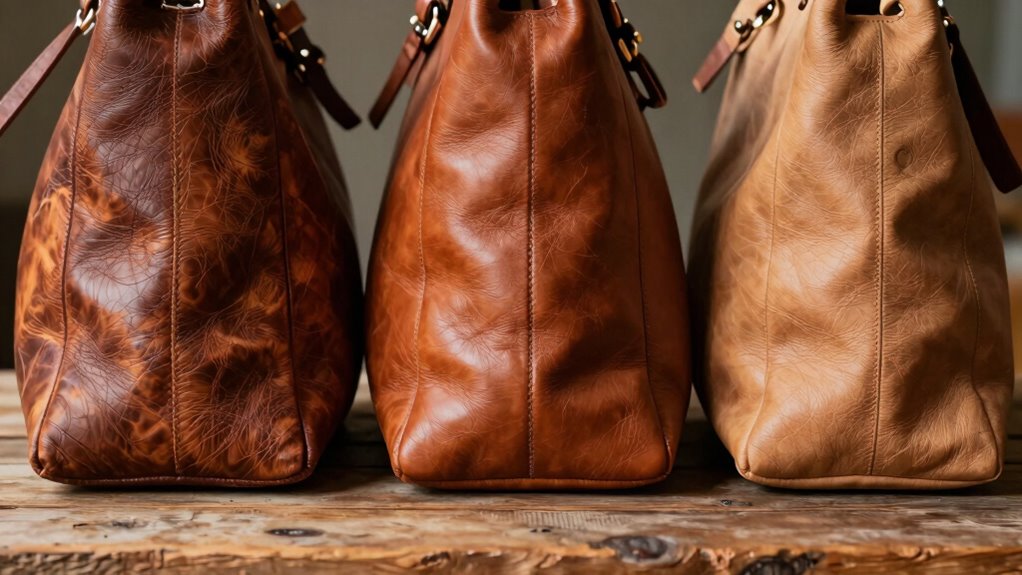
When comparing full‑grain, top‑grain, and genuine leather, the differences in quality are significant and directly impact the durability, appearance, and value of your leather bag. Full‑grain leather undergoes minimal leather treatment, preserving its natural surface, which allows it to develop a rich patina over time through leather aging. This creates a unique look and enhances its strength. Top‑grain leather is slightly more processed; it’s sanded and refinished, making it less durable but still high quality. Genuine leather, often made from layers of split leather, receives extensive leather treatment, resulting in a thinner, less resilient material that shows faster signs of wear. The quality of leather treatment and natural aging processes ultimately determine how well each type holds up and ages gracefully. Additionally, free floating natural leather surfaces contribute to the unique aging pattern and character of each piece, emphasizing the importance of choosing the right type for longevity and style. Moreover, leather finishing techniques can further influence the appearance and durability of each leather type, affecting how well they withstand daily use. For instance, protective coatings can help extend the lifespan of treated leathers by providing additional resistance against scratches and moisture, and advances in leather treatment methods continue to improve durability across all types.

Genuine Leather Crossbody Bag For Women – Medium Cross Body Handbag Purse
- Versatile Daily Use: Durable and functional crossbody bag
- Premium Genuine Leather: 100% oil-rich leather with cotton lining
- Adjustable Strap: Customizable length for comfort
As an affiliate, we earn on qualifying purchases.
As an affiliate, we earn on qualifying purchases.
Which Leather Is Most Durable for Everyday Use?
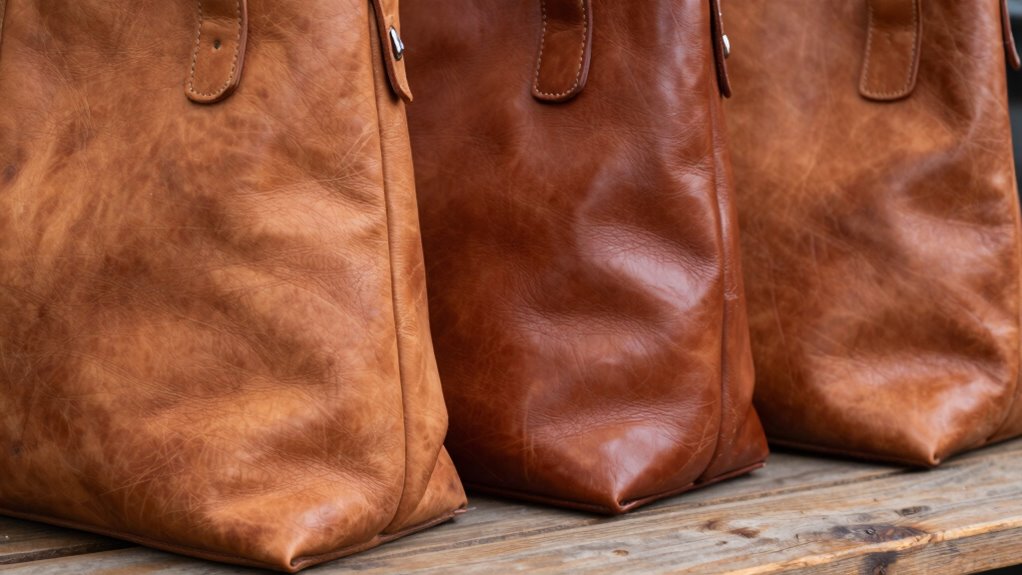
Among the different types of leather, full‑grain leather stands out as the most durable choice for everyday use. Its superior strength comes from the way it’s sourced—using the entire top layer of the hide, which contains the strongest fibers. This makes it resistant to scratches and wear over time. Proper leather sourcing guarantees you get authentic, high‑quality full‑grain leather that ages beautifully. To maintain its durability, regular leather maintenance is essential; cleaning and conditioning keep the leather supple and prevent cracking. Unlike top‑grain or genuine leather, full‑grain resists stretching and tearing, making it ideal for daily use. Additionally, the comogenic ratings of full‑grain leather are typically low, reducing the risk of skin irritation when used regularly. When selecting leather, understanding leather grading can help ensure you choose a high‑quality product. Using finishing techniques can also enhance the leather’s appearance and longevity. Proper leather treatment can further extend its lifespan by protecting it from environmental damage. Investing in full‑grain leather means you’ll have a sturdy, long-lasting bag that improves with age when properly cared for.
Women's Quilted Caviar Leather Crossbody Bag, Black, Gold-Tone Chain Shoulder Handbag Luxury Designer Bag
- Premium Caviar Leather: High-quality quilted grain leather with diamond stitching
- Adjustable Chain Strap: Gold-tone interwoven chain with leather for versatile wear
- Spacious Interior: Multiple compartments and slip pocket for organization
As an affiliate, we earn on qualifying purchases.
As an affiliate, we earn on qualifying purchases.
How Can You Spot Full‑Grain, Top‑Grain, and Genuine Leather When Shopping?
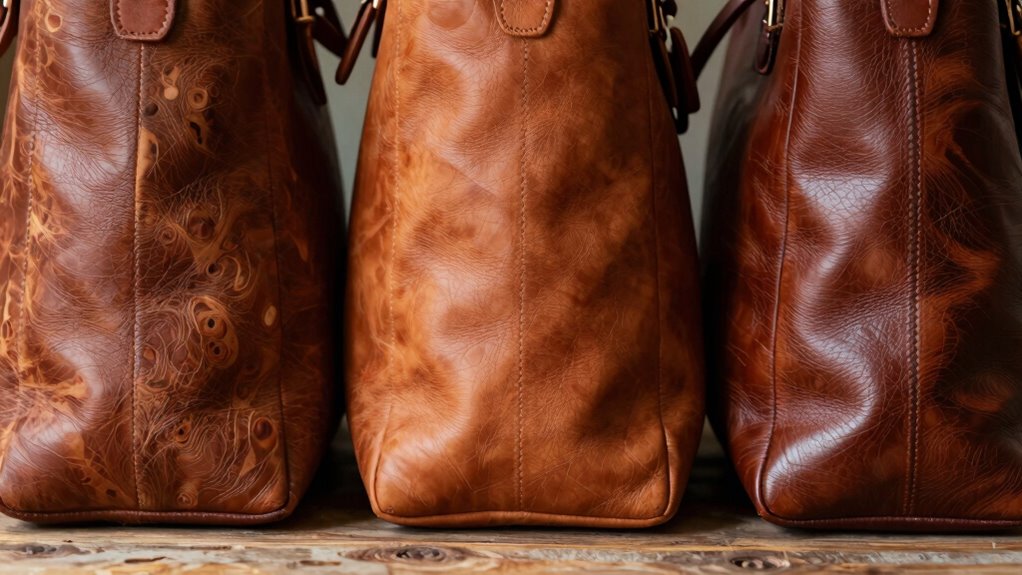
Choosing the right type of leather starts with knowing how to identify full-grain, top-grain, and genuine leather during your shopping trip. Look closely at the surface: full-grain leather has natural, imperfect textures and visible pores, indicating minimal processing. Top-grain leather is slightly smoother, with a refined appearance due to surface sanding, but still retains some natural features. Genuine leather often feels uniform and may have an artificial finish. Pay attention to leather coloring; full- and top-grain leathers often develop a rich, uneven patina over time with proper leather care. Genuine leather may lack this depth and tends to wear more quickly. By examining texture, finish, and how the leather ages, you can confidently select the authentic quality that suits your needs.
What Are the Price Ranges and Value Differences?
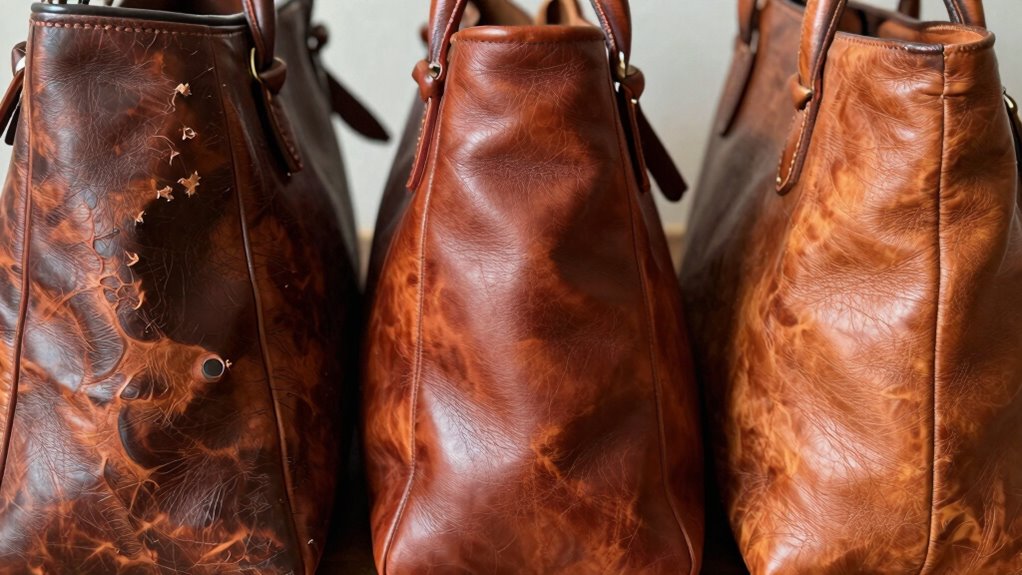
Leather bags come in a wide range of prices, reflecting differences in quality, craftsmanship, and the type of leather used. Luxury pricing is common for full-grain and top-grain leather, which offer durability and a premium look, often costing several hundred to thousands of dollars. These bags hold their value and age beautifully over time. If you’re on a budget, genuine leather bags provide a more affordable option, often priced under a hundred dollars, though they may not be as durable or long-lasting. While budget options can be appealing, they usually don’t offer the same craftsmanship or leather quality as higher-end bags. Understanding these value differences helps you make a smarter purchase, balancing your style preferences with your budget.
How to Choose the Best Leather for Your Style and Budget
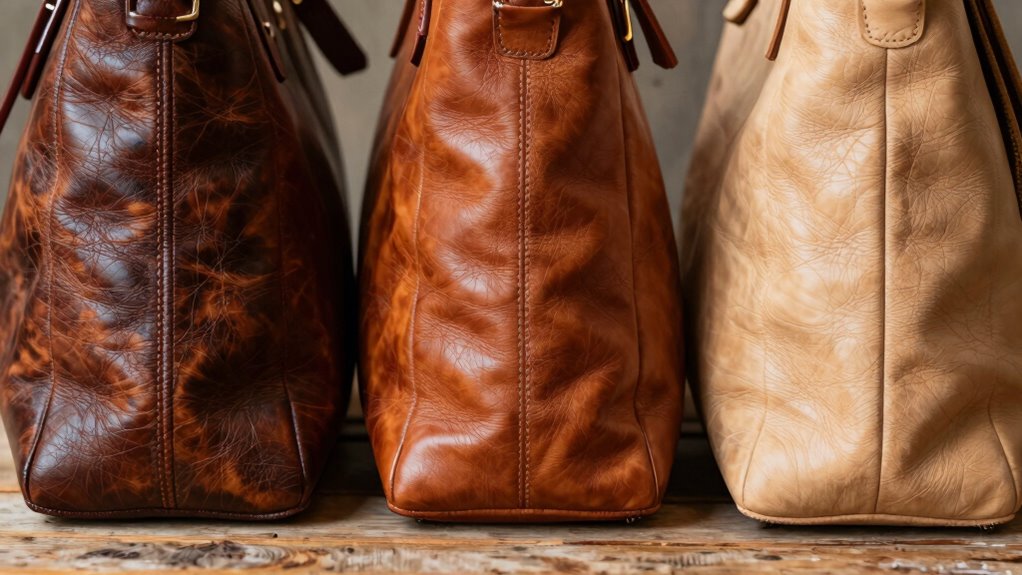
When selecting a leather bag, your personal style and budget should guide your choice of leather type. If you want durability and a refined look, full-grain leather is a great option, but it tends to be pricier. For a balance of quality and affordability, top-grain leather offers a softer feel with easier leather care. Genuine leather, while more budget-friendly, may not last as long. Consider eco-friendly options if reducing environmental impact matters to you; many brands now use sustainable tanning methods or recycled materials. Think about how much maintenance you’re willing to do—some leathers require regular leather care to keep their appearance. Incorporating requirements traceability into your purchasing process can help ensure you select a leather that meets your quality expectations and sustainability standards. Additionally, looking into sustainable tanning methods can help you choose environmentally responsible options. Ultimately, choose a leather type that fits your style, budget, and values, so your bag remains both functional and a reflection of your personal taste.
Frequently Asked Questions
How Does Leather Processing Affect Environmental Sustainability?
Leather processing impacts environmental sustainability profoundly, especially through chemical use in tanning. By choosing sustainably sourced materials and eco-friendly tanning methods, you can reduce pollution and conserve resources. Opting for eco-conscious brands that prioritize sustainable sourcing and environmentally friendly tanning processes helps lessen your environmental footprint. This way, you support a more sustainable leather industry and contribute to protecting ecosystems while enjoying high-quality leather products.
Can Leather Bags Be Repaired After Damage?
Yes, leather bags can definitely be repaired after damage. With proper leather repair, you can restore your bag’s beauty and prolong its life. Damage restoration involves addressing scratches, tears, or stains with specialized techniques and tools. You’ll find that many issues can be fixed, from scuffs to holes, giving your favorite accessory a fresh, new look. Trust skilled craftspersons to handle your leather repair needs with care and precision.
Which Leather Type Ages Best Over Time?
You’ll find that full-grain leather ages best over time, developing a rich patina and unique aging characteristics. Its natural surface allows it to develop a beautiful, deepened color and character with use, making each bag distinctive. Top-grain leather also ages well but may lack some of the authentic patina. Genuine leather, being lower quality, tends to wear out faster and doesn’t develop as desirable aging qualities, so choose full-grain for lasting beauty.
Are There Ethical Concerns With Leather Production?
Think of leather production as a delicate dance on a tightrope—balancing tradition and ethics. You should be aware there are ethical concerns, especially around animal welfare and sustainable sourcing. Some producers prioritize cruelty-free methods and eco-friendly practices, but others may overlook these issues. When you choose leather, seek brands committed to ethical standards, ensuring your accessory doesn’t come at the expense of the environment or animal lives.
How Should I Care for Different Leather Types?
To care for different leather types, you should tailor your leather maintenance and cleaning techniques accordingly. For full-grain and top-grain leathers, use a damp cloth for surface cleaning and apply leather conditioner regularly to keep the leather supple. Genuine leather may require gentler cleaning and less frequent conditioning. Always test products on a small area first, and avoid harsh chemicals to preserve your bag’s quality and appearance.
Conclusion
Choosing the right leather is like picking the perfect pair of shoes—you want something that fits your style and lasts over time. Whether you opt for full-grain, top-grain, or genuine leather, knowing their differences helps you make an informed choice. Treat your leather bag like a trusted friend: with care, it’ll only get better with age, just like a fine wine or a well-loved book.