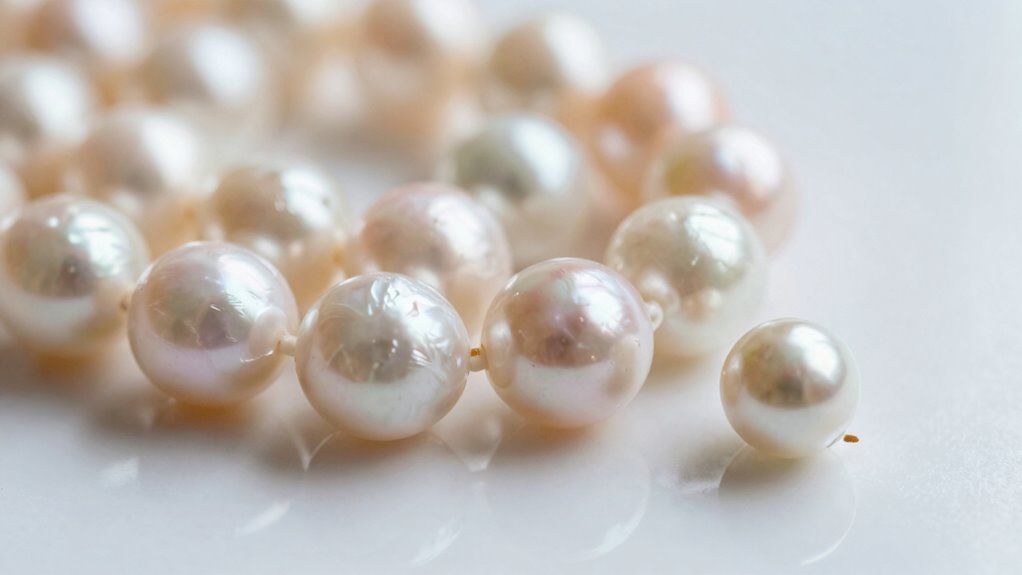

To tell if a pearl is real without tools, look closely at its surface for natural imperfections and subtle luster, as genuine pearls often have tiny bumps or pits. Gently rub the pearl against your teeth; real ones feel gritty, while imitations are smooth. Drop water on the surface—if it beads up, it’s more likely authentic. Notice its weight and how it feels—real pearls are heavier and cool to touch. Keep exploring for more tips to confidently identify your pearls.
Key Takeaways
- Gently rub the pearl against your teeth; real pearls feel slightly gritty, while imitations feel smooth or glassy.
- Observe water behavior: genuine pearls cause water to bead up, whereas imitations absorb or spread quickly.
- Check surface imperfections; natural pearls often have minor flaws, bumps, or irregularities.
- Assess weight and temperature; real pearls are heavier and feel cool initially, warming up with touch.
- Look for variations in shape and size; genuine pearls display slight irregularities, unlike perfectly uniform imitations.
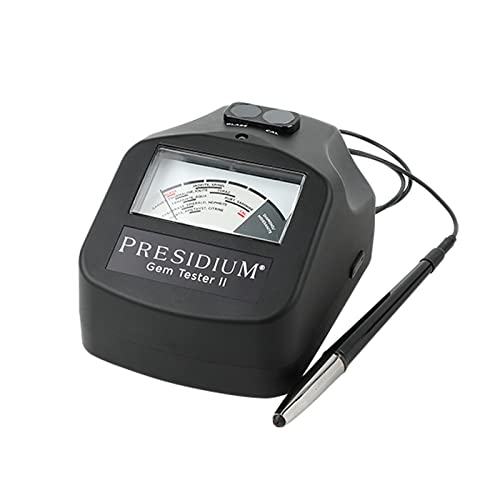
Presidium Instruments Gem Tester II (PGT II) with Assisted Thermal Calibration (ATC) for Identifying Diamonds/Moissanites and Common Colored Gemstones
- Assisted Thermal Calibration: Self-calibrate to environment
- Trusted Industry Standard: Compact, sturdy, portable design
- Thin Retractable Probe: Industry's thinnest probe tip
As an affiliate, we earn on qualifying purchases.
As an affiliate, we earn on qualifying purchases.
How to Spot a Real Pearl: Key Signs to Look For
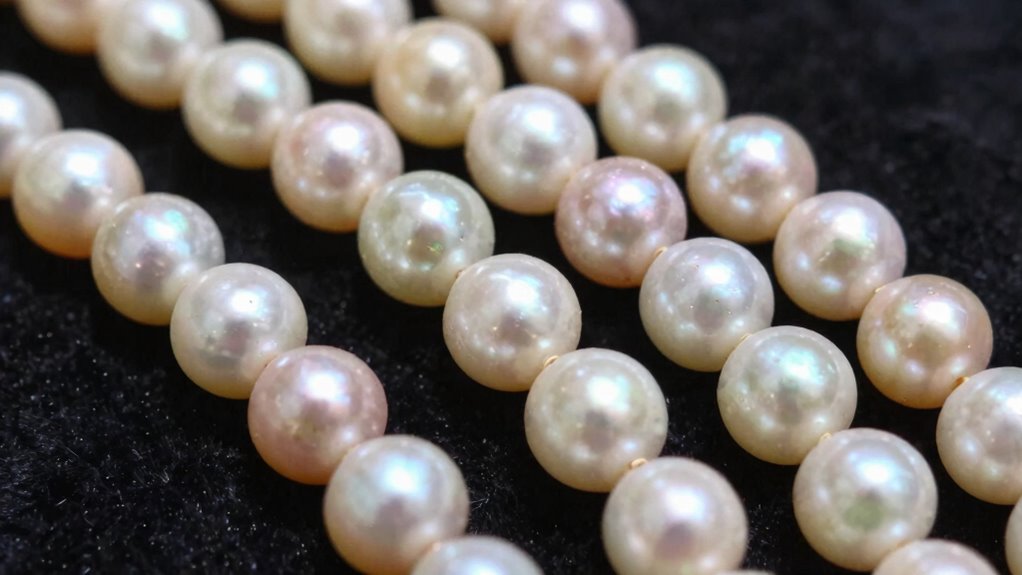
Knowing how to identify a real pearl can save you from buying a fake. One way is to understand pearl cultivation, which involves oysters naturally producing pearls over time. Genuine pearls often have a subtle luster developed through this process, rooted in pearl history that dates back thousands of years. Look closely at the surface; real pearls usually have minor imperfections or irregularities, unlike perfectly smooth imitation ones. Feel the pearl’s weight; authentic pearls tend to be heavier than plastic imitations. The color may also vary slightly, reflecting their natural origin. Additionally, examine the shape—most real pearls aren’t perfectly round. Recognizing these signs helps you distinguish real pearls from counterfeit ones, making your purchase more confident and informed. Pearl formation process contributes to the unique characteristics that set real pearls apart from imitations, highlighting the importance of understanding pearl authenticity to make informed decisions. A gentle surface inspection can reveal these distinguishing features, further aiding in identification. Being familiar with the natural variability in color and shape also enhances your ability to tell real pearls from synthetic ones.

MilkyWay Wish Pearl Necklace Kit, DIY Necklace Making Kit, lotus Necklace Cage Locket Cultured Pearl in Oyster Set, 16.9", Surprise Gift For Wife, Girlfriend,Mother (MOM)
- Naturally Cultured Pearl: Grown over 5 years in Akoya oyster
- Complete Jewelry Set: Includes pearl, chain, and pendant
- Random Pearl Color: White, cream, peach, purple, black
As an affiliate, we earn on qualifying purchases.
As an affiliate, we earn on qualifying purchases.
Performing the Water Drop Test to Check Authenticity
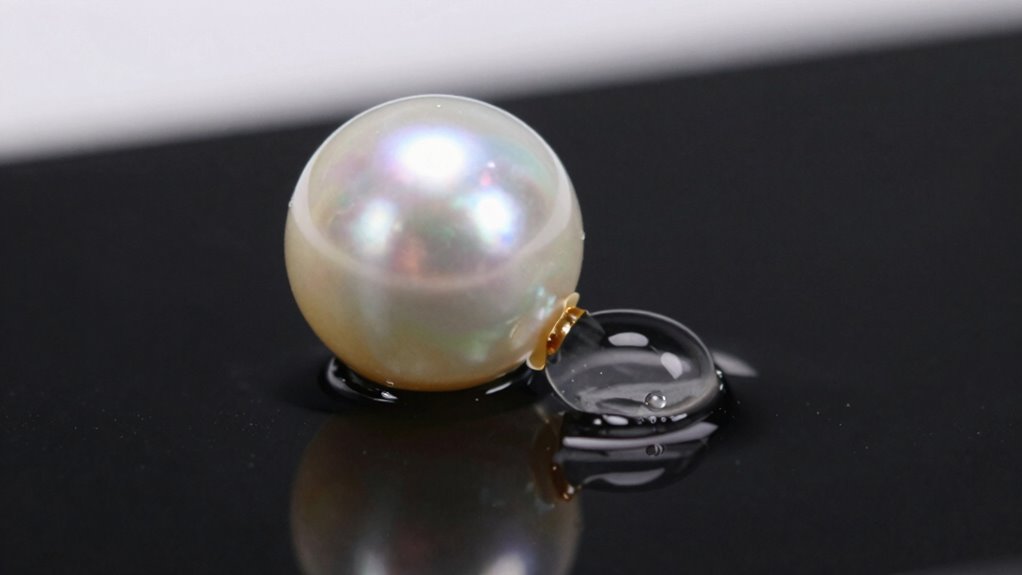
Performing the water drop test, you start by gently dropping a small amount of water onto the pearl’s surface. Watch how the water behaves—if it beads up and stays on the surface, it’s likely genuine; if it sinks in quickly, it might be fake. Observing these water behavior indicators helps you determine the pearl’s authenticity with confidence. Additionally, understanding the Free Floating nature of real pearls can help you assess their buoyancy and authenticity during testing. Recognizing that real pearls are natural and organic can further aid in distinguishing them from imitation varieties. The piercing process of genuine pearls often involves natural formation, which can sometimes be felt through careful examination. Moreover, surface luster is a key characteristic that can reveal whether a pearl is authentic, as real pearls typically exhibit a deep, reflective glow. To better understand the water absorption properties, consider how the pearl’s surface interacts with moisture, providing clues to its authenticity.
Drop Test Basics
Performing the water drop test is a simple yet effective way to verify a pearl’s authenticity. When you drop a small amount of water onto a real pearl, it tends to absorb quickly due to its natural porosity, reflecting its origin from pearl cultivation. Imitation pearls, often made from glass or plastic, won’t absorb water and will instead bead up or stay dry. This test also highlights the importance of ethical sourcing, as genuine pearls come from sustainable farms that prioritize healthy, natural growth. By understanding how real pearls behave during this test, you can better distinguish authentic jewelry from imitation pieces. Additionally, color consistency is another key indicator, as real pearls typically exhibit subtle variations in shade and luster that imitation pearls often lack. Remember, this quick check won’t give you definitive proof, but it’s a valuable step in your overall evaluation process.
Observe Water Behavior
When you place a few drops of water onto a pearl’s surface, observe how it behaves to assess its authenticity. A real shell pearl typically causes the water to bead up, forming small, round droplets that stay intact due to its natural nacre coating. This water behavior indicates a genuine pearl’s smooth, slightly textured surface. In contrast, a plastic imitation often absorbs the water quickly or causes it to spread out flat, showing a lack of surface tension. If the water beads and remains on the surface, it’s a good sign of authenticity. However, if the water disperses or soaks in immediately, you might be dealing with a shell pearl or a plastic imitation. This simple test helps differentiate between real and fake pearls without any tools.
Authenticity Indicators
The water drop test is a straightforward method to verify if a pearl is genuine. When you place a drop of water on its surface, a real pearl absorbs it slowly, reflecting its natural composition. Imitation pearls repel water or allow it to slide off quickly, indicating a synthetic material. This test taps into cultural symbolism, where authentic pearls symbolize purity and wisdom, and their historical significance highlights their value across civilizations.
| Authenticity Indicator | Meaning |
|---|---|
| Water absorption | Genuine pearls absorb water, showing real material |
| Water runoff | Imitations repel water, indicating synthetic surface |
| Cultural symbolism | Authentic pearls symbolize purity and status |

VIKI LYNN Freshwater Cultured Pearl Necklace Set Includes Stunning Bracelet and Stud Earrings Jewelry for Women
- Jewelry Set Includes: Necklace, bracelet, earrings with clasp
- Pearl Size: 7.5-10mm freshwater pearls
- Material: AAA-grade cultured freshwater pearls
As an affiliate, we earn on qualifying purchases.
As an affiliate, we earn on qualifying purchases.
Using the Tooth Test: Gently Rubbing to Verify a Pearl
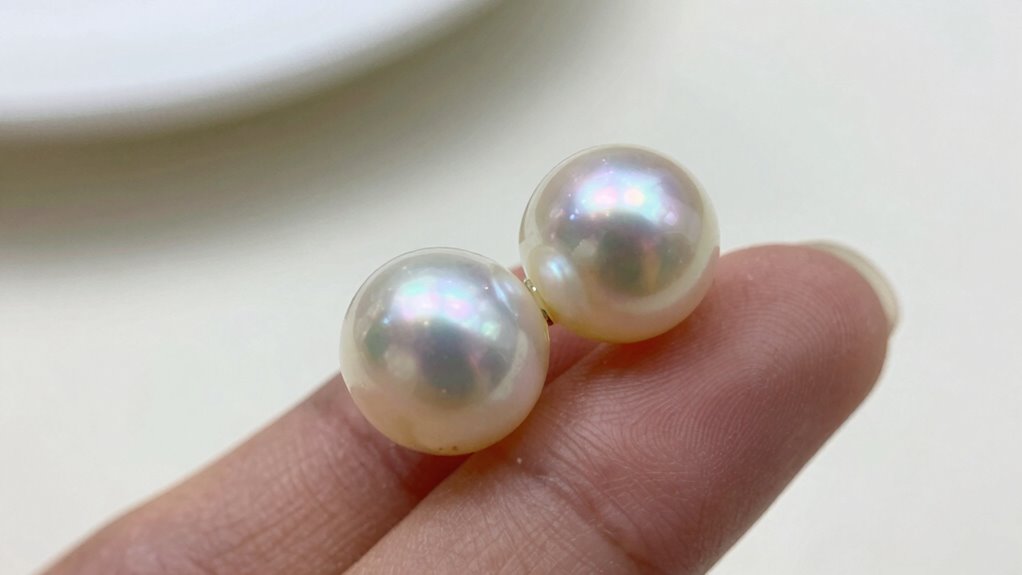
To verify a pearl’s authenticity, gently rubbing it against your teeth is a simple and effective test. Genuine pearls typically have a smooth, slightly gritty texture due to their natural pearl luster, which provides a subtle graininess when rubbed lightly. Imitation pearls often feel slick or glassy because they lack the layered nacre that creates real pearls’ unique surface. As you perform the test, pay attention to surface imperfections; real pearls might have tiny blemishes or irregularities, but they still feel consistently gritty. If the pearl feels perfectly smooth and slides easily, it could be imitation. This tactile approach helps distinguish authentic pearls from synthetic ones without any specialized tools, relying solely on your sense of touch and attention to surface details. Additionally, understanding the pearl quality factors can help you better assess authenticity.
As an affiliate, we earn on qualifying purchases.
Assessing Surface Shine and Flaws on Pearls
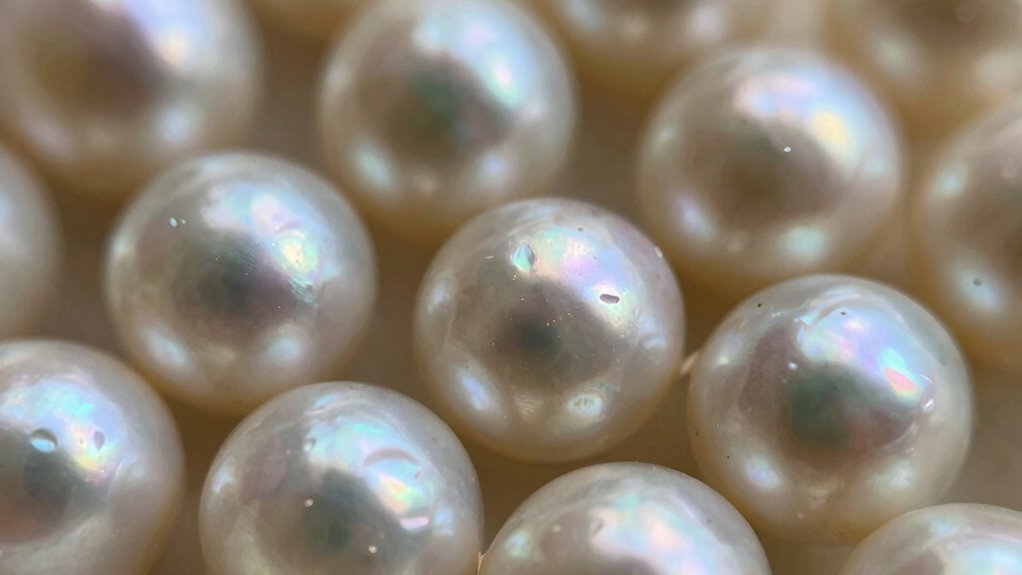
After verifying a pearl’s authenticity with the tooth test, examining its surface shine and flaws offers further insight into its quality. Focus on the luster evaluation—the way light reflects off the surface. A genuine pearl should have a deep, radiant glow with high shine that seems to glow from within. Look closely for flaws such as bumps, pits, or uneven spots. Flaw detection helps distinguish real pearls from imitations, which often have duller surfaces or visible surface imperfections. Luster, or the surface’s ability to reflect light, is a key indicator of a pearl’s quality and authenticity. Perfectly smooth, luminous surfaces indicate high-quality pearls, while excessive flaws or a lack of shine suggest lower quality or imitation. Additionally, understanding surface flaws can help identify natural versus cultured pearls, as natural pearls tend to have more irregularities. Recognizing pearl surface characteristics can also reveal information about how the pearls were cultivated or formed naturally. The presence or absence of certain flaws can also provide clues about the pearl’s formation process, helping distinguish between natural and cultured origins. Moreover, examining the surface texture can help determine how well the pearl was cared for or how it has aged over time. By assessing surface shine and flaws carefully, you can better determine a pearl’s authenticity and overall value.
Checking Shape and Size: Are Perfectly Uniform Pearls Fake?
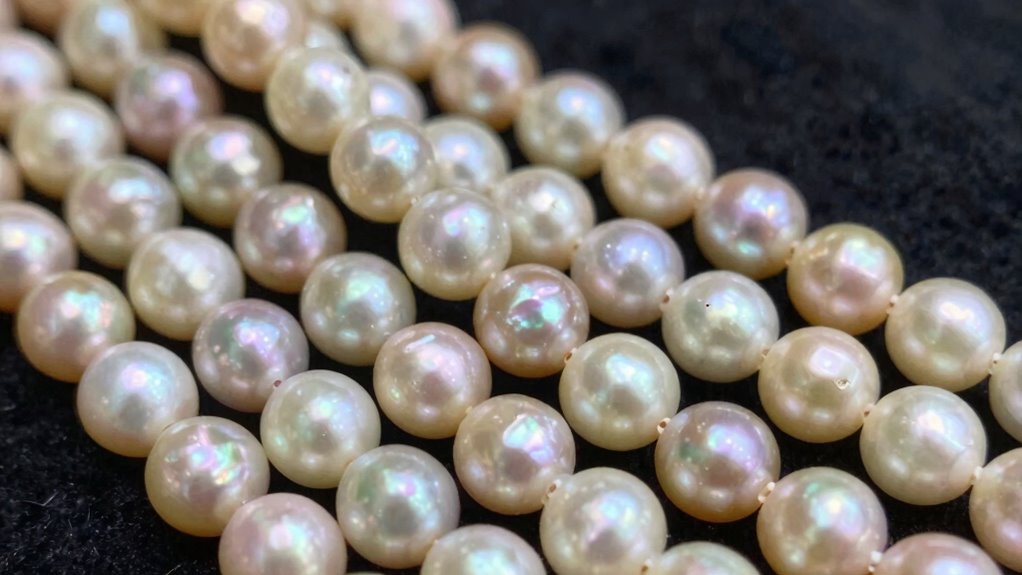
While perfectly uniform pearls might seem appealing, their consistent size and shape often raise suspicion of imitation. Genuine pearls usually display slight variations in pearl shape and size consistency due to natural formation. Imitation pearls, however, tend to be unnaturally uniform, signaling fakery. To check, observe these aspects:
- Variations in pearl shape, with real pearls having subtle differences
- Slight inconsistencies in size, as perfect uniformity is rare in nature
- The overall symmetry, which may appear too precise in fake pearls
- The surface pattern, as natural pearls have minor irregularities affecting shape and size
Feeling the Weight and Texture of Real vs Fake Pearls

You can often tell real pearls by how they feel in your hand; genuine ones are noticeably heavier. Run your fingers over their surface—authentic pearls have a slightly gritty texture, while fakes tend to be smooth or plasticky. Feeling the weight and texture helps you distinguish between real and fake pearls with confidence. Additionally, understanding pearl characteristics can aid in your identification process. Recognizing natural vs cultured pearls can also provide valuable clues during your evaluation. Knowing the surface quality of pearls further enhances your ability to differentiate authentic from imitation jewelry. Paying attention to luster and iridescence can also be a helpful indicator of authenticity. The presence of blemishes or imperfections is often a sign of natural origins, setting authentic pearls apart from uniform imitations.
Weight Differences Clearly Felt
Feeling the weight and texture of pearls can immediately reveal whether they’re genuine or fake. Real pearls tend to have a substantial feel, reflecting their natural formation and cultural significance. Heavier pearls often hint at higher quality, resonating with their historical value as prized treasures. Imitations feel lighter and less dense, lacking that natural heft. To further distinguish them:
- Genuine pearls feel cool initially and warm up with touch
- Real pearls have a slightly gritty surface when rubbed gently
- Fake pearls often feel uniformly smooth and plasticky
- The weight difference is noticeable, with real pearls feeling more substantial in your hand
- Density and weight are key indicators, as authentic pearls’ natural composition gives them a distinctive heft compared to imitations. Additionally, understanding precious metal investments can help you appreciate the value of authentic jewelry.
Texture Tells Authenticity
The texture of a pearl offers a clear indication of its authenticity. Genuine pearls, shaped by natural pearl farming processes, have a slightly uneven surface with tiny ridges and a subtle gritty feel when rubbed gently. In contrast, imitation pearls often feel smooth and glassy, lacking the natural imperfections. Cultural significance also plays a role—real pearls have been treasured for centuries, and their unique textures reflect their origin. When you handle a real pearl, you notice its cool touch and slight roughness, which are hard to replicate. Imitation pearls, made from plastic or glass, often feel slick and uniform. By paying attention to texture, you can distinguish authentic pearls from fake ones without any tools, appreciating their natural beauty and cultural importance.
When to Consult a Professional for Certification
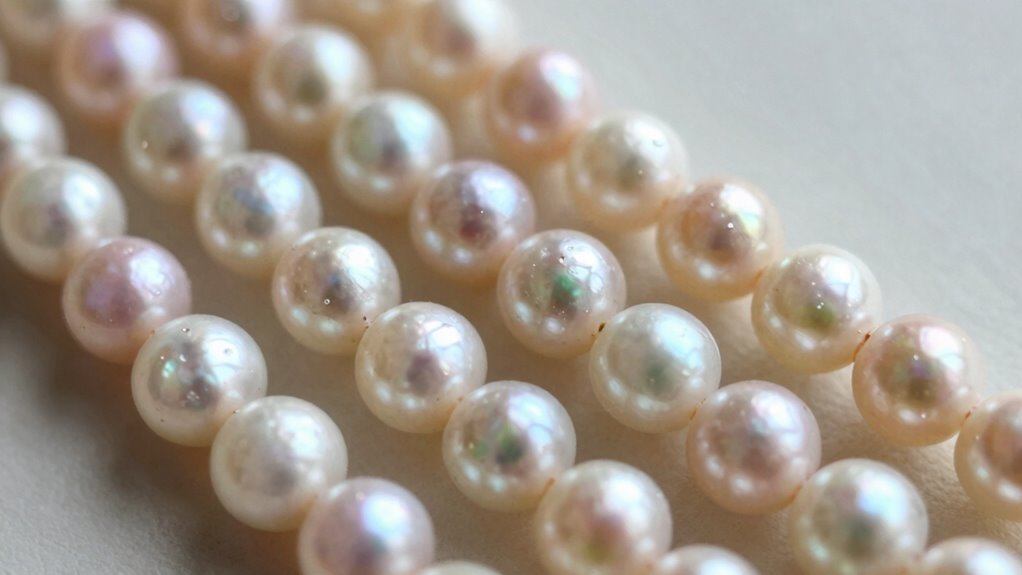
Knowing when to consult a professional for certification can guarantee you time and guarantee your pearls meet quality standards. If you doubt their authenticity or value, seeking a professional appraisal is wise. A certified gemologist or a laboratory certification provides a reliable assessment of whether your pearls are genuine. Consider consulting a professional if your pearls have irregular shapes, unusual luster, or inconsistent surface textures. They can perform detailed tests that aren’t accessible to the average buyer. Additionally, professional certification helps confirm if your pearls are natural or cultured, saving you from potential fraud. Remember, expert evaluations are vital for high-value pieces or when buying from less reputable sources. Trusting a professional ensures your pearls are accurately identified and valued. Vetted – Soul Sanctuaries and understanding authenticity testing can help you make informed decisions about your jewelry. Ensuring proper certification procedures can further validate your pearls’ authenticity and worth.
Frequently Asked Questions
Can Imitation Pearls Be Made to Feel Like Real Ones?
Yes, imitation pearls can be made to feel more like real ones through pearl dyeing and imitation pearl manufacturing techniques. These methods can add a smoother, more natural texture, mimicking the cool, soft surface of genuine pearls. By carefully applying dyes and surface treatments, manufacturers enhance their appearance and feel, making imitation pearls more convincing. However, subtle differences usually remain, so tactile inspection is still the best way to tell them apart.
Are There Any Risks in Performing DIY Pearl Tests at Home?
Performing DIY pearl tests at home carries some risks to home safety, especially if you use chemicals or sharp objects improperly. You might also jeopardize testing accuracy if you’re not experienced, leading to false results. To stay safe and get reliable answers, consider consulting a professional jeweler instead of relying solely on homemade methods. This way, you protect yourself and ensure your pearls are correctly identified.
How Long Do Water Drop Tests Typically Take?
The duration of a drop test varies, but typically, a pearl water test takes just a few seconds to a minute. You gently place a drop of water on the pearl’s surface and observe how it reacts. If it beads up and stays on the surface, it’s likely real. If it soaks in quickly, it may be imitation. Keep a close eye during the pearl water test to accurately assess its authenticity.
What Are the Most Common Mistakes When Identifying Real Pearls?
When identifying real pearls, you might mistake imitation pearls for genuine ones if you skip proper pearl classification or rely solely on visual clues. Common mistakes include assuming surface luster equals authenticity or ignoring subtle differences in texture. To avoid these errors, seek expert identification and consider factors like shape, weight, and surface quality. Rushing the process can lead to misclassification, so take your time and double-check with trusted sources.
Do Natural Pearls Come in All Shapes and Sizes?
Natural pearls do come in all shapes and sizes, showcasing remarkable shape diversity and size variation. You’ll find them round, oval, irregular, or baroque, each displaying unique characteristics. This variability makes natural pearls especially sought after and collectible. When you’re exploring pearl jewelry, keep in mind that natural pearls don’t conform to uniform standards, so embracing their diversity helps you appreciate their natural beauty and rarity.
Conclusion
Now that you know how to spot a real pearl’s natural luster and subtle flaws, you’re ready to distinguish authenticity from imitation. While the water drop and tooth tests are simple, don’t forget that genuine pearls often feel heavier and have unique surface imperfections. If in doubt, consulting a professional offers peace of mind. After all, just as no two pearls are exactly alike, your confidence in identifying them should be uniquely yours.