Choosing sustainable fashion means you support eco-friendly materials like recycled fabrics made from plastic bottles and old textiles, which helps reduce waste and conserve natural resources. You also promote ethical sourcing by choosing brands that ensure fair wages and safe working conditions while minimizing environmental impact. Your choices can spark industry change and encourage innovation. If you want to discover more about how your fashion decisions can positively impact the planet, there’s much more to explore ahead.
Key Takeaways
- Recycled fabrics from materials like plastic bottles reduce waste and lessen the demand for virgin resources in clothing production.
- Ethical sourcing ensures fair labor practices and minimizes environmental impact across supply chains.
- Using eco-friendly materials and practices cuts water, energy, and chemical use in garment manufacturing.
- Consumer support for sustainable brands drives industry innovation and promotes transparency and accountability.
- Clear labeling and informed choices empower consumers to select eco-friendly, ethically produced fashion options.
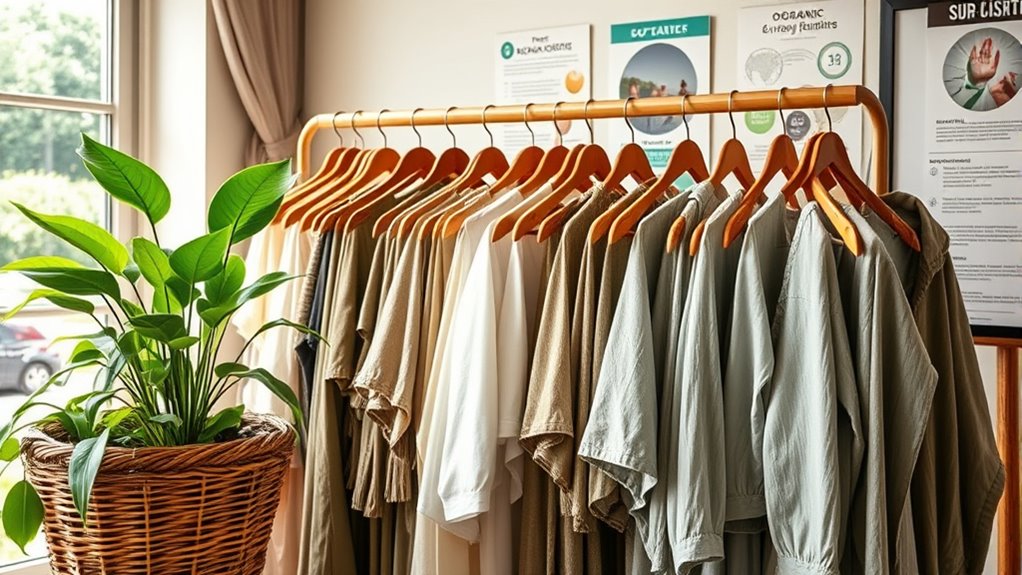
Have you ever wondered how your wardrobe choices impact the planet? Every piece of clothing you buy carries a story, and many of those stories involve environmental and ethical concerns. Choosing sustainable fashion means thinking about more than just style; it’s about making mindful decisions that support a healthier planet. One way to do this is by seeking out brands that prioritize recycled fabrics. These fabrics are made from materials that have already been used, such as plastic bottles or old textiles, and repurposed into new garments. By opting for recycled fabrics, you reduce waste in landfills and decrease the demand for virgin resources, which often require intensive water, energy, and chemical use to produce. This shift helps cut down on pollution and conserves natural resources, making your wardrobe less of a burden on the environment.
Choosing recycled fabrics reduces waste, conserves resources, and supports sustainable fashion practices.
Equally important is understanding ethical sourcing. When you buy from brands committed to ethical sourcing, you’re supporting fair labor practices and environmentally responsible production methods. Ethical sourcing means ensuring that workers are paid fair wages, work in safe conditions, and aren’t exploited. It also involves selecting suppliers that minimize their environmental impact, whether through reduced water and energy use or eco-friendly manufacturing processes. By choosing brands that emphasize ethical sourcing, you’re actively contributing to a more just and sustainable fashion industry. This not only benefits the planet but also improves the lives of workers who make your clothes.
Making mindful choices about recycled fabrics and ethical sourcing might seem small at first, but collectively, they create a powerful shift in the industry. When you prioritize brands that use recycled materials, you promote innovation and demand for sustainable materials, encouraging more companies to follow suit. Supporting brands that practice ethical sourcing pushes the entire industry toward transparency and accountability. It’s about aligning your values with your purchasing decisions, ensuring that your wardrobe reflects your commitment to protecting the environment and respecting human rights.
The good news is that sustainable fashion is more accessible than ever. Many brands now clearly label their materials and sourcing practices, making it easier for you to make informed choices. By becoming a conscious consumer and seeking out those who prioritize recycled fabrics and ethical sourcing, you help drive the industry toward more sustainable practices. Every garment you buy becomes a statement—one that says you care about the planet and the people involved in making your clothes. In doing so, you not only elevate your style but also contribute to a more sustainable future for fashion.
Frequently Asked Questions
How Do Eco-Friendly Materials Compare in Durability to Conventional Fabrics?
Eco-friendly materials often have comparable or even better fiber longevity and fabric resilience than conventional fabrics. You might find that natural fibers like organic cotton and hemp are quite durable when cared for properly, while innovative sustainable options like recycled polyester can withstand regular wear and washing. Although some eco-friendly fabrics may initially seem less resilient, many are engineered for durability, making them a smart, long-lasting choice for your wardrobe.
What Certifications Indicate Genuine Sustainable Fashion Brands?
You should look for certification standards like GOTS, Fair Trade, and OEKO-TEX to guarantee eco label legitimacy. These certifications verify that brands meet strict environmental and social criteria, confirming their commitment to genuine sustainability. When choosing sustainable fashion, checking for these trusted labels helps you support truly eco-friendly brands and makes your fashion choices more impactful and responsible.
How Can Consumers Identify Truly Eco-Conscious Clothing?
You can identify truly eco-conscious clothing by checking for ethical labeling and transparency in sourcing. Look for brands that openly share their supply chain details and use certifications like GOTS or Fair Trade. When shopping, ask about the materials used and manufacturing practices. If a brand is transparent and provides clear information about their sustainability efforts, chances are they’re genuinely committed to eco-friendly fashion.
Are There Affordable Sustainable Fashion Options Available?
Yes, you can find affordable sustainable fashion options. Look for budget-friendly choices like thrift stores, online marketplaces, and brands that prioritize eco-friendly materials without high prices. Shopping during sales or off-season can also save you money while supporting eco-conscious brands. By researching and being flexible, you can enjoy stylish, sustainable clothing that fits your budget. Remember, being eco-friendly doesn’t mean sacrificing affordability.
What Are the Environmental Impacts of Fast Fashion Alternatives?
Imagine a fast fashion brand rapidly producing cheap clothes, leading to environmental pollution and resource depletion. This approach causes water contamination from dye runoff, excessive waste, and overuse of raw materials. The environmental impacts of fast fashion alternatives are significant, as they accelerate pollution and deplete essential resources. You might notice this in overflowing landfills and polluted waterways, highlighting how quick, cheap fashion harms the planet more than sustainable choices.
Conclusion
As you embrace sustainable fashion, imagine yourself walking a lush forest path, each step leaving a gentle mark on the earth. By choosing eco-friendly materials and mindful practices, you become a steward of our planet’s beauty—like a guardian of nature’s delicate balance. Every conscious decision you make adds to a tapestry of change, weaving a future where style and sustainability walk hand in hand. Together, you can paint a greener, brighter world.