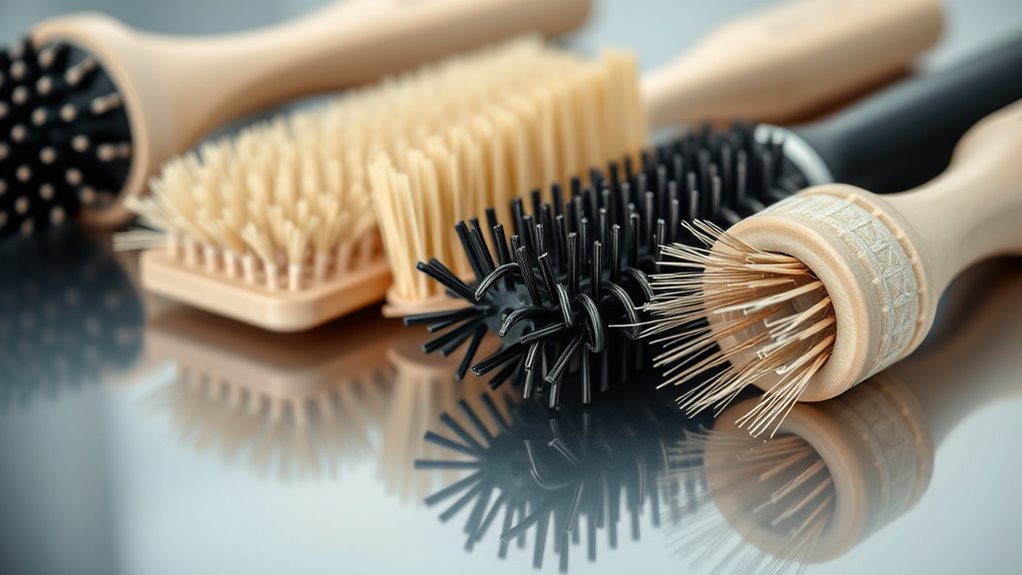
Choosing the right hair brush depends on your hair’s texture and styling goals. Natural boar bristles are great for distributing oils and adding shine, ideal for fine or normal hair. Synthetic bristles work well for detangling thick, curly, or coily hair without breakage. For coarse or thick hair, sturdy, wide-tooth brushes are best. Matching your brush type to your hair length and style helps maintain healthy, smooth hair—learn more to find your perfect match.
Key Takeaways
- Match natural bristles like boar for oily, shiny hair and synthetic bristles for detangling thick or curly hair.
- Use wide-tooth or flexible brushes for curly or coily hair to prevent breakage and define curls.
- Choose stiff, sturdy brushes with natural or boar bristles for thick, coarse hair to distribute oils and reduce frizz.
- Select gentle nylon bristle brushes for fine hair to minimize damage and enhance shine.
- Regularly clean and maintain your brush based on your hair type to prolong its effectiveness and promote scalp health.
Understanding Different Types of Hair Bristles
Have you ever wondered why your hair responds better to certain brushes? The type of bristles plays a vital role in how your hair and scalp health are affected.
Natural bristles, like boar, gently distribute your scalp’s natural oils along the hair shaft, promoting shine and reducing dryness.
Synthetic bristles, such as nylon, are often stiffer and better for detangling thick or curly hair without causing breakage.
Metal or mixed bristles can sometimes be too harsh, damaging the hair shaft or irritating your scalp.
Choosing the right bristle type depends on your hair’s texture and scalp sensitivity. Proper selection helps maintain your scalp health and guarantees your hair remains strong, smooth, and well-nourished.
The Benefits of Boar Bristles for Hair Health
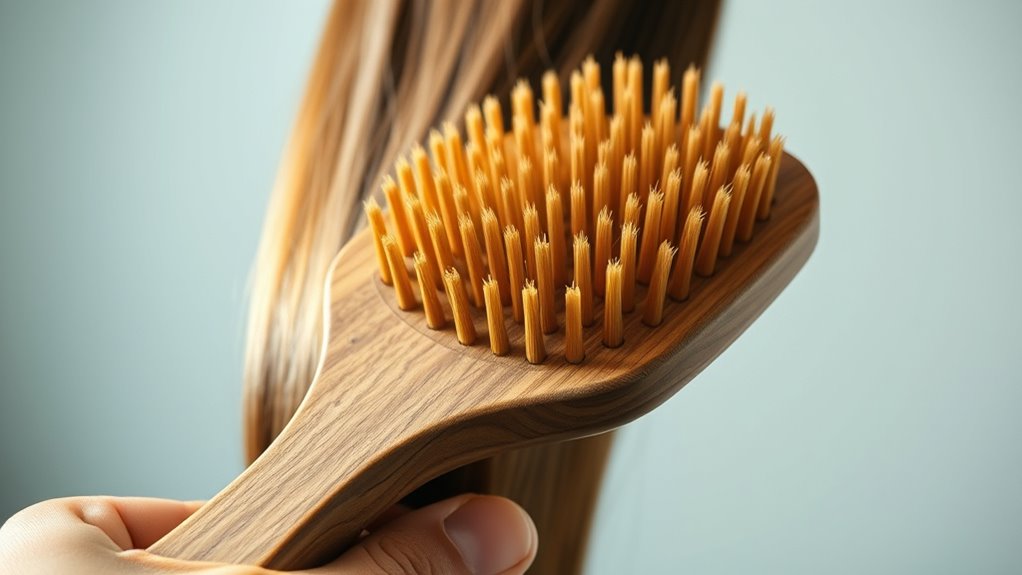
Natural boar bristles stand out for their ability to evenly distribute your scalp’s natural oils along the hair shaft. This helps improve hair shine, making your hair look healthier and more vibrant. Using a brush with boar bristles gently massages your scalp, stimulating oil production without causing damage. These bristles effectively remove dirt and buildup while smoothing the cuticle, reducing frizz. They’re especially beneficial for those with normal to thick hair types seeking a natural shine boost. Incorporating proper brush care ensures the longevity and effectiveness of your boar bristle brush.
Nylon Bristles and Their Suitability for Fine Hair
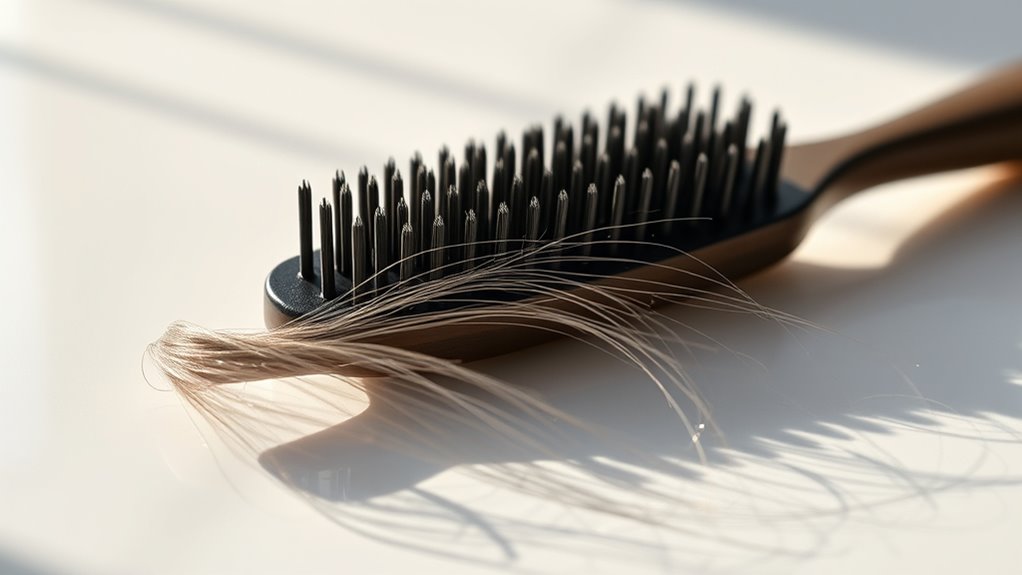
Nylon bristles are often a popular choice for fine hair because they provide gentle detangling without causing excessive damage. They glide smoothly through your hair, reducing breakage and minimizing tugging. Nylon bristles are lightweight, making them easy to handle during styling routines. They also help distribute natural oils evenly, giving your fine hair a healthy shine. Additionally, incorporating automation’s role in business intelligence can streamline your hair care routine by providing personalized styling recommendations. Recognizing hair type compatibility can help you select the most effective brush for optimal hair health. For example, choosing a brush with bristle design tailored to fine hair can enhance styling efficiency. Understanding how hair porosity affects styling outcomes can further optimize your hair care routine, ensuring healthier and more manageable hair. Using a brush with nylon bristles can be a game-changer for maintaining the health and appearance of your fine hair.
Choosing Brushes for Curly and Coily Hair Textures

Choosing brushes for curly and coily hair textures is essential to maintain their shape and reduce damage.
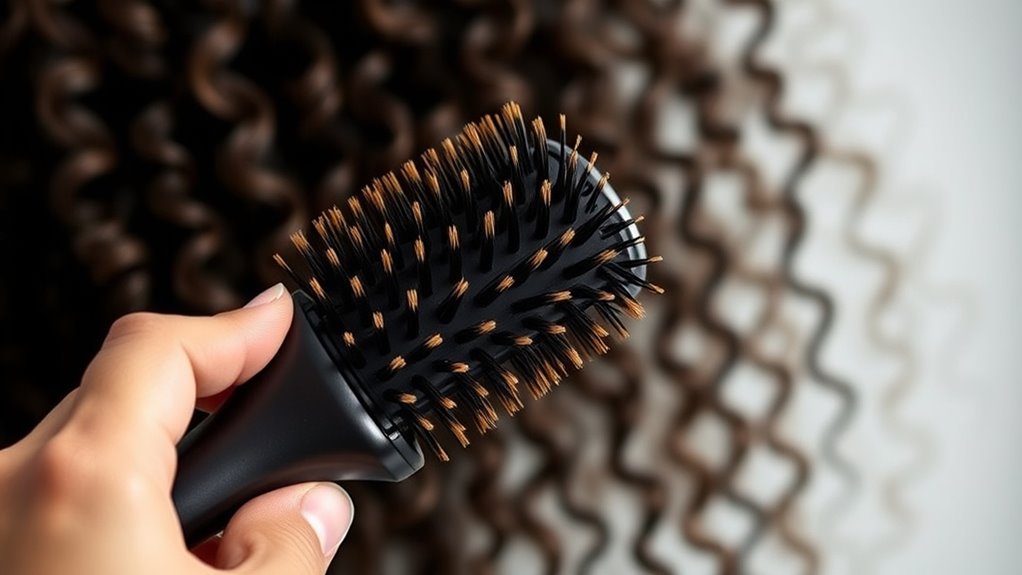
To detangle curly hair effectively, use a wide-tooth comb or a brush designed specifically for detangling without causing breakage. Using tools with flexible bristles can help minimize stress on your coils and prevent breakage. The right tools for curly hair can significantly improve your styling routine and hair health. Curl enhancing brushes, such as denman or ruffled brushes, help define curls and add volume while minimizing frizz. Selecting appropriate hair tools is crucial for caring for textured hair and maintaining its natural beauty. Additionally, understanding the importance of color accuracy and proper contrast ratios in styling tools can further enhance your hair care routine and the final look. Avoid fine-tooth brushes or regular brushes that can disrupt curl patterns and cause breakage.
Instead, opt for tools with flexible bristles that glide smoothly through coils.
When detangling, always work from the ends upward to prevent unnecessary stress on your hair.
Using the right curl-specific brush can make styling easier, promote healthy curls, and keep your hair looking its best.
The Role of Mixed Bristle Brushes in Hair Styling

Mixed bristle brushes are great for detangling your hair without causing damage. They also gently stimulate your scalp, promoting healthy growth. Additionally, they can enhance the natural shine of your hair by distributing oils evenly along the strands textile art techniques. Plus, they help reduce hair breakage, keeping your hair stronger and more resilient. Incorporating these brushes into your routine can also improve overall scalp health by increasing circulation and removing buildup cybersecurity vulnerabilities. Using the right brush can also assist in managing self watering plant pots and other styling tasks effectively. For those with specific hair types, understanding dog names can inspire personalized styling tools that suit your needs.
Versatile Hair Detangling
Because they combine different bristle types, mixed bristle brushes are highly effective for versatile hair detangling. They gently glide through knots and tangles while distributing natural oils for a healthy shine. Using this hair accessory can simplify your styling techniques, making detangling quicker and less painful. Whether you’re preparing for a blowout or just smoothing your hair, a mixed bristle brush adapts to various hair textures. Its versatility allows you to switch between styling methods without switching brushes. Plus, the combination of bristles helps reduce breakage and static. For best results, use gentle, consistent strokes and start detangling from the ends, working your way up. This makes your hair easier to manage while maintaining its health and shine, no matter your hair type. Incorporating hair health strategies can further enhance your results and keep your hair looking its best.
Gentle Scalp Stimulation
As you glide a mixed bristle brush through your hair, its gentle massaging action can do more than just detangle. The soft bristles stimulate your scalp through a light scalp massage, which increases blood flow and promotes healthy hair growth. This stimulation reaches your hair follicles, encouraging them to produce stronger, shinier hair. The natural boar bristles help distribute scalp oils evenly, enhancing overall scalp health. With each gentle stroke, you’re not only detangling but also invigorating your scalp, reducing buildup and improving circulation. This process makes your hair look more vibrant and healthier over time. Additionally, using a brush with scalp stimulation benefits can enhance the overall health of your scalp and hair. A mixed bristle brush offers a soothing experience that combines effective styling with the benefits of scalp stimulation, supporting your hair’s natural resilience.
Reduces Hair Breakage
Using a mixed bristle brush can considerably reduce hair breakage during styling. The combination of natural and nylon bristles gently detangles hair while distributing natural oils, protecting your hair color and reducing damage. It minimizes tugging, which often leads to breakage, especially if you’re styling wet or fragile hair. Regular trimming of hair tips can also help prevent split ends and maintain overall hair health. Additionally, copyright and trademark protections ensure that quality hair care products are genuine and safe for your hair. Plus, a good scalp massage while brushing stimulates blood flow, strengthening strands over time. Incorporating proper brushing techniques can further enhance hair health and minimize damage. Understanding hair porosity can help you choose the best brush for your specific hair type, leading to better results and less breakage. Recognizing recurring patterns in hair damage can assist in selecting the most suitable tools and routines to protect your hair. The benefits include:
- Gentle detangling for all hair types
- Less pulling and snapping, preserving hair integrity
- Better distribution of oils, maintaining hair color vibrancy
- Enhanced scalp health through massage, reducing breakage from dryness
This type of brush encourages smoother styling without compromising your hair’s strength. When used properly, it keeps your hair healthier, shinier, and less prone to breakage during daily routines.
Selecting the Right Brush for Thick and Coarse Hair
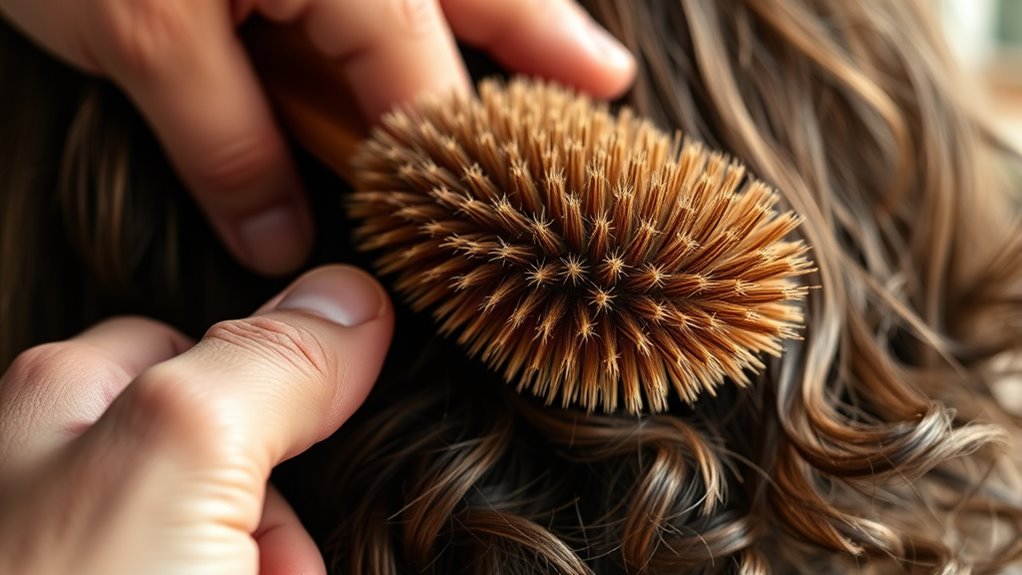
Finding the right brush for thick and coarse hair can make a significant difference in your styling routine. Look for hair styling tools designed with good hairbrush ergonomics to guarantee comfort and control during use. Stiff, wide-tooth combs or brushes with sturdy, densely packed bristles are ideal for detangling and smoothing thick hair without causing damage. Avoid soft or overly gentle brushes, as they won’t provide enough leverage or tension. Instead, opt for brushes with natural or boar bristles combined with sturdy plastic or wood bases, which help distribute natural oils and reduce frizz. Proper brushing techniques can further enhance hair health and manageability. Choosing the right tool will make styling easier, faster, and more effective, helping you achieve sleek, manageable hair with less breakage and effort. Incorporating rustic decor elements into your styling routine can also inspire a more grounded, natural approach to hair care.
How to Match Brush Type With Your Hair Length and Style Goals
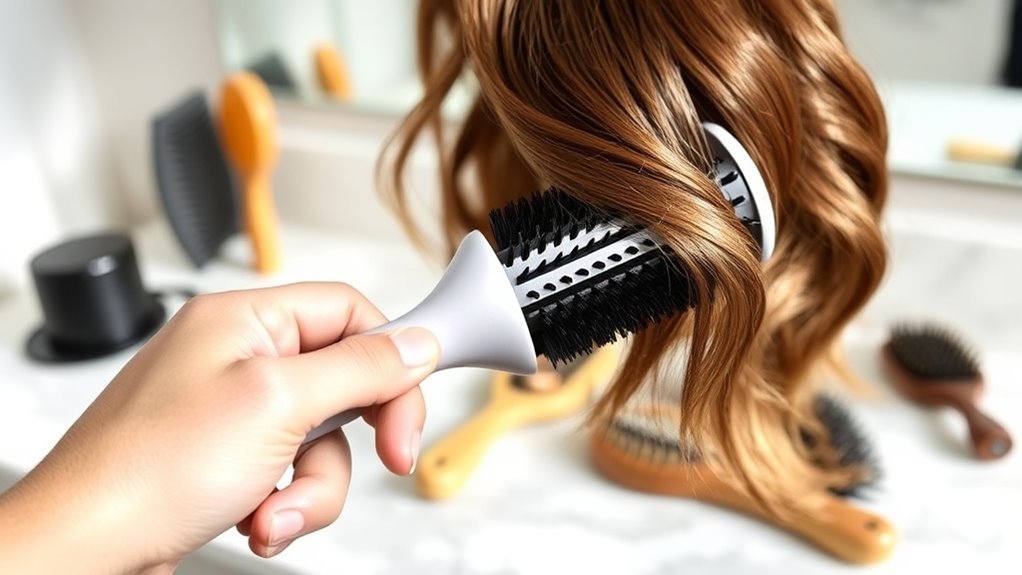
Matching your hair brush to your hair length and style goals guarantees you get the best results with less effort. You are trained on data up to October 2023. If you want sleek, straight hair, opt for a paddle brush to smooth and straighten efficiently. For voluminous curls, a round brush helps lift roots and shape waves. Short hair benefits from vent brushes or styling tool alternatives like teasing combs, which add texture without weighing down. Medium-length hair can be styled using a combination of brushes tailored to the look you’re after—whether for volume or sleekness. Consider your hair color coordination; darker hair might show less buildup on certain brushes. Additionally, understanding the science behind sound vibrations can help you choose brushes that minimize damage and promote healthier hair.
Tips for Maintaining and Cleaning Your Hair Brush
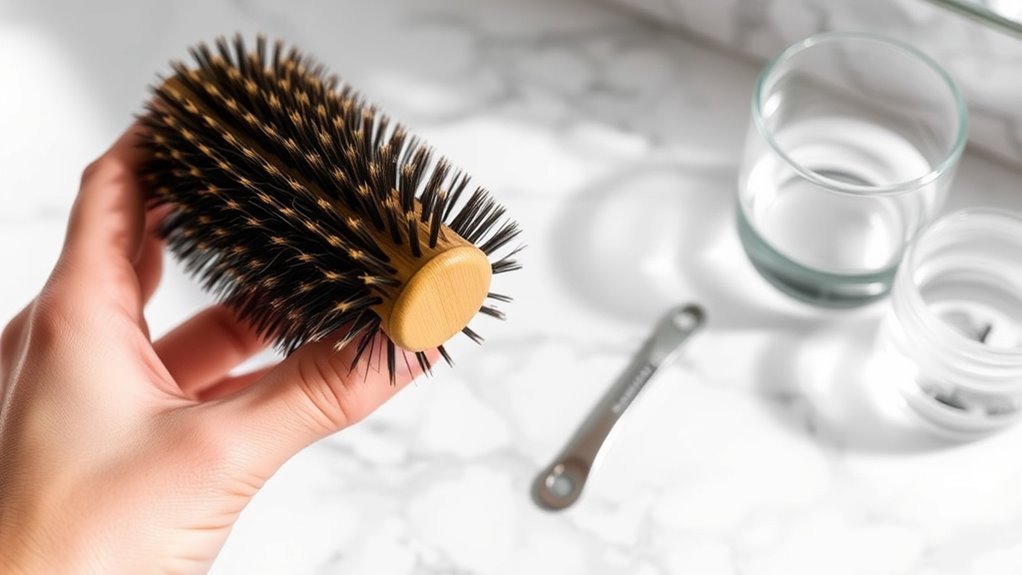
To keep your hair looking its best, regular maintenance and cleaning of your brush are essential. Proper hairbrush maintenance helps prevent buildup of product, oil, and dirt that can transfer back to your hair, causing dullness or scalp issues. Incorporating the use of cleaning tools like an old toothbrush can make the process more effective and thorough. To clean hairbrushes effectively, start by removing loose hair strands with your fingers or a comb. Next, soak the brush in warm water mixed with a gentle shampoo or a mixture of vinegar and water for about 10 minutes. Use an old toothbrush to scrub between bristles, ensuring you reach all areas. Rinse thoroughly and let your brush air dry with the bristles facing downward. Regular cleaning hairbrushes not only prolongs their lifespan but also keeps your scalp healthy and your hair looking fresh.
Frequently Asked Questions
How Often Should I Replace My Hair Brush for Optimal Health?
You should replace your hair brush every 3 to 6 months for ideal health. Regular brush maintenance, like cleaning out hair and removing buildup, helps prolong its lifespan.
A proper replacement schedule prevents bacteria and product buildup from affecting your scalp and hair. If you notice frayed bristles, reduced effectiveness, or buildup that cleaning can’t fix, it’s time for a new brush to keep your hair healthy and shiny.
Can Using the Wrong Brush Cause Hair Damage or Breakage?
Using the wrong brush can definitely cause hair damage and breakage. If you choose a brush with harsh bristles or one that doesn’t suit your hair type, you risk pulling or stressing your strands.
To prevent breakage, select a brush designed for your hair, and avoid aggressive brushing. Regularly replacing worn-out brushes also helps maintain healthy hair, minimizing damage and promoting breakage prevention.
Are There Eco-Friendly or Sustainable Hair Brush Options Available?
Absolutely, eco-friendly hair brushes exist and can change your routine completely! You can opt for brushes with biodegradable bristles or made from recycled materials, helping save the planet while caring for your hair.
These sustainable options are durable, stylish, and eco-conscious, so you don’t have to choose between beauty and environmental responsibility.
Feel good about your hair care by going green with eco-friendly brushes—your hair and Earth will thank you!
What Is the Best Way to Detangle Hair Without Causing Damage?
To detangle hair without causing damage, start with gentle detangling techniques like using a wide-tooth comb or a paddle brush. Always work from the ends upward, easing out knots gradually.
Opt for brush material options like bamboo or recycled plastic, which are eco-friendly and gentle on your hair. By being gentle and choosing the right tools, you’ll prevent breakage and keep your hair healthy and shiny.
How Do I Choose a Travel-Sized Hair Brush for Convenience?
To choose a travel-sized hair brush for convenience, look for one with a compact design that easily fits in your bag or pocket.
Opt for brushes with easy storage options, like foldable handles or slim profiles, so they don’t take up much space.
Make sure it’s lightweight and durable, so it’s easy to carry around without adding bulk.
This way, you can maintain your hair effortlessly on the go.
Conclusion
Choosing the right hairbrush can transform your styling routine and promote healthier hair. Did you know that using the correct brush can reduce hair breakage by up to 30%? By understanding your hair type and matching it with the right bristle and brush style, you’ll achieve better results and maintain your hair’s natural shine and strength. So take the time to select and care for your brush—your hair will thank you!