
Your stylist emphasizes the importance of adjusting your flat iron to the right temperature to avoid damage and keep your hair healthy. Usually, they recommend using lower heat settings for fine or damaged hair (around 250–350°F) and higher settings for thicker hair, but never exceeding 400°F. Monitoring the temperature and using heat protectant sprays are key steps. Keep these rules in mind, and you’ll learn more about protecting your hair while achieving sleek results.
Key Takeaways
- Use the lowest effective temperature to prevent heat damage and maintain hair health.
- Adjust temperature based on hair type: 300–350°F for fine, 375–400°F for thick, lower for damaged hair.
- Avoid high heat settings on chemically treated or fragile hair to reduce risk of breakage.
- Always test the flat iron on a small section before full styling to ensure safe heat levels.
- Regularly monitor and regulate the flat iron’s temperature to protect hair from excessive heat exposure.
Why Your Flat Iron Temperature Can Make or Break Your Hair Health
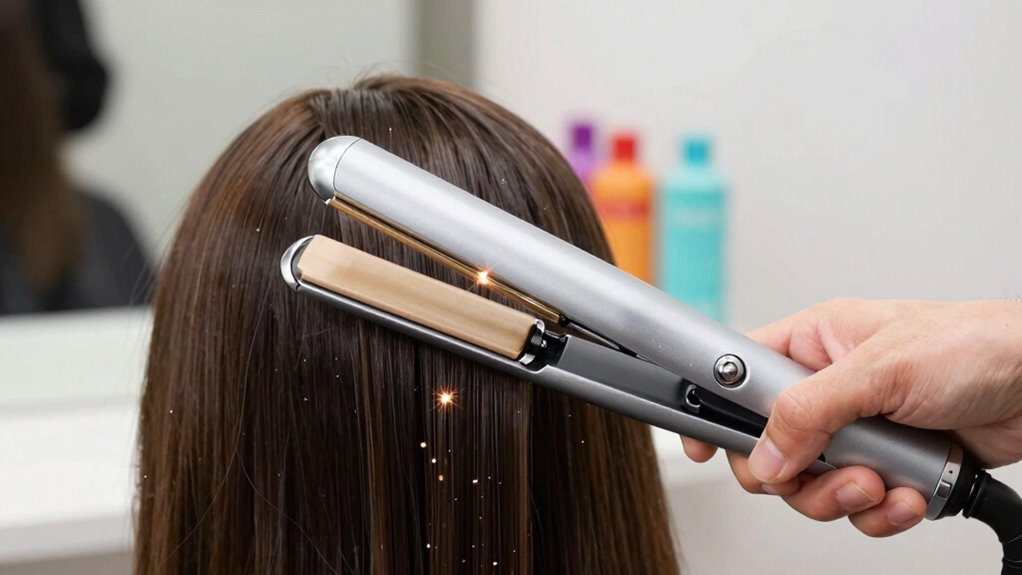
Your flat iron’s temperature plays a crucial role in maintaining your hair’s health. If it’s too hot, you risk heat damage, which can cause dryness, breakage, and split ends. Excessive heat strips away moisture, leading to dull, brittle hair that’s hard to manage. On the other hand, using a lower temperature helps preserve your hair’s natural hydration, keeping it shiny and soft. Proper temperature control minimizes the risk of damage while still delivering smooth, sleek results. When your flat iron is set correctly, it locks in moisture and prevents excessive dryness. Remember, your hair’s health depends on balancing heat with hydration. Staying mindful of your flat iron’s temperature ensures you achieve your desired style without compromising your hair’s strength and vitality. Additionally, choosing a temperature-adjustable flat iron allows for more precise control to protect your hair from unnecessary damage. Using tools with temperature control features can help you customize heat settings for optimal hair safety. Maintaining the correct flat iron heat is essential for preventing long-term damage and keeping your hair healthy over time. Incorporating proper heat techniques can further enhance your styling results while safeguarding your hair’s health.
What’s the Best Flat Iron Temperature for Your Hair Type?
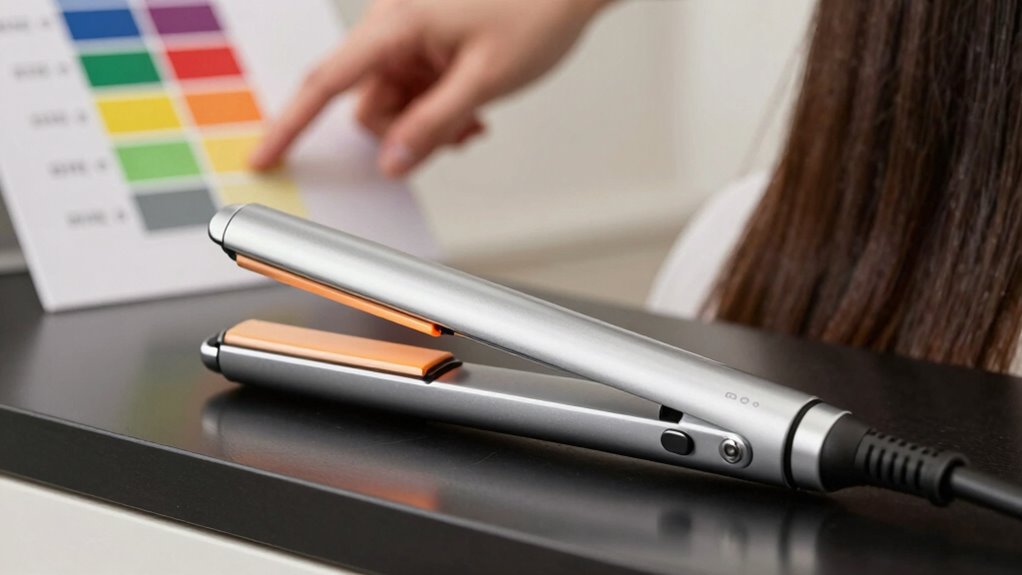
Choosing the right flat iron temperature depends on your hair type. For fine hair, lower settings work best, while thick hair needs higher temperatures to straighten effectively. If your hair is damaged, consider reducing the heat to prevent further harm. Additionally, using proper heat protection can help maintain your hair’s health during styling. It’s also beneficial to understand that electric dirt bikes can produce between 10 to 20 horsepower, which is comparable to traditional gas-powered bikes, providing quick acceleration with instant torque.
Ideal Temperatures for Fine Hair
For fine hair, selecting a lower flat iron temperature is essential to prevent damage and breakage. Typically, setting your flat iron between 300°F and 350°F works best. Higher temperatures can cause unnecessary stress, especially if you’ve recently undergone hair coloring, which weakens the hair shaft. Fine hair is more prone to heat damage, so sticking to these lower settings helps maintain its health and shine. Additionally, if you have a sensitive scalp, lower temperatures reduce the risk of irritation. It’s also helpful to understand heat damage prevention techniques to keep your hair healthy over time. Using a heat protectant spray can further minimize heat injury and preserve your hair’s integrity. Proper temperature regulation ensures that you avoid unnecessary stress on your strands. Always test the heat on a small section first to ensure comfort and safety. Remember, less is more—using the right temperature preserves your hair’s integrity and keeps it looking smooth without risking damage. Incorporating heat styling tips can further enhance your hair’s health and styling results.
Suitable Settings for Thick Hair
Thick hair can handle higher heat settings, but finding the right temperature is key to achieving smooth, snag-free results without causing damage. Typically, settings between 375°F and 400°F work well, but always test a small section first. Using a hair serum can help protect your strands and improve manageability. Keep in mind, excessive heat can affect scalp health over time, so avoid prolonged exposure. To ensure optimal results, consider the regional variations in hair care practices that can influence your styling routine. Proper heat distribution is essential to prevent hot spots that may cause uneven damage. Additionally, understanding the effects of heat on hair structure can help you make more informed styling choices. Maintaining a consistent temperature during styling helps prevent unnecessary stress on your hair. – Use the lowest effective temperature to prevent unnecessary stress. – Always apply a heat protectant before styling. – Avoid repeatedly going over the same section. – Maintain a healthy scalp by not overheating near the roots. Incorporating personal hair type considerations can further optimize your styling results and protect your hair’s health.
Adjusting Based on Hair Damage
If your hair has suffered damage from frequent heat styling or chemical treatments, adjusting your flat iron temperature is essential to prevent further harm. Lowering the heat helps minimize additional hair damage and preserves your hair’s health. For damaged hair, keep the temperature adjustment between 250°F and 300°F to avoid excessive heat exposure. Using a higher temperature can weaken your hair’s structure, leading to breakage and frizz. Always test your flat iron on a small section first, especially if your hair is fragile. Remember, the goal is to style effectively without compromising strength. Regularly evaluating your hair’s condition will guide you in tweaking the temperature, ensuring you style safely while maintaining healthy hair. Free Floating
How to Check and Adjust Your Flat Iron Settings for Safe Styling
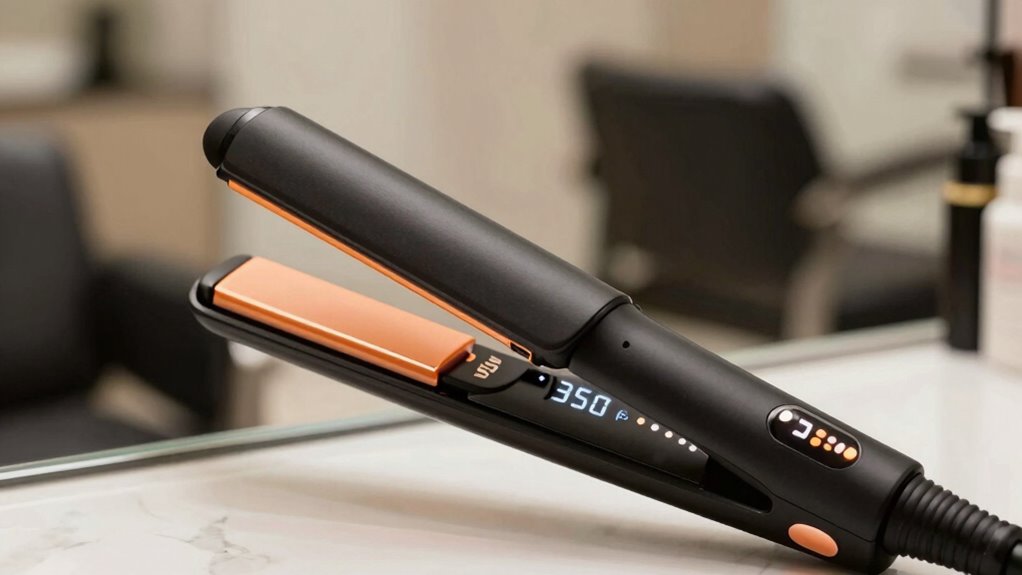
To keep your hair safe, it’s important to understand your flat iron’s temperature settings and how to adjust them properly. You should regularly check the current temperature and make safe tweaks based on your hair type and style needs. By following these tips, you can guarantee your styling is both effective and gentle. Additionally, monitoring the filter indicators on your styling tools can help maintain optimal performance and prevent overheating. Being aware of temperature control features can further help you customize your heat levels for different styling scenarios. For optimal safety and performance, understanding your device’s watt-hours capacity can help you choose the right settings and avoid damage or overheating. Regularly consulting your user manual ensures you’re aware of all safety features and recommended temperature ranges.
Temperature Settings Explained
Wondering how to guarantee your flat iron is set at the right temperature? First, check your iron’s temperature display or manual. Adjust the setting based on your hair type and desired style. Keep in mind that heat distribution varies by iron material—ceramic, tourmaline, or titanium—affecting how evenly heat spreads. Using too high a temperature can damage your hair, while too low won’t style effectively. To ensure safe styling:
- Always start with the lowest heat setting and increase as needed
- Use a heat-resistant mat to prevent heat transfer to surfaces
- Clean your plates regularly for ideal heat conduction
- Test the temperature on a small section before full styling
- Understanding heat conduction properties can help you choose the best flat iron for your needs, and selecting the proper temperature is crucial to avoid heat damage.
Safe Adjustment Tips
Before adjusting your flat iron, always check its current temperature setting to guarantee safe styling. This helps prevent heat damage, especially if your hair is fine or already damaged. Follow temperature guidelines based on your hair type: lower settings for delicate hair, medium for normal, and higher only if necessary. Use the dial or digital controls to make precise adjustments, and avoid cranking up the heat beyond recommended levels. Always test the temperature on a small section first. If your flat iron has an automatic shut-off, make sure it’s functioning properly. Regularly cleaning the plates ensures even heat distribution, reducing the risk of heat damage. Staying within safe temperature ranges helps protect your hair’s health while achieving the style you want. Proper temperature control is essential for preventing damage and maintaining healthy hair during styling. Additionally, understanding how heat settings impact different hair types can help you make more informed adjustments for optimal results, especially when considering the best temperature for your specific hair condition.
Protect Your Hair: Best Heat Protectant Sprays and Measures
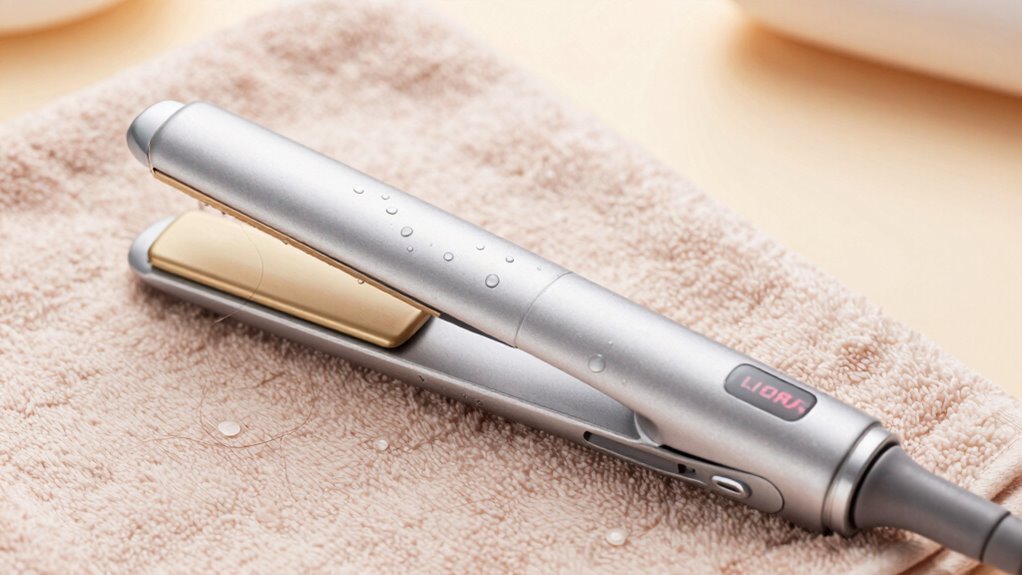
Protecting your hair from heat damage is essential, and using the right heat protectant spray can make all the difference. Apply a quality spray evenly before using your flat iron to create a barrier against high temperatures. For extra protection, consider using a lightweight hair oil on the ends to prevent dryness and breakage. Remember, even the best heat protectant isn’t foolproof—avoid excessive heat to minimize damage.
Protect your hair from heat damage with quality protectant spray and lightweight oil.
Key tips include:
- Choose a heat protectant formulated for your hair type
- Reapply spray if you plan to straighten in multiple sections
- Use a lower temperature setting whenever possible
- Incorporate hair oil to shield strands from heat and maintain moisture
Common Flat Iron Temperature Mistakes: and How to Avoid Them
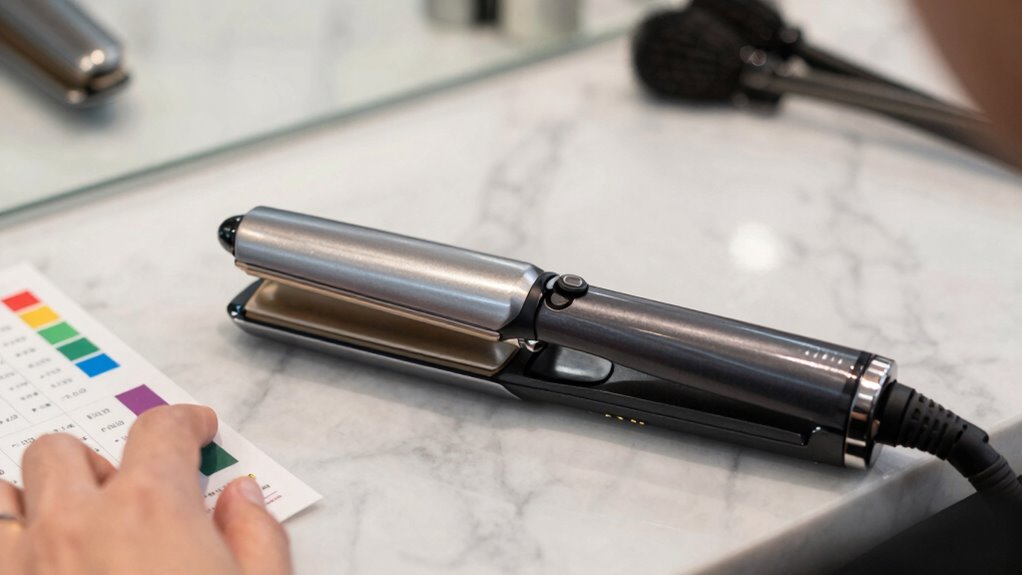
Using the wrong flat iron temperature can cause significant damage to your hair, but many people make common mistakes that worsen the problem. One mistake is ignoring your hair texture when choosing a temperature; fine or damaged hair needs lower heat, while thicker hair may require higher settings. Another mistake is relying solely on styling techniques, like multiple passes, instead of adjusting the temperature appropriately. Overheating your flat iron can lead to dryness, breakage, and frizz, regardless of your styling method. To avoid these errors, always start with the lowest effective temperature for your hair type, and limit the number of passes. Properly matching the temperature to your hair texture and adjusting your styling techniques can help protect your hair and achieve healthier, smoother results.
How to Spot Signs of Flat Iron Damage and Overheating

If your flat iron is causing damage or overheating, you’ll likely notice some telltale signs in your hair. Heat damage often results from excessive temperature control or prolonged exposure to high heat. Look out for:
Heat damage signs include brittle strands, split ends, frizz, and loss of shine—monitor your flat iron’s heat to protect your hair.
- Dry, brittle strands that break easily
- Unexplained split ends or frizz
- Loss of natural shine and smoothness
- Unusual scalp irritation or dryness
These signs indicate that your flat iron may be running too hot or that you’re not managing heat settings properly. Overheating can weaken hair bonds, leading to long-term damage. To prevent this, always check your device’s temperature control and keep it within safe limits. Recognizing these early signs helps you adjust your styling habits and protect your hair from unnecessary heat damage.
Simple Tips for Sleek Hair Without Damaging Your Strands
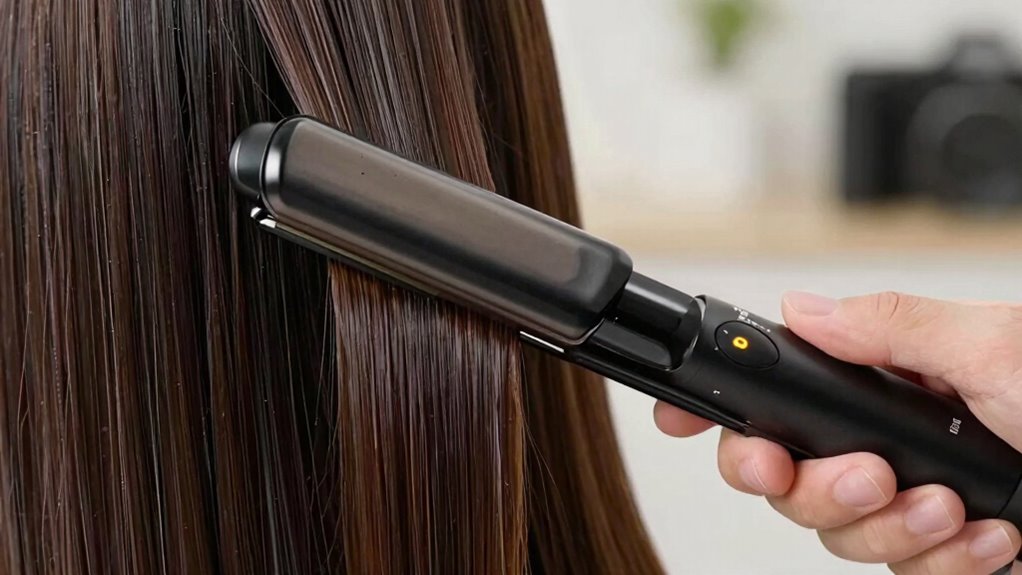
Achieving sleek, shiny hair doesn’t have to come at the expense of your strands’ health. Understanding your hair porosity helps you choose the right styling products that protect while smoothing. For high-porosity hair, opt for lightweight serums that seal moisture and prevent damage, while low-porosity hair benefits from heat protectants that help styling products penetrate without causing breakage. Always apply a heat protectant before using a flat iron, regardless of hair type. Use minimal heat and set your iron to the lowest effective temperature. Finish with a lightweight serum or shine spray to tame flyaways. These simple tips keep your hair sleek and smooth without sacrificing strength or health, making every styling session safer and more effective.
Frequently Asked Questions
How Often Should I Adjust My Flat Iron Temperature?
You should adjust your flat iron temperature as needed to prevent damage and maintain styling consistency. Check for temperature fluctuations during use, especially if you notice your hair isn’t looking right or feels damaged. Keep the heat stable by setting it to the right level for your hair type, and tweak it if your hair becomes frizzy or limp. Regular adjustments help you achieve smooth, consistent results without harming your hair.
Can I Use the Same Heat Setting on All Hair Types?
You can’t use the same heat setting on all hair types because it risks heat damage, especially if your hair has high porosity or fine strands. Thinner or damaged hair needs lower temperatures, while thicker, coarse hair can handle higher heat. Adjust your flat iron based on your hair’s porosity and condition to protect it from damage. Always test and start with the lowest effective temperature for the best results.
What Are the Long-Term Effects of High-Temperature Styling?
Using high temperatures regularly can cause heat damage, weakening your hair over time. It also leads to moisture loss, making your hair dry and brittle. You might notice increased breakage, split ends, and dullness. To protect your hair’s health, avoid constant high-heat styling and use heat protectants. Opt for lower temperatures whenever possible, and give your hair regular breaks from heat to maintain its strength and moisture.
Is It Safe to Use a Flat Iron Daily?
Is it safe to use a flat iron daily? If you keep up with flat iron maintenance and always apply heat protection sprays, you can minimize damage. However, daily use still risks long-term damage like dryness and breakage. To protect your hair, use the lowest effective temperature and give your strands regular breaks. Are you willing to accept some risk for daily styling, or is healthier hair more important?
How Do I Know if My Flat Iron Is Overheating?
You can tell if your flat iron is overheating by checking for signs of heat damage, like burnt hair or split ends. To guarantee temperature accuracy, use a heat thermometer or test the flat iron on a small section first. If it feels too hot or causes damage easily, lower the temperature. Regularly monitoring helps protect your hair from excessive heat and keeps styling safe and effective.
Conclusion
Remember, your flat iron is a double-edged sword—used wisely, it can transform your look; misused, it can harm your hair. Knowing the right temperature and protecting your strands is like tending a delicate garden—you nurture beauty without risking damage. So, stay attentive, adjust your settings, and always prioritize your hair’s health. After all, beautiful hair isn’t just about style—it’s about respecting the care behind it.