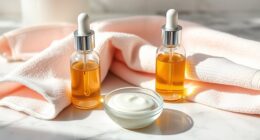
To keep your hair hydrated, combine masks with humectants like honey or glycerin to draw in moisture, then seal it with lightweight oils such as argan or jojoba. Water-based treatments like sprays or leave-in conditioners provide quick moisture, but they work best when followed by oils to lock in hydration. Avoid over-washing to prevent stripping natural oils. Keep practicing these techniques, and you’ll discover effective strategies for maintaining soft, shiny hair that thrives.
Key Takeaways
- Use hydrating masks with humectants like honey or glycerin weekly to deeply moisturize the scalp and hair.
- Seal in moisture with lightweight oils such as argan or jojoba after water-based treatments.
- Apply water-based sprays or mists regularly to maintain ongoing hydration throughout the day.
- Avoid over-washing to prevent stripping natural oils and causing dryness.
- Combine hydration techniques with nourishing ingredients for long-lasting, healthy, shiny hair.

Healthy, hydrated hair looks shiny, soft, and full of life. When your hair is well-moisturized, it not only feels better but also appears healthier and more vibrant. Achieving this starts with understanding the importance of scalp moisture. Your scalp serves as the foundation for healthy hair growth, and neglecting it can lead to dryness, flakiness, and dull strands. Many hydration myths circulate, like the idea that applying water alone will keep your hair moist. While water is essential, relying solely on it can be misleading. Water-based treatments don’t penetrate deeply enough to hydrate hair fibers effectively if you don’t seal in that moisture with oils or masks afterward. Instead, you need a balanced approach that combines hydration with sealing and nourishing ingredients.
To truly hydrate your hair, you should incorporate masks, oils, and water-based treatments into your routine. Masks rich in humectants, like honey or glycerin, draw moisture into your hair strands from the environment or from your scalp. When used correctly, they help boost scalp moisture and prevent dryness. Oils, especially lightweight ones like argan or jojoba, act as sealants that lock in moisture, creating a barrier that protects your hair from environmental stressors. Applying oil after a water-based treatment ensures that the hydration you provide isn’t lost quickly. Water-based treatments—like leave-in sprays or refreshing mists—offer immediate hydration, but they work best when combined with oils or masks that prevent rapid evaporation. Additionally, selecting eco-friendly and safe materials can ensure your treatments are free from harmful substances, supporting overall hair health.
Many people fall for hydration myths that suggest over-washing or using water alone can solve all moisture issues. That’s not true. Over-washing can strip natural oils, leaving your scalp dry and flaky, which hampers moisture retention. Plus, water alone doesn’t stay in your hair fibers long enough to provide lasting hydration without the help of emollients or sealants. Instead, focus on a routine that includes hydrating masks weekly, lightweight oils post-wash, and water-based sprays to maintain moisture throughout the day. By understanding your scalp’s needs and debunking hydration myths, you can develop a more effective routine. This approach ensures your scalp remains moist and your strands stay soft, shiny, and resilient. Remember, consistent care combined with the right products makes a visible difference—your hair will thank you with health and radiance.
Frequently Asked Questions
Can Hydration Treatments Prevent Hair Breakage?
Yes, hydration treatments can help prevent hair breakage by strengthening your strands and reducing damage. They improve hydration, making hair more flexible and resilient. Considering your hair porosity is essential, as high-porosity hair absorbs hydration faster but loses it easily, so customized treatments work best. Regularly hydrating your hair with masks, oils, and water-based products can considerably decrease breakage and keep your hair healthier over time.
How Often Should I Apply Hair Masks for Optimal Hydration?
Think of your hair as a garden needing regular watering. For ideal hydration, you should apply a hair mask once a week for most hair types. If your hair is very dry or curly, consider increasing to twice a week. Conversely, if your hair is fine or oily, once every two weeks might suffice. Adjust application frequency based on your hair type considerations to keep your strands lush and healthy.
Are All Oils Suitable for Every Hair Type?
Not all oils are suitable for every hair type because oil compatibility depends on your hair porosity. If you have high porosity hair, lighter oils like argan or grapeseed work well, while thicker oils like coconut might weigh it down. For low porosity hair, avoiding heavy oils helps prevent buildup. Assess your hair porosity to choose the right oil, ensuring ideal hydration and avoiding potential damage.
What Ingredients Should I Look for in Water-Based Hydrating Products?
Look for water-based hydrating products with natural humectants like glycerin, honey, or aloe vera, which draw moisture into your hair. Also, choose those with emollient carriers such as panthenol or glycerol to lock in hydration and smooth the hair cuticle. These ingredients work together to keep your hair moisturized, soft, and healthy, especially if your hair tends to be dry or brittle.
Does Climate Affect the Effectiveness of Hydration Treatments?
Climate definitely affects how well hydration treatments work. When humidity levels drop during seasonal changes, your hair loses moisture faster, making treatments less effective. Conversely, in humid conditions, your hair absorbs water more easily, boosting hydration. You should adjust your routine based on these shifts—using richer oils in dry seasons and lighter water-based treatments when humidity is high—to keep your hair consistently hydrated.
Conclusion
So, it’s no coincidence that your hair’s best friend is hydration. When you give your strands the right masks, oils, and water-based treatments, you’re not just caring for your hair—you’re nurturing a part of yourself. The more you hydrate, the more your hair responds with shine and strength. It’s almost as if, in caring for your hair, you’re also reminding yourself to slow down and cherish the little moments.