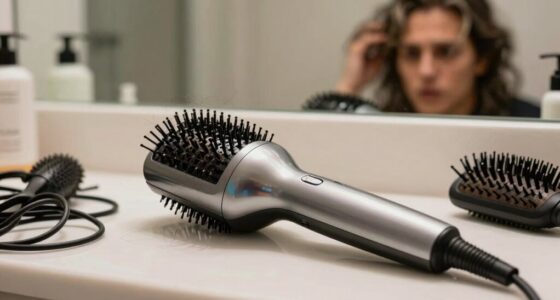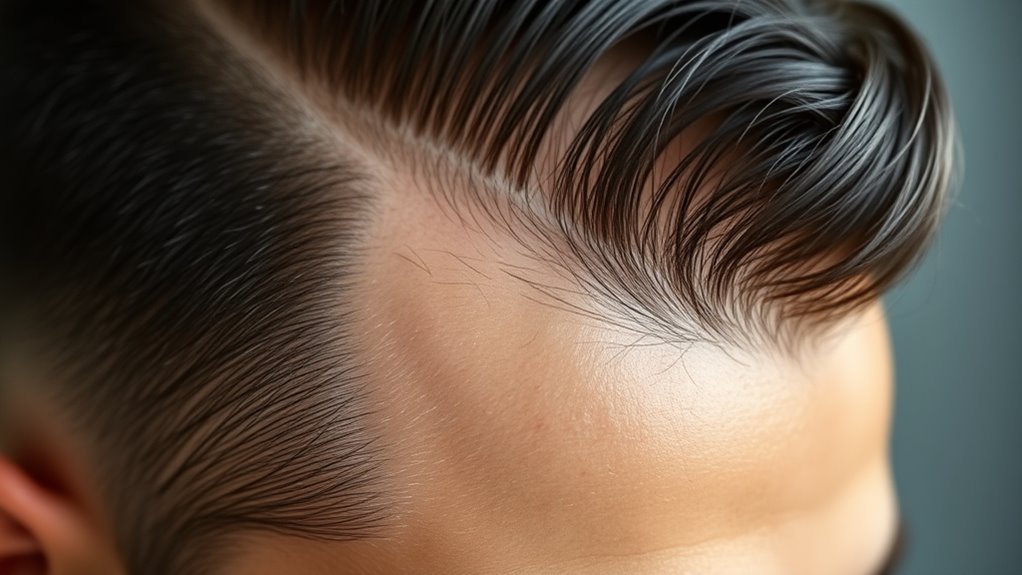

For men’s haircare, start by understanding your scalp type—oily, dry, or sensitive—to choose the right shampoo. Regular gentle cleansing and exfoliation prevent buildup and promote healthy growth. Use products with nourishing ingredients like biotin or tea tree oil, and apply conditioners sparingly to avoid irritation. Opt for clean, sharp haircuts and style with suitable products for a polished look. Keep up with a consistent routine to maintain scalp health and sharp style; more tips await you.
Key Takeaways
- Use scalp-specific shampoos suited for oily, dry, or sensitive scalps to maintain cleanliness and prevent issues.
- Regularly exfoliate the scalp with gentle massages to remove dead skin and promote healthy follicle function.
- Incorporate nourishing ingredients like biotin, keratin, and plant oils to support hair growth and scalp health.
- Choose styling products that match your hair type and avoid excessive use to prevent buildup and scalp irritation.
- Maintain a consistent grooming routine, including trims and natural remedies, to promote healthy, stylish hair and scalp vitality.
Understanding Your Scalp: Types and Common Concerns
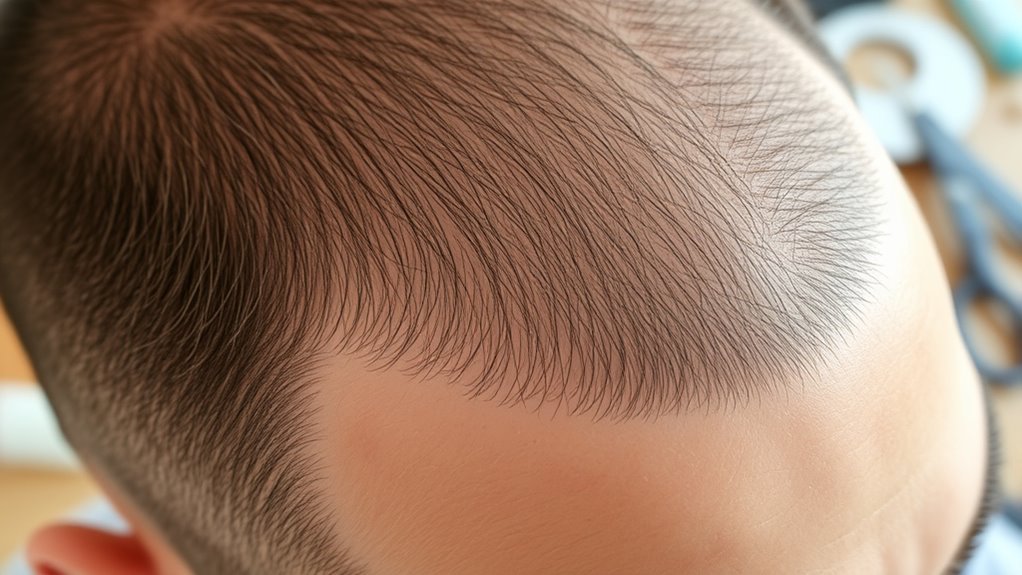
Your scalp is the foundation of healthy hair, and understanding its type is key to choosing the right care routine. If you notice redness, itching, or flaky patches, you might be dealing with scalp fungal infections or scalp psoriasis.
These conditions can cause discomfort and affect hair growth if left untreated. Scalp fungal infections, like dandruff caused by yeast overgrowth, often result in greasy or dry flakes. Scalp psoriasis appears as thick, silvery scales and can be painful. Recognizing your scalp type—whether oily, dry, or sensitive—helps you select appropriate products and treatments. Proper maintenance and cleaning of scalp and hair care tools can also prevent the buildup of irritants and bacteria that worsen these conditions. Identifying common concerns early allows you to manage symptoms effectively and maintain a healthy scalp, setting a solid foundation for strong, healthy hair. Understanding scalp health is essential for long-term hair vitality.
The Importance of Regular Scalp Cleansing

Regular scalp cleansing is essential for maintaining healthy hair and preventing common issues like excess oil, buildup, and dandruff. Incorporating scalp exfoliation into your routine helps remove dead skin cells and unclog hair follicles, promoting a cleaner scalp. Sound vibrations are believed to enhance cellular regeneration and overall health, supporting a healthier scalp environment. This process not only refreshes your scalp but also enhances circulation, supporting stronger hair growth. Regular cleansing reduces oiliness that can lead to greasy hair and prevents dandruff caused by dry or flaky skin. When you keep your scalp clean, you minimize the chances of bacteria and fungi thriving, which are common dandruff triggers. Additionally, advancements in AI are being utilized in dermatology to develop personalized scalp treatments, making routine care more effective. The integration of data privacy protections in health technologies ensures that your personal information remains secure during these advanced treatments. Developing advanced filtration systems in scalp products can further improve the removal of impurities and improve hair health. Implementing environmentally friendly practices in haircare routines can also contribute to sustainability and reduce ecological impact. Consistent scalp cleansing ensures your scalp stays balanced, healthy, and less prone to irritation. A simple, regular routine can make a significant difference in the overall health and appearance of your hair.
Choosing the Right Shampoo for Your Hair Type

To find the best shampoo, consider your hair type—whether it’s oily, dry, or normal. Look for ingredients that address your specific needs, like moisturizing agents for dryness or clarifying formulas for excess oil. Choosing the right product guarantees your hair stays healthy and looks its best. Additionally, selecting a shampoo with proper ingredient balance can help maintain scalp health and prevent issues like dandruff or irritation. For example, understanding the perfecting Earl Grey tea process can be analogous to selecting a shampoo that balances cleansing with nourishment, ensuring your scalp remains healthy and resilient. Incorporating portable grooming tools can further enhance scalp and hair care routines on the go. As technology advances, some formulations incorporate AI-driven ingredient optimization to tailor products more precisely to individual scalp conditions. Recognizing the electric power of haircare products can also inform better choices for scalp stimulation and revitalization.
Hair Type Considerations
Choosing the right shampoo depends on understanding your hair type, as different textures and conditions require specific care. If you have high hair porosity, look for shampoos that help seal cuticles and retain moisture, preventing frizz and dryness. For low porosity hair, opt for lightweight formulas that won’t weigh hair down or cause buildup. If your scalp is sensitive, choose gentle, sulfate-free shampoos that minimize irritation. Those with a sensitive scalp should avoid harsh chemicals and fragrances to prevent discomfort. Straight, wavy, or curly hair each needs tailored products to enhance their natural texture. Understanding ethical hacking and how they interact with your hair and scalp can also help you select products that optimize your hair health.
Ingredients to Seek
Selecting the right shampoo means paying close attention to its ingredients, as certain components can enhance or harm your hair depending on your type. Look for ingredients that promote scalp exfoliation without irritation, like salicylic acid or gentle scrubs, to remove dead skin and prevent buildup. Incorporating inspirational quotes about fatherhood can serve as a reminder to nurture your scalp and hair health with patience and care. Additionally, nourishing elements such as biotin, keratin, or plant-based oils support healthy hair growth. Consider shampoos with soothing agents like aloe vera or tea tree oil to calm the scalp and boost scalp massage techniques, which improve circulation and stimulate follicles. Exploring Kia Tuning options for your vehicle can also inspire you to adopt a meticulous approach to personal care, emphasizing the importance of regular maintenance and attention to detail. Embracing cultural appreciation can deepen your understanding of natural remedies and traditional practices that benefit scalp health, fostering a holistic approach. Incorporating automation’s role in business intelligence can also help you track which shampoos work best for your scalp over time.
Tips for Gentle Washing and Scalp Massage
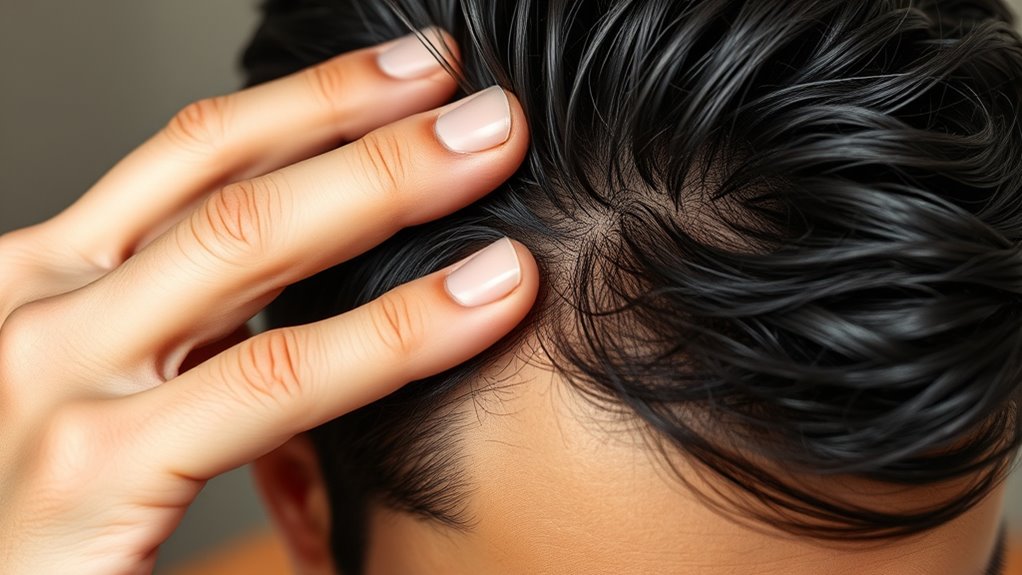
When washing your hair, use lukewarm water to prevent scalp dryness and irritation.
Apply gentle pressure with your fingertips—avoid scrubbing too hard—to stimulate circulation and clean effectively.
This approach helps keep your scalp healthy while reducing the risk of damage.
Use Lukewarm Water
Using lukewarm water is essential for gentle hair washing and scalp massage. It helps maintain ideal temperature control, preventing scalp dryness or irritation. When washing your hair, focus on water pressure—too high can damage hair and disturb your scalp’s health. Here are three tips to maximize the benefits: 1. Keep the water at a comfortable, lukewarm temperature to avoid scalp stress. 2. Adjust water pressure to be gentle, ensuring thorough cleaning without causing damage. 3. Rinse thoroughly to remove all shampoo and conditioner residues, using consistent temperature control. Additionally, choosing the right haircare tools can facilitate a gentle and effective washing routine. Using appropriate water temperatures can also help prevent damage and promote scalp health. Being aware of retail hours can also help you plan your shopping for haircare products without hassle. Regular maintenance of scalp health is crucial for optimal hair quality and growth, and understanding celebrity lifestyle insights can inspire you to adopt healthier hair habits.
Apply Gentle Pressure
Applying gentle pressure during washing and scalp massage guarantees you clean effectively without causing damage. Using the right scalp pressure helps prevent irritation and maintains healthy hair follicles.
Focus on a gentle massage technique, using your fingertips rather than nails, to stimulate circulation and loosen buildup. Avoid pressing too hard, which can cause discomfort or injury to your scalp.
Instead, use light, circular motions to ensure thorough cleansing while protecting your scalp’s delicate skin. When shampooing, distribute the product evenly with this gentle pressure to enhance its effectiveness.
Addressing Hair Loss and Thinning Naturally

If you’re looking to address hair loss and thinning naturally, there are several effective strategies you can try.
First, explore natural remedies like essential oils such as rosemary or peppermint, which may stimulate scalp circulation.
Second, make dietary adjustments by increasing your intake of nutrients like biotin, zinc, and iron, which support healthy hair growth.
Third, reduce stress through activities like meditation or exercise, as stress can accelerate hair loss.
Combining these approaches can improve scalp health and promote thicker hair over time.
Remember, consistency is key, and natural methods may take a few months to show results.
Always consult with a healthcare professional before starting new supplements or remedies to ensure they’re right for you.
Proper Conditioning and Moisturizing Techniques

Choosing the right conditioner is essential for keeping your hair healthy and manageable.
You should also develop a moisturizing routine that fits your hair type and lifestyle.
Choosing the Right Conditioner
Selecting the right conditioner is essential for maintaining healthy, well-moisturized hair. It helps prevent dryness, supports beard grooming, and keeps your scalp exfoliation routine effective.
To choose wisely, consider these points:
- Hair Type: Pick a conditioner suited for your hair—lightweight for fine hair or richer formulas for thick, coarse hair.
- Ingredients: Look for hydrating ingredients like aloe or glycerin; avoid harsh chemicals that can strip moisture.
- Application: Focus on the mid-lengths and ends, not the roots, to prevent buildup and scalp irritation. Proper conditioning enhances scalp health and complements your grooming routine, making your hair look sharp and healthy.
Moisturizing Routine Tips
To keep your hair healthy and well-moisturized, mastering proper conditioning and moisturizing techniques is essential. Focus on maintaining scalp hydration by using the right conditioner suited for your hair type and applying it evenly from roots to ends. Don’t skip conditioning after shampooing, as it helps lock in moisture and prevent dryness.
Incorporate moisturizing masks into your routine once a week to give extra hydration, especially if your scalp tends to get dry or flaky. When applying masks, ensure you massage them into your scalp gently to promote absorption and stimulate circulation. Rinse thoroughly to avoid buildup.
Consistent use of these tips keeps your scalp hydrated, reduces irritation, and leaves your hair soft, manageable, and healthy-looking.
Styling Products: Selecting and Using Them Wisely
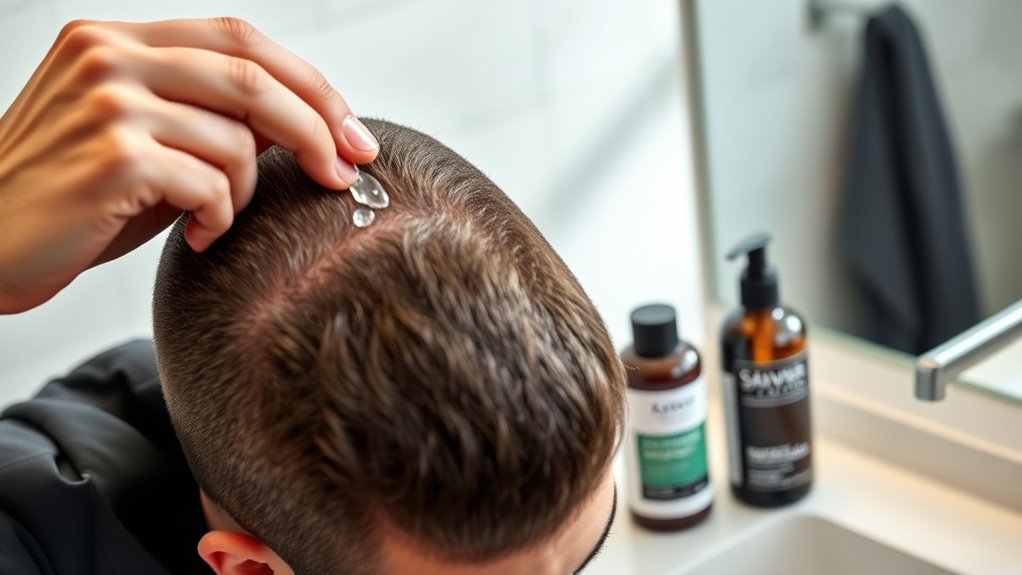
Finding the right styling products can make a significant difference in achieving your desired look, but it’s important to select wisely. The right product depends on your hair type, styling goals, and even beard grooming habits.
Here are three tips to help you choose and use styling products effectively:
- Consider your hair texture—light creams for fine hair, thicker pomades for coarse hair.
- Use styling products that complement your hair color options, like matte finishes for a natural look or gloss for a vibrant, polished style.
- Apply products sparingly, especially if you’re experimenting with hair color options or styling for special occasions.
Choosing the right product ensures your style stays intact without damaging your scalp or hair.
Haircut and Styling Tips for a Sharp Look
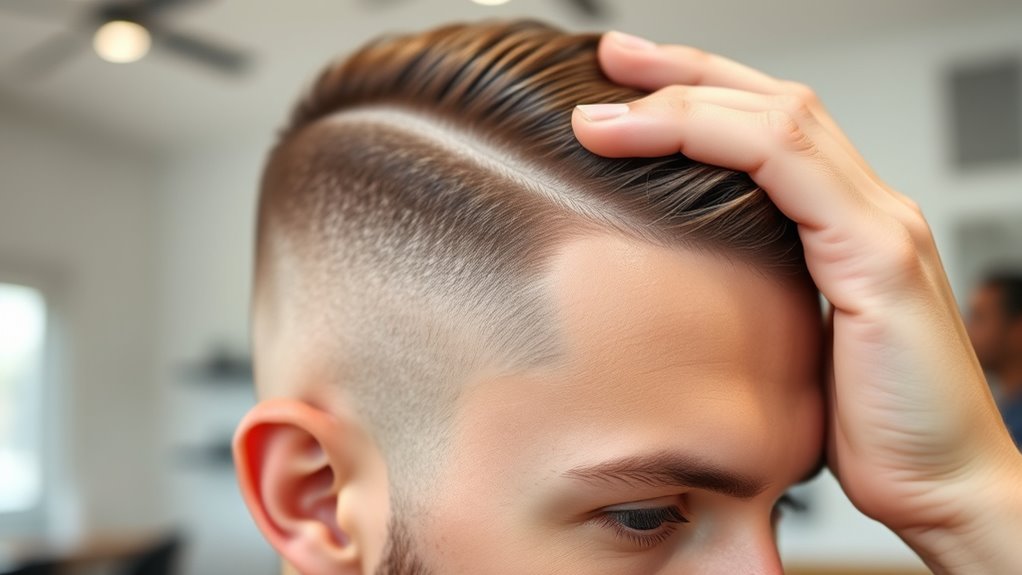
Achieving a sharp, polished look starts with the right haircut and styling techniques. Choose a cut that complements your face shape and fits your lifestyle. Regular beard grooming enhances your overall style, framing your face and adding to your sharp appearance.
When styling, consider your hair color options—subtle highlights or a bold new hue can elevate your look and add dimension. Use styling products thoughtfully to maintain your desired shape without weighing hair down. Keep hair tidy and well-maintained, trimming as needed to avoid uneven edges.
A clean haircut combined with thoughtful styling and beard grooming creates a confident, sharp look that stands out. Remember, consistency in grooming and choosing colors that suit your skin tone will boost your style’s impact.
Developing a Daily Haircare Routine

Maintaining a sharp look requires more than just a good haircut and styling; developing a consistent daily haircare routine keeps your hair healthy and looking its best. Start by incorporating scalp exfoliation once or twice a week to remove dead skin and promote healthy hair growth.
Next, consider taking hair growth supplements to support stronger, thicker hair from within. To streamline your routine, focus on these essentials:
- Use a gentle shampoo suited for your scalp type every day.
- Apply scalp exfoliation treatments regularly to prevent buildup.
- Incorporate hair growth supplements into your diet for added support.
Sticking to this routine ensures your scalp stays healthy, your hair grows properly, and your overall look remains sharp.
Protecting Your Hair and Scalp From Environmental Damage

Environmental factors like sun exposure, pollution, and harsh weather can quickly damage your hair and scalp if you’re not protected. To combat this, prioritize sun protection by wearing hats or applying a broad-spectrum sunscreen formulated for hair and scalp. These steps help prevent UV rays from breaking down hair fibers and causing dryness.
Pollution defense is equally important; pollutants can clog follicles and weaken hair strands. Use gentle cleansers that remove dirt and pollutants without stripping natural oils. Consider leave-in conditioners with antioxidants to create a barrier against environmental stressors.
Regularly protecting your scalp from these elements keeps your hair healthier, stronger, and less prone to damage, ensuring your hairstyle stays sharp and your scalp remains healthy regardless of outdoor conditions.
Frequently Asked Questions
How Often Should I Trim My Hair for Optimal Scalp Health?
You should trim your hair every 6 to 8 weeks for ideal scalp health. This trimming frequency helps prevent split ends, promotes healthy growth, and maintains your desired hair length.
Regular trims also allow you to check for scalp issues like dryness or irritation, ensuring your scalp stays healthy. Keep an eye on your hair length and trim accordingly to keep your hair looking fresh and vibrant.
Are There Natural Remedies to Improve Scalp Circulation and Hair Growth?
Yes, you can boost scalp circulation and hair growth naturally. Regularly massaging your scalp with herbal oils like rosemary or peppermint stimulates blood flow and nourishes hair follicles.
Incorporate daily scalp massage, using gentle circular motions with these oils, to enhance circulation.
Consistent use of herbal oils and massage helps improve scalp health, promoting stronger, healthier hair growth over time.
Can Diet and Supplements Influence Scalp Health and Hair Quality?
Did you know that a balanced diet can boost hair growth by up to 60%? Your diet impacts scalp health considerably, providing essential nutrients like vitamins and minerals that strengthen hair.
Supplements like biotin or omega-3s offer added benefits, filling nutritional gaps. By eating nutrient-rich foods and considering supplements, you can improve scalp circulation, enhance hair quality, and promote healthier, stronger hair over time.
What Are Signs of Scalp Infections or Conditions Requiring Medical Attention?
If you notice scalp infection symptoms like redness, swelling, itching, or pain, you should see a doctor.
Signs of scalp disease include flakes, sores, or unusual hair loss.
Persistent scalp issues that don’t improve with basic care could be infections or conditions needing medical attention.
Don’t ignore these signs; early treatment can prevent further damage and help restore your scalp’s health.
How Does Stress Impact Scalp Health and Hair Loss?
Stress triggers hormonal changes that can weaken your scalp and lead to hair loss. While you focus on stress management, your scalp suffers from reduced blood flow and increased inflammation, accelerating hair thinning.
To prevent hair loss, prioritize relaxation and healthy habits. Managing stress not only boosts your overall well-being but also supports scalp health, making it an essential step in hair loss prevention.
Stay calm, stay confident.
Conclusion
Think of your scalp as the foundation of a sturdy house. When you care for it with gentle cleansing, nourishing products, and protection from harsh elements, your hair stands tall and strong. Neglect the foundation, and everything above can falter. So, treat your scalp like your most valuable asset—because, with the right care, you’ll build a confident, sharp look that lasts. Your hair’s health is the blueprint for your style’s success.