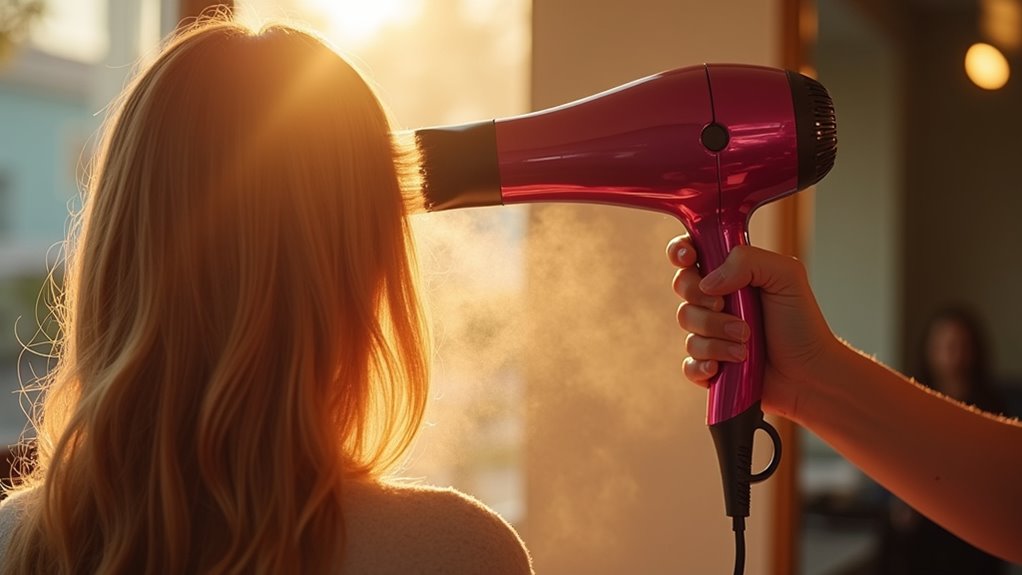

To achieve healthier styling, always use a heat protectant before applying heat tools. Choose the right product—silicone-based for shine and moisture barriers or natural formulas for gentler protection. Apply evenly, focusing on mid-lengths and ends, and wait a few seconds for it to absorb. Use the lowest effective temperature and avoid unnecessary heat to prevent damage. Keep learning how to improve your routine for better hair health over time.
Key Takeaways
- Always apply a heat protectant before using heat styling tools to shield hair from damage.
- Choose the right protectant formula (silicone-based or natural) based on hair type and styling needs.
- Use the lowest effective heat setting and limit the number of heat styling sessions weekly.
- Ensure even application of protectant products, focusing on mid-lengths and ends for maximum protection.
- Incorporate regular deep conditioning treatments to repair damage and maintain healthy, resilient hair.
Understanding the Importance of Heat Protection

Understanding the importance of heat protection is essential if you want healthier, damage-free styling. When you expose your hair to heat tools, you risk causing hair damage, which can lead to breakage, split ends, and dullness. Using the right heat protectant products creates a barrier that minimizes this damage. But it’s not just about applying any product; paying attention to product ingredients is vital. Look for ingredients like silicones or thermal protectants that coat the hair shaft, shielding it from high temperatures. Avoid products with harsh alcohols or unnecessary chemicals that can weaken your hair further. Recognizing the significance of proper heat protection helps you maintain healthier hair while achieving your desired style, making your styling routine safer and more effective.
Types of Heat Protectant Products and How to Choose Them
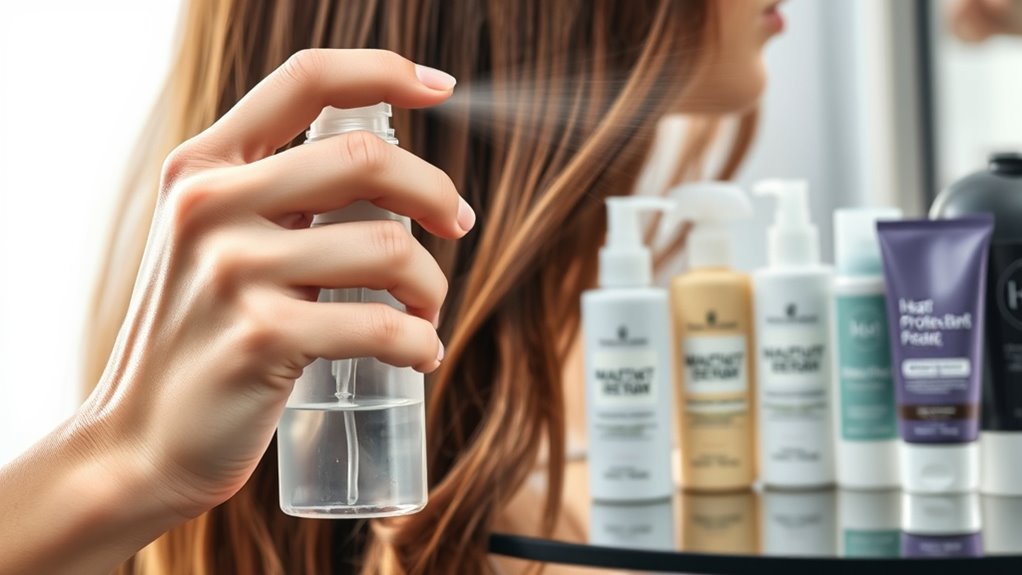
Choosing the right heat protectant product can make a significant difference in maintaining healthy hair while styling. When selecting, consider whether you prefer silicone-based or natural formulas. Silicone protectants form a smooth barrier, offering shine and heat resistance, while natural options use plant extracts for a lighter feel. Decide between spray and serum formats: sprays are quick and easy for even coverage, whereas serums provide targeted control and extra moisture. Here are key points to help you choose:
Choose between silicone and natural protectants, spray or serum, for optimal hair heat styling care.
- Silicone vs. natural ingredients
- Spray for lightweight, quick application
- Serum for added moisture and control
- Heat resistance level suited for your styling tools
- Hair type compatibility (fine, thick, curly)
Matching your needs with these factors ensures effective heat protection and healthier styling results. Incorporating proper application techniques can further maximize the benefits of your chosen product, especially when considering the impact of heat styling on hair health. Using products with heat-resistant formulations can provide an extra layer of protection during high-temperature styling. Being aware of heat damage prevention strategies can help maintain the integrity of your hair over time.
Proper Application Techniques for Maximum Effectiveness
To get the best protection, apply your heat protectant thoroughly and evenly through your hair. Make sure to distribute it well, focusing on all strands to prevent hot spots. Allow the product to set for a few minutes before using heat tools for maximum effectiveness. Additionally, choosing an air purifier with advanced air purification technology can help improve overall hair health by reducing airborne pollutants that may cause damage. Incorporating heat styling techniques that minimize heat exposure can further protect your hair from damage. Staying informed about advancements in AI in education can also help you leverage innovative tools for improved learning and hair care tips. Being aware of juice cleansing benefits can motivate healthier lifestyle choices that support hair vitality and overall wellness.
Use Heat Protectant Properly
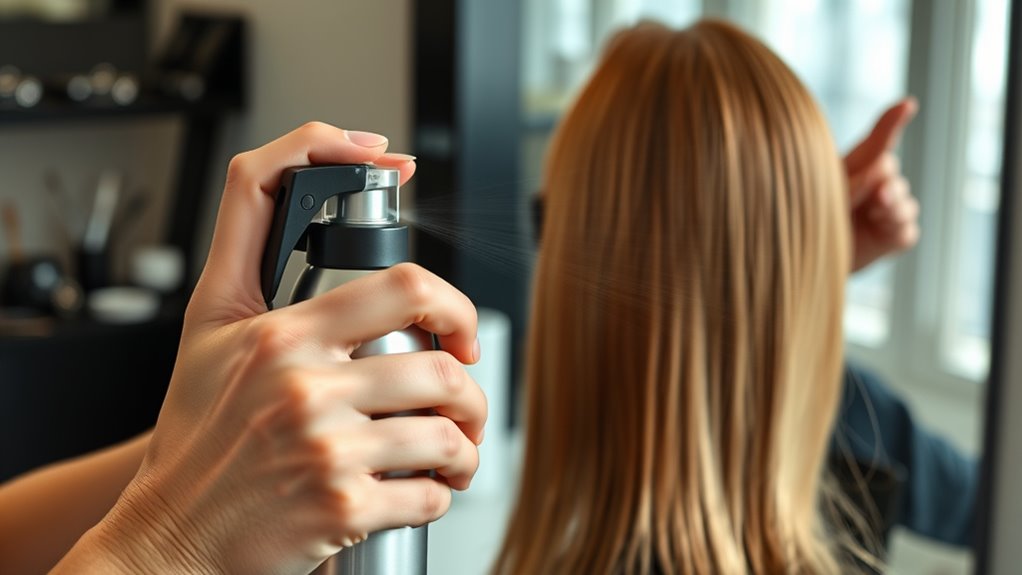
Applying heat protectant correctly is essential to maximize its benefits and shield your hair effectively. To get the most out of your product, spray or apply a small amount of a hair serum or heat protectant evenly before heat styling. Hold the spray about six inches from your hair to prevent over-application. Remember, a little goes a long way—too much can weigh hair down or make styling difficult. Always wait a few seconds for the product to absorb before using hot tools. To ensure maximum protection, focus on the mid-lengths and ends, where damage is most likely. Using these techniques helps your heat styling tools work more efficiently while safeguarding your hair’s health and shine. Proper application techniques are crucial for achieving optimal results and maintaining healthy hair. Additionally, understanding product formulation can help you select the best heat protectant for your hair type. Being aware of heat settings on your styling tools can further prevent unnecessary damage and ensure the longevity of your hair health. Moreover, choosing products with scientifically proven ingredients can enhance the protective benefits during styling.
Distribute Evenly Throughout Hair
Once you’ve sprayed or applied your heat protectant, distributing it evenly throughout your hair guarantees every strand gets the same level of protection. Use your fingers or a wide-tooth comb to work the product through from roots to tips. Focus on sections, especially if you have hair color treatments, to prevent uneven heat exposure that can cause fading or damage. Ensuring even coverage also promotes scalp health by avoiding product buildup in one area, which can irritate your scalp. Pay special attention to the ends of your hair, as they tend to be more vulnerable. Proper distribution helps maximize the protectant’s effectiveness, reducing the risk of heat damage and maintaining your hair’s vibrancy while keeping your scalp healthy. Regularly inspecting for product buildup ensures the product is evenly distributed and effective. Additionally, understanding the importance of color accuracy in styling products can help you select the best heat protectants for vibrant, healthy hair. Incorporating sound science into your hair care routine can further optimize your styling results and hair health.
Allow Products to Set
After you’ve evenly distributed your heat protectant, give it a few minutes to set before using heat tools. This allows the product ingredients to fully absorb into your hair, providing maximum protection. Rushing this step can reduce effectiveness and expose hair to unnecessary damage. During this time, avoid touching or combing your hair to let the product work properly. Properly allowing products to set makes certain your styling tools don’t heat up prematurely, promoting healthier styling. Keep these tips in mind:
- Wait at least 2-3 minutes for the product ingredients to settle
- Avoid brushing or touching hair immediately after application
- Use a blow dryer on a cool setting if needed to speed up setting
- Check the product’s instructions for specific wait times
- Be patient for better protection and longer-lasting styles
- Understanding industry trends can help you choose the best products for your hair type and styling goals. Incorporating heat protection efficiently is similar to ECU tuning in Honda vehicles, where proper timing and application maximize performance and longevity. Additionally, allowing products to set properly can also help optimize their exfoliating benefits, ensuring your hair and scalp stay healthy and protected. Being mindful of product formulation can further enhance the effectiveness and safety of your styling routine.
Safe Styling Practices to Minimize Hair Damage
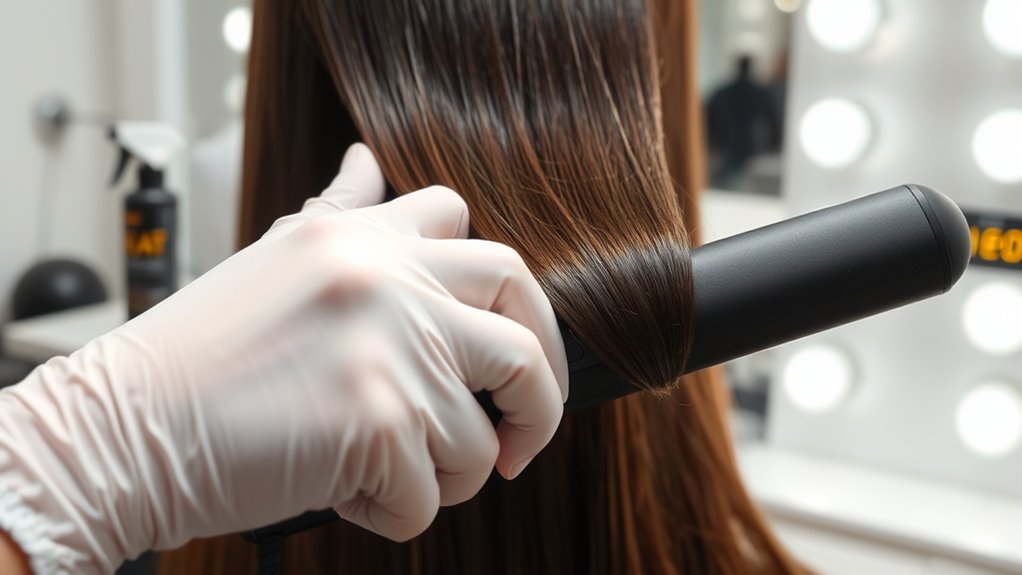
To keep your hair healthy while styling, adopting safe practices is essential. One key step is choosing the right heat protectant; compare silicone vs. natural options to find what works best for your hair. Silicone-based protectants create a barrier, locking in moisture and reducing heat damage, but some prefer natural ingredients like aloe or coconut oil for gentler protection. You can also make DIY heat protectants at home using simple ingredients like shea butter or argan oil, which nourish your hair while shielding it from heat. Always apply protectants evenly before using heat tools, and avoid high temperatures. Limiting the number of heat styling sessions and using the lowest effective heat setting further minimizes damage, keeping your hair healthier and stronger over time.
Tips for Maintaining Healthy Hair Amid Regular Heat Styling
Maintaining healthy hair while frequently using heat styling tools requires consistent care and mindful habits. To reduce heat damage, always apply a heat protectant before styling. Proper product layering is key—start with a heat protectant, then add nourishing serums or oils to lock in moisture. Limit heat exposure by using the lowest effective temperature and avoid daily styling. Incorporate deep conditioning treatments weekly to repair damage and keep hair resilient. Trim split ends regularly to prevent further damage from heat stress. Use heat tools with ceramic or tourmaline plates for even heat distribution. Additionally, selecting vetted home theatre projectors can ensure a distraction-free environment for relaxation and styling. Using the right tools and protective products can also help prevent heat damage and keep hair healthy. These simple tips help maintain healthy hair despite frequent heat styling.
Common Mistakes to Avoid When Using Heat Tools

Using heat tools without paying attention to common mistakes can quickly damage your hair and undermine your styling efforts. One major mistake is using high heat settings unnecessarily, which increases the risk of heat damage. Always opt for the lowest effective temperature. Another mistake is neglecting to use a heat protectant; skipping this step allows direct heat contact, leading to breakage. Overusing styling products without proper cleansing can cause product buildup, weighing down your hair and making it look dull. Also, using heat tools on damp hair traps moisture, causing damage and frizz. Finally, not allowing your tools to cool down between uses can lead to uneven heating and potential damage. Avoid these pitfalls to protect your hair’s health and achieve better results.
Frequently Asked Questions
Can Heat Protectants Be Used on Wet Hair?
You might wonder if heat protectants can be used on wet hair. It’s best to wait until your hair is towel-dried before applying the product. Applying heat protectant on wet hair can dilute the product and reduce its effectiveness. For proper product application, towel-dry your hair first, then evenly distribute the protectant. This way, you guarantee your hair gets the full benefit and stays healthier during styling.
How Often Should I Replace My Heat Protection Products?
Did you know most heat protectants stay effective for about a year? You should replace yours regularly to guarantee maximum protection. Check the product shelf life on the packaging and follow storage tips like keeping it in a cool, dry place away from sunlight. Over time, ingredients can break down, reducing effectiveness, so replacing your heat protection products as recommended keeps your hair safe and styled beautifully.
Are Natural Oils Effective as Heat Protectants?
Natural oils can offer some protection, but their effectiveness as heat protectants varies. They’re generally safe ingredients, but they don’t provide the same level of heat resistance as dedicated products. For better results, apply a small amount evenly before styling, focusing on ends and mid-lengths. Remember, natural oils can help add shine and moisture but shouldn’t replace specialized heat protectants for high-temperature styling.
Do All Heat Protectants Work Equally Well on Color-Treated Hair?
Not all heat protectants work equally well on color-treated hair. You should look for products with ingredients like silicones and proteins that shield color from heat damage. Proper application techniques, such as evenly distributing the product and using the lowest heat setting necessary, improve effectiveness. Be mindful of product ingredients to avoid stripping color, and always apply protectants before using styling tools for healthier, vibrant hair.
Is There a Difference Between Spray and Cream Heat Protectants?
You might wonder if spray and cream heat protectants differ. The main difference lies in their product formulation and application techniques. Sprays are lightweight and easy to apply evenly, ideal for quick styling, while creams offer more moisture and are better for thick or textured hair. Choose based on your hair type and styling needs, ensuring you apply evenly for the best heat protection.
Conclusion
By mastering heat protection, you’re not just styling—you’re safeguarding your hair’s future. Think of your tools as trusted allies; with proper care, they can help you achieve stunning looks without sacrificing health. Remember, every time you protect your strands, you’re weaving a story of resilience and beauty. So, embrace these tips, and let your hair shine brighter—because in the domain of styling, prevention truly is the best form of preservation.