
To tell if a ‘high-speed’ hair dryer is truly fast, check its airflow rate, wattage, and motor quality instead of trusting marketing words. Look for real specifications, customer reviews, and independent tests to see how quickly it dries different hair types. A powerful motor and efficient airflow design usually mean better performance. Want to learn more about identifying genuine high-speed dryers and testing their performance? Keep exploring for expert tips.
Key Takeaways
- Check the actual airflow rate and velocity specifications, not just marketing claims or wattage.
- Review independent test results or customer reviews for real-world drying performance.
- Compare drying times against similar models to see if “high-speed” claims hold true.
- Examine the motor power and airflow design for consistency and strength during use.
- Verify if the dryer offers adjustable airflow and heat settings for optimal, customizable performance.
What Does “High-Speed” Mean for Hair Dryers?
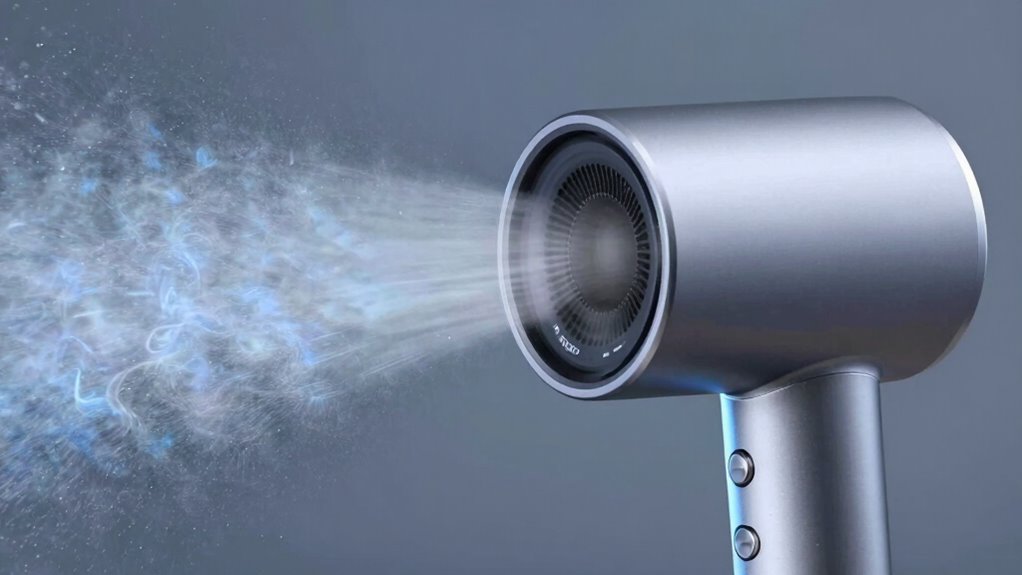
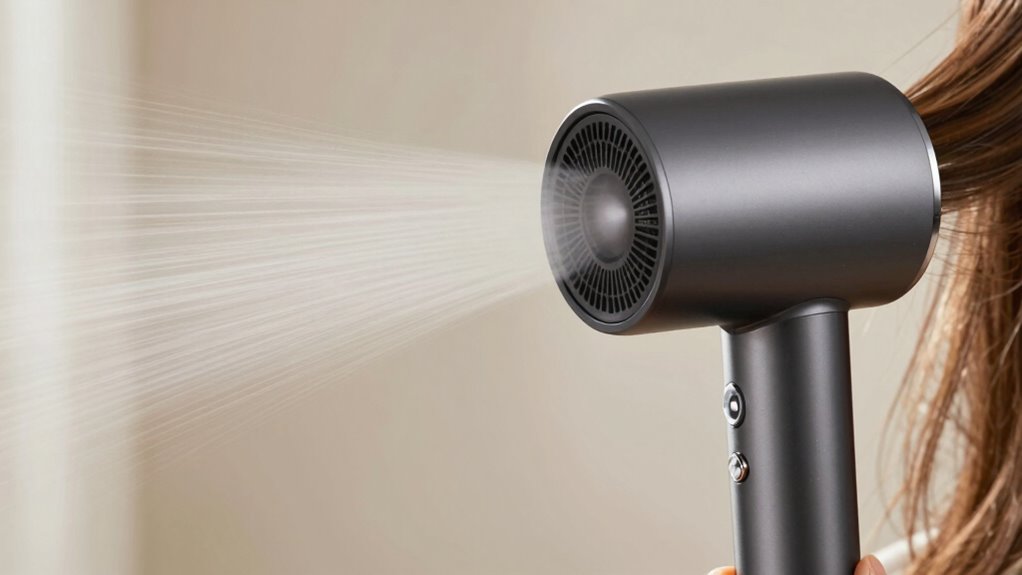
When you see a hair dryer labeled “high-speed,” it typically refers to the blower’s airflow rate, measured in miles per hour (mph) or meters per second (m/s). Many branding myths suggest that a higher number automatically means better performance, but customer reviews reveal a different story. Some dryers with impressive speed ratings still underperform in real-world use, while others with modest ratings deliver excellent results. It’s essential to look beyond the marketing and consider how the blower’s airflow actually feels during use. A truly high-speed dryer moves air swiftly, but factors like design and user experience also matter. Customer reviews can help you identify whether a dryer’s “high-speed” label translates into effective, fast drying in everyday situations. Additionally, understanding how airflow impacts indoor air quality can provide a broader perspective on appliance performance and safety. The overall design and build quality of the dryer also influence how well it maintains consistent airflow over time. In some cases, the motor efficiency plays a crucial role in sustaining high airflow without overheating or losing power. Moreover, airflow dynamics within the dryer affect how evenly heat is distributed across your hair, impacting drying efficiency and hair health.
Key Features That Make a Hair Dryer Fast (Wattage, Motor, Airflow)
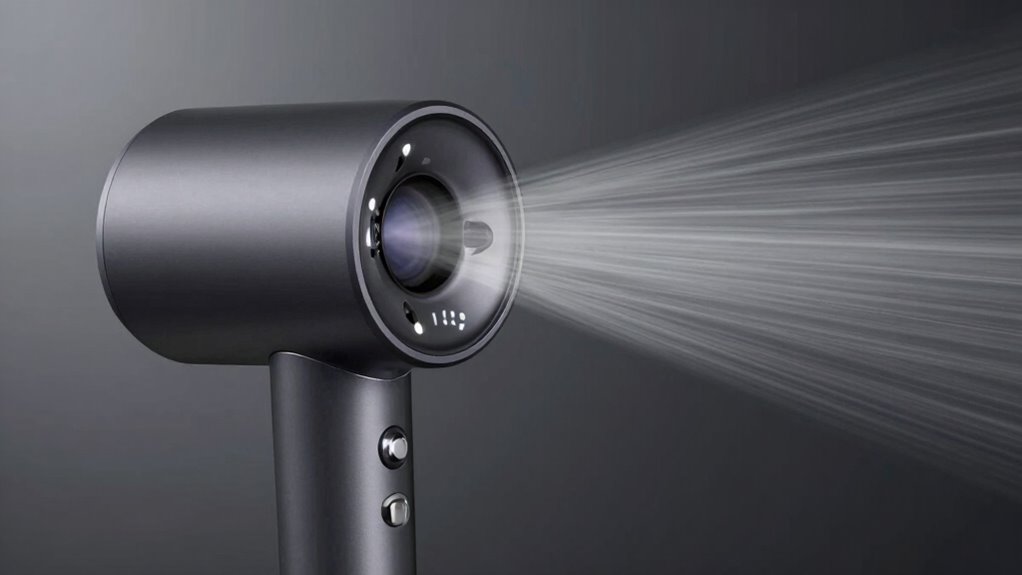
A hair dryer’s speed largely depends on its wattage, motor strength, and airflow, all of which work together to deliver fast drying times. Higher wattage means more power, cutting down drying time and enhancing styling versatility. A strong motor provides consistent airflow and durability, ensuring efficient performance. Good airflow, often linked to a larger or optimized design, speeds up the drying process without increasing noise levels unnecessarily. Consider these key features: performance factors that influence drying efficiency and overall user experience. These features determine how quickly you can style your hair while maintaining comfort and efficiency. Additionally, the motor quality plays a crucial role in maintaining consistent airflow and longevity of the device, with high-quality motors often incorporating advanced engineering to improve performance and durability. Moreover, understanding the impact of airflow can help in selecting a dryer that truly meets your speed needs. Properly engineered airflow systems can significantly boost drying efficiency by optimizing how air is directed and expelled from the device.
How Airflow and Heat Settings Help You Dry Faster
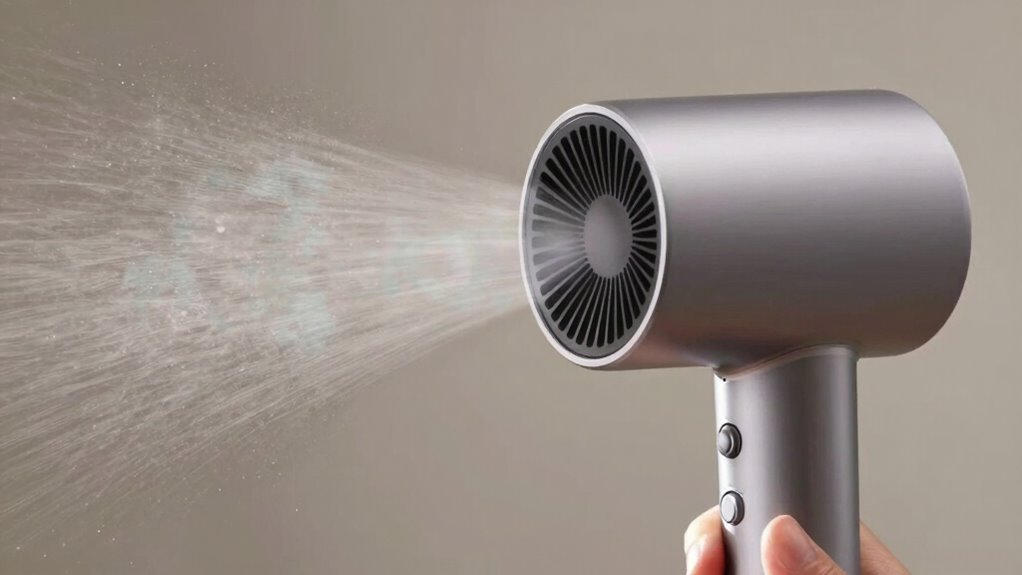
Maximizing airflow and heat settings allows you to dry your hair more quickly and efficiently. Airflow control lets you adjust the strength and direction of the airflow, helping you target specific areas or speed up the drying process overall. Higher airflow settings remove moisture faster, reducing drying time. Heat distribution ensures the heat is evenly spread across your hair, preventing hot spots that can cause damage. Using the right combination of heat and airflow prevents over-drying or frying your hair, making the process safer and more effective. Many dryers have multiple heat settings, allowing you to customize based on your hair type. Properly managing airflow control and heat distribution helps you achieve faster drying without compromising your hair’s health. Incorporating auditory feedback techniques can also help you become more aware of your drying process, ensuring optimal results while protecting your hair. Additionally, understanding the technology features of your dryer can help you select the most efficient settings for your hair type and drying needs. Being aware of drying efficiency can guide you in choosing the best combination of settings for quick and safe drying. Paying attention to dryer performance can further enhance your overall drying experience and efficiency. Recognizing the role of airflow optimization can further improve your drying times and protect your hair from damage.
Can Marketing Claims About Speed Be Trusted?
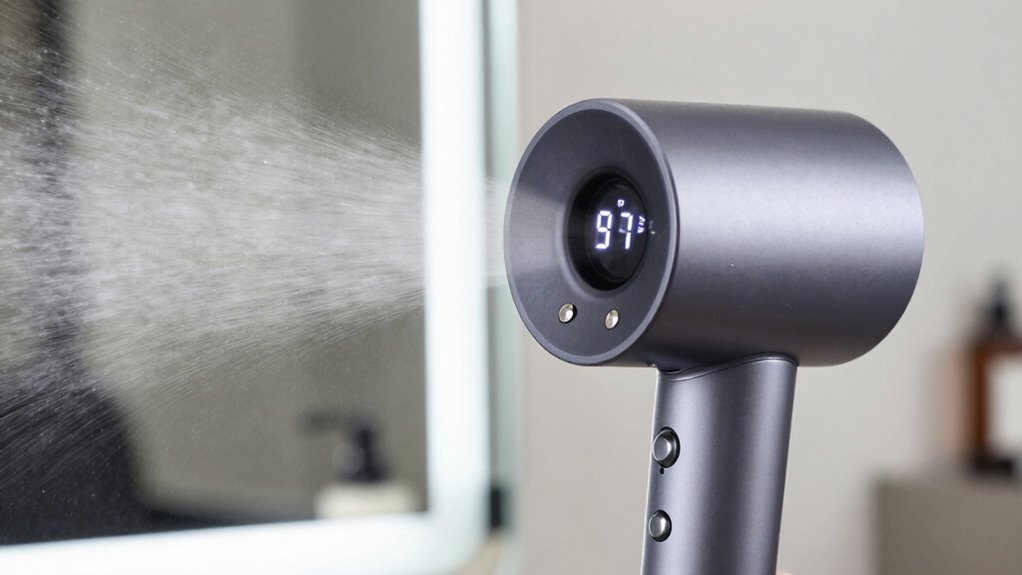
Marketing claims about a hair dryer’s speed can be misleading, so it’s important to approach them with skepticism. Many brands use marketing jargon to exaggerate their product’s performance, making it hard to trust these promises. To cut through the hype:
Beware of exaggerated hair dryer speed claims; seek real data and honest reviews instead.
- Check for real data—look for actual airflow and temperature stats, not just buzzwords.
- Read reviews from other consumers who’ve tested the product.
- Be wary of vague phrases like “fast drying” without specifics.
- Remember that some claims are designed to create consumer skepticism rather than provide transparency. Additionally, understanding wall art trends can help consumers make more informed choices about design products beyond just hair dryers.
Being aware of performance specifications can also help you evaluate whether the claims about speed are backed by measurable data. Recognizing product testing standards can further ensure you’re comparing devices based on reliable benchmarks. Moreover, considering material quality can influence the actual drying efficiency and longevity of the device. For instance, some brands may use advanced airflow technology to enhance their claims of speed, but without verifying these features, consumers should remain cautious.
How to Test a Hair Dryer’s Drying Speed Before Buying
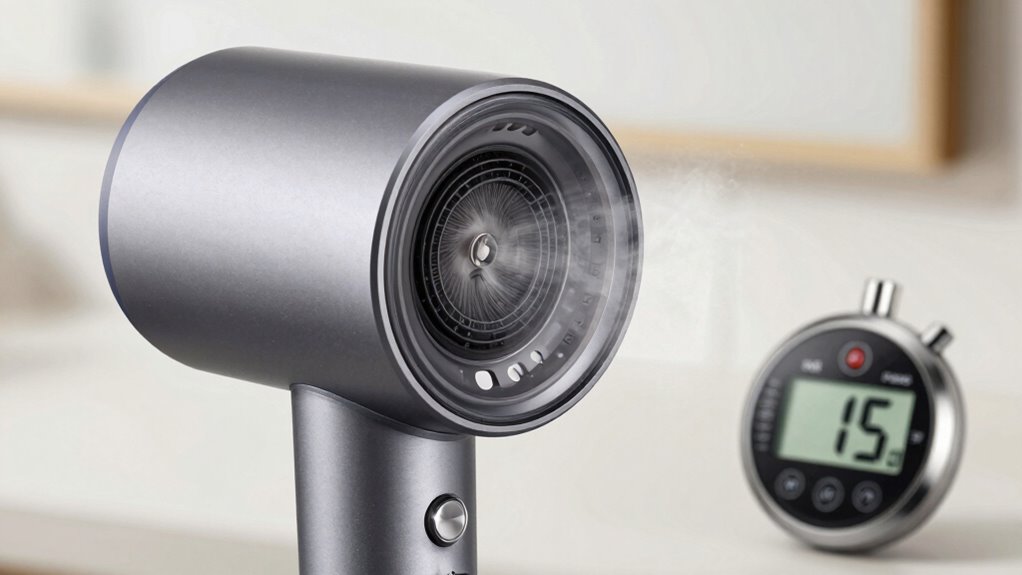
Before trusting a high-speed hair dryer’s advertised performance, it’s wise to test its drying speed firsthand. To do this, compare models using real-world tests. Check product reviews and brand reputation to narrow your options. When testing, use the same towel-dried hair type and a stopwatch for consistency. Record how long each dryer takes to dry hair completely. It’s also helpful to consider Free Floating design elements that may impact airflow and drying efficiency. Additionally, understanding the fan motor power can give you insights into the dryer’s potential speed and performance. Keep in mind that technology advancements in motor design can significantly influence drying times. For optimal results, ensure the dryer’s body measurements are suitable for your hand size and grip comfort. Being aware of breast cancer symptoms can also be important for overall health awareness, especially if you are regularly using heat styling tools. Here’s a simple way to visualize your comparison:
| Dryer Model | Drying Time (minutes) | Notes |
|---|---|---|
| Brand A | 5 | Faster, more efficient |
| Brand B | 7 | Slightly slower |
| Brand C | 6 | Moderate speed |
Performing these tests helps you see which dryer truly delivers high-speed performance before making a purchase decision.
Frequently Asked Questions
How Does the Weight of a Hair Dryer Affect Its Drying Speed?
The weight of a hair dryer impacts its drying speed mainly through ergonomics considerations. A lighter dryer lets you maneuver easily, reducing fatigue, so you can style efficiently. Heavier models might feel cumbersome, slowing you down despite their power. Opt for a lightweight, energy-efficient dryer to enhance comfort and speed. Remember, a well-designed, lighter dryer enables quicker styling without sacrificing performance, making your hair routine more effective and less tiring.
Can the Nozzle Size Influence a Hair Dryer’s Speed?
Imagine a narrow nozzle focusing a powerful jet of air, increasing airflow velocity to dry your hair faster. Yes, nozzle size directly influences speed—smaller nozzles concentrate airflow, boosting drying power, while larger ones spread out the air, slowing things down. So, if you want quick results, opt for a dryer with a smaller nozzle; it’ll channel airflow efficiently, making your styling routine quicker and more effective.
Do Different Hair Types Require Different Drying Speeds?
Yes, different hair types require different drying speeds. If you have thick, coarse hair, you might need a higher speed to cut down drying time effectively. For fine or delicate hair, a gentler, lower speed helps prevent damage. Consider your hair texture and scalp sensitivity when choosing settings; faster speeds can cause frizz or irritation for sensitive scalps or fragile strands. Adjust your dryer accordingly for ideal results.
How Does the Placement of the Motor Impact Drying Performance?
Did you know that ideal airflow efficiency can boost drying speed by up to 20%? The placement of the motor considerably impacts this efficiency. When the motor is positioned closer to the air outlet, it enhances airflow, making your drying process quicker and more effective. Proper motor placement reduces turbulence, ensuring consistent heat and airflow, so your hair dries faster and with less damage.
Are There Brands Known for Consistently High-Speed Hair Dryers?
You’ll find that brands like Dyson, T3, and GHD are known for consistently high-speed hair dryers. Their brand reputation and positive customer reviews highlight their ability to deliver powerful airflow and quick drying times. When shopping, check reviews to confirm that the dryer performs as advertised. These brands invest in advanced motor technology, ensuring you get a high-speed drying experience that meets your expectations.
Conclusion
Ultimately, a truly high-speed hair dryer is like a swift breeze cutting through a storm—powerful, efficient, and trustworthy. By understanding the wattage, motor, and airflow, you can see past the marketing haze. Think of testing as feeling the wind’s force firsthand—simple yet revealing. When you choose wisely, your drying experience becomes a rapid, satisfying gust, leaving your hair smooth and your morning routine flowing like a gentle yet unstoppable current.