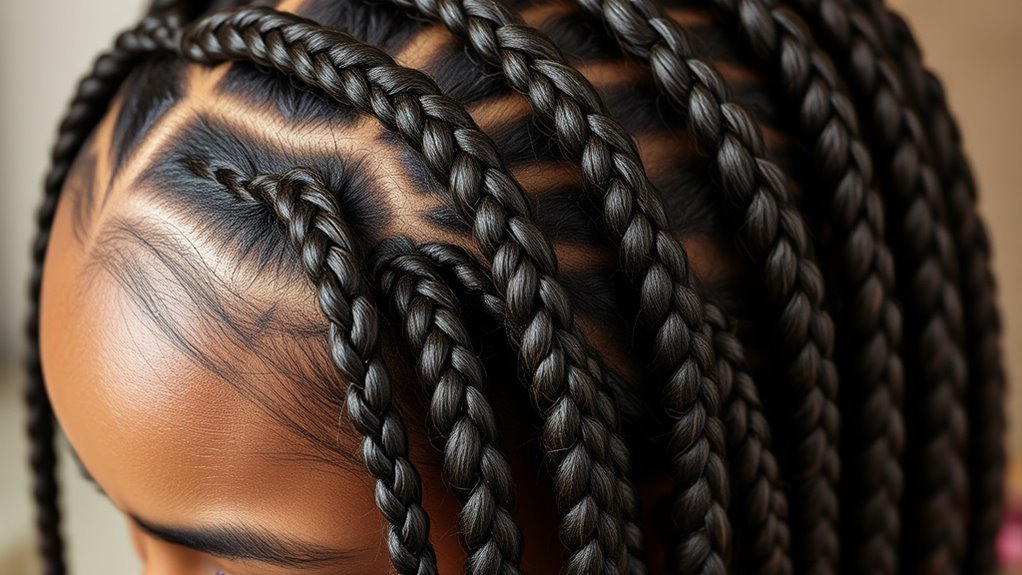

Protective hairstyles help you maintain healthy hair by reducing breakage, protecting against environmental damage, and locking in moisture. To keep your hair strong, choose styles suitable for your hair type, avoid tight styles that cause tension, and follow proper care routines like gentle cleansing and regular moisturizing. Watch for signs of damage or scalp issues so you can act early. Keep exploring to learn how to make your protective styles work best for your hair health.
Key Takeaways
- Choose protective styles suited to your hair type to minimize tension and prevent damage.
- Regularly cleanse, moisturize, and gently detangle hair to maintain scalp health and prevent dryness.
- Avoid styles that are too tight and take breaks between protective hairstyles to reduce scalp tension.
- Use lightweight oils and products tailored to your hair porosity to lock in moisture and prevent breakage.
- Carefully remove protective styles, detangling gently and monitoring scalp health to prevent long-term damage.
Benefits of Protective Hairstyles for Hair Growth
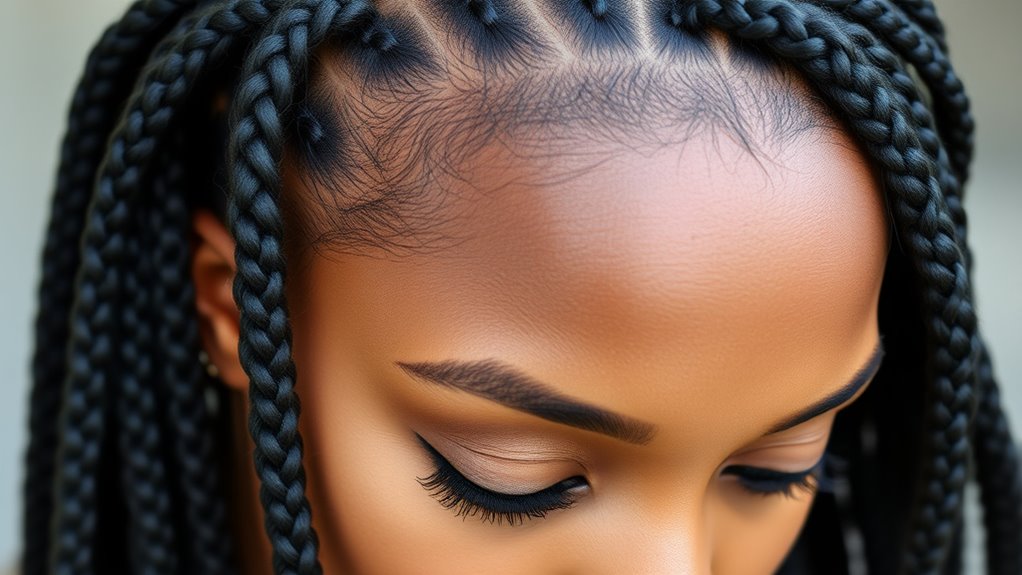
Protective hairstyles play a crucial role in promoting hair growth by reducing breakage and minimizing daily damage. When you choose the right style, you help safeguard your hair strands from environmental stress and friction.
Understanding your hair porosity helps you select styles that lock in moisture, preventing dryness that can weaken strands. If you have sensitive scalp, opting for gentle protective styles ensures you avoid irritation and discomfort.
These styles shield your hair from harsh elements and constant manipulation, allowing your scalp to breathe and recover. By reducing exposure to damaging factors, protective hairstyles support healthy growth and improve overall hair strength.
Properly chosen styles tailored to your hair’s porosity and scalp sensitivity create an ideal environment for your hair to thrive.
Choosing the Right Protective Style for Your Hair Type
Choosing the right protective style depends on understanding your hair type and how it responds to different styles. For tighter curls, looser braid patterns or soft twists minimize tension, preventing breakage. If your hair is fine, opt for low-tension weave types like sew-ins or clip-ins to avoid stress on strands. Thicker hair can handle more intricate braid patterns and fuller weave styles. Consider your scalp’s sensitivity and daily maintenance needs when selecting styles. Using the right hair care tools can also reduce damage and make styling easier. Use the table below to guide your choices:
| Hair Type | Recommended Styles |
|---|---|
| Curly, Coarse | Loose braids, crochet styles |
| Fine, Thin | Low-tension sew-ins, clip-ins |
| Thick, Wavy | Box braids, larger weave types |
Essential Hair Care Tips While Wearing Protective Styles
Wearing protective styles can help your hair grow stronger and healthier, but only if you follow proper care practices. Knowing your hair texture is essential because it influences how often you should wash and moisturize your hair.
For tighter curls, gentle cleansing and deep conditioning prevent dryness, while looser textures may require less frequent washing. Be cautious with styling tools; avoid excessive heat, as it can weaken your strands, even under protective styles. Incorporating consistent hair routines can help maintain optimal moisture levels and reduce damage.
Use wide-tooth combs or your fingers to detangle gently, reducing breakage. Keep your scalp clean and well-moisturized to prevent buildup and dryness. Regularly check your hair for signs of tension or damage, adjusting your routine accordingly. Incorporating proper hair care routines can significantly improve your hair’s resilience and health over time.
Additionally, ensuring your environment is free from pollutants and dust can help maintain a healthy scalp, as air quality plays a role in hair health. Incorporating mindfulness practices such as deep breathing or visualization can also reduce stress that might negatively impact hair growth. Paying attention to scalp health is crucial for overall hair vitality and maximizing the benefits of protective styles.
Common Mistakes to Avoid When Wearing Protective Styles
Wearing styles that are too tight can cause unnecessary tension and damage your hair over time. Forgetting to keep your hair moisturized leads to breakage and dryness, defeating the purpose of protective styling. Incorporating Gold IRA benefits can help maintain hair health and minimize damage. Properly tuned vehicles, like those enhanced through suspension and engine upgrades, exemplify how attention to detail can optimize performance and longevity, similar to how gentle styling preserves hair integrity. Additionally, understanding AI vulnerabilities can help you stay informed about potential risks in new styling tools or products. Recognizing the emotional motivations behind certain hair choices, as seen in affairs – cheating husband secrets, highlights the importance of addressing underlying issues rather than resorting to potentially damaging styles. To protect your hair, avoid these common mistakes and prioritize gentle, well-maintained styles.
Tight Hairstyles and Tension
While protective hairstyles can help maintain healthy hair, opting for styles that are too tight can cause significant damage. Excessive hair tension increases scalp stress, leading to pain, breakage, and hair loss over time. Concerningly, research supports that the tension from certain styles can impact personality traits, affecting emotional well-being and interpersonal relationships. Additionally, the importance of preservation efforts in historic farmhouses highlights how careful maintenance can sustain cultural heritage and structural integrity for future generations. To avoid this, keep these tips in mind:
- Don’t pull hair too tightly when creating styles.
- Avoid styles that cause constant pulling or pulling at the edges.
- Take breaks between tight styles to reduce scalp stress.
- Monitor your scalp for signs of discomfort or soreness.
- Be aware that hair care practices and proper styling techniques play a crucial role in maintaining hair health. Incorporating scalp health strategies can further prevent damage caused by tight hairstyles.
- Incorporating gentle exfoliation with glycolic acid can help keep your scalp healthy and free from buildup, reducing the risk of irritation caused by tight styles.
Neglecting Hair Moisture
Neglecting to keep your hair adequately moisturized can lead to dryness, breakage, and increased fragility, especially when wearing protective styles for extended periods. Understanding your hair porosity helps you determine how well your hair retains moisture. Proper moisture retention** is essential for maintaining healthy hair, as it helps prevent damage caused by dryness. When you skip moisture retention, your hair becomes brittle and prone to damage. To avoid this mistake, incorporate regular moisturizing routines tailored to your hair’s porosity. Use water-based sprays or leave-in conditioners for daily hydration, and seal in moisture with oils or creams. Moisture retention techniques are vital for keeping your hair healthy, reducing breakage, and ensuring your protective styles serve their true purpose. Additionally, considering hair porosity can help you choose the most effective moisturizing methods for your specific hair type. Staying informed about hair health can further enhance your protective styling routine and overall hair care. Maintaining proper storage** of hair products can also help preserve their effectiveness and prevent contamination.
Maintaining Scalp Health During Protective Hairstyles
Keeping your scalp healthy while wearing protective styles is key to preventing discomfort and damage. Make sure to cleanse your scalp regularly to remove buildup. Proper care also involves using suitable products to support hair health, especially when engaging in frequent modifications like styling adjustments. And keep it moisturized with oils to avoid dryness. Proper care will help your hair stay strong and your scalp comfortable throughout the style.
Regular Scalp Cleansing
Regular scalp cleansing is essential to keep your scalp healthy and prevent buildup when wearing protective hairstyles. It helps remove dirt, excess oil, and product residue, promoting a hair detox that encourages healthy growth. Proper scalp cleansing also reduces the risk of itchiness and dandruff, keeping your scalp refreshed and balanced.
To make the most of your routine, consider these tips:
- Use a gentle, sulfate-free shampoo to cleanse without stripping natural oils.
- Incorporate scalp massages to stimulate circulation and loosen buildup.
- Wash your scalp regularly, especially if you sweat or use styling products frequently.
- Avoid over-washing, which can cause dryness; find a routine that suits your hair type.
Maintaining a clean scalp supports your hair’s health, especially during protective styles.
Moisturize and Oil Properly
After thoroughly cleansing your scalp, it’s important to focus on moisturizing and oiling to maintain scalp health during protective styles.
Understanding your hair porosity helps determine the right approach; high porosity hair benefits from lighter, water-based moisturizers, while low porosity hair prefers heavier creams.
Use natural oils like jojoba, argan, or coconut oil to lock in moisture and keep your scalp nourished.
Regularly applying these oils prevents dryness, flakiness, and breakage.
Be mindful not to over-oil, as excess can lead to buildup.
Focus on the scalp and hair ends, ensuring they stay hydrated and healthy.
Proper moisturizing and oiling support hair retention and overall scalp health, making your protective style last longer and look better.
Transitioning Out of Protective Styles Safely
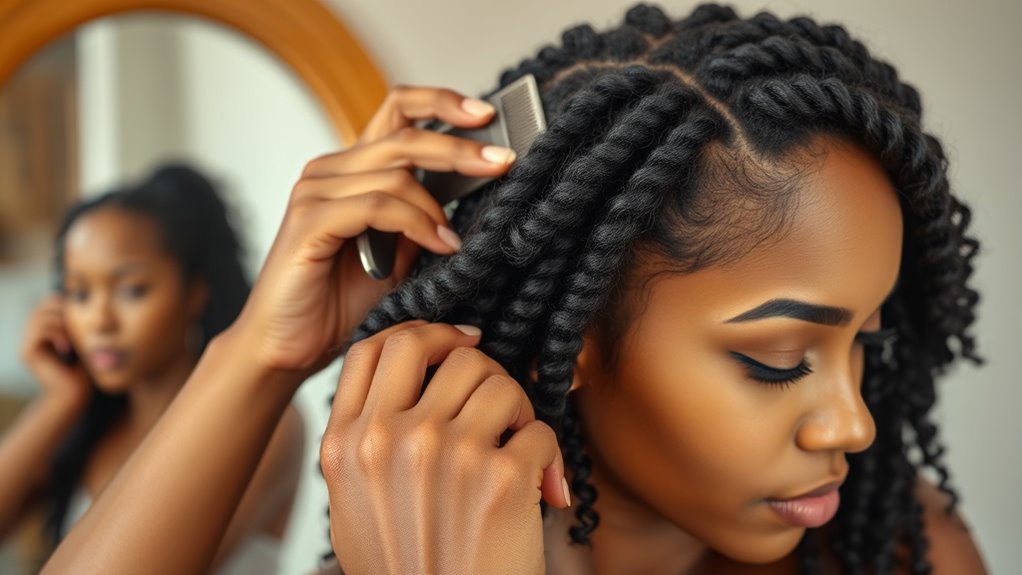
Switching out of protective styles requires careful planning to maintain healthy hair. If you rush, you risk scalp itching or damage from hair dyeing attempts to blend your hair.
Removing protective styles carefully helps keep your hair healthy and scalp comfortable.
To make the changeover smooth, follow these steps:
- Gently detangle and moisturize your hair to reduce breakage.
- Avoid harsh hair dyeing immediately after removal; give your scalp time to breathe.
- Inspect your scalp for itching or irritation, and treat any discomfort with soothing oils.
- Gradually reduce tension by styling your hair in low-manipulation styles before fully releasing the protective style.
Best Products for Protective Hairstyles
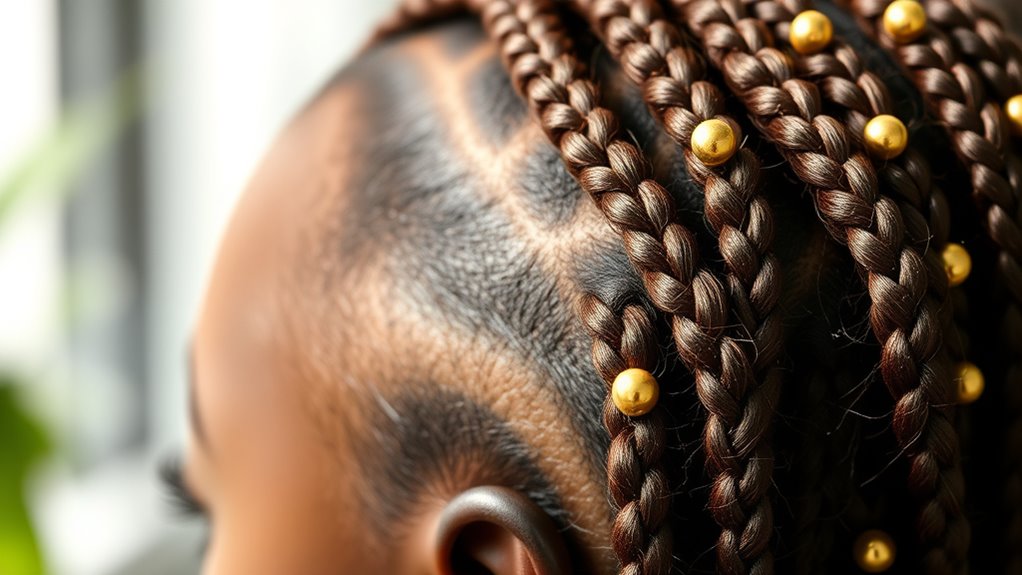
Choosing the right products is essential to keeping your protective hairstyles healthy and looking their best. Opt for lightweight oils and leave-in conditioners that hydrate without weighing down your hair. Consider hair accessory choices that prevent tension and breakage, like soft scrunchies or satin scarves. Staying current with protective style trends means selecting products that enhance shine and maintain scalp health. Here’s a quick guide:
| Product Type | Benefits | Best For |
|---|---|---|
| Moisturizing Oils | Seal in moisture, add shine | Daily hydration |
| Light Leave-in | Detangles, reduces frizz | Maintaining style |
| Scalp Serums | Soothes scalp, prevents dryness | Long-term scalp health |
Using these products wisely supports both style longevity and hair health.
How to Extend the Life of Your Protective Style
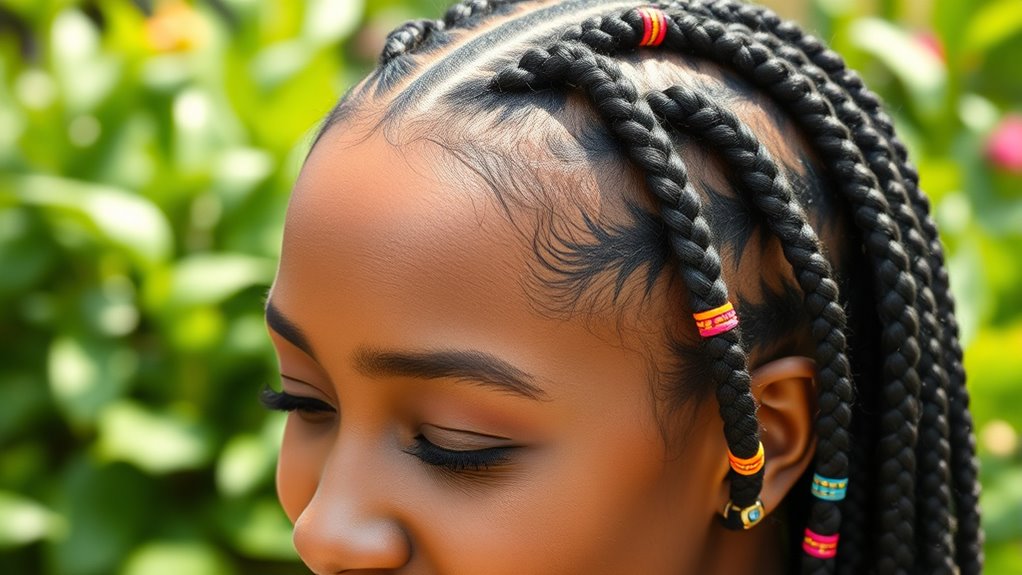
To make your protective hairstyle last longer, focus on maintenance routines that prevent damage and preserve your style’s integrity. Proper care keeps your hair healthy and your style looking fresh. Here are four tips:
- Use gentle hair accessories like satin scrunchies or clips to avoid breakage.
- Refresh your scalp daily with light oils or sprays to prevent dryness.
- Employ safe styling techniques, such as avoiding tight pulls or excessive manipulation.
- Regularly cover your style with a satin scarf or bonnet while sleeping to reduce friction and frizz.
These simple steps help extend your protective style’s lifespan while maintaining hair health.
Consistent care guarantees your hairstyle stays neat and your hair remains strong.
Recognizing Signs of Hair Damage and When to Seek Help

While protective styles can keep your hair healthy, it’s essential to recognize when they might be causing more harm than good. Watch for signs like increased scalp sensitivity, which indicates irritation or inflammation. If you notice persistent discomfort, tenderness, or redness, it’s a sign to loosen or remove the style.
Hair thinning is another red flag; if you see noticeable thinning or bald patches, it’s time to seek help from a professional. Tight styles that pull on your edges can weaken hair strands and damage follicles, leading to breakage.
Regularly check your scalp and hair for these signs, and don’t ignore discomfort. Taking prompt action can prevent long-term damage and maintain your hair’s health beneath protective styles.
Frequently Asked Questions
How Often Should I Wash My Hair During Protective Styles?
You should wash your hair every 1-2 weeks while in protective styles to maintain scalp hygiene and prevent buildup. Use a gentle, sulfate-free shampoo and focus on your scalp to keep it clean.
Be sure to moisturize your hair and scalp afterward to support moisture maintenance. Avoid over-washing, which can cause dryness, and always listen to your hair’s needs to keep your protective style healthy and comfortable.
Can Protective Styles Cause Hair Breakage if Worn Too Long?
Yes, protective styles can cause hair breakage if worn too long because excessive hair tension from prolonged style duration weakens strands.
When you keep styles in for too many weeks, your hair becomes more prone to breakage, especially at stress points.
To avoid this, limit the style duration and give your hair regular breaks, ensuring your strands stay healthy and strong while enjoying protective styles.
Are There Specific Protective Styles for Transitioning Hair Textures?
Think of shifting hair as a delicate dance that requires the right moves. You should choose protective styles like braids or twists that suit your hair texture, ensuring compatibility and minimizing stress.
Opt for gentle braiding techniques that accommodate both your natural and relaxed hair, preventing damage. These styles help your hair adapt gradually, preserving health and encouraging growth while allowing your beautiful transition to be smooth and stylish.
How Do I Prevent Scalp Irritation While Wearing Protective Hairstyles?
To prevent scalp irritation while wearing protective hairstyles, prioritize scalp hygiene by keeping your scalp clean and moisturized. Use gentle, sulfate-free shampoos and avoid excessive product buildup.
Regularly cleanse your scalp and loosen tight styles to prevent irritation. Additionally, apply lightweight oils to soothe your scalp and reduce itching.
Make sure your hairstyle isn’t too tight, as this helps with irritation prevention and maintains healthy scalp conditions during protective styles.
What Are Natural Remedies to Restore Hair Health After Protective Styles?
To restore your hair health after protective styles, try herbal oils like castor or coconut oil to nourish your scalp and strengthen strands.
Use nutrient-rich masks containing ingredients like honey, avocado, or aloe vera to deeply hydrate and repair damage.
Consistently incorporating these remedies helps stimulate growth, reduce breakage, and restore your hair’s vigor, ensuring you maintain healthy, resilient hair even after wearing protective styles.
Conclusion
By embracing protective styles with mindful care, you nurture your hair like a gardener tending delicate blooms. With patience and the right tips, your hair can flourish like a lush garden in full bloom. Remember, each style is a chapter in your hair’s story—tend to it gently, and watch your hair weave a tapestry of health and beauty that endures through time. Your hair’s shining future begins with loving, protective hands.