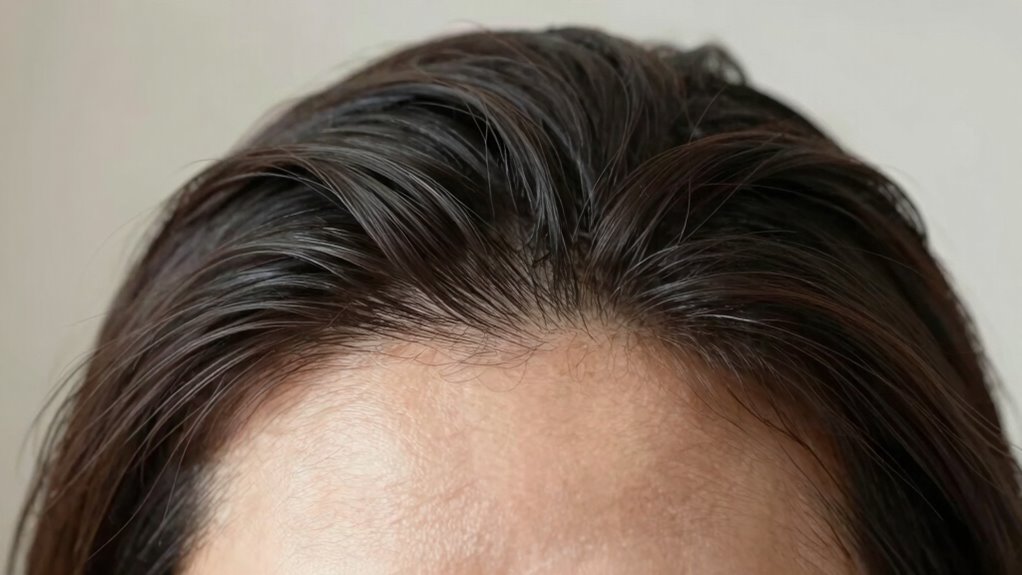
Your scalp’s barrier acts as a protective shield, preventing bacteria, pollutants, and excess oils from penetrating your skin. When it’s healthy, it keeps your scalp balanced and your hair strong. But if the barrier gets damaged—due to harsh products, poor water quality, or pollution—you might experience flakiness, irritation, or hair thinning. Maintaining this barrier is key to healthy hair, and understanding how to support it can make a big difference in your scalp health.
Key Takeaways
- The scalp barrier protects hair follicles from bacteria, pollutants, and excess oils, maintaining scalp health.
- It relies on a slightly acidic pH (4.5-5.5) to stay intact and prevent irritations.
- Damage from harsh products, water, or pollutants weakens the barrier, causing discomfort and hair issues.
- Barrier failure leads to dryness, dandruff, inflammation, and increased risk of hair thinning or loss.
- Using gentle, pH-balanced products and nourishing ingredients supports a healthy scalp barrier.
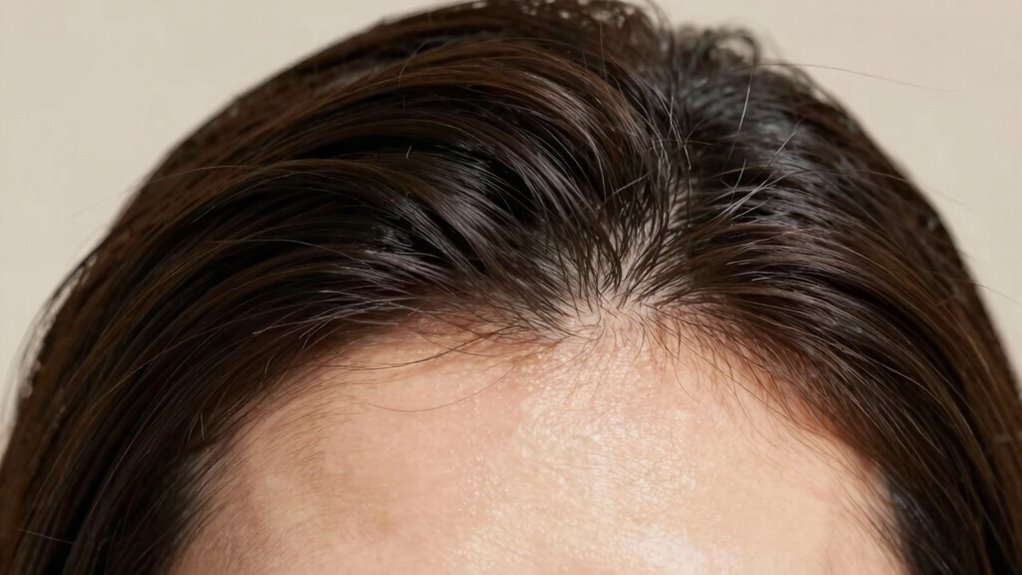
Ever wondered why your scalp sometimes feels itchy, irritated, or prone to dandruff? The answer often lies in the health of your scalp barrier, a delicate yet essential layer that protects your scalp and hair follicles. The scalp barrier acts like a shield, preventing harmful bacteria, pollutants, and excess oils from penetrating deeply. When it’s compromised, you’ll notice discomfort, flakiness, and even hair thinning. To understand why, you need to grasp the importance of maintaining the right balance in your scalp’s environment, especially its pH.
Your scalp’s pH is slightly acidic, usually around 4.5 to 5.5, which helps keep the skin’s natural barrier intact. When the pH shifts out of this range—becoming more alkaline—it weakens the barrier, making it easier for irritants and microbes to invade. This disruption can lead to inflammation, increased oil production, and the formation of dandruff. The health of your hair follicle, the tiny structure where hair grows, depends heavily on this balance. If your scalp’s pH is off, it can affect the functioning of the hair follicle, leading to weaker strands or hair loss over time.
A balanced, slightly acidic scalp pH is essential for healthy skin, hair growth, and preventing irritation.
You might not realize it, but daily factors like shampoo choice, water quality, and even environmental pollutants can disturb your scalp pH. Harsh shampoos or overly alkaline products strip away natural oils, damaging the scalp barrier and exposing hair follicles to damage. This can cause your scalp to become dry, flaky, or oily, depending on how the barrier reacts. When the barrier fails, it’s easier for bacteria and fungi to thrive, which worsens irritation or dandruff. Maintaining the proper scalp pH is crucial for preventing these issues and supporting overall scalp health.
Keeping your scalp’s pH in check is essential for maintaining a healthy barrier. Gentle, pH-balanced shampoos help preserve this delicate environment, supporting the natural oils that protect your scalp. Additionally, avoiding excessive washing or harsh chemicals can prevent disrupting the barrier further. Nourishing ingredients like aloe vera, tea tree oil, and probiotics can help restore balance and soothe irritation. Remember, a healthy scalp barrier doesn’t just prevent discomfort; it actively promotes stronger, healthier hair by ensuring the hair follicle receives the right environment to grow.
In essence, your scalp barrier is the foundation of scalp health. By paying attention to factors that influence scalp pH and protecting this barrier, you support not only your comfort but also the vitality of your hair from root to tip.

DR.FORHAIR Phyto Therapy Shampoo 16.91 fl.oz.
- Balanced pH Level: pH 5.0~6.0 for scalp health
- Oil and Moisture Balance: Normalizes scalp oil and moisture levels
- Reduces Sebum: Decreases sebum by 61.5%
As an affiliate, we earn on qualifying purchases.
As an affiliate, we earn on qualifying purchases.
Frequently Asked Questions
How Can I Tell if My Scalp Barrier Is Compromised?
You can tell if your scalp barrier is compromised by noticing increased scalp sensitivity, irritation, or excessive oiliness. When your scalp’s pH balance is off, it disrupts hair follicle health, leading to issues like dandruff or dryness. Pay attention to persistent itching or flakiness, which might indicate a weakened barrier. Maintaining a balanced scalp pH and healthy hair follicles helps protect your scalp and prevents further damage.
Are Certain Hair Types More Prone to Barrier Damage?
Certain hair types, especially high porosity hair, are more prone to barrier damage because it readily absorbs moisture and loses it quickly, making the scalp more vulnerable. If your scalp’s pH balance is off, it can weaken the barrier further. Maintaining a balanced scalp pH and understanding your hair porosity helps protect your scalp, reducing damage and keeping your hair healthy and resilient.
Can Scalp Barrier Issues Cause Hair Loss?
You might not realize it, but scalp barrier issues can lead to hair loss. When your scalp’s pH balance gets thrown off or sebum production becomes uneven, it weakens the barrier and causes irritation. This damage hampers healthy hair growth and can even trigger shedding. So, keeping your scalp’s pH balanced and sebum in check isn’t just about comfort — it’s essential for maintaining strong, healthy hair.
What Ingredients Help Restore a Damaged Scalp Barrier?
To restore a damaged scalp barrier, look for ingredients like niacinamide, ceramides, and fatty acids, which boost scalp hydration and reinforce the skin’s natural defenses. These ingredients are highly effective because they improve ingredient efficacy by penetrating deeply to repair and soothe the scalp. Regularly using products with these elements helps restore balance, prevent dryness, and support healthy hair growth, keeping your scalp resilient and well-hydrated.
How Often Should I Treat My Scalp Barrier?
You should treat your scalp barrier 1 to 2 times a week, incorporating gentle scalp exfoliation to remove buildup and promote healthy skin renewal. Focus on maintaining scalp hydration daily with moisturizing products, especially if your scalp feels dry or tight. Avoid over-treating, which can strip natural oils. Regular, balanced care helps strengthen your scalp barrier, keeping your scalp healthy, comfortable, and less prone to irritation or damage.

Dove Derma Scalp Dandruff Relief 3-in-1 Barrier Repair Serum for Flakes 2oz
- Hydrates and strengthens hair: Locks in moisture and boosts resilience
- Relieves dry scalp symptoms: Soothes tightness and discomfort
- Supports scalp barrier health: Regenerates moisture barrier with key ingredients
As an affiliate, we earn on qualifying purchases.
As an affiliate, we earn on qualifying purchases.
Conclusion
Think of your scalp barrier as a guardian shield, protecting your skin’s delicate world beneath. When it’s strong, your scalp stays resilient, thriving in harmony. But when it’s compromised, it’s like a fortress with cracks—inviting irritation and imbalance. Nourish and nurture this essential barrier, and it’ll stand tall, defending your confidence and comfort. Your scalp’s health is the silent melody that keeps your hair vibrant and your spirit shining bright. Guard it well, and let your beauty flourish.

VOERUY Scalp Scrub, Rosemary Scalp Exfoliator Scrub Shampoo, 2-in-1 Scalp Treatment with Mint Oil, Hair Treatment to Clarify and Remove Build Up with Silicone Scalp Massager, 10.6oz/300g
- Scalp Detox and Buildup Removal: Removes product buildup and impurities
- Balances Scalp Health: Relieves itchiness and controls oiliness
- Natural Plant-Based Formula: Infused with rosemary, peppermint, sea salt
As an affiliate, we earn on qualifying purchases.
As an affiliate, we earn on qualifying purchases.

Contently Probiotic Scalp Essence|Instant Cooling & Detox|Korean hair care|For Flaky, Dry & Itchy Scalp|Anti-Dandruff & Strengthen Roots 4.06 fl.oz
- Type: Leave-in scalp treatment
- Main Benefits: Soothes, nourishes, and refreshes scalp
- Key Ingredients: Probiotics, plant extracts, menthol
As an affiliate, we earn on qualifying purchases.
As an affiliate, we earn on qualifying purchases.