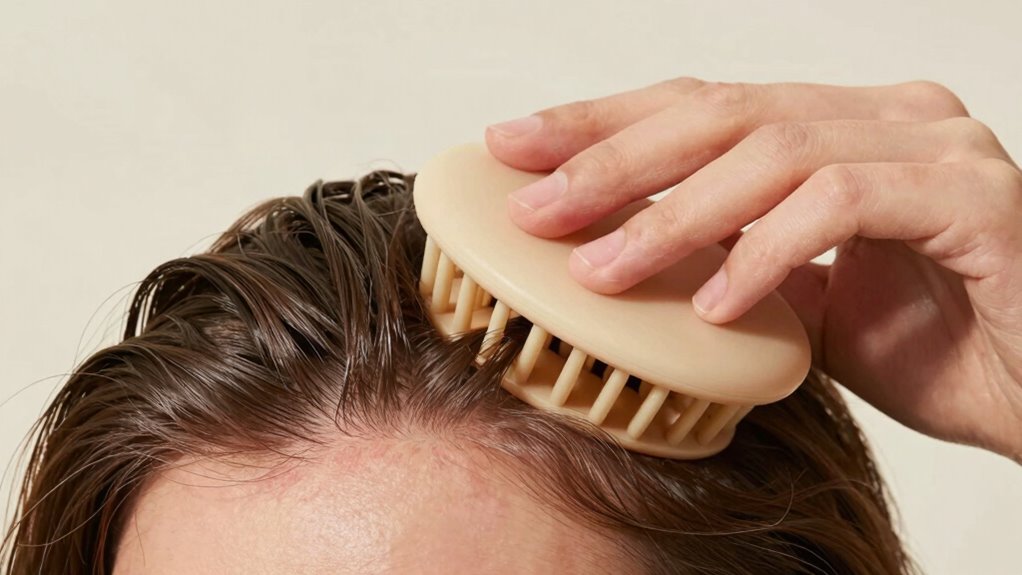
Scalp massagers can help improve scalp health and boost circulation, which may support hair density over time, but they don’t directly speed up hair growth. They work by gently stimulating blood flow, relaxing your scalp, and promoting a healthy environment for hair follicles. However, claims that they cure hair loss or dramatically accelerate growth are myths. To understand how to get the most benefits and what to expect, keep exploring these tools.
Key Takeaways
- Scalp massagers can boost blood flow, potentially supporting hair health, but they are not proven to significantly accelerate hair growth.
- Regular scalp massage may improve scalp conditions and increase hair density over time, though evidence is limited.
- They are primarily tools for relaxation and scalp health, not a guaranteed solution for hair loss or rapid growth.
- Proper use involves gentle, rhythmic motions; overuse or excessive pressure can cause irritation.
- Claims of curing hair loss or reversing baldness are myths; scalp massagers support overall scalp wellness but don’t directly increase hair growth.
Do Scalp Massagers Help Hair Grow Faster?
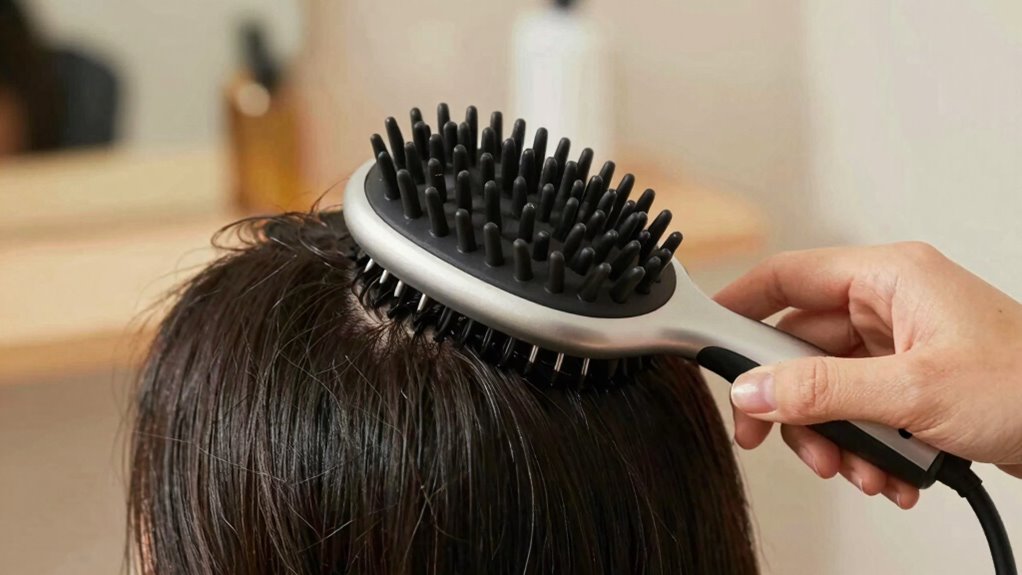
While scalp massagers are popular for relaxation, many people wonder if they can actually help hair grow faster. There are plenty of hair growth myths out there, and some claim scalp massage myths boost hair growth markedly. However, scientific evidence doesn’t fully support these claims. While massaging your scalp increases blood flow, which benefits scalp health, it doesn’t directly accelerate hair growth. It’s important to separate fact from fiction; using a scalp massager isn’t a magic solution for faster hair growth. Instead, it can improve scalp comfort and stimulate follicles in a supportive way. Additionally, understanding hair growth factors such as genetics and overall health is essential for realistic expectations. Furthermore, Free Floating techniques can be incorporated into a holistic approach to scalp care but should not replace proven medical treatments when necessary.
How Do Scalp Massagers Work?
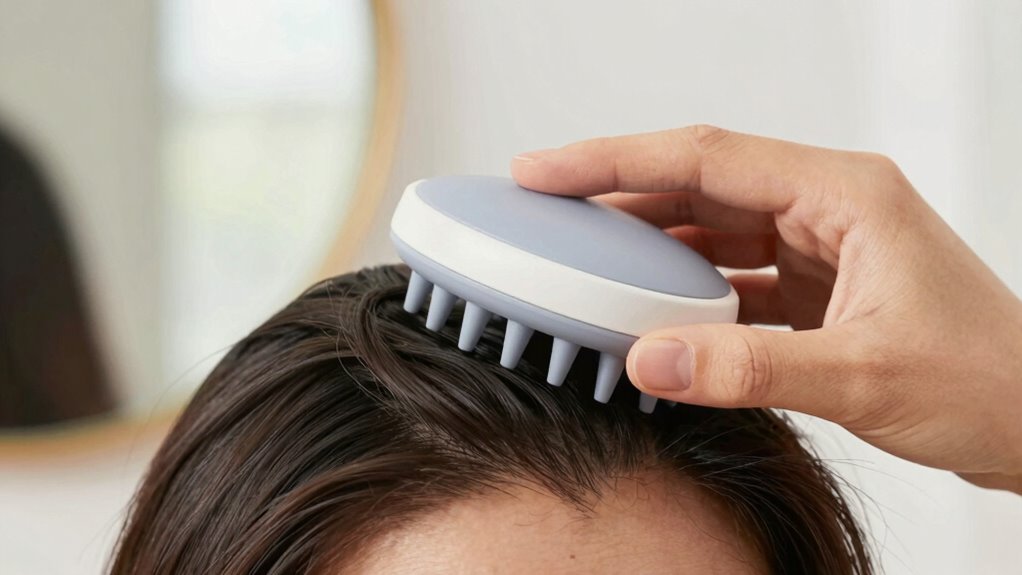
Scalp massagers work by applying gentle pressure and rhythmic movements to the scalp, which helps stimulate blood flow and relax tense muscles. Understanding scalp anatomy is key—they target the skin, hair follicles, and underlying tissues to promote circulation. Using specific massage techniques, such as circular motions or tapping, you activate nerve endings and encourage nutrient delivery to hair roots. These devices often mimic manual massage, but with consistent, automated motions that reach areas difficult to massage by hand. The vibrations or kneading motions increase blood flow, delivering oxygen and nutrients to follicles, which may support healthier hair. By stimulating the scalp’s nerve endings and muscles, scalp massagers can also reduce tension and stress, creating a more relaxed environment for hair growth. Additionally, incorporating techniques inspired by astrophotography practices, such as systematic and targeted movements, can optimize the effectiveness of scalp massage. Regular use may also help in detecting scalp issues early, allowing for more effective hair care routines. Proper scalp stimulation can enhance overall scalp health and improve the absorption of hair care products. Furthermore, consistent use can contribute to a sense of overall well-being by reducing tension and stress, which are known to impact hair health negatively.
What Does Research Say About Scalp Massage and Hair Growth?
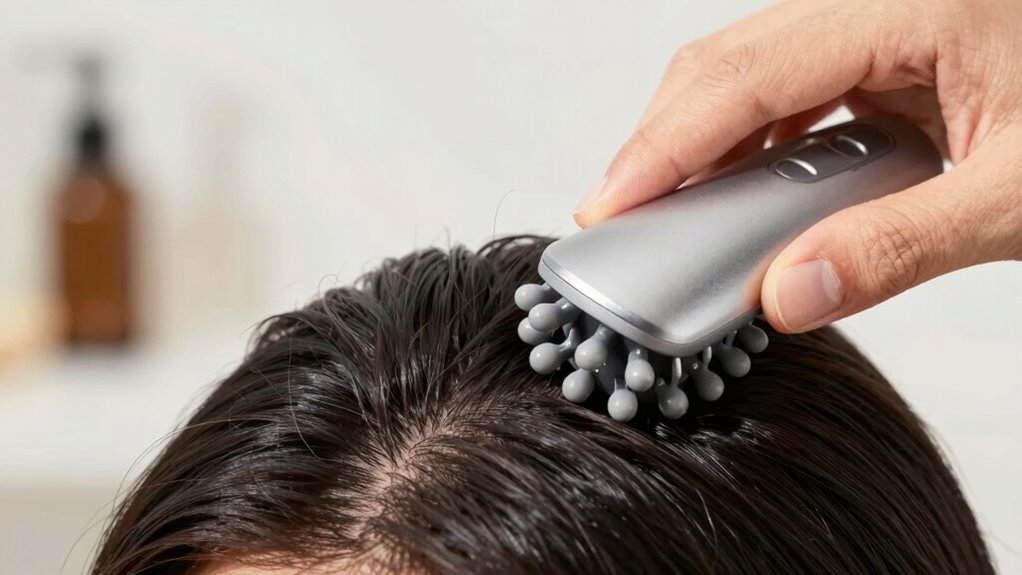
Research suggests that scalp massage can boost blood flow, which may support hair growth. Studies also indicate that regular massage might improve hair density over time. While promising, more research is needed to confirm these benefits definitively. Additionally, maintaining overall indoor air quality can influence scalp health and hair vitality. Proper calibration of the scalp’s environment may further enhance the effectiveness of massage routines. For optimal results, understanding the regional variations in hair growth patterns might help tailor massage techniques more effectively. Moreover, integrating sound healing techniques with scalp massage could potentially augment relaxation and promote healthier hair follicles. Incorporating scalp health practices into routine care may also contribute to better hair growth outcomes.
Evidence for Increased Circulation
Studies have shown that scalp massage can boost blood flow to hair follicles, which may support healthy hair growth. Different scalp massage techniques, such as circular motions or gentle kneading, can effectively improve circulation. When you use these techniques regularly, you enhance circulation improvement in your scalp, ensuring more nutrients reach your hair follicles. Some research indicates that increased blood flow from massage can positively influence hair health, although direct links to growth are still being studied. The key is consistent application of gentle pressure to stimulate blood vessels without causing damage. While more research is needed for definitive conclusions, existing evidence suggests that incorporating scalp massage into your routine could help promote better circulation and overall scalp health. Incorporating brain-boosting activities like massage can also contribute to mental well-being, which is essential for overall health. Additionally, choosing the right type of scalp massage technique can maximize benefits and minimize potential irritation.
Impact on Hair Density
While definitive proof remains limited, emerging research suggests that regular scalp massage may positively influence hair density. By stimulating blood flow, scalp massage can enhance follicle health, which is key to thicker, fuller hair. Improved circulation delivers essential nutrients and oxygen to hair follicles, potentially encouraging growth and reducing hair thinning. Some studies indicate that consistent scalp stimulation may activate dormant follicles, leading to increased hair density over time. Additionally, proper maintenance practices can help prevent issues that may interfere with hair growth, such as clogged follicles or scalp inflammation. Incorporating scalp massage techniques into your routine can further optimize these benefits by providing targeted stimulation. For example, gentle massage pressure can improve blood flow without damaging delicate scalp tissues. Moreover, incorporating consistent massage routines can help sustain these potential benefits over the long term. Although more extensive research is needed to confirm these effects conclusively, many users report noticeable improvements in hair fullness after regular massage sessions. Keep in mind, individual results vary, and scalp massage should complement other hair care practices for best results. Overall, it appears that scalp massage could be a helpful tool in supporting healthier, denser hair.
Can Using a Scalp Massager Boost Hair Growth?
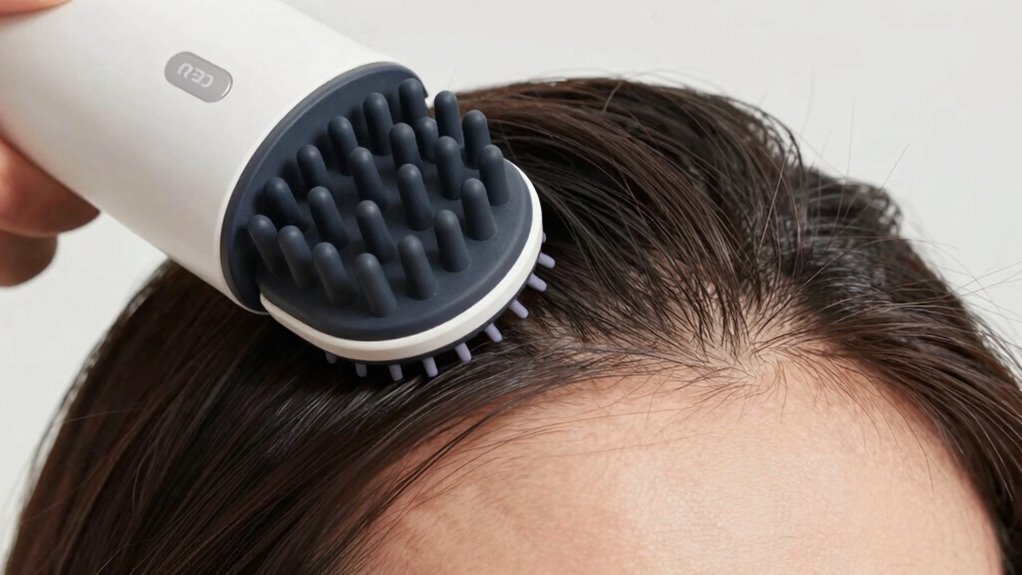
Many people wonder if using a scalp massager can actually promote hair growth. While direct evidence is limited, some benefits suggest it could help. For example:
- It may improve scalp circulation, encouraging nutrient delivery to hair follicles.
- Regular massaging can help distribute scalp oil evenly, enhancing hair texture and overall health.
- Increased blood flow might stimulate dormant hair follicles, potentially aiding growth.
Additional Benefits of Using a Scalp Massager
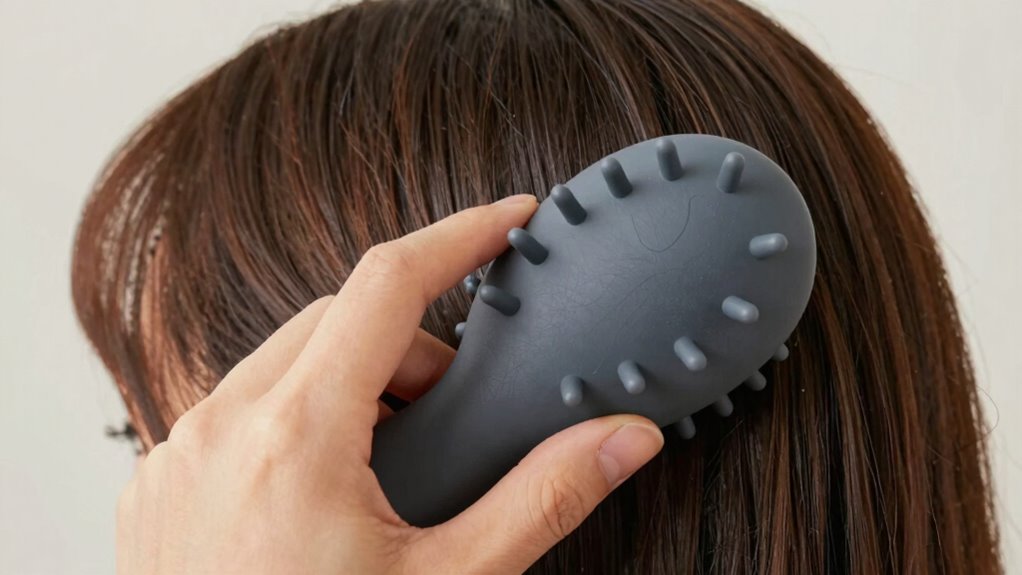
Using a scalp massager offers more than just potential hair growth benefits; it can also enhance your overall scalp health and comfort. One key advantage is the relaxation benefits it provides, helping you unwind after a long day. The gentle stimulation increases blood flow, which can soothe tension and reduce stress. Regular use encourages a calming sensation, making your scalp feel healthier and more comfortable. Additionally, scalp blood circulation is improved through consistent massage, supporting overall scalp vitality. Proper scalp hygiene practices are essential for maintaining a healthy environment and preventing issues like dandruff or dryness. This stress reduction can positively impact your mental well-being, promoting a sense of relaxation and tranquility. Enhancing scalp health practices is essential to maintaining a healthy scalp environment. By incorporating a scalp massager into your routine, you not only support scalp health but also create a moment of self-care that relieves tension and boosts your overall mood. It’s a simple, effective way to enjoy both physical and mental relaxation.
What Are the Limitations and Myths About Scalp Massagers?
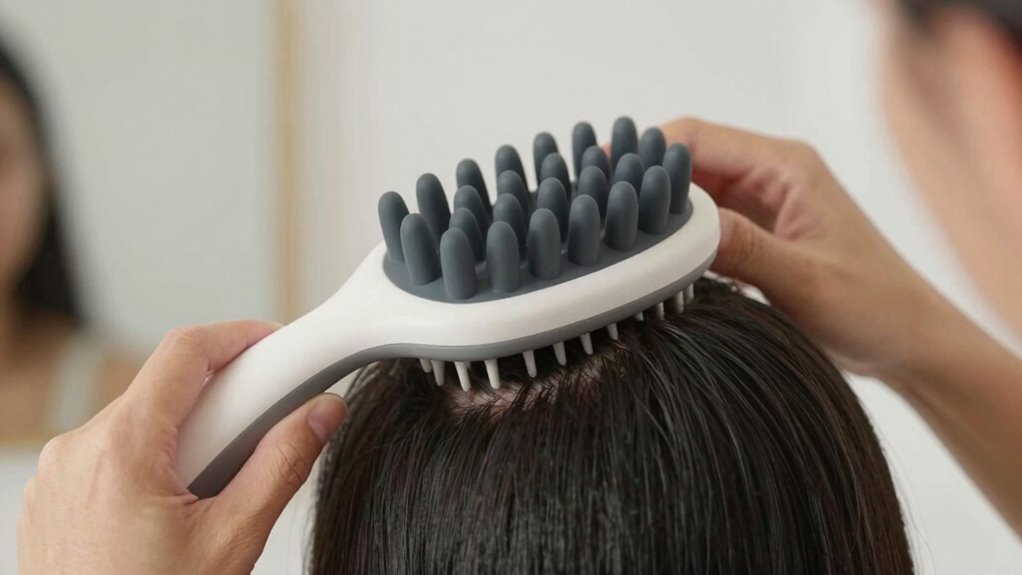
Many claims about scalp massagers can be overhyped, making it hard to know what’s true. Scientific evidence supporting some benefits is limited or inconsistent, so results may vary. Plus, people often get confused about how to use them properly for the best effects. For instance, understanding exfoliation can help clarify how scalp massagers might contribute to a healthier scalp environment. Additionally, knowing how blood circulation impacts hair health can set realistic expectations for what these devices can achieve. Recognizing the limitations of magnetic or electrical stimulation can also help manage expectations regarding their effectiveness in promoting hair growth. Moreover, understanding support for hair health from various treatments can help set a more comprehensive view of what scalp massagers can provide.
Furthermore, aligning expectations with spirituality insights can offer a broader perspective on personal growth and well-being related to self-care practices.
Overhyped Benefits Claims
While scalp massagers are often marketed with claims of remarkable benefits, it’s important to approach these promises with skepticism. Many hair growth myths and massage misconceptions circulate, exaggerating what scalp massagers can achieve. Here are three key points to contemplate:
- They don’t guarantee faster hair growth; improvements are typically subtle at best.
- Claims that massagers can target specific scalp issues are often overstated.
- The idea that scalp massages alone can reverse hair loss is a myth; they may support overall scalp health but aren’t a cure.
While massagers can promote relaxation and improve circulation, expecting dramatic hair growth results is unrealistic. Don’t fall for overhyped promises; manage your expectations based on scientific evidence.
Scientific Evidence Gaps
Although scalp massagers are popular for their supposed benefits, the scientific evidence supporting their effectiveness remains limited. Much of what users experience may stem from the placebo effect or personal preferences rather than proven results. Studies haven’t conclusively shown they stimulate hair growth or improve scalp health. Instead, your perception of benefit often depends on expectations and sensation. Here’s a quick view:
| Factor | Influence | Evidence Level |
|---|---|---|
| Placebo Effect | Creates perceived benefits | Significant |
| User Preferences | Shapes subjective satisfaction | High |
| Scientific Data | Lacks rigorous, consistent results | Limited |
| Actual Impact | Uncertain, needs more research | Insufficient evidence |
In short, your beliefs and sensations play a big role, but scientific proof remains scarce.
Proper Usage Confusion
Despite their popularity, there are common misconceptions and uncertainties about how to use scalp massagers properly. Many people struggle with effective scalp massager techniques, leading to ineffective results or even discomfort. Common usage mistakes include applying too much pressure, using the device for too long, or neglecting the scalp’s sensitivity. To avoid these issues, focus on gentle, consistent movements that stimulate blood flow without causing irritation. Here are key points to contemplate:
- Use light pressure to prevent scalp irritation.
- Limit sessions to 5-10 minutes to avoid overstimulation.
- Follow manufacturer guidelines for safe and effective usage.
Understanding these tips helps ensure you get the benefits without falling for myths or making common mistakes.
How to Use a Scalp Massager Effectively

To get the most benefits from your scalp massager, it’s important to use it correctly. Focus on gentle, circular motions to relieve scalp tension and stimulate blood flow. Avoid pressing too hard, as excessive pressure can cause scalp discomfort or hair shedding. Use your massager for about 3-5 minutes daily, targeting areas where tension builds up. Here’s a quick guide:
| Step | Tip |
|---|---|
| 1 | Start with clean, dry hair |
| 2 | Use light pressure to prevent damage |
| 3 | Move slowly in circular motions around scalp |
| 4 | Focus on tense areas like temples or crown |
| 5 | Finish with a gentle massage to relax scalp |
Consistent, careful use helps reduce scalp tension and supports healthy growth.
Are Scalp Massagers Worth It? Factors to Consider
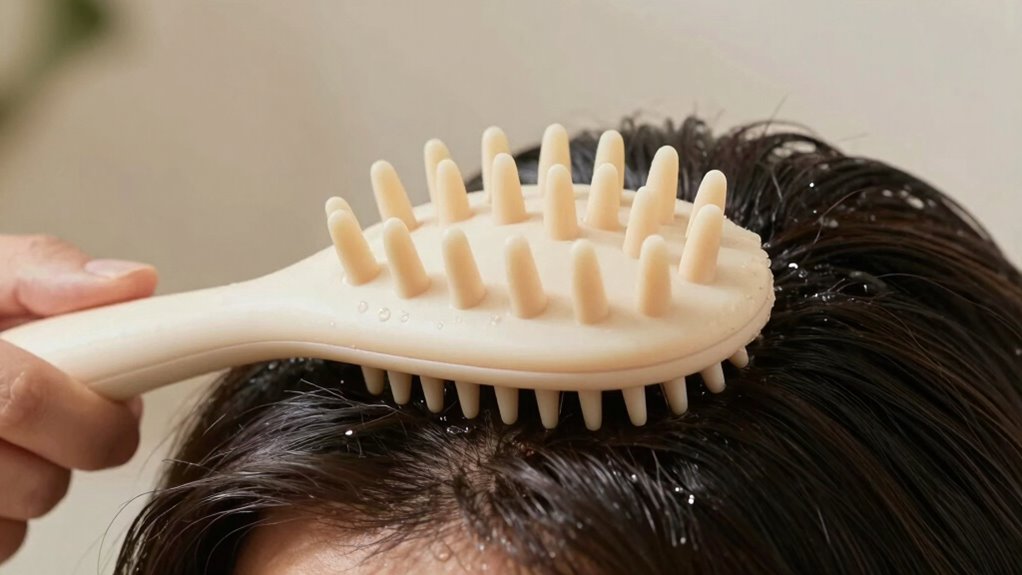
Considering how to get the most from your scalp massager involves evaluating whether it’s a worthwhile investment for your hair and scalp health. First, assess the different scalp massager types—manual, electric, or ultrasonic—to find one suited to your needs. Next, consider cost considerations: some models are affordable, while others can be pricey; determine your budget and expected benefits. Finally, think about your specific goals, such as relaxation, stimulating growth, or scalp cleansing, to choose a device that aligns with those aims. A high-quality scalp massager can be worth it if it fits your routine and budget, but it’s essential to weigh these factors carefully. If used correctly, it can enhance scalp health without unnecessary expenditure.
Frequently Asked Questions
Are Scalp Massagers Suitable for All Hair Types?
You’ll find scalp massagers are generally suitable for most hair types, but it’s important to consider hair type compatibility and scalp sensitivity. If you have sensitive skin or a delicate scalp, choose a gentle, soft-bristled massager to avoid irritation. For thicker or coarser hair, look for a device with adjustable settings. Always start slowly and monitor how your scalp responds to ensure comfort and safety.
How Often Should I Use a Scalp Massager?
You should use a scalp massager 3-4 times a week to support hair growth techniques and maintain scalp health. Regular use stimulates blood flow, encouraging healthy hair follicles. Avoid overdoing it, as too much pressure can irritate your scalp. Consistency is key—combine massaging with proper hair care routines for best results. Listen to your scalp’s response and adjust frequency to keep your scalp healthy and promote growth.
Can Scalp Massagers Prevent Hair Loss?
Scalp massagers alone can’t prevent hair loss, despite common hair growth myths. They improve scalp health by increasing circulation, which may support hair growth, but they don’t stop genetic or medical-related hair loss. Use them regularly as part of a healthy scalp routine, but remember, preventing hair loss involves thorough care, including proper nutrition and medical advice. So, while helpful, scalp massagers aren’t a guaranteed solution for preventing hair loss.
Are There Any Risks or Side Effects?
Ever wonder if using a scalp massager could backfire? Generally, they’re safe when used correctly, but safety concerns do exist. You might experience allergic reactions if you have sensitive skin or allergic responses to materials like rubber or certain plastics. Overuse can cause scalp irritation or discomfort. To stay safe, follow instructions, avoid excessive pressure, and stop if you notice any adverse reactions. Are you prepared to prioritize your scalp’s health?
Do Scalp Massagers Work Better With Oils or Serums?
Scalp massagers work better with oils or serums because they enhance scalp stimulation and promote better oil absorption. When you use oils or serums with a massager, it helps nutrients penetrate your scalp more effectively, boosting blood flow and nourishing hair follicles. This combo can improve overall scalp health and potentially support growth. Just make sure to choose lightweight, non-greasy products to avoid clogging pores.
Conclusion
Think of a scalp massager like watering a garden—it helps nourish your hair follicles, but it won’t instantly make your plants grow taller. While it can improve circulation and relaxation, there’s no magic wand for rapid growth. If you make it part of your routine, you’re planting seeds for healthier hair over time. So, be patient, stay consistent, and enjoy the process—your hair’s growth journey is a marathon, not a sprint.