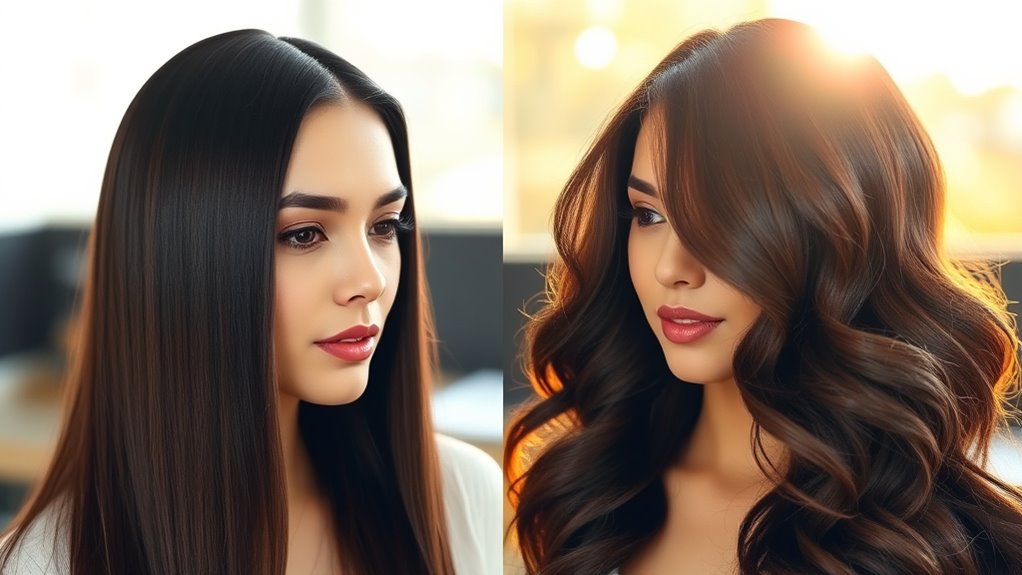

If you want sleek, frizz-free hair that’s easier to manage, a smoothing treatment could be your best choice. However, if you prefer to enhance your natural curls or waves with more volume and definition, texturizing is ideal. Consider your hair type and style goals—smoothing treatments straighten or soften, while texturizing boosts your natural texture. To find out which option suits you best, explore the differences and benefits further.
Key Takeaways
- Choose smoothing treatments for frizz control and sleek, straight hair; opt for texturizing to enhance curls and add volume.
- Consider your natural hair texture and desired style to determine which treatment aligns best with your goals.
- Smoothing treatments offer longer-lasting results, while texturizing provides more flexibility and subtle curl enhancement.
- Consult a stylist to assess your hair type and ensure the treatment suits your needs and maintains hair health.
- Both options can be customized or combined for personalized results and easier maintenance.
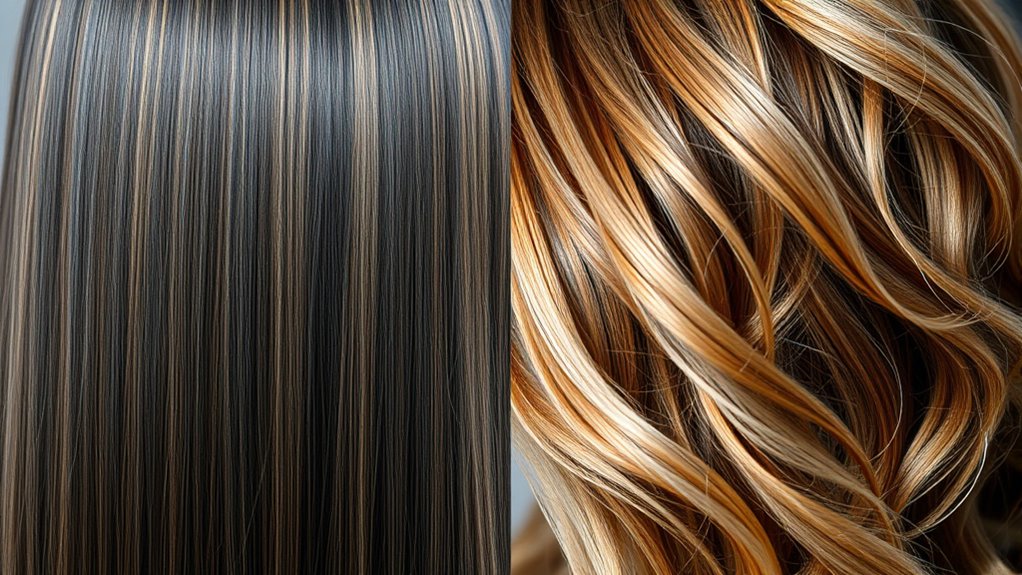
When it comes to managing your hair’s texture, understanding the difference between smoothing treatments and texturizing is essential. Both options can transform your look, but they serve different purposes and suit different hair types. If you’re seeking frizz control and smoother hair, a smoothing treatment might be the way to go. These treatments are designed to reduce frizz, tame flyaways, and give your hair a sleek, polished appearance. They work by sealing keratin or other smoothing agents into your hair cuticle, creating a protective layer that resists humidity and moisture. As a result, your hair becomes markedly easier to manage, especially if you struggle with frizz in humid weather. On the other hand, if your goal is to enhance your natural curls or waves, texturizing is usually more suitable. Texturizing treatments are formulated to add volume, definition, and flexibility to your curls. They don’t straighten your hair but instead improve curl pattern, making your hair appear more lively and bouncy. If you have curly hair that tends to look weighed down or is difficult to style, texturizing can boost curl enhancement, giving you more control and a more uniform look.
While smoothing treatments often involve chemicals that break down the hair’s natural structure to smooth out frizz and promote shine, texturizing may use different formulas that lift or loosen the curl pattern without causing damage. Additionally, understanding the hair’s natural texture can help you choose the most suitable treatment for your needs. When choosing between the two, consider your desired outcome. Do you want straighter, more manageable hair with less frizz? Then a smoothing treatment is probably your best choice. If you prefer to emphasize your natural curl or wave, want more volume, or aim for a more tousled, beachy look, then texturizing will give you the flexibility and curl enhancement you desire.
It’s also worth noting that some treatments can be combined or tailored to suit your specific needs, so consulting with a professional stylist is a smart move. They can assess your hair type, texture, and goals to recommend the right approach. Keep in mind that smoothing treatments tend to be longer-lasting but may require maintenance, while texturizing can be more subtle and easier to adjust over time. Ultimately, understanding what you want—whether it’s frizz control, curl enhancement, or both—will help you make an informed decision that keeps your hair healthy and looking its best.
keratin smoothing treatment for hair
As an affiliate, we earn on qualifying purchases.
As an affiliate, we earn on qualifying purchases.
Frequently Asked Questions
How Long Do Smoothing Treatments Typically Last?
Smoothing treatments typically last around three to six months, depending on your hair type and hair care routine. The chemical effects gradually fade as your hair grows out and is exposed to washing and styling. To maximize longevity, trust your stylist’s expertise in applying the treatment properly and follow their advice on maintenance. Proper care, like sulfate-free shampoos and limiting heat styling, helps extend the results.
Can Texturizing Damage My Hair Permanently?
Yes, texturizing can cause permanent hair damage if not done properly, especially with repeated treatments. It alters your hair’s structure, which may weaken strands over time. While treatment longevity varies, the damage from texturizing can be long-lasting or even permanent. To protect your hair, consult a professional stylist, and consider the risks to avoid unnecessary damage and maintain healthy hair.
Which Option Is Better for Curly Hair?
For curly hair, texturizing often works better because it enhances your natural curls and offers better frizz control. It softens tight coils without completely straightening your hair, allowing your curls to stay defined and manageable. Smoothing treatments tend to relax curls more permanently, which might reduce your curl pattern over time. Choose texturizing if you want to boost your curl enhancement while keeping frizz in check.
Are There Any Specific Hair Types Unsuitable for These Treatments?
Some hair types aren’t suitable for smoothing or texturizing treatments. If you have chemical incompatibility or scalp sensitivity, these treatments might cause irritation or damage. Fine, damaged, or overly processed hair can also struggle to handle the chemicals. It’s essential to consult with a professional who can assess your hair’s condition and determine if these treatments are safe for you, preventing unwanted surprises and ensuring the best results.
How Do I Maintain These Treatments at Home?
To maintain your treatments at home, stick to simple DIY routines. Use sulfate-free shampoos and nourishing conditioners to prolong the results. Incorporate leave-in conditioners or serums for added moisture and shine. Product recommendations like keratin-safe styling products help preserve your treatment. Avoid excessive heat styling, and schedule regular touch-ups with your stylist to keep your hair smooth or textured as desired. Consistency is key for lasting results.
curl enhancing texturizing spray
As an affiliate, we earn on qualifying purchases.
As an affiliate, we earn on qualifying purchases.
Conclusion
Choosing between smoothing treatments and texturizing depends on your hair goals. While smoothing offers sleek, frizz-free locks, texturizing adds volume and movement. Think of it like the difference between a polished mirror and a lively dance floor—both stunning, but for different moods. So, which vibe matches your style? Your perfect hair transformation awaits, whether you crave smooth sophistication or lively texture. Make your choice and embrace your unique look today.
frizz control hair treatment
As an affiliate, we earn on qualifying purchases.
As an affiliate, we earn on qualifying purchases.
professional hair texturizer
As an affiliate, we earn on qualifying purchases.
As an affiliate, we earn on qualifying purchases.