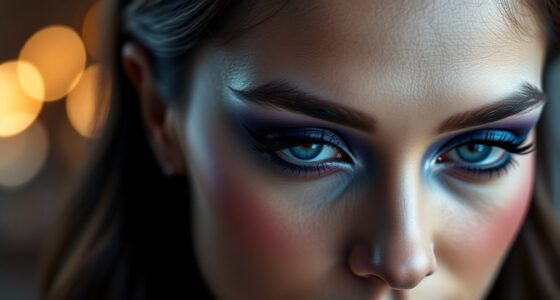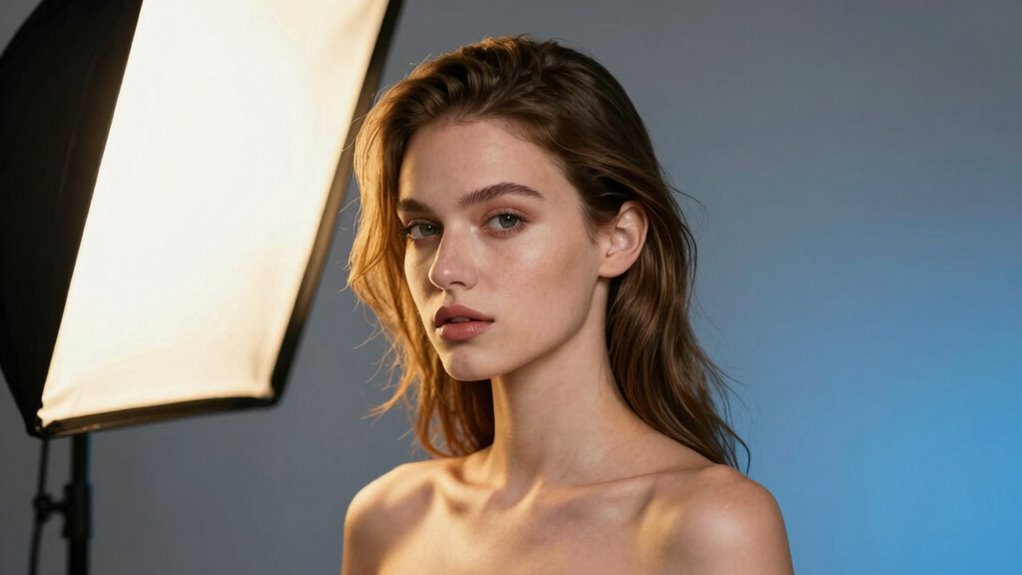
Understanding color temperature helps you create flattering, professional lighting for beauty content. It’s measured in Kelvin and affects the mood, skin tones, and overall look. Warm tones (2700K-3500K) give a cozy, soft feel, while cooler tones (above 5000K) provide a crisp, modern vibe. Choosing the right temperature depends on your goals and skin undertones. Keep in mind, proper control guarantees consistent, stunning visuals—discover how to master this key aspect for perfect results.

Turn your wind-down time into listening time
- Thousands of audiobooks, podcasts and originals
- Listen on your phone, tablet or Echo — also offline
- Cancel anytime
Key Takeaways
- Color temperature determines the overall mood and tone of beauty lighting, affecting skin appearance and emotional impact.
- Kelvin scale measures light hue; lower Kelvin (2700K-3000K) is warm, higher Kelvin (above 5000K) is cool, guiding aesthetic choices.
- Proper adjustment ensures accurate skin tones and makeup rendering, enhancing natural beauty and visual consistency.
- Matching light temperature to desired mood (warm for softness, cool for modernity) optimizes the aesthetic and viewer perception.
- Techniques like gels, camera white balance, and calibrated equipment help control and maintain consistent color temperature.
studio LED light with adjustable color temperature
As an affiliate, we earn on qualifying purchases.
As an affiliate, we earn on qualifying purchases.
What Is Color Temperature and Why Is It Important in Beauty Lighting?
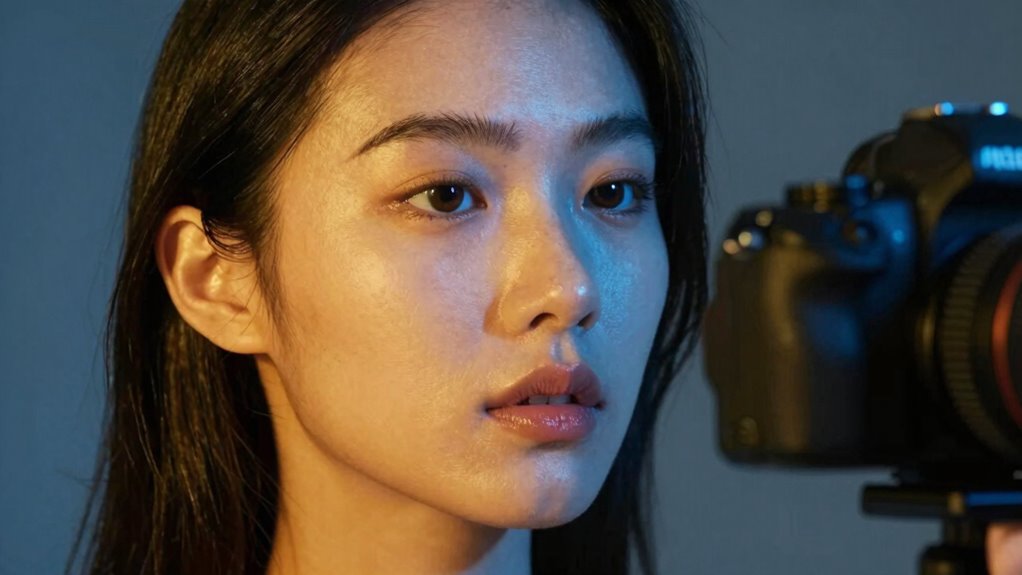
Understanding color temperature is essential because it determines the overall tone and mood of your beauty lighting. When selecting lighting accessories, pay attention to the color temperature they emit, as it influences how your skin appears on camera. Warm tones (around 2700K-3000K) create a cozy, inviting feel, while cooler tones (above 5000K) provide a crisp, energetic look. Color psychology plays a significant role here—warm light can evoke comfort and intimacy, whereas cooler light suggests freshness and professionalism. By choosing the right color temperature, you control the emotional impact of your content. Additionally, understanding how lighting temperature affects skin tone helps you craft the perfect atmosphere in your studio, ensuring every shot complements your desired aesthetic and enhances your subject’s features naturally. Recognizing the impact of different temperatures on skin appearance allows you to fine-tune your lighting setup for optimal results, especially considering factors like skin undertones that can be influenced by lighting choices. Being aware of how to measure color temperature can further improve your ability to select the proper lighting for consistent and flattering results.
bi-color ring light for beauty content
As an affiliate, we earn on qualifying purchases.
As an affiliate, we earn on qualifying purchases.
Understanding Kelvin Scale: How It Affects Your Studio Lighting
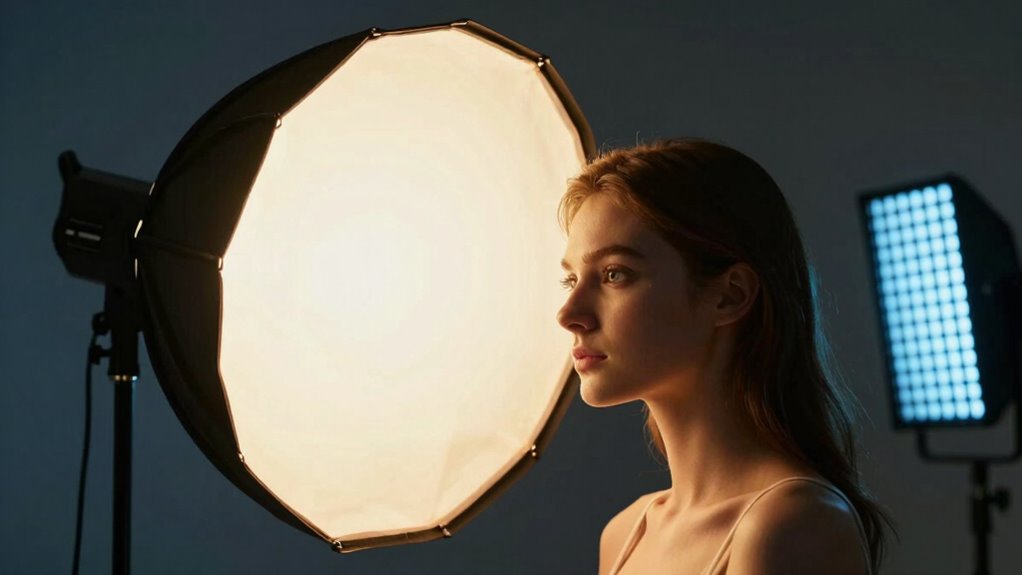
Understanding the Kelvin scale helps you manage the warmth or coolness of your studio lighting. It directly impacts color rendering and how your subjects appear on camera. Choosing the right temperature guarantees your lighting enhances your shot’s mood and accuracy. Properly managing light color temperature ensures consistent and professional-looking results in your content. Being aware of early warning signs of issues can help you adjust your lighting setup promptly to maintain optimal image quality. Additionally, understanding the color rendering index helps in selecting lights that produce accurate and vibrant colors in your footage. Recognizing the importance of Free Floating can also aid in creating a balanced lighting environment that complements your overall setup. Paying attention to lighting consistency can prevent color shifts and maintain a cohesive look throughout your project.
Kelvin Scale Basics
The Kelvin scale is essential for controlling the color temperature of your studio lighting. It measures the hue of light emitted by a source, ranging from warm (yellow-orange) to cool (blue). Understanding this scale helps you choose the right lighting for your desired aesthetic. For example, lower Kelvin values (around 2700K-3000K) produce warm tones, ideal for cozy, inviting looks. Higher values (above 5000K) create cooler, daylight-like effects. You can modify light color with lighting gels or color filters to match or adjust the Kelvin temperature, giving you greater creative control. These tools allow you to fine-tune your lighting setup without changing bulbs, ensuring your beauty content’s color accuracy and mood align perfectly with your vision.
Color Rendering Impact
Choosing the right Kelvin temperature isn’t just about matching aesthetic preferences—it directly influences how colors appear on camera. When your lighting has proper color rendering, you guarantee accurate color reproduction, especially for skin tones, making your subjects look natural and vibrant. Poor color rendering can cause skin tones to look dull, washed out, or oddly tinted, undermining your work’s professionalism. Brightness and hue are important, but how colors are rendered truly impacts the viewer’s emotional response. Understanding the color temperature helps you control the mood and authenticity of your visuals, ensuring your content resonates effectively with your audience. Additionally, mastering color rendering allows you to adapt your lighting to various environments and creative goals, elevating the overall quality of your production. Recognizing the importance of accurate color reproduction ensures that your footage remains true to life and visually compelling. Mastery of lighting consistency also ensures uniformity across different shots, maintaining a professional look throughout your project.
Choosing Correct Temperature
Selecting the right Kelvin temperature is essential because it determines the color tone of your studio lighting. When choosing your lighting, consider how different temperatures influence lighting aesthetics and the mood you want to create. For a warm, inviting glow, opt for lower Kelvin values around 2700K to 3000K, which evoke comfort and intimacy. Conversely, higher temperatures like 5000K to 6500K produce cooler, more neutral light suited for a natural, professional look. Understanding how Kelvin affects color psychology helps you set the right tone for your content. Properly balanced lighting enhances your subject’s features and ensures your visuals communicate the desired emotion. The color temperature scale helps in choosing the appropriate light for your setting. Always experiment with different temperatures to find what best complements your overall aesthetic and mood. Additionally, being aware of the visual impact of color temperature enables you to tailor your lighting setup to enhance storytelling and viewer engagement. Adjusting your lighting to match the desired ambiance can significantly improve the overall quality of your content. Recognizing how different Kelvin levels impact color perception allows you to fine-tune your lighting for optimal results. Being familiar with lighting color psychology can further refine your choices and help evoke specific responses from your audience.
professional photography lighting kit
As an affiliate, we earn on qualifying purchases.
As an affiliate, we earn on qualifying purchases.
How Different Kelvin Temperatures Impact Skin Tones and Makeup Looks
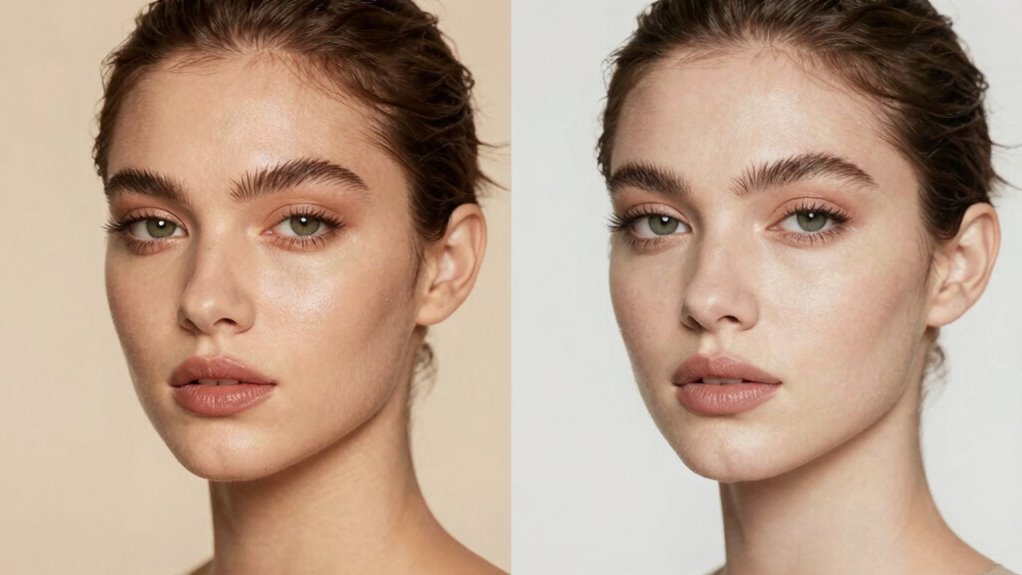
Different Kelvin temperatures can dramatically change how skin tones and makeup appear on camera. For example, lower Kelvin values (around 3200K) cast a warm, yellowish hue that can enhance golden undertones but may clash with cooler wardrobe choices. Higher Kelvin settings (around 5600K) produce a cooler, bluish light, which can make skin look paler and alter makeup shades. Understanding this helps you select lighting that complements your wardrobe choices and ensures makeup remains accurate and flattering. For makeup compatibility, warmer light can make reds and warm tones pop, while cooler light can mute these shades or emphasize cool hues. Adjusting your Kelvin temperature allows you to create a natural or desired aesthetic, ensuring your skin tones and makeup look their best on camera. Additionally, lighting calibration can help optimize your setup for consistent and flattering results, especially when working with different color temperatures, and utilizing tools like light meters can help achieve precise settings for professional-quality lighting. Properly managing color temperature can prevent unwanted color casts and ensure your lighting setup aligns with your creative goals.
color temperature meter for studio lighting
As an affiliate, we earn on qualifying purchases.
As an affiliate, we earn on qualifying purchases.
How to Choose the Best Color Temperature for Your Beauty Content Goals
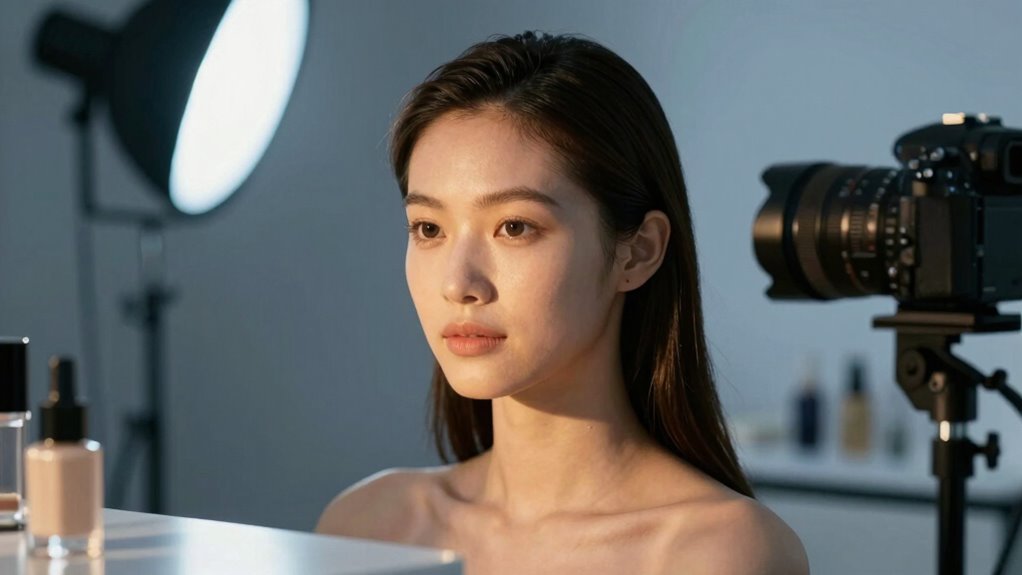
Your choice of color temperature should reflect the mood you want to create, whether warm and inviting or cool and modern. Keep in mind that different skin tones respond better to certain temperatures, enhancing natural beauty. By matching the right temperature to your content goals, you can craft images that resonate with your audience. Additionally, understanding interior design fundamentals can help you create a cohesive aesthetic that complements your lighting choices. Considering lighting quality can also influence how well your content aligns with your overall visual style. Embracing curiosity about artistic expression can inspire innovative lighting setups that elevate your content even further, especially when considering how essential oils for skin and mood enhancement can influence the ambiance and emotional impact of your visuals.
Match Mood With Temperature
Choosing the right color temperature for your studio lighting can dramatically influence the mood and tone of your beauty content. To match the desired mood, consider how lighting ambiance affects viewer perception and mood enhancement. Warm temperatures (around 2700K–3500K) create a cozy, inviting feel perfect for romantic or softer looks. Cooler temperatures (5000K–6500K) evoke a clean, energetic vibe suitable for high-fashion or editorial styles. Neutral lighting balances warmth and coolness, offering versatility. Think about your content’s emotional goal—calm, excitement, or sophistication—and select accordingly. Remember, the right temperature isn’t just about brightness but also about setting the mood that aligns with your artistic vision. Adjust your lighting to evoke the exact atmosphere you want your audience to experience.
- Warm tones promote intimacy and softness
- Cool tones convey freshness and modernity
- Neutral temperatures provide flexibility
- Match color temperature to your content’s emotional goal
- Use lighting ambiance for mood enhancement
Consider Skin Tones
When selecting the ideal color temperature for your beauty content, considering skin tones is essential to achieve a flattering and cohesive look. Different skin undertones—warm, cool, or neutral—respond uniquely to lighting. For warm undertones, choose a warmer color temperature, like 3200K, to enhance golden or peachy hues and maintain makeup harmony. Cool undertones benefit from a cooler light, around 5600K, which complements pink or bluish undertones without washing out the skin. Neutral undertones are versatile and can work well with a broad range of temperatures. By tailoring your lighting to match skin undertones, you ensure natural, vibrant results that highlight the person’s best features and create a seamless, polished appearance. This approach helps your beauty content resonate authentically with viewers.
Warm vs. Cool Lighting: Which Is Better for Portraits and Videos?
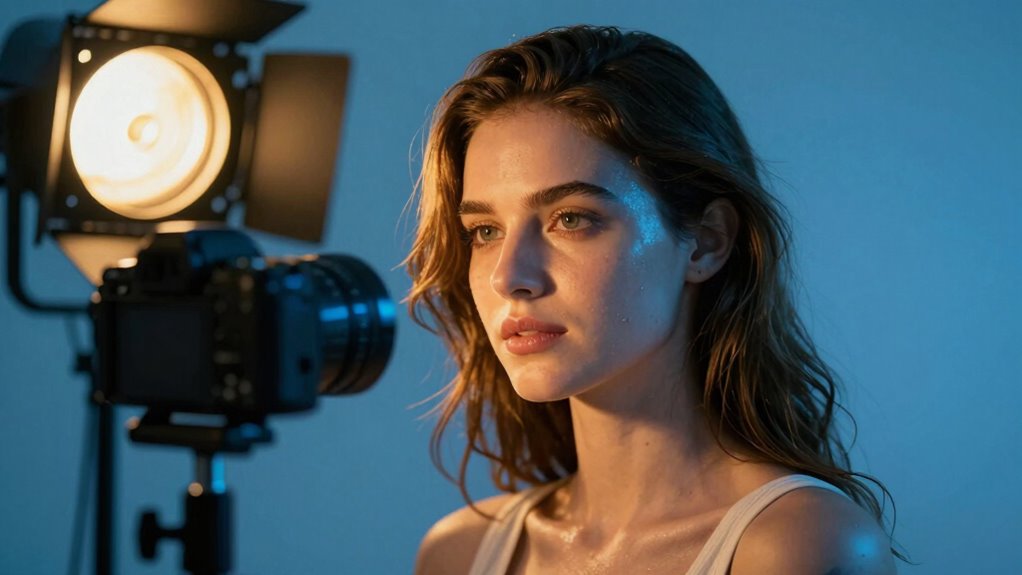
Deciding between warm and cool lighting can substantially impact the mood and tone of your portraits and videos. Warm lighting creates a cozy, inviting atmosphere, while cool lighting evokes a modern, crisp feel. Your choice affects color contrast and lighting harmony, influencing how skin tones appear and how elements blend. Warm tones enhance intimacy and softness, making them ideal for emotional content. Cool tones add clarity and a sleek look, perfect for professional or artistic projects. Consider your desired mood and audience when selecting lighting. Balance color temperature to ensure harmony across your scene. Experimenting with both can reveal which complements your style best. Ultimately, the right choice enhances your storytelling and sets the visual tone effectively.
- Warm lighting emphasizes intimacy and softness
- Cool lighting provides clarity and modernity
- Balance enhances color contrast and harmony
- Mood influences viewer perception
- Experimentation reveals your ideal setting
How to Adjust and Control Color Temperature in Your Studio Setup
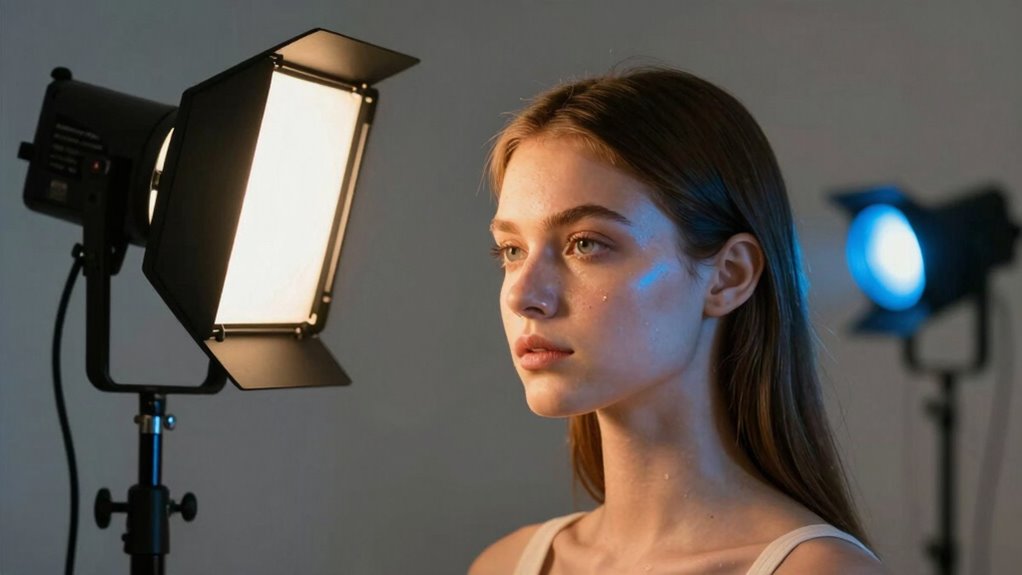
Controlling color temperature in your studio setup is key to achieving the desired mood and visual harmony. To do this effectively, use color correction techniques, such as adjusting your light sources or adding gels to modify the light’s hue. Light gels are affordable and versatile; they can instantly change a light’s color temperature, helping you match different lights or achieve a specific look. If your lights are too warm or cool, apply gels to bring them into balance, ensuring consistent skin tones and overall color accuracy. Additionally, pay attention to your camera’s white balance settings to fine-tune the results. Combining these methods allows you to maintain precise control over your studio lighting, creating the perfect environment for stunning beauty content.
Matching Light Temperature With Ambient Conditions: Tips for Consistent Results
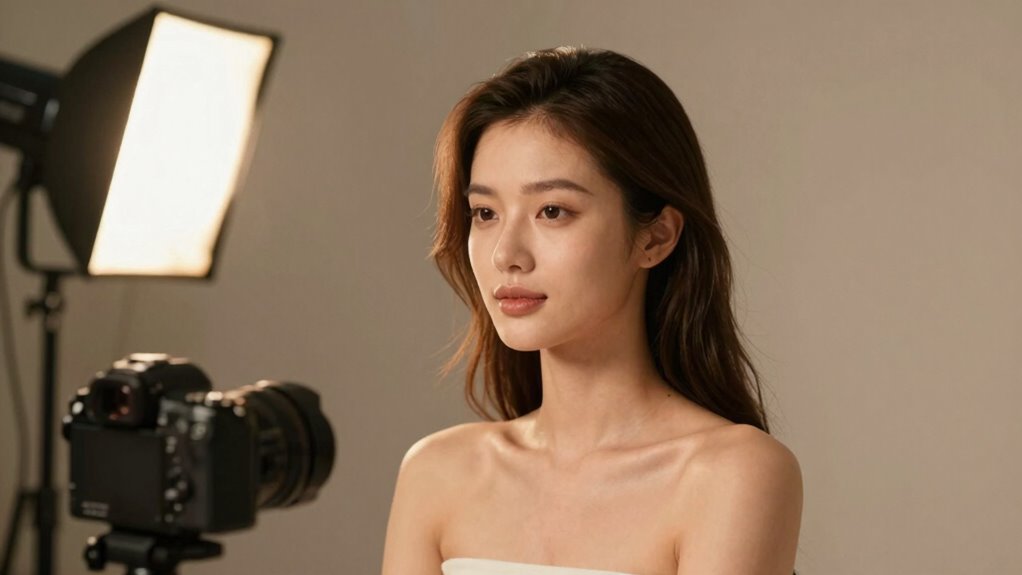
To get consistent lighting results, you need to evaluate your ambient conditions first. Use the same light sources whenever possible to maintain a stable color temperature, and adjust for natural light changes throughout the day. By paying attention to these factors, you’ll ensure your studio lighting matches ambient conditions effectively.
Assess Ambient Lighting Conditions
Understanding the ambient lighting conditions in your shooting environment is essential for achieving consistent results. Conducting an ambient assessment helps you identify the existing light’s color temperature, intensity, and direction. This ensures you match your artificial lights accordingly, avoiding unwanted color shifts. To accurately evaluate lighting conditions:
- Observe the overall color cast in the environment
- Use a gray card or white balance tool
- Note natural light sources, like windows or skylights
- Check for mixed lighting from different sources
- Record the time of day, as it affects ambient light
Use Consistent Light Sources
Matching your artificial light sources to the ambient light temperature is key to maintaining consistent color and mood in your shots. When you select light sources with similar color temperatures, you achieve better lighting consistency and more accurate color matching across your footage. Using mismatched lights can cause unwanted color shifts, making your content look uneven or unnatural. To guarantee uniformity, stick to lights with consistent Kelvin ratings or use gels to modify their color temperature. Always check your lights before shooting to confirm they match the ambient conditions or your desired aesthetic. This approach helps you avoid color discrepancies and keeps your visuals cohesive, making your beauty content appear polished and professional. Consistent lighting sources are essential for reliable, high-quality results.
Adjust for Natural Light
When working with artificial lights, it’s important to account for the natural light in your environment to keep your footage consistent. Natural light varies throughout the day, especially during outdoor shooting, affecting your color temperature. To match your artificial lights with ambient conditions, observe the natural light’s hue and intensity. Adjust your light’s color temperature accordingly, either by using gels or dimming. Consider the time of day, weather, and surroundings to anticipate changes. This ensures your beauty content remains cohesive, regardless of shifting natural light.
- Monitor natural light changes during outdoor shooting
- Use gels to match your lights to ambient conditions
- Adjust your light’s intensity based on natural light levels
- Plan shoots during consistent lighting times
- Always check your footage on a calibrated monitor
Common Mistakes When Setting Color Temperature and How to Avoid Them
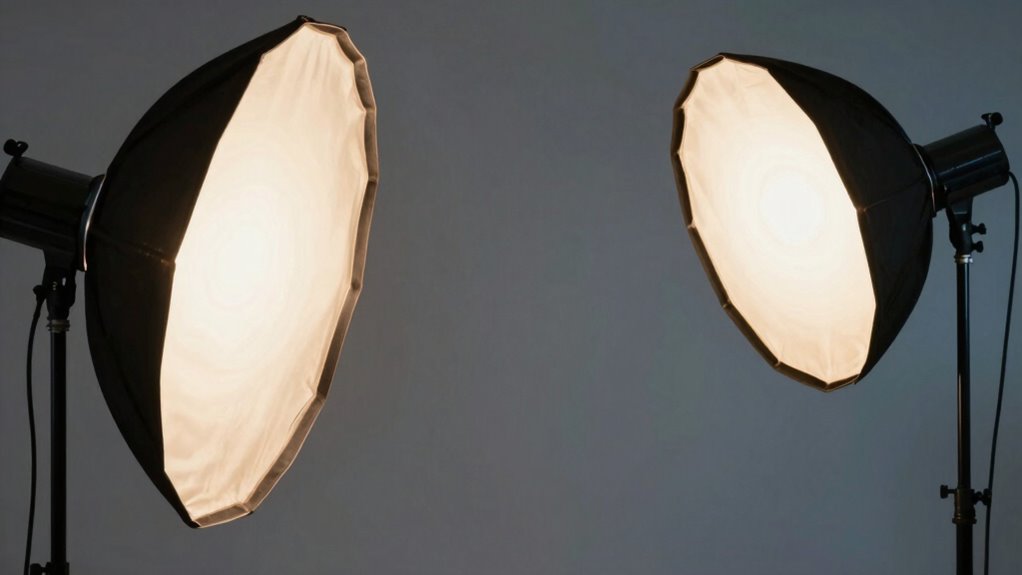
Setting the wrong color temperature can quickly ruin the mood and realism of your shot, so it’s essential to get it right. A common mistake is neglecting proper lighting setup, which causes inconsistent color tones. Without correct color calibration, your camera may interpret light differently, leading to unnatural skin tones or color casts. Always double-check your light sources are matching the desired temperature before shooting. Relying solely on auto settings or guesswork can cause mismatches, so use a reliable color meter or calibration tools. Failing to adjust for ambient light or switching lights without recalibrating can also create mismatched tones. Take the time to verify and adjust your lighting setup regularly to maintain consistent and accurate color temperature throughout your shoot.
Essential Tools and Equipment for Maintaining Consistent Light Temperature
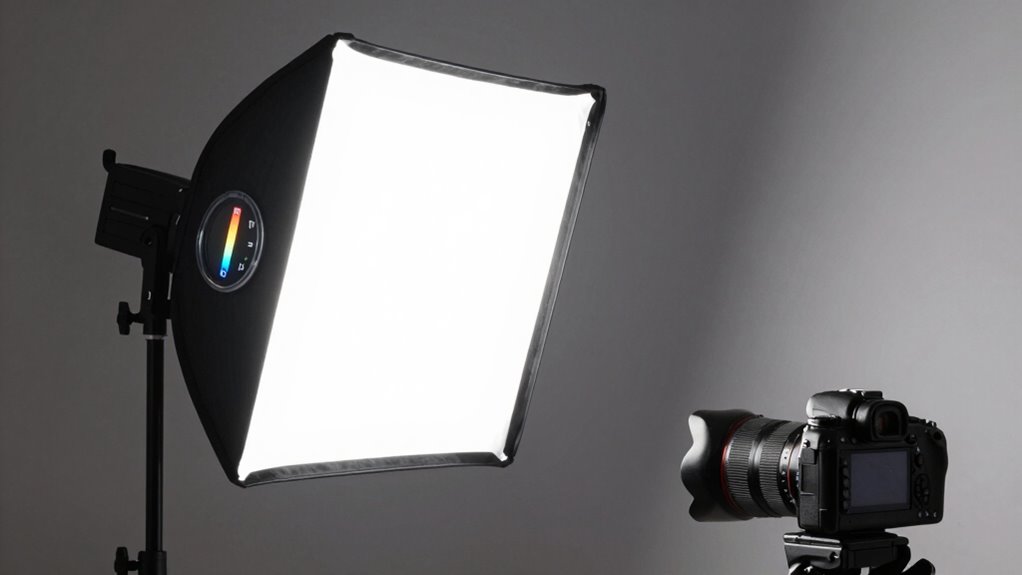
To maintain consistent light temperature, you need the right tools and equipment that provide accurate readings and reliable adjustments. Proper tools ensure color consistency across your setup and help with equipment calibration, preventing color shifts that can affect your results. A good quality digital color meter or spectrometer measures exact color temperature, allowing precise adjustments. Use calibrated light meters to verify your lighting conditions regularly. Reliable gels and filters help modify light without altering its temperature unexpectedly. Additionally, investing in adjustable LED lights with consistent output ensures stable color performance. Regularly checking and calibrating your equipment keeps your lighting setup dependable, so your content’s color remains uniform and true to life, ultimately elevating your beauty content quality.
- Digital color meter or spectrometer
- Calibrated light meters
- Adjustable LED lights
- Trusted gels and filters
- Regular equipment calibration
Final Tips to Master Color Temperature and Elevate Your Beauty Content
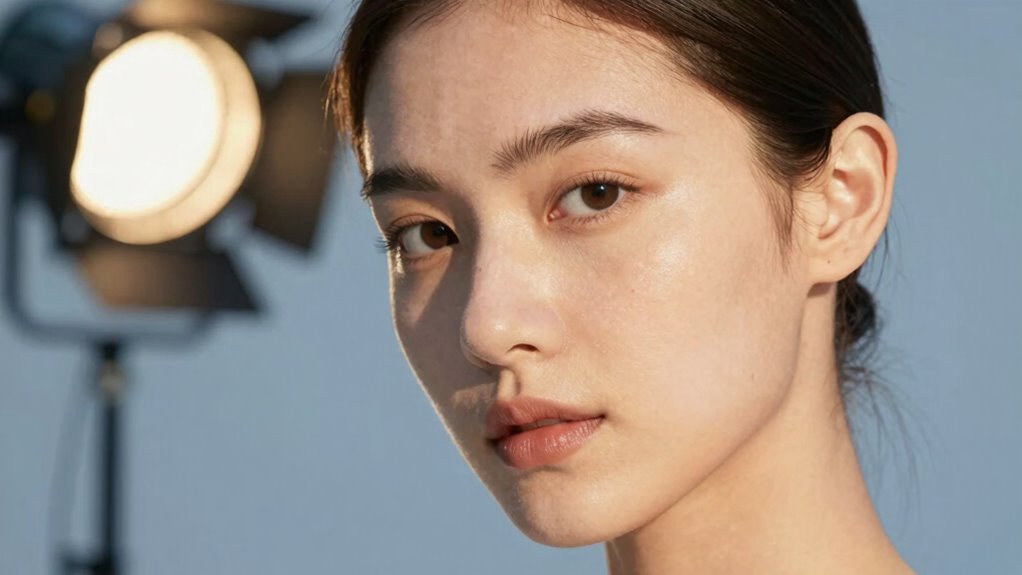
Mastering color temperature is essential for creating flawless beauty content that looks professional and consistent. To elevate your work, pay attention to color contrast by adjusting lighting to complement skin tones and makeup. Experiment with different lighting angles to find the most flattering and natural look. Use the table below to guide your setup:
| Lighting Angle | Effect on Color Temperature | Best Use Case |
|---|---|---|
| Front | Reduces shadows, softens skin | Close-up portraits |
| Side | Adds depth, enhances contrast | Highlighting facial features |
| Back | Creates separation, mood | Dramatic or editorial shots |
Frequently Asked Questions
Can LED Lights Change Color Temperature Dynamically During Shoots?
Yes, LED lights can change color temperature dynamically during shoots thanks to their high flexibility. With adjustable settings, you can easily perform color temperature adjustments on the spot, allowing you to match your lighting to different scenes or skin tones. This LED light flexibility makes it simple to create the perfect look without switching equipment, giving you seamless control over your lighting environment and improving your overall shoot quality.
How Does Ambient Daylight Influence Your Studio’s Color Temperature Settings?
You can’t ignore the fact that natural light influences your studio’s color temperature settings. As daylight shifts throughout the day, it affects your color consistency, like trying to hit a moving target. To keep your shots looking uniform, you need to adjust your studio lights accordingly or use gels to balance the ambient daylight. This way, your beauty content maintains a professional, consistent look regardless of natural light changes.
What Are the Best Practices for Calibrating Multiple Lights for Consistent Color?
You should start by using a reliable color meter or a calibration tool to measure each light’s color temperature. Adjust each light to match a target setting, ensuring color matching across all sources. Keep your lights at consistent distances and angles, and regularly verify settings during shoots. This approach helps maintain lighting consistency, making your skin tones and overall visuals look natural and cohesive throughout your beauty content.
How Does Color Temperature Affect the Longevity of Your Studio Lighting Equipment?
Color temperature doesn’t directly influence your studio lighting equipment’s longevity, but using bulbs at high or extreme temperatures can reduce their lifespan. Proper equipment maintenance, like regular cleaning and avoiding overheating, helps preserve bulb lifespan. When you select bulbs with appropriate color temperature, you ensure consistent results without stressing your lights, ultimately extending their life. Always follow manufacturer guidelines to keep your equipment in top condition and avoid premature failure.
Are There Specific Color Temperature Settings Recommended for Different Skin Tones?
Think of your studio lighting as a chameleon, adjusting to highlight every skin tone beautifully. For warm skin tones, use a warmer color temperature around 3200K to enhance natural glow, while cooler tones benefit from a neutral 5500K to keep makeup true to life. Always consider skin tone adjustments and makeup compatibility, ensuring your lighting complements your subject’s unique hue, creating a harmonious and flattering portrait every time.
Conclusion
Mastering color temperature might seem tricky at first, but with practice, you’ll see how it transforms your beauty content. Think of warm light as a cozy glow that enhances golden skin tones, while cool light gives a fresh, polished look. By matching your lighting to your vibe, you’ll create stunning visuals that captivate. Don’t let confusion hold you back—use simple tools and experiment. Soon, controlling your studio lighting will feel effortless, elevating your artistry every time.
Fall Picks
fall essentials
As an affiliate, we earn on qualifying purchases.