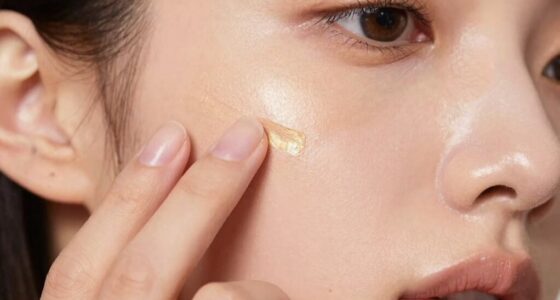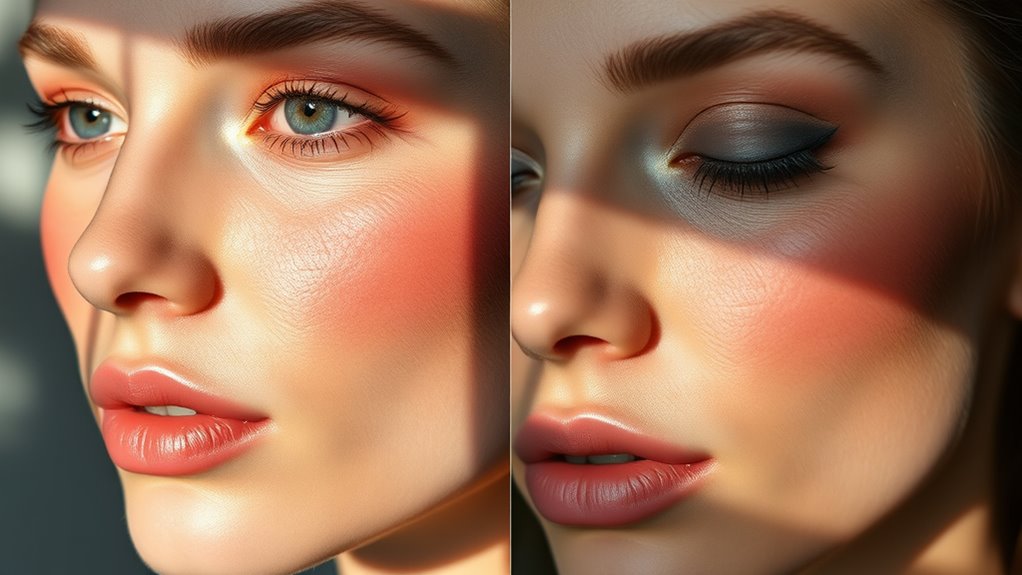

Draping and contouring use blush and highlighter differently to shape your face. In draping, you apply blush broadly on the cheeks and blend onto the temples for a soft glow, emphasizing natural warmth. Contouring, on the other hand, places blush higher on the cheeks or slightly above to define facial features sharply. Highlighting in draping is more generous and seamless, while in contouring, it’s subtle and focused on structure. To master each technique, understanding their placement nuances is key.

Turn your wind-down time into listening time
- Thousands of audiobooks, podcasts and originals
- Listen on your phone, tablet or Echo — also offline
- Cancel anytime
Key Takeaways
- Draping uses expansive blush placement blending onto temples for a soft, luminous glow, while contouring places blush on the apples or slightly above for definition.
- Draping emphasizes blending blush and highlighter for a dewy, natural finish; contouring uses subtle blush to sculpt facial features.
- In draping, blush is applied more broadly for warmth, whereas in contouring, it highlights facial structure with precise placement.
- Highlighting in draping is generous and blended for a radiant look; contouring highlights are subtle, focusing on high points for structure.
- The overall goal of draping is a soft, glowing appearance; contouring creates a more sculpted, defined facial shape.
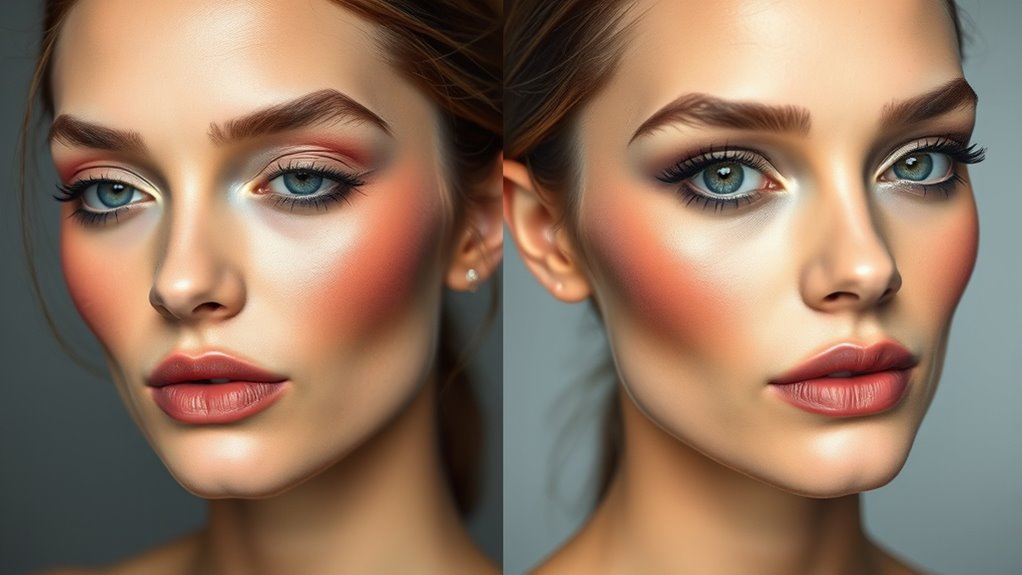
When it comes to enhancing your facial features, both draping and contouring are popular makeup techniques, but they serve different purposes and require distinct approaches. One of the key differences lies in how you use highlighting techniques and blush placement to shape and add dimension to your face. With draping, you focus on blending blush and highlighter to create a soft, luminous glow, emphasizing natural contours and adding warmth. Contouring, on the other hand, involves strategically applying darker shades to carve out specific areas, giving your face a more sculpted look. Understanding how to approach blush placement and highlighting techniques in each method will help you achieve the desired effect.
Master the art of blush placement and highlighting to beautifully enhance your natural features with draping or contouring.
In draping, blush placement is more expansive and tends to follow the natural shape of your cheekbones, blending slightly onto your temples and the top of your forehead. This technique emphasizes a healthy, radiant glow rather than sharp definition. You typically use blush shades with a warm or slightly shimmery finish, sweeping them in a sweeping motion from the apples of your cheeks upward toward your temples. The goal is to create a seamless transition between your blush and highlighter, which is strategically placed on the high points of your face—cheekbones, brow bones, and the bridge of your nose—to enhance your natural features with a soft, luminous touch. Highlighting techniques in draping involve applying highlighter generously to these high points, blending well to avoid harsh lines, and creating a dewy, fresh appearance that mimics natural light. Proper highlighting techniques can also help balance facial proportions and add a youthful glow.
Contouring, however, demands precise blush placement that’s more understated but intentional. Instead of sweeping blush across larger areas, you might opt to apply it just on the apples of your cheeks or slightly above, depending on your face shape and the desired effect. The focus is on creating shadows that define your cheekbones, jawline, and nose bridge. Highlighting in contouring involves subtle application on the high points where light naturally hits—cheekbones, nose tip, cupid’s bow—adding dimension without overpowering the sculpted look. The key is blending well to ensure the transition between shades looks seamless, emphasizing structure rather than a flushed appearance.
Ultimately, mastering both highlighting techniques and blush placement in draping and contouring allows you to tailor your makeup to enhance your natural beauty or achieve a more dramatic, sculpted look. The choice depends on whether you want a soft, glowing appearance or a more defined, chiseled effect. Both methods rely heavily on how you position your blush and highlighter, and understanding these nuances helps you craft a look that perfectly complements your features.
As an affiliate, we earn on qualifying purchases.
Frequently Asked Questions
Can Draping or Contouring Suit All Face Shapes?
Draping and contouring can enhance all face shapes, but their effectiveness depends on your face shape and blush placement. For example, contouring works well to define cheekbones on round faces, while draping emphasizes cheek hollows on heart-shaped faces. You should adjust blush placement to flatter your features—high on the apples for a youthful look or along the cheekbones for added definition. Experiment to find what suits your face shape best.
Which Technique Lasts Longer Throughout the Day?
Ever wondered which blush technique offers the best makeup longevity? Draping with cream blush tends to last longer throughout the day because it melds seamlessly with your skin, resisting fading. Contouring powder blush may fade faster, especially if you have oily skin. To make your blush application last longer, set it with a translucent powder and use long-wear formulas. Wouldn’t you prefer your glow to stay vibrant all day?
Are There Skin Types That Shouldn’T Use These Techniques?
If you have sensitive or acne-prone skin, you might want to be cautious with draping and contouring techniques. These methods can sometimes clog pores or irritate delicate skin, especially if you use heavy or non-comedogenic products. It’s best to choose lightweight, non-irritating formulas and do a patch test first. If your skin reacts badly, consider simpler blush applications to add color without risking breakouts or irritation.
How Do I Choose the Right Blush Shade?
You should choose a blush color that complements your skin’s undertone for the best look. If you have cool undertones, opt for soft pinks or mauves, while warm undertones glow with peach or coral shades. To find harmony, match your blush to your overall undertone, ensuring it enhances your natural complexion. Test shades on your cheek before applying to see how well they blend and suit your skin.
Can Beginners Easily Learn Draping and Contouring?
Yes, beginners can easily learn draping and contouring with some practice. Start with simple application tips like blending seamlessly and choosing the right shades through color matching. Practice on small areas first, and don’t be afraid to experiment gently. Watching tutorials and using quality tools will boost your confidence. Remember, the key is to build your skills gradually and enjoy the process of enhancing your natural beauty.
As an affiliate, we earn on qualifying purchases.
Conclusion
So, here’s the irony: whether you’re draping or contouring, you’re still just playing with makeup to reshape your face. You spend hours deciding which technique makes you look more natural—or more dramatic—only to realize it’s all about illusion. In the end, both methods reveal you’re just a master of tricks. So go ahead, have fun experimenting—because no matter what you choose, your face remains the ultimate canvas of your creativity.
As an affiliate, we earn on qualifying purchases.
As an affiliate, we earn on qualifying purchases.
Fall Picks
fall essentials
As an affiliate, we earn on qualifying purchases.