Foundation sunscreens do provide some UV protection, but their effectiveness depends on proper application, formulation stability, and coverage. They are generally less reliable than dedicated sunscreens because they contain lower concentrations of UV filters and can be uneven or wiped away easily. To get the most protection, it’s best to use a broad-spectrum sunscreen underneath and layer with SPF makeup carefully. If you want to learn how to maximize your sun safety, keep exploring.
Key Takeaways
- Foundation SPF provides limited protection compared to dedicated sunscreens due to lower ingredient concentrations.
- Proper application and sufficient layering are essential for foundation SPF to offer effective UV defense.
- Makeup SPF mainly enhances coverage and longevity, not comprehensive sun protection.
- Relying solely on foundation SPF is inadequate; additional sunscreen and protective measures are recommended.
- The stability and formulation quality of ingredients influence how well foundation SPF maintains its protective effect.
How Does SPF Work in Cosmetics?

Have you ever wondered how SPF in makeup actually protects your skin? It works through two main types: chemical filters and mineral blockers. Chemical filters absorb UV rays, converting them into heat and then releasing it from your skin. Mineral blockers, like zinc oxide or titanium dioxide, sit on the skin’s surface, reflecting and scattering UV radiation away. These ingredients are integrated into makeup formulas to provide a barrier against the sun’s harmful rays. The SPF rating indicates how long you can stay in the sun without burning compared to no protection. When applied correctly, makeup with SPF offers a convenient way to shield your skin daily. Proper application of SPF-containing makeup is essential to ensure maximum protection. Understanding these mechanisms helps you choose products that effectively guard against UV damage, especially when considering skin protection technologies that enhance effectiveness.
The Difference Between Sunscreen and Foundation SPF
You might think foundation with SPF offers enough protection, but it often provides less coverage than dedicated sunscreen. A thorough understanding of sunscreen efficacy versus makeup SPF can help you select the most effective sun protection. Understanding these differences guarantees you’re truly safeguarding your skin from UV rays. Moreover, advancements in AI-driven data analysis are enhancing our ability to evaluate and improve SPF formulations, ensuring consumers receive effective protection. Additionally, specialized formulations in sunscreens are designed to provide broader and more reliable coverage than typical makeup products. Recognizing the importance of manufacturing standards also plays a role in ensuring consistent SPF performance across different products. Staying informed about regulatory guidelines helps consumers make better choices regarding sun protection products.
SPF Coverage Clarity
While both sunscreen and foundation can offer SPF protection, their coverage levels and effectiveness differ markedly. Sunscreens are designed with specific UV filtering ingredients that provide consistent protection across exposed skin. They’re formulated for ingredient stability, ensuring the SPF remains effective over time and under sun exposure. Forsale 100 Foundations with SPF, however, often contain lower concentrations of these ingredients, leading to uneven or limited coverage. You might think your foundation shields your entire face, but it typically covers only the areas where you apply it, leaving other spots unprotected. The clarity in SPF coverage depends on application thickness and formulation. Achieving reliable sun protection requires understanding the formulation stability of your SPF products and their limitations. The UV filtration ingredients in dedicated sunscreens are specifically designed to withstand environmental factors like heat, sweat, and water, which can degrade the effectiveness of SPF in makeup. For reliable sun protection, don’t rely solely on foundation SPF—understand its limits compared to dedicated sunscreens. Additionally, considering the protective coverage of your makeup ensures you are not underestimating the need for additional sun protection measures.
Makeup vs. Sun Protection
Although both sunscreen and foundation can contain SPF, they serve different purposes and offer varying levels of protection. Sunscreens are specifically formulated to block or absorb UV rays, providing reliable sun protection.
Foundations with SPF mainly aim to enhance makeup longevity and even out skin tone, but their cosmetic ingredients aren’t always designed for sun defense. To understand the difference:
- Sunscreens offer broad-spectrum protection designed to shield against UVA and UVB rays.
- Foundations with SPF primarily focus on cosmetic coverage and staying power.
- Relying solely on foundation SPF might leave your skin vulnerable, so layering with dedicated sunscreen is essential for effective sun protection.
- Incorporating knowledge of AI security can help consumers select skincare products that are both effective and safe from potential digital vulnerabilities, especially as online reviews and product information become more interconnected.
Knowing this helps you choose products wisely, ensuring your skin stays protected while looking flawless.
Do Foundation Sunscreens Provide Adequate UV Protection?
You might wonder if foundation sunscreens offer enough UV protection for your skin. The SPF level on your foundation and how evenly you apply it play big roles in its effectiveness. Applying a broad-spectrum sunscreen before makeup can improve skin texture and promote a smoother application, potentially enhancing the evenness of your sunscreen coverage. Using a primer with added sun protection can also help create a more uniform barrier. Additionally, understanding the importance of sunscreen formulation can guide you toward choosing products that provide better coverage and protection. Incorporating chemical and physical blockers into your skincare routine can enhance UV defense, especially when relying on makeup products. For example, some crochet styles for locs can be paired with protective products to shield hair from UV rays, highlighting the importance of comprehensive sun care. Let’s explore whether relying on foundation alone shields you properly from the sun’s rays.
SPF Coverage Level
Have foundation sunscreens ever truly offered enough UV protection? The answer depends on the SPF levels they contain. Many foundation products boast SPF ratings, but their actual sun protection can vary. Here’s what you should consider:
- SPF ratings: Higher SPF levels (like 30 or more) generally offer better sun protection but may not fully block all UV rays. SPF effectiveness can be affected by factors like application thickness and wear time.
- Coverage area: Foundations typically cover only your face and neck, leaving other exposed skin vulnerable.
- Product formulation: Some formulations may degrade or become less effective under certain conditions, impacting their SPF coverage.
- Additional sun safety measures: While foundation sunscreens can contribute to sun protection, relying solely on them often isn’t enough. You need to complement them with proper sun protection measures for *suitable* UV defense.
Application and Effectiveness
While SPF ratings on foundation products suggest they offer some level of UV protection, their actual effectiveness depends heavily on application. Properly applying enough product ensures you get the intended SPF. Inconsistent application or skipping areas reduces protection considerably. Ingredient stability and formulation challenges also impact effectiveness; some sunscreens break down or lose potency when exposed to heat or light. To maximize protection, use a generous layer and reapply every two hours if outdoors. Here’s a quick comparison:
| Application Tip | Effectiveness Impact |
|---|---|
| Use sufficient product | Achieves labeled SPF |
| Reapply regularly | Maintains protection |
| Focus on even coverage | Prevents unprotected spots |
| Check ingredient stability | Ensures sustained UV defense |
| Be mindful of formulation challenges | Prevents degradation of SPF |
Additionally, the formulation stability of sunscreen ingredients can vary, affecting how well the SPF holds up over time.
Consistent, correct application is key to foundation sunscreens working effectively.
Factors That Influence the Effectiveness of Makeup With SPF

Several factors can impact how well makeup with SPF protects your skin. First, ingredient stability matters—you want your sunscreen ingredients to remain effective over time, especially when exposed to light and heat. A reliable payment processing system ensures your transactions are secure, which is crucial if you’re purchasing makeup with SPF online. Second, formulation consistency ensures each application provides the same level of protection; if formulations vary, your SPF efficacy can drop. Third, the product’s texture and coverage influence how well it forms a barrier; thick or uneven layers may hinder UV protection. Additionally, the longevity of the SPF in your makeup can degrade with wear and environmental exposure. Understanding sound design techniques can help you recognize how product formulations are optimized for maximum stability and protection. Proper formulation stability is essential to prevent ingredients from breaking down prematurely. Moreover, selecting products with consistent formulations can help ensure reliable protection over time. The performance of makeup with SPF can also be affected by how well it adheres to your skin and resists sweat and oil. To maximize protection, choose products with stable ingredients and consistent formulations. Being aware of these factors helps you select makeup that truly offers the SPF benefits it promises.
Proper Application Techniques for SPF-Infused Makeup
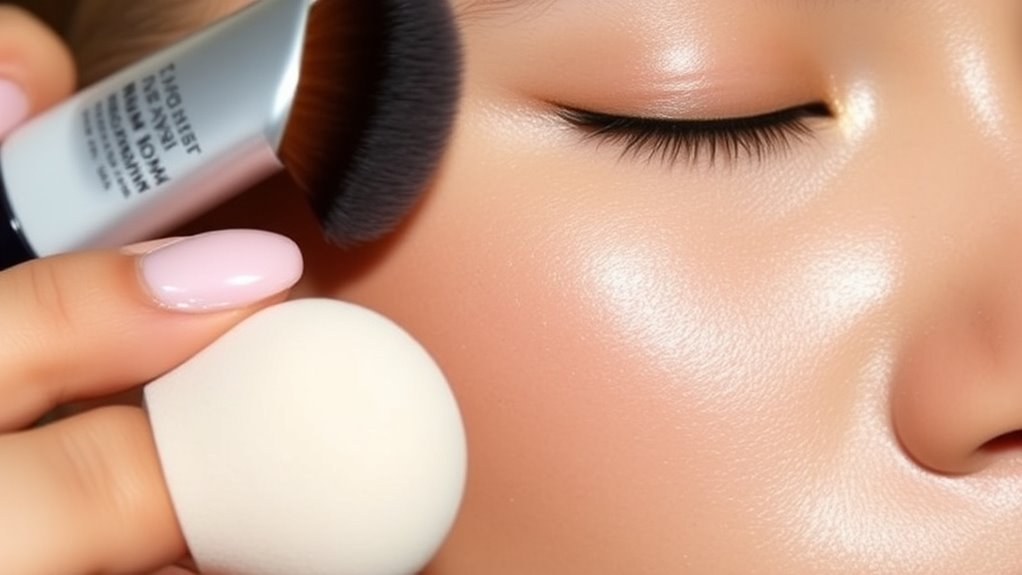
To guarantee your SPF-infused makeup provides the protection you need, applying it correctly is essential. Start with clean, dry skin, and apply a generous layer of primer or moisturizer first.
Next, use application techniques like tapping or stippling to evenly distribute the foundation, ensuring you cover all areas thoroughly.
When layering products, give each layer a few seconds to settle before applying the next, preventing clumping or uneven coverage.
If you’re using multiple products, build from lighter to heavier textures, always allowing each to set.
Remember, don’t rush the process—proper product layering ensures maximum SPF protection and a natural finish.
Consistent, careful application makes sure your foundation’s SPF works effectively throughout the day.
Limitations of SPF in Foundation Compared to Sunscreen
Although SPF in foundation offers some protection, it typically provides a lower level of sun defense compared to dedicated sunscreens. This limitation arises because:
- Many foundations contain only a small amount of chemical filters or mineral blockers, reducing overall SPF effectiveness.
- Foundation coverage often isn’t applied evenly or liberally enough to meet the labeled SPF, leaving gaps in protection.
- The makeup may be wiped off or rubbed away during the day, especially in areas with frequent contact or sweat, limiting ongoing protection.
Because of these factors, relying solely on foundation SPF isn’t sufficient. For all-encompassing sun defense, you need a dedicated sunscreen applied properly beneath your makeup, ensuring consistent, full coverage.
The Role of Additional Sun Protection Measures
Since SPF in your foundation isn’t enough on its own, incorporating additional sun protection measures is essential for effective skin defense. Relying solely on makeup products with SPF can leave your skin vulnerable to UV damage, especially during prolonged sun exposure.
To strengthen your UV protection, wear broad-spectrum sunscreen on exposed areas and reapply frequently. Seek shade whenever possible, especially during peak sunlight hours. Wearing protective clothing, like wide-brimmed hats and sunglasses, helps shield your skin and supports your skin barrier.
These measures reduce the risk of sunburn, premature aging, and skin cancer. Remember, maintaining a healthy skin barrier is key to resisting UV damage, so combine physical barriers with your SPF makeup for holistic protection.
Tips for Choosing the Right Foundation With SPF

Choosing the right foundation with SPF involves more than just checking for a number on the label. To make certain you get the best protection and look your best, consider these tips:
Choosing a foundation with SPF requires careful selection for optimal protection and natural look.
- Prioritize ingredient safety by selecting formulas free from harmful additives.
- Focus on shade matching to find a color that suits your skin tone naturally.
- Verify that the SPF provides broad-spectrum protection suitable for your daily sun exposure.
Common Myths About Makeup Sunscreens Debunked
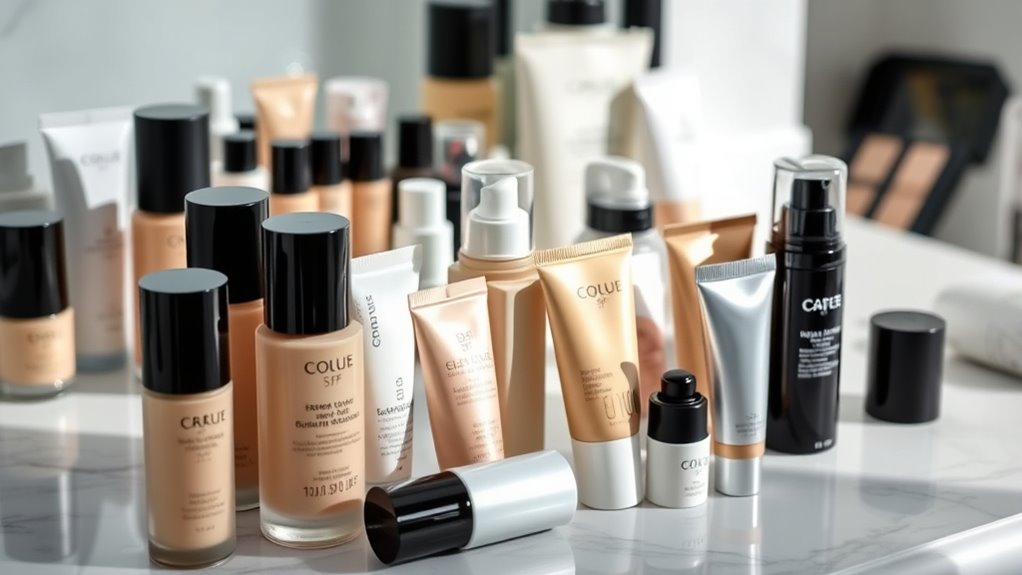
Many people believe that makeup with SPF offers enough sun protection for all situations, but this isn’t always true. Some think that applying foundation alone is enough, whether it contains chemical filters or mineral blockers. However, makeup often provides only minimal coverage and may not be reapplied frequently enough for full protection. Relying solely on makeup can leave your skin vulnerable, especially during prolonged sun exposure. The truth is, chemical filters absorb UV rays, while mineral blockers reflect them—each has strengths and weaknesses. Don’t let misconceptions leave your skin exposed. Remember, makeup with SPF should complement, not replace, dedicated sunscreen.
| Myth | Reality | Feelings |
|---|---|---|
| SPF in makeup is enough | You need additional sunscreen | Safe, confident, protected |
| Mineral blockers aren’t effective | They block UV rays effectively | Secure, reassured |
| Chemical filters are harmful | They’re safe when used properly | Trust, peace of mind |
| Reapplication isn’t necessary | Regular reapplication is key | Empowered, prepared |
Frequently Asked Questions
Can SPF in Foundation Replace Traditional Sunscreen for Daily Sun Protection?
You can’t rely solely on SPF in foundation for daily sun protection because it may not provide enough ingredient efficacy or broad-spectrum coverage.
For better makeup longevity and skin health, apply a dedicated sunscreen underneath your foundation. This guarantees you get adequate sun protection while maintaining the look you want.
How Often Should I Reapply Makeup With SPF During the Day?
You should reapply your makeup with SPF every two hours, especially if you’re outdoors or sweating. Think of it as an armor upgrade to keep your skin protected all day.
Use powder touchups to refresh your look and boost SPF coverage, or spritz with a setting spray for quick, effective reapplication. This routine guarantees your skin stays shielded from sun damage without sacrificing your flawless finish.
Does SPF in Makeup Provide Protection Against All Types of UV Rays?
SPF in makeup offers protection mainly against UVB rays, but it doesn’t fully shield you from all UV spectrum rays like UVA.
The effectiveness depends on the formulation and how well it prevents skin penetration by harmful rays.
To guarantee thorough protection, you should use additional sun protection measures, like broad-spectrum sunscreens.
Relying solely on makeup SPF might leave your skin vulnerable to UV damage from UVA rays, which penetrate deeper.
Are There Specific Ingredients in Makeup SPF That Enhance Sun Protection?
Yes, specific ingredients in makeup SPF can enhance sun protection. Chemical filters like avobenzone and oxybenzone absorb UV rays, providing effective defense.
Mineral ingredients such as zinc oxide and titanium dioxide create a physical barrier that reflects UV rays away from your skin.
Using products with a combination of these ingredients offers broader protection, ensuring your skin stays safer from harmful UV exposure while you wear makeup.
How Long Does SPF in Foundation Last Before Losing Effectiveness?
Ever wonder how long your foundation’s SPF actually protects you? Typically, the sunscreen lifespan in makeup is about two hours, but this can vary based on factors like sweating, touching your face, or exposure to water.
Makeup SPF durability isn’t forever, so reapplying every two hours is essential for consistent protection. Keep an eye on your skin, and don’t rely solely on the initial application for long-lasting sun defense.
Conclusion
So, if you think slapping on a foundation with SPF is your magic shield against the sun, think again—you’re barely scratching the surface! Makeup SPF alone can’t block all those harmful rays, no matter how fancy the label. To truly protect your skin, you need proper application, additional sunscreen, and sun-safe habits. Don’t rely on makeup alone—you’re risking your skin’s future if you do! Protect yourself like your skin’s life depends on it—because it really does!