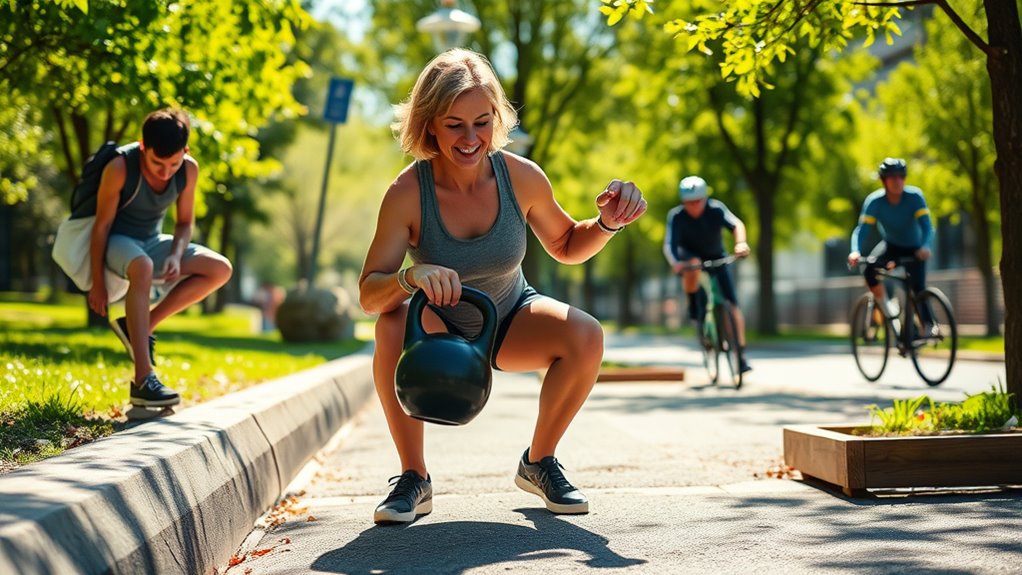
Functional fitness prepares you for everyday movements by strengthening your core and improving your balance. When your core is strong, it supports your spine and pelvis, making activities like bending, lifting, and reaching easier and safer. Better balance helps you move smoothly and avoid falls, boosting your confidence and independence. By working on both, you build a solid foundation for daily tasks. Keep exploring to discover how these skills can make your life safer and more active.
Key Takeaways
- Enhances daily movement efficiency by improving balance and core strength, making everyday tasks easier and safer.
- Reduces fall and injury risks through better body stabilization and coordination in various positions.
- Supports functional tasks like bending, lifting, and carrying by strengthening core muscles and improving control.
- Promotes independence and confidence by preparing the body to handle unpredictable surfaces and loads.
- Combines proper nutrition with movement training to boost overall resilience, recovery, and physical fitness for daily activities.

Have you ever wondered how some people seem to move effortlessly through daily tasks and physical activities? The secret often lies in their functional fitness, a training approach designed to enhance your body’s ability to perform everyday movements with ease and efficiency. One key component of this is balance training, which helps you stabilize your body in various positions, whether you’re standing in line or reaching for something on a high shelf. When you focus on improving your balance, you train your nervous system to coordinate your muscles more effectively, reducing the risk of falls or injuries. This isn’t just about standing on one leg; it’s about building a foundation that supports all movement, from bending and twisting to lifting and carrying.
Core strength plays a pivotal role in functional fitness because your core acts as the body’s center of power and stability. It’s not just about having visible abs; it’s about strengthening the muscles around your abdomen, back, and pelvis to support your spine and pelvis during everyday activities. When your core is strong, bending down to pick up groceries, reaching for something on a high shelf, or even maintaining good posture while sitting becomes much easier and safer. Without proper core strength, you might find yourself compensating with other muscles, leading to strain or injury over time. Incorporating core exercises into your routine enhances your overall stability, making all movements more controlled and less taxing.
Balance training and core strength are interconnected, forming the foundation of functional fitness. When you work on balancing exercises—like standing on one leg or using unstable surfaces—you engage your core muscles naturally, forcing them to activate and stabilize your entire body. This synergy improves coordination and makes complex movements feel more natural. You’ll notice that everyday tasks become smoother because your body is better prepared to handle uneven surfaces, sudden shifts, or unexpected loads. Plus, as your balance and core strength improve, you’ll likely experience increased confidence and independence in your daily life.
Additionally, engaging in proper nutrition can support your training efforts by providing essential nutrients that help repair and strengthen muscles involved in balance and core stability. Ultimately, integrating balance training and core strengthening exercises into your fitness routine translates into real-world benefits. You’ll move with more control, reduce fatigue during physical tasks, and lower your risk of injury. Whether you’re carrying groceries, playing sports, or simply walking around, these foundational elements keep you agile and resilient. Functional fitness isn’t about lifting the heaviest weights or running the fastest; it’s about making sure your body performs at its best in the activities that matter most every day. By focusing on these key areas, you set yourself up for a healthier, more active life, where movement feels natural, safe, and effortless.
Frequently Asked Questions
How Quickly Can I See Results From Functional Fitness?
You can start noticing results from functional fitness within a few weeks if you maintain consistent training intensity and keep your workout duration effective. Typically, you’ll feel stronger and more energetic after 3 to 4 weeks. To see steady progress, focus on progressively increasing your workout intensity and duration over time. Stay dedicated, and you’ll likely experience improvements in daily strength, mobility, and overall fitness relatively quickly.
Is Functional Fitness Suitable for Seniors?
Yes, functional fitness is perfect for seniors. Imagine regaining your balance training, feeling your joint mobility improve with each gentle movement. It’s designed to boost strength and confidence, helping you navigate daily tasks effortlessly. As you build stability and flexibility, you’ll notice everyday activities becoming easier and safer. This tailored approach keeps you active and independent, making every day safer and more enjoyable.
Can Functional Fitness Help With Injury Recovery?
Yes, functional fitness can help with injury recovery by improving joint stability and correcting muscle imbalances. You’ll strengthen the muscles around affected joints, providing better support and reducing pain. Additionally, targeted exercises restore balance in muscles, preventing future injuries. By focusing on movements that mimic daily activities, you’ll rebuild strength and flexibility efficiently, making your recovery process faster and more effective.
What Equipment Is Needed for Functional Fitness Workouts?
You only need a few equipment essentials to master functional fitness workouts—think dumbbells, resistance bands, a stability ball, and a jump rope. These tools make your workouts adaptable for any fitness level, allowing you to modify exercises with ease. With just these basics, you can perform dynamic, everyday-movement-inspired routines that boost strength and flexibility. Who needs fancy gear when you have simple, versatile equipment that transforms your fitness game?
How Often Should I Incorporate Functional Exercises Into My Routine?
You should incorporate functional exercises into your routine about 2 to 3 times a week. This exercise frequency helps you build strength, improve mobility, and maintain workout consistency without overtraining. Consistency is key to seeing benefits, so schedule these workouts regularly and make them part of your overall fitness plan. Adjust the frequency based on your goals and recovery, but aim for steady progress with each session.
Conclusion
Embracing functional fitness is like planting a sturdy tree—your roots grow deeper with every movement, anchoring you through life’s storms. As you build strength and flexibility, you become better equipped to handle daily challenges, symbolizing resilience and adaptability. Remember, each workout is a drop in the vast ocean of your potential. Stay committed, and watch how your life blossoms—strong, flexible, ready to face whatever comes, rooted in the power of functional fitness.