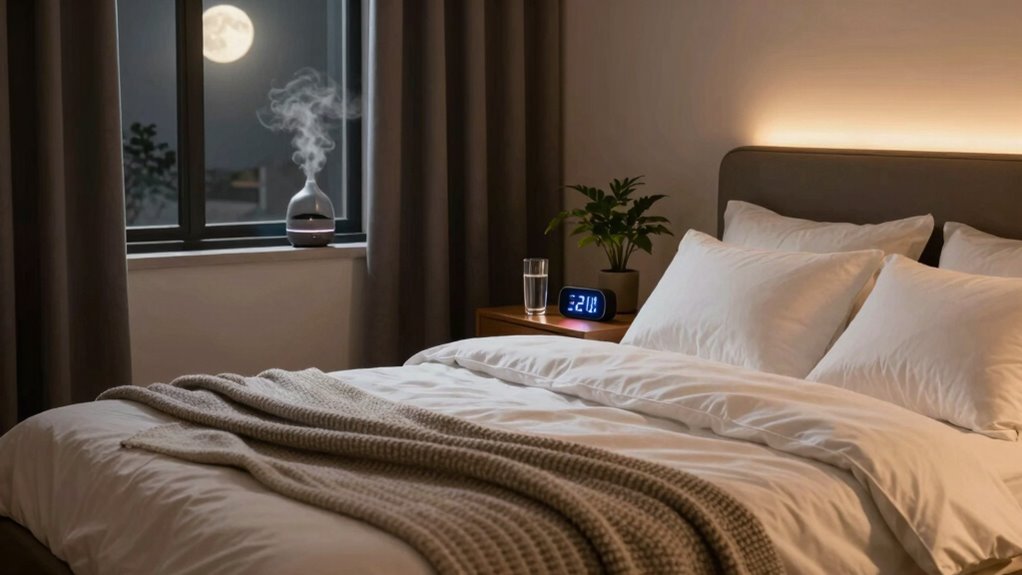

To create a home setup that supports sleep and recovery, focus on optimizing your bedroom environment with a cool, dark, and quiet atmosphere. Use blackout curtains, white noise, and proper bedding to enhance comfort. Establish calming routines before bed, like stretching or listening to soothing music, and keep a consistent sleep schedule. Maintain good air quality and organization for mental relaxation. If you keep exploring, you’ll discover even more ways to turn your space into a restful sanctuary.

Turn your wind-down time into listening time
- Thousands of audiobooks, podcasts and originals
- Listen on your phone, tablet or Echo — also offline
- Cancel anytime
Key Takeaways
- Maintain a cool, dark, and quiet bedroom environment with proper airflow and minimal clutter.
- Use comfortable, breathable bedding and supportive mattresses to enhance physical comfort.
- Establish a consistent sleep schedule and calming pre-sleep routines to reinforce your circadian rhythm.
- Limit screen time before bed and incorporate relaxation techniques like meditation or gentle stretching.
- Enhance air quality with natural ventilation or air purifiers to support overall recovery and restful sleep.

Are you considering setting up a sleep-friendly environment at home? Creating a space that promotes restful sleep isn’t just about choosing the right mattress or pillow—it’s about enhancing your entire sleep environment. Your sleep environment plays a pivotal role in how quickly you fall asleep and how deeply you recover overnight. Start by ensuring your bedroom is cool, dark, and quiet. A temperature between 60-67°F (15-19°C) is ideal for most people, helping your body maintain perfect sleep processes. Use blackout curtains or an eye mask to block out light, as darkness encourages the production of melatonin, the hormone responsible for sleep regulation. White noise machines or earplugs can help drown out disruptive sounds, creating a peaceful atmosphere conducive to uninterrupted rest.
Create a sleep sanctuary with a cool, dark, quiet room for deeper, more restorative rest.
Beyond physical elements, your sleep environment should support effective recovery strategies. Sleep isn’t just about clocking hours; it’s about quality downtime that allows your body to repair and rejuvenate. Incorporate calming routines before bed, such as gentle stretching or meditation, to signal to your body that it’s time to wind down. Avoid screens at least an hour before bed, since blue light can interfere with melatonin production. Instead, opt for relaxing activities like reading or listening to soothing music. Ensuring your bedroom is free from clutter and distractions further reinforces a restful atmosphere—an organized space reduces stress and helps your mind associate the room with relaxation. Creating a sleep-conducive environment can significantly improve your sleep quality and recovery. Additionally, paying attention to sleep environment factors, such as airflow and bedding materials, can further optimize your sleep quality. Proper air quality in your sleep space is essential, as pollutants and poor ventilation can negatively impact sleep and recovery. Introducing natural ventilation or air purifiers can enhance air circulation and reduce airborne irritants, supporting healthier sleep patterns. Incorporating proper lighting in your sleep space can also influence your circadian rhythms and promote better sleep patterns.
Investing in good-quality sleep essentials also enhances your recovery strategies. A comfortable mattress and pillows aligned with your preferred sleeping position support spinal health and reduce discomfort, which can interfere with sleep quality. Additionally, keep your bedding breathable—natural fabrics like cotton or linen can help regulate temperature and prevent overheating during the night. Hydration, a balanced diet, and limiting caffeine or alcohol close to bedtime are also essential components of effective recovery strategies, all of which are easier to maintain when your sleep environment encourages consistent, restorative sleep.
Finally, consistency is key. Establishing a regular sleep schedule—going to bed and waking up at the same time every day—helps reinforce your body’s internal clock. When your sleep environment is refined and your recovery strategies are in place, you’ll find it easier to fall asleep, stay asleep, and wake feeling refreshed. Over time, this holistic approach transforms your home into a sanctuary that actively supports your health and well-being through quality sleep.
Frequently Asked Questions
How Often Should I Replace My Mattress for Optimal Sleep?
You should replace your mattress every 7 to 10 years for ideal sleep. Mattress durability varies based on sleep surface materials, with foam and innerspring mattresses typically lasting around a decade, while latex mattresses may last longer. Over time, wear and tear reduce support and comfort, leading to poorer sleep quality. Regularly assess your mattress for sagging or discomfort, and replace it when it no longer provides proper support.
What Are the Best Colors to Promote Relaxation in the Bedroom?
Did you know that blue hues can boost relaxation and improve sleep quality? In your bedroom, choose calming colors based on color psychology, like soft blues, gentle greens, or neutral tones. These colors create a soothing sleep ambiance, helping you unwind and fall asleep faster. Avoid bright, stimulating shades. By selecting the right calming colors, you set the perfect mood for restful, restorative sleep every night.
Should I Use a White Noise Machine or Earplugs?
You should consider using a white noise machine if you want a consistent, soothing background sound that masks disruptive noises. If you prefer a more portable option or need to block out specific sounds, earplugs work well. Both options help minimize disturbances, but white noise creates a gentle, constant environment, while earplugs offer direct sound blocking. Choose based on your noise sensitivity and sleeping environment for better sleep quality.
How Can I Reduce Electromagnetic Fields in My Sleep Environment?
To reduce electromagnetic fields in your sleep environment, start by turning off Wi-Fi routers and unplugging electronics when not in use. Use electromagnetic safety shields on devices, and keep electronic gadgets away from your bed. Opt for wired connections instead of Wi-Fi. Keep your sleep area as free from electronics as possible, creating a calmer sleep environment that minimizes electromagnetic exposure and promotes better sleep quality.
What Are Natural Remedies to Improve Sleep Quality?
You can improve sleep quality naturally by sipping herbal teas like chamomile or valerian before bed, which promote relaxation. Additionally, using an aromatherapy diffuser with calming essential oils such as lavender or chamomile helps create a soothing environment. These remedies relax your mind and body, making it easier to fall asleep and enjoy restful recovery. Incorporate them into your nightly routine for better sleep and overall well-being.
Conclusion
Now that you’ve crafted your perfect sleep sanctuary, think of it as a cozy lighthouse guiding you safely through the stormy seas of stress and fatigue. By prioritizing comfort, darkness, and tranquility, you’re setting the stage for restful nights and rejuvenated mornings. Remember, your home is your haven—treat it like a lighthouse, shining bright and steady, leading you toward better sleep and vibrant recovery every day. Sweet dreams await at your beautifully crafted haven.
Fall Picks
fall essentials
As an affiliate, we earn on qualifying purchases.