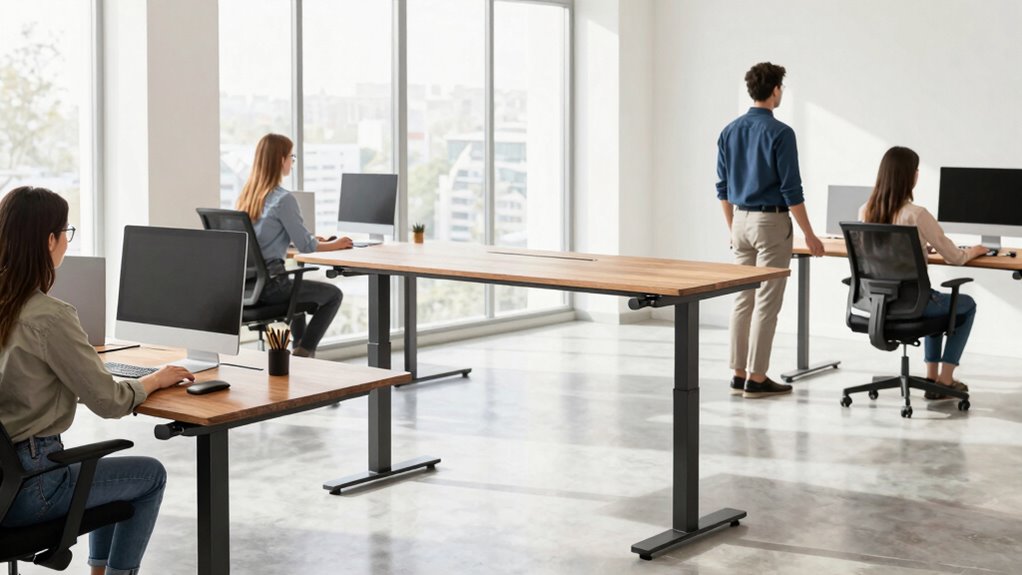
The ideal standing desk height for most people typically ranges between 40 and 50 inches, depending on your height. To find the best fit, you should adjust the desk so your elbows bend at about 90 degrees with your wrists straight. Adjustable desks are the best choice because they let you customize the height for maximum comfort and ergonomics. Keep in mind, proper setup helps prevent strain, and there’s more to contemplate if you want to optimize your workspace.
Key Takeaways
- The typical adjustable height range for standing desks is between 40 to 50 inches, accommodating most users comfortably.
- Proper ergonomic height allows elbows at approximately 90 degrees and wrists straight, regardless of individual height.
- Adjustable desks enable customization, supporting a wide variety of user heights and ergonomic preferences.
- The ideal standing desk height depends on a person’s overall height, with taller users needing higher settings.
- Incorporating ergonomic accessories like monitor risers and keyboard trays can optimize comfort within the height range.
Why Proper Standing Desk Height Is Important for Comfort and Productivity

Having your standing desk set to the correct height is essential because it directly impacts your comfort and efficiency throughout the day. When your desk is at the right level, you can maintain an ergonomic posture, reducing strain on your neck, shoulders, and back. Proper height prevents you from hunching or overstretching, which can lead to discomfort and fatigue. This alignment supports better circulation and minimizes the risk of repetitive strain injuries. Additionally, an ergonomic posture enhances focus and productivity by keeping your body relaxed and alert. Good desk height isn’t just about comfort; it offers significant health benefits, helping you sustain energy levels and avoid long-term musculoskeletal issues. Ergonomic design can further optimize your workspace for maximum comfort and support. Ensuring your desk height aligns with body mechanics promotes overall well-being during extended periods of sitting or standing. Properly adjusted anti-fatigue mats can also play a crucial role in reducing fatigue when standing for long durations, and incorporating customizable height settings allows for quick modifications to suit different tasks or user preferences, making your workspace more versatile.
How to Measure Your Body and Find the Right Standing Desk Height
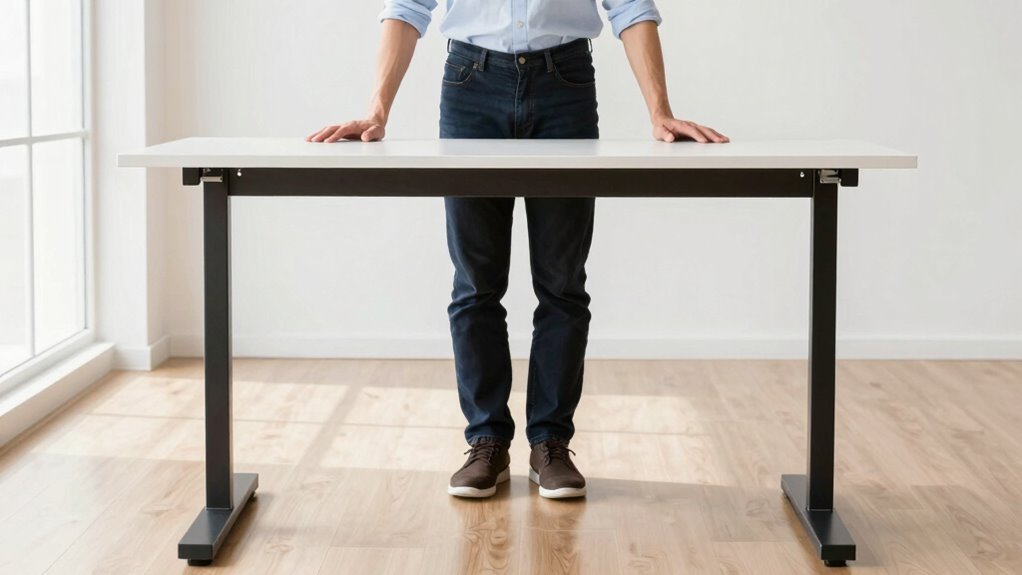
To find the right standing desk height, start by measuring your body accurately. Use a tape measure to determine your elbow height when standing naturally with your arms relaxed at your sides. This measurement helps you set your desk at a level that promotes good posture. When choosing a standing desk, consider the standing desk materials, guaranteeing they’re sturdy and adjustable for fine-tuning. Incorporate ergonomic accessories like monitor risers, keyboard trays, or anti-fatigue mats to optimize comfort and support proper alignment. Keep in mind that your ideal height allows your elbows to bend at about a 90-degree angle, with wrists straight and shoulders relaxed. Taking precise measurements ensures you select a desk that fits your body, reducing strain and increasing productivity. Additionally, understanding ergonomic principles can help you make more informed choices for a healthier workspace. Ensuring your workspace design aligns with body mechanics can further enhance comfort and prevent injury. Being aware of posture correction techniques can also contribute to maintaining comfort throughout your workday. Regularly adjusting your desk setup and practicing correct sitting and standing habits can promote long-term health benefits. Incorporating proper ergonomic setup into your routine can lead to improved comfort and overall well-being during work hours.
What Is the Ideal Standing Desk Height Range for Most People?

For most people, the ideal standing desk height falls within a range that allows your elbows to bend at approximately 90 degrees, keeping your wrists straight and shoulders relaxed. This height typically ranges between your waist and elbow level, depending on your height. When setting your desk, consider how desk accessories like monitor arms or keyboard trays can help fine-tune your setup for comfort. Don’t fall for standing desk myths that suggest one perfect height exists for everyone; individual differences matter. Instead, aim for a position that supports natural posture and reduces strain. Adjustments are key, so take the time to find a height that feels comfortable for you and supports long-term health. Proper setup prevents discomfort and maximizes the benefits of your standing desk, especially when considering ergonomic principles that promote better posture and reduce fatigue. Incorporating personalized adjustments can further enhance comfort and productivity over time. Additionally, understanding the height range that suits most users can help you make more informed decisions when customizing your workspace, and exploring adjustability features can ensure your desk accommodates your needs as they change.
Typical Standing Desk Heights for Different User Heights

Your ideal standing desk height depends on your height, so finding the optimal range is key. Adjustable desks help you customize for comfort, making sure your elbows stay at a 90-degree angle. Considering your height ensures you set the perfect working position, reducing strain and boosting productivity. Additionally, proper ergonomics can significantly enhance comfort and prevent musculoskeletal issues during long work hours. Regularly inspecting your gear ensures all components function correctly, contributing to a safer and more comfortable workspace. Incorporating ergonomic principles into your setup can further improve overall comfort and efficiency, supported by guidelines from soul sanctuaries. Understanding the correct posture can help maintain spinal health and prevent discomfort over time.
Optimal Height Range
Finding the right standing desk height is essential for comfort and productivity, and it varies based on your height. Typically, your desk should be set so your elbows are at a 90-degree angle, reducing strain. The ideal height range for most users falls between 40-50 inches, depending on your stature. Choose ergonomic accessories like adjustable monitor arms or anti-fatigue mats to enhance comfort. When selecting desk material options, consider sturdy surfaces that support your ergonomic setup without wobbling. Additionally, ensuring your workspace promotes ergonomic posture can prevent discomfort and improve long-term health. Proper desk height adjustment is crucial for maintaining comfort throughout your workday. Adjusting your workspace to support correct ergonomics can significantly improve your overall well-being and productivity. Properly setting your desk height can also help reduce fatigue and musculoskeletal issues. Remember that ergonomic principles guide the ideal setup to keep your body aligned and healthy. Here’s a quick guide:
| User Height | Desk Height Range | Emotional Impact |
|---|---|---|
| Short | 40-43 inches | Confidence in comfort |
| Average | 43-47 inches | Focus and ease |
| Tall | 47-50 inches | Confidence in productivity |
Adjustability for Comfort
Adjustability plays a key role in guaranteeing your standing desk setup remains comfortable across different users and tasks. With flexible height adjustments, you can customize your workspace for ideal ergonomics, reducing strain and fatigue. Incorporate ergonomic accessories like keyboard trays, monitor arms, and anti-fatigue mats to enhance comfort further. These standing desk accessories allow you to fine-tune your setup, making it easier to maintain proper posture throughout the day. When your desk height can be easily changed, you guarantee that both sitting and standing positions are comfortable, regardless of user height. This adaptability helps prevent discomfort and encourages movement, making your workspace more versatile and supportive for long hours of work. Additionally, understanding ergonomic principles can guide you in creating a healthier, more efficient workspace. Knowing capacity and adjustability features of your desk can also help you select the most suitable model for your needs. To maximize comfort and prevent musculoskeletal issues, it’s important to consider ergonomic design features that promote proper alignment and support.
User Height Considerations
Choosing the correct standing desk height depends heavily on your overall height to guarantee proper ergonomics. When your desk is set at the right level, your elbows should bend at about a 90-degree angle, with your wrists straight. For taller users, a higher desk may be necessary, while shorter individuals might need a lower setup. Consider using desk accessories like adjustable monitor stands or keyboard trays to fine-tune your workspace. Standing desk mats help reduce fatigue and improve comfort during long periods of standing. Remember, a desk that’s too high or too low can cause strain and discomfort, so prioritize adjustability and personal comfort. Ensuring your standing desk aligns with your height will promote better posture and productivity.
Are Adjustable Desks the Best Choice for a Custom Fit?

Adjustable desks let you fine-tune the height for a perfect fit, ensuring ergonomic comfort. With precise adjustments, you can easily switch between sitting and standing positions, promoting better posture. Plus, their versatility makes them suitable for various tasks and users, maximizing your workspace flexibility.
Precise Height Adjustments
When it comes to finding the perfect height, precise adjustments are crucial for comfort and ergonomics. Adjustable desks excel in providing ideal height customization, allowing you to fine-tune the surface to your specific needs. This level of ergonomic precision ensures your monitor, keyboard, and work surface align perfectly, reducing strain on your neck, shoulders, and wrists. With accurate height adjustments, you can switch between sitting and standing positions seamlessly, maintaining comfort throughout your workday. Many adjustable desks feature digital controls or incremental dials, giving you exact control over each adjustment. This precision helps you create a personalized workstation that promotes better posture and minimizes fatigue. Ultimately, precise height adjustments make adjustable desks a top choice for achieving a truly customized and ergonomic workspace.
Ergonomic Comfort Benefits
The ability to fine-tune your desk height directly impacts your overall comfort during long work hours. When your desk is adjustable, you can set it to the ideal height that promotes proper posture, reducing strain on your back and neck. Good foot support becomes easier, as you can position your feet comfortably flat on the floor or a footrest, enhancing stability and circulation. Plus, adjustable desks often improve desk aesthetics, creating a sleek, organized workspace that feels personalized. This customization helps prevent discomfort and fatigue, making work sessions more productive. By tailoring the height to your body’s needs, you ensure ergonomic benefits that promote long-term health and comfort, making adjustable standing desks a smart investment for a truly ergonomic setup.
Versatile Usage Options
Because they can be easily modified to suit different tasks and users, adjustable desks offer exceptional versatility for various work and activity setups. You can quickly switch from sitting to standing, optimizing your ergonomic accessories and desk placement for comfort. Imagine arranging your workspace with these options:
| Task | Desk Height | Accessories |
|---|---|---|
| Typing | Mid-level | Keyboard tray, monitor riser |
| Reading/Research | Elevated | Adjustable monitor arm |
| Break/Stretch | Lower | Footrest, ergonomic chair |
This flexibility ensures your workspace adapts to your needs, whether focusing on precision tasks or taking a break. Adjustable desks truly provide a customizable experience that promotes comfort and productivity, making them the top choice for a personalized setup.
How to Set Up Your Standing Desk to Prevent Strain

Setting up your standing desk correctly is key to preventing strain and maintaining comfort throughout your workday. Focus on posture alignment by adjusting the height so your elbows are at a 90-degree angle, keeping your wrists straight and relaxed. Your monitor should be at eye level to avoid neck strain and promote proper desk aesthetics, ensuring your workspace looks organized and efficient. Make sure your feet are flat on the floor, with your weight evenly distributed, and keep your knees slightly bent. Position your keyboard and mouse close enough to avoid reaching, which can cause shoulder tension. Regularly check your setup throughout the day to maintain these adjustments, reducing fatigue and preventing long-term discomfort. Proper setup creates a healthier, more ergonomic workspace that supports your productivity.
How Do You Know If Your Standing Desk Is Set Correctly?

To know if your standing desk is set correctly, pay attention to how your body feels during use. Comfort and proper alignment are key indicators. Here are three ways to check:
- Your elbows should be at a 90-degree angle when resting on desk accessories or work surfaces.
- Your wrists stay straight, avoiding strain, especially when using sitting alternatives or standing for long periods.
- Your monitor should be eye level, preventing neck strain, and your feet should be flat on the floor or on a mat.
If you experience discomfort or fatigue, adjust the height accordingly. Proper setup ensures your standing desk promotes good posture and reduces strain, making it a comfortable sitting alternative that fits your body’s needs.
Fixed vs. Adjustable Standing Desks: Which Works Best for You?
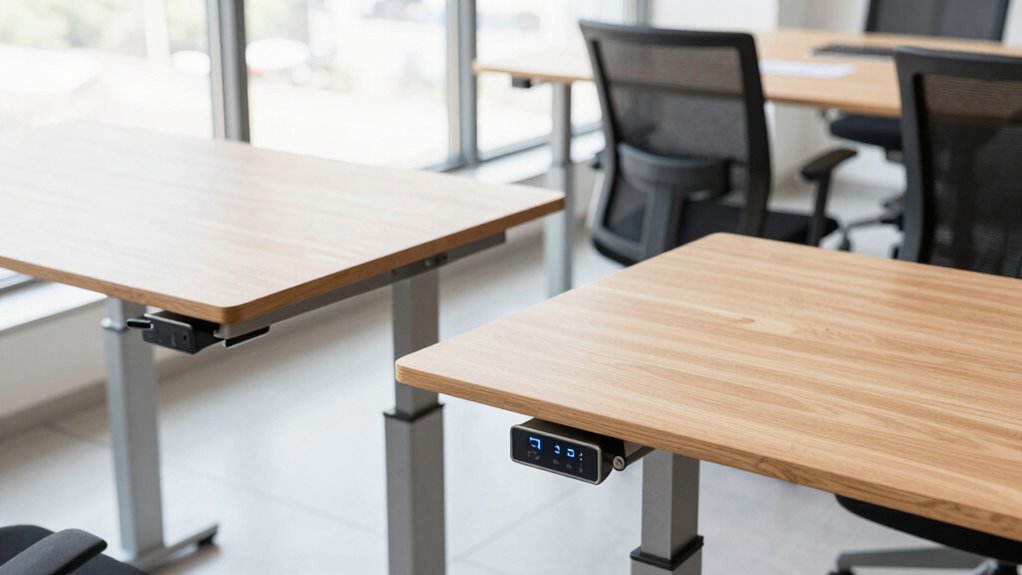
Choosing between a fixed and an adjustable standing desk depends on your work habits and flexibility needs. If you prefer simplicity and stability, a fixed desk might suit you better. However, if you value versatility and ergonomic adjustments, an adjustable desk allows you to switch between sitting and standing easily. To optimize comfort, consider ergonomic accessories like keyboard risers and monitor arms with both desk types. Using standing desk mats can also reduce fatigue, especially if you use an adjustable desk frequently. Here’s a quick comparison:
| Feature | Fixed Desk | Adjustable Desk | Both |
|---|---|---|---|
| Stability | High | Moderate | Ergonomic accessories fit both |
| Flexibility | Limited | Highly flexible | Can accommodate standing desk mats |
| Cost | Usually less | Usually more | Both options vary in price |
| Ease of Use | Simple | Requires adjustment | Easy to incorporate accessories |
Final Tips for Choosing a Standing Desk That Fits Most People
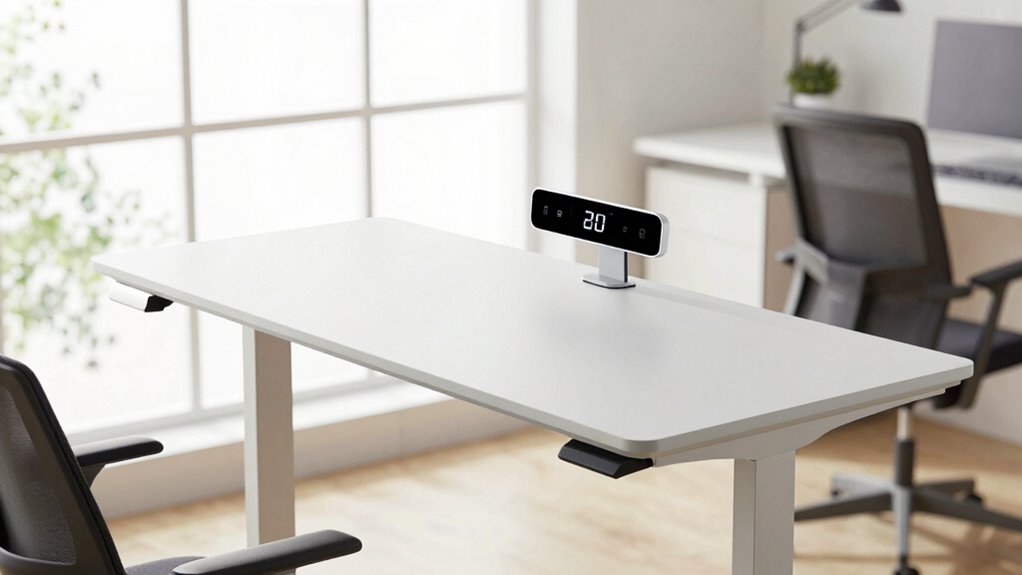
Selecting a standing desk that works for most people involves considering flexibility, comfort, and budget. To make the best choice, keep these tips in mind:
Choosing a versatile, comfortable, budget-friendly standing desk is key for most users.
- Prioritize adjustability: Look for desks with flexible height ranges, reflecting the standing desk history of evolving ergonomic standards.
- Add essential desk accessories: Items like monitor arms and anti-fatigue mats enhance comfort and productivity.
- Set a budget: Quality desks vary widely; balancing features with your budget ensures long-term satisfaction.
Frequently Asked Questions
Can Standing Desks Be Customized for Specific Ergonomic Needs?
Yes, standing desks can be customized for your ergonomic needs. You can adjust the height, tilt, and keyboard position with adjustable features, ensuring proper alignment and comfort. Many desks also allow ergonomic modifications like adding footrests or monitor arms. These customizable options help you create a workspace tailored to your body, reducing strain and increasing productivity. Always choose a desk with versatile adjustable features for ideal ergonomic support.
How Often Should I Adjust My Standing Desk Height During the Day?
Adjust your standing desk often to avoid aches and awkwardness. Every 30 to 60 minutes, shift your stance, ensuring your ergonomic chair and desk mat support your posture. Frequent adjustments prevent stiffness and strain, keeping you comfortable and confident. Use your desk’s height controls to fine-tune your fit, and take short breaks to stretch. Staying proactive with these pauses promotes productivity and prevents persistent pains.
Are There Health Risks Associated With Incorrect Desk Height?
Yes, there are health risks if your desk height isn’t correct. Incorrect height can lead to ergonomic hazards and posture issues, like neck, shoulder, or back pain. When your desk is too high or low, you strain muscles and joints, increasing discomfort and potential injury over time. To stay safe, adjust your desk to maintain a neutral, comfortable posture, reducing these risks and promoting better ergonomic health.
What Accessories Can Enhance Comfort at a Standing Desk?
To boost comfort at your standing desk, you can use ergonomic mats that reduce strain on your feet and legs. Monitor arms are also helpful, as they allow you to adjust your screen height for better posture and less neck strain. These accessories make your workspace more ergonomic, helping you stay comfortable and focused during long work sessions. Incorporate them to create a healthier, more supportive standing desk setup.
How Do I Transition Safely From Sitting to Standing Work?
Imagine your body waking up as you switch from sitting to standing. To do this safely, start by gradually raising your desk using ergonomic footrests for support. Adjust your monitor to eye level with an adjustable monitor stand, keeping your neck relaxed. Move slowly, listening to your body, and take breaks often. This gentle shift helps prevent strain and makes standing more comfortable over time.
Conclusion
Choosing the right standing desk height is like finding the perfect fit in a pair of shoes—it keeps you comfortable and prevents unnecessary strain. By measuring yourself and considering adjustable options, you’ll set yourself up for better posture, increased productivity, and long-term health. Remember, a well-fitted desk isn’t just furniture; it’s the foundation for your daily comfort. Invest the time now, and your body will thank you for years to come.