Reverse osmosis water effectively removes many contaminants like salts, heavy metals, bacteria, and organic compounds by passing water through a semi-permeable membrane. However, it may not filter out gases such as chlorine and VOCs, or very small minerals that can affect taste. Maintenance is key for ideal performance, and some substances can still slip through. If you want to understand exactly what gets filtered and what doesn’t, keep exploring this topic further.
Key Takeaways
- Reverse osmosis effectively removes dissolved salts, heavy metals, bacteria, viruses, and organic compounds from water.
- It typically filters out particles as small as 0.0001 microns, providing high-quality purification.
- Gases like chlorine and VOCs may escape due to membrane limitations, and small minerals can pass through.
- Substances such as certain pesticides, low-molecular-weight compounds, and volatile chemicals may remain in filtered water.
- Regular maintenance, including filter replacement and system sanitization, is essential for optimal RO system performance.

iSpring RCC7AK-BN NSF Certified, 75 GPD, Alkaline 6-Stage Reverse Osmosis System, pH+ Remineralization RO Water Filter System Under Sink Patented Top-Mounted Faucet Design for Easy Installation
- Patented Top-Mounted Faucet Design: Easy above-sink installation
- Mineral Boost Stage: Adds essential minerals and pH balance
- Transparent Filter Housing: Monitor contaminant buildup easily
As an affiliate, we earn on qualifying purchases.
As an affiliate, we earn on qualifying purchases.
What Is Reverse Osmosis and How Does It Work?
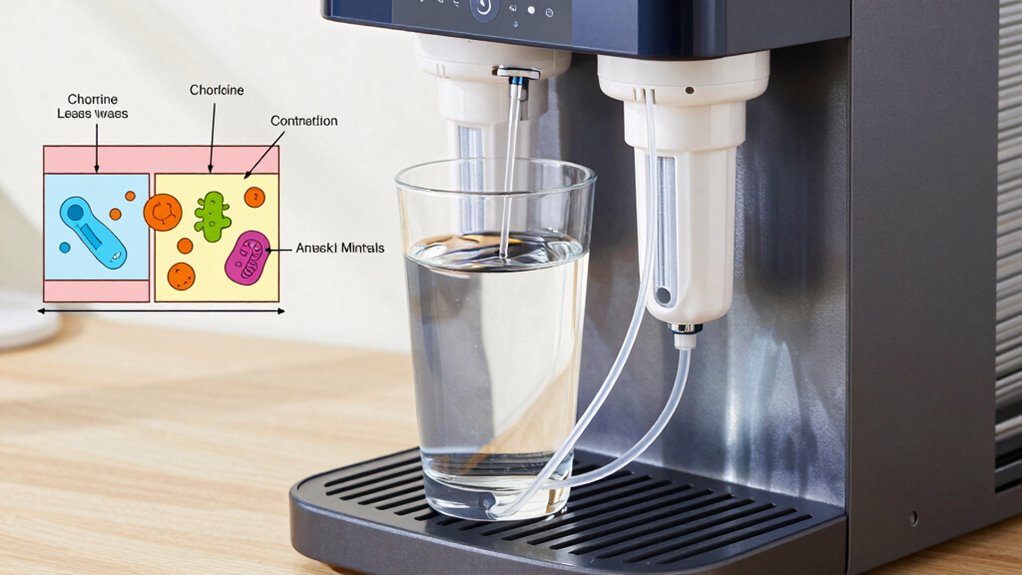
Reverse osmosis is a water purification process that uses a semi-permeable membrane to remove impurities. Your RO system relies heavily on membrane durability to guarantee effective filtration over time. A strong, well-maintained membrane resists damage from contaminants and prolongs system life. Before water reaches the membrane, a pre-filter is essential; it removes larger particles like sediment and chlorine that could harm or clog the membrane. This step protects the membrane, maintaining its integrity and efficiency. When water passes through the pre-filter, it’s prepared for the fine filtration of the membrane, which traps dissolved solids, bacteria, and other impurities. Proper membrane maintenance is crucial to ensure consistent performance and longevity of your RO system. This combination of pre-filter importance and a durable membrane ensures you get clean, safe drinking water with consistent performance.
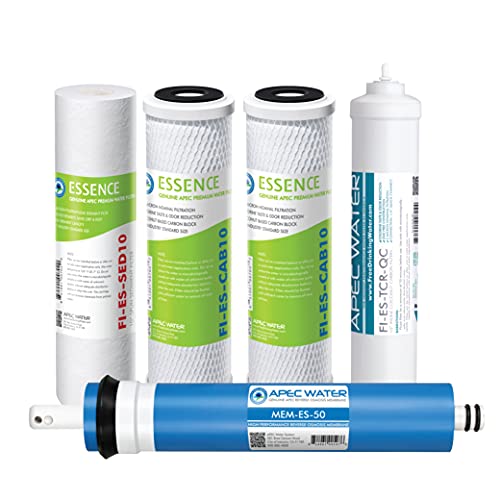
APEC Water FILTER-MAX-ES50 Reverse Osmosis Filter Replacement Set, 50 GPD
- Compatible with ROES-50: Designed for APEC ESSENCE Series
- Sediment Filter: 5 micron sediment removal
- Carbon Block Filters: Removes chlorine, taste, odor
As an affiliate, we earn on qualifying purchases.
As an affiliate, we earn on qualifying purchases.
Which Contaminants Does Reverse Osmosis Remove?

Have you ever wondered what contaminants reverse osmosis can remove from your water? It’s effective against many contaminant types, including dissolved salts, heavy metals, and organic compounds. Reverse osmosis’s filtration limits allow it to trap particles as small as 0.0001 microns, which means it can remove bacteria, viruses, and most chemicals. Additionally, the membrane’s filtration limits prevent many harmful substances from passing through. These limits are based on the pore size of the membrane, which is crucial for its effectiveness. The membrane material also plays a role in determining which contaminants are most effectively removed. Moreover, the filtering process can be affected by factors such as water temperature and pressure, which influence its efficiency. However, some substances, like certain gases or volatile organic compounds, may pass through the membrane due to their small size or volatility. While reverse osmosis is highly efficient at reducing contaminants, it’s important to understand its limitations. It doesn’t remove everything, especially substances that are very small or not easily captured by the membrane. Still, it provides a significant level of purification for most common contaminants in drinking water.
iSpring RCC7AK-BN NSF Certified, 75 GPD, Alkaline 6-Stage Reverse Osmosis System, pH+ Remineralization RO Water Filter System Under Sink Patented Top-Mounted Faucet Design for Easy Installation
- Patented Top-Mounted Faucet Design: Easy above-sink installation
- Mineral Boost Stage: Adds essential minerals and pH balance
- Transparent Filter Housing: Monitor contaminant buildup easily
As an affiliate, we earn on qualifying purchases.
As an affiliate, we earn on qualifying purchases.
What Substances Can’t Reverse Osmosis Filter Out?
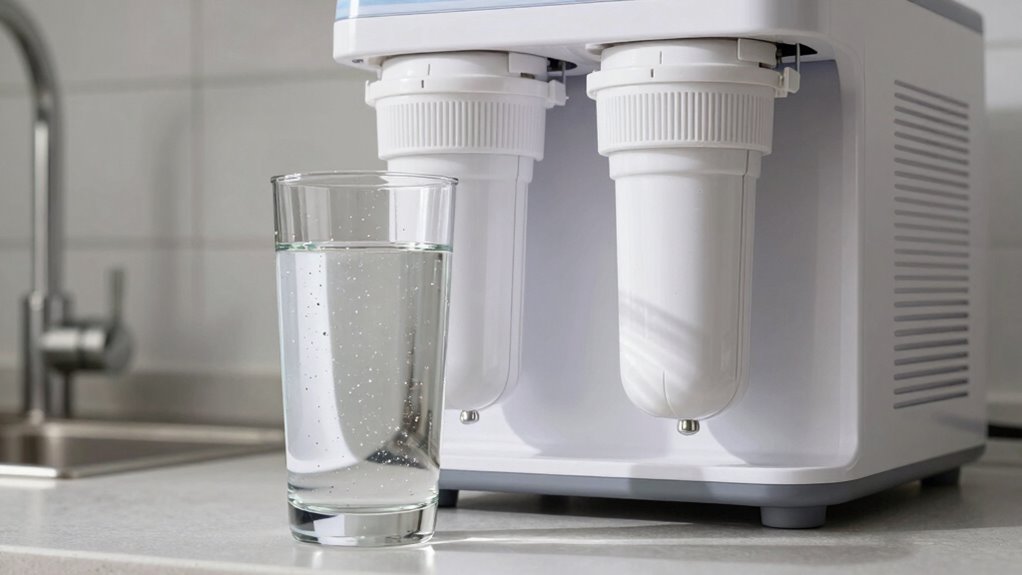
Although reverse osmosis effectively removes many contaminants, it can’t filter out certain substances, especially those that are very small or volatile. For example, it struggles with:
- Gases like chlorine and volatile organic compounds (VOCs) that can escape the membrane. Additionally, some gas transfer limitations mean these gases may still be present after treatment. Understanding membrane permeability helps explain why some gases bypass filtration.
- Minerals that are small enough to pass through, affecting mineral retention and taste.
- pH imbalances, since RO can slightly alter water’s acidity or alkalinity without proper pH adjustment.
- Some pesticides and herbicides that are volatile or very low in molecular size.
Additionally, filter technology limitations mean that some tiny or gaseous substances may still be present after treatment. For instance, membrane permeability factors can influence how well certain substances are filtered out. While RO improves water purity, it doesn’t completely eliminate all substances, especially those that are tiny, gaseous, or volatile. Understanding these limitations helps you better manage your water quality and consider additional treatments, such as proper pH balancing or activated carbon filters, to address these residual substances.
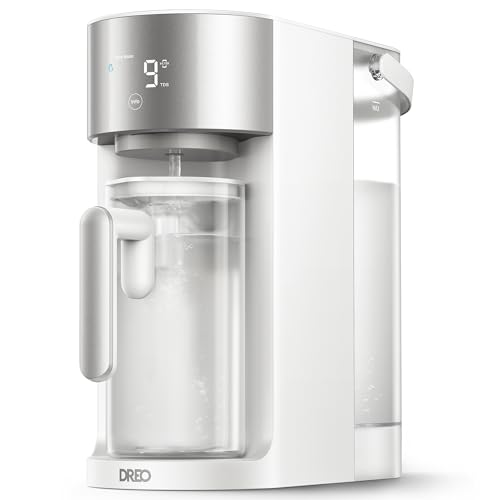
DREO Reverse Osmosis Water Filter Countertop, RO Filtration System, 3:1 Pure to Drain, TDS & Filter Life & Autofill Pitcher, Installation-Free, Self-Cleaning Water Purifier, RO Water Filter
- SGS Tested for Impurity Removal: Removes 1000+ impurities including chemicals
- Real-Time TDS & Filter Monitoring: Displays raw and pure water TDS levels
- Auto-Fill and Self-Cleaning System: Hands-free refills and automatic internal cleaning
As an affiliate, we earn on qualifying purchases.
As an affiliate, we earn on qualifying purchases.
How to Maintain Your Reverse Osmosis System
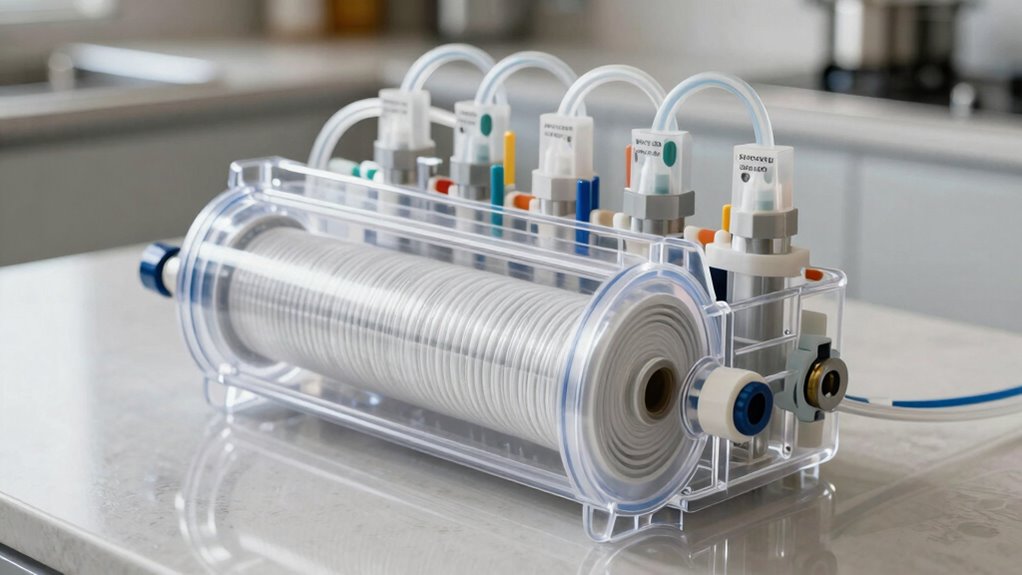
To keep your reverse osmosis system working effectively, regular maintenance is key. Follow simple maintenance tips like inspecting your system periodically for leaks or damage. One of the most important steps is timely filter replacement; filters should be changed according to the manufacturer’s schedule—usually every 6 to 12 months. This prevents buildup of contaminants and guarantees optimal filtration. Additionally, sanitize your system annually to prevent bacteria growth. Keep an eye on the storage tank for any foul odors or reduced water quality. Regularly check the flow rate; a decline may indicate clogged filters. Proper maintenance not only ensures consistent water quality but also helps to avoid costly repairs down the line. Microplastics in dust can sometimes bypass filtration if filters are not maintained properly, so staying vigilant is essential. By staying proactive with maintenance tips and promptly replacing filters, you’ll extend your system’s lifespan and continue enjoying clean, safe drinking water. Regularly monitoring filter efficiency can help identify when replacements are needed before problems arise. To ensure your system maintains accurate performance, consider using testing accuracy tools to verify water quality regularly. Additionally, staying informed about common system issues can help you troubleshoot problems early and keep your system running smoothly.
Is Reverse Osmosis Water Right for Your Drinking Needs?
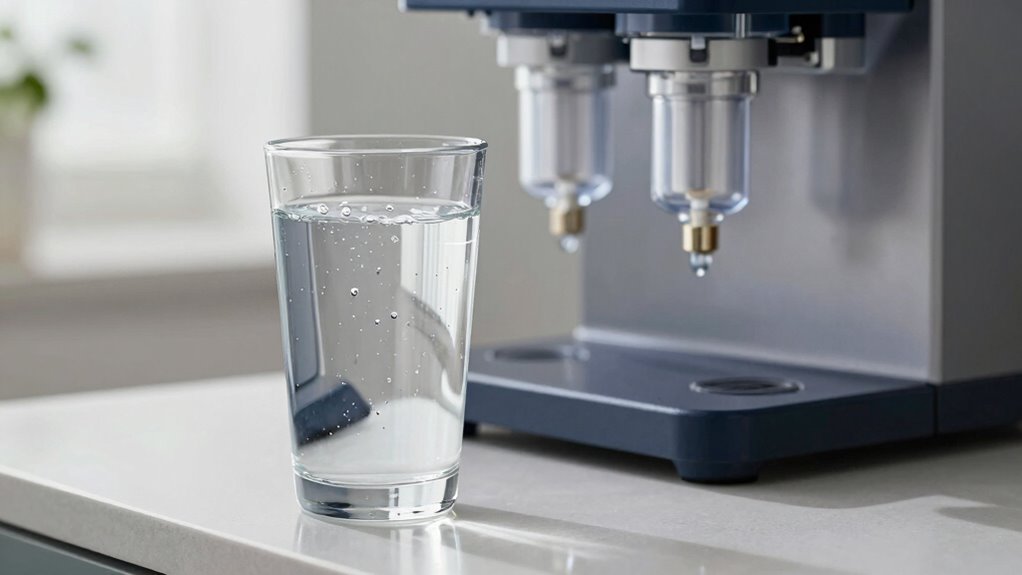
Wondering if reverse osmosis water suits your drinking needs? It might be a great choice if you prefer a clean, pure taste and want to reduce contaminants found in tap water. However, consider these points:
Considering pure, contaminant-free water? Reverse osmosis could be ideal for a fresh taste and cleaner drinking experience.
- If you dislike the flat or slightly mineral-like water taste typical of some bottled water, RO water offers a crisp alternative.
- If your local water has strong odors or tastes, RO can improve your drinking experience.
- If you’re concerned about removing impurities but still want some minerals, you might need additional remineralization.
- If you’re okay with the maintenance of an RO system, it can provide consistent quality at home.
- Incorporating urban greening initiatives can help improve overall water quality and reduce reliance on extensive filtration systems.
- Additionally, understanding the water purification process can help you determine if RO is the best option for your specific needs.
- Recognizing the impact of water filtration on mineral content can help you make an informed choice about your drinking water.
- Being aware of water mineral content can guide you in deciding whether to add minerals back into your water after filtration.
- Considering water quality standards in your area can further aid in selecting the most suitable filtration method.
Ultimately, it’s about your preferences for water taste and your health priorities. RO water could be the right fit or maybe not, depending on your needs.
Frequently Asked Questions
Can Reverse Osmosis Remove Viruses and Bacteria Effectively?
Yes, reverse osmosis effectively removes viruses and bacteria through viral filtration and bacteria removal processes. You benefit from its membrane’s tiny pores that block pathogens, making your water safer to drink. While it’s highly efficient, guarantee your system is well-maintained for maximum bacteria removal. Regularly replacing filters and membranes keeps your reverse osmosis unit functioning properly, providing you with clean, pathogen-free water.
Does Reverse Osmosis Improve the Taste and Odor of Water?
Yes, reverse osmosis improves the taste and odor of your water. It reduces unpleasant odors and enhances taste by removing chlorine, sulfur, and other compounds that cause off-flavors. As a result, your water becomes cleaner and more invigorating. You’ll notice a significant difference in how your water tastes and smells, making it more enjoyable to drink and use for cooking. This process guarantees you get fresher, better-tasting water every time.
How Long Does a Typical Reverse Osmosis System Last?
Imagine a trusty water filter as a steady guardian, standing guard over your tap. Typically, your reverse osmosis system lasts about 2-3 years, depending on usage and water quality. To keep it performing at its best, follow the recommended replacement schedule for filters and membranes. Regular maintenance guarantees your system’s lifespan extends, providing you with clean, crisp water without interruption.
Is Reverse Osmosis Water Safe for Cooking and Brewing?
Yes, reverse osmosis water is safe for cooking and brewing. It provides a clean, pure taste, but it can have a lower pH balance and reduced mineral content. For ideal flavor and health, you might want to add minerals back or mix it with mineral-rich water. This guarantees your dishes and beverages have the right mineral balance, enhancing taste while keeping water safe and healthy.
What Are the Costs Associated With Installing and Maintaining an RO System?
You should anticipate a cost analysis that includes upfront installation expenses, typically between $200 and $600, depending on system complexity. Maintenance expenses involve replacing filters and membranes every 6 to 12 months, costing around $50 to $150 annually. Additional costs may include water waste and energy use. Regular upkeep guarantees your RO system functions efficiently, saving you money long-term and providing clean, safe water for your home.
Conclusion
Think of reverse osmosis as a diligent gatekeeper, filtering out unwanted guests from your water. While it’s excellent at removing many contaminants, some substances slip through like uninvited guests sneaking past. By understanding its strengths and limits, you can decide if it’s the right fit for your hydration needs. Proper maintenance keeps this gatekeeper on duty, ensuring your water remains clean and safe—like having a trusted friend watch over your health every day.