Aromatherapy can be a natural and effective way to reduce stress and promote relaxation. You can create personalized blends using calming essential oils like lavender, chamomile, citrus, or peppermint, applying them through diffusers or directly on pulse points. Make sure to use high-quality oils, perform skin patch tests, and follow safety guidelines. By incorporating these mindful techniques, you can enhance your stress management routine—if you continue exploring, you’ll discover how to maximize its soothing benefits.
Key Takeaways
- Use calming essential oils like lavender, chamomile, and citrus in diffusers or topically for stress relief.
- Create personalized blends combining soothing oils to enhance relaxation and emotional well-being.
- Follow safety guidelines by performing patch tests and avoiding overexposure to prevent sensitivities.
- Incorporate aromatherapy into daily routines for consistent stress management and emotional balance.
- Ensure the use of high-quality, pure essential oils from reputable sources for safe and effective relaxation.
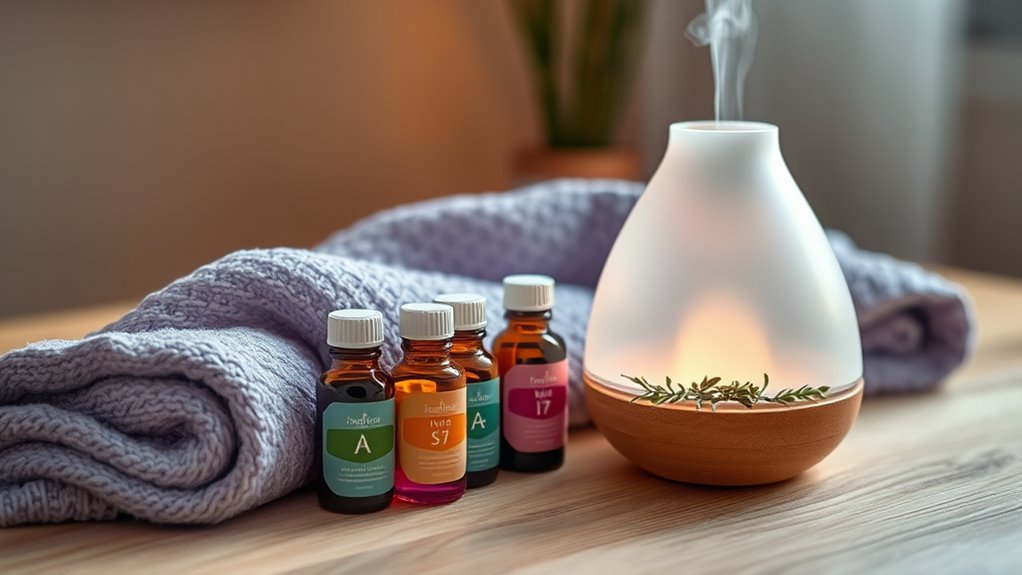
When stress takes over your day, turning to aromatherapy can offer a natural and effective way to find relief. One of the most rewarding aspects of aromatherapy is essential oil blending, which allows you to customize scents that resonate with your personal preferences and specific stress levels. By mixing different essential oils, you can create a calming aroma tailored to your needs, whether it’s a soothing lavender and chamomile blend or an invigorating citrus and peppermint combination. However, it’s essential to prioritize aromatherapy safety when blending oils. Not all essential oils are suitable for direct skin contact or inhalation, and some can cause allergic reactions or irritation if used improperly. Always dilute essential oils with a carrier oil before applying them to your skin, and perform a patch test to check for sensitivities. Furthermore, research each oil’s properties and contraindications to avoid adverse effects, especially if you’re pregnant, nursing, or have underlying health conditions.
In addition to blending, understanding how to use essential oils safely enhances your stress relief routine. Use a diffuser to disperse a calming scent throughout your space, but be mindful of the room size and the amount of oil you add—more isn’t always better. Keep the diffuser in a well-ventilated area and avoid overexposure, which can lead to headaches or respiratory irritation. If you prefer a more direct approach, dilute your essential oils in a carrier oil and apply them to pulse points like your wrists or temples. Remember, quality matters; choose pure, high-grade essential oils from reputable sources to ensure safety and efficacy. Avoid synthetic fragrances or oils that contain additives, as these can undermine the benefits of aromatherapy and pose health risks.
Practicing aromatherapy safety also involves being aware of your environment and personal sensitivities. If you’re prone to respiratory issues, consult with a healthcare professional before using certain oils or diffusing in enclosed spaces. Keep essential oils out of reach of children and pets, as some oils can be toxic if ingested or applied improperly. When it comes to blending, start with small quantities and adjust gradually, noting how your body responds. Additionally, some essential oils have demonstrated stress-relieving properties that can enhance your relaxation routine. By combining thoughtful essential oil blending with diligent aromatherapy safety measures, you create a stress-relief practice that’s both effective and safe. This mindful approach allows you to harness the full potential of aromatherapy, helping you relax and restore balance amidst life’s daily pressures.
Frequently Asked Questions
Can Aromatherapy Replace Professional Mental Health Treatment?
Aromatherapy can’t substitute professional mental health treatment, but it can serve as a helpful complementary therapy. You might find it useful for relaxation and stress relief alongside therapy or medication. While it offers mental health support, it shouldn’t be your sole treatment method. If you’re struggling with mental health issues, it is vital to seek advice from a qualified mental health professional to guarantee thorough care.
Are There Any Risks or Side Effects With Essential Oils?
Yes, there are some safety concerns with essential oils. You might experience allergic reactions or skin irritation if you’re sensitive or use them undiluted. Always do a patch test before applying a new oil, and avoid ingestion unless advised by a professional. Keep essential oils out of reach of children and pets. Being cautious helps you enjoy the benefits while minimizing risks and side effects.
How Long Does It Take to Notice Stress Relief Benefits?
While patience is often rewarded, timing expectations for stress relief benefits vary with individual differences. You might notice calming effects within minutes, especially with inhalation, but for some, it could take longer or require consistent use. Trust your body’s signals and give yourself time to adapt. With regular application, you’ll likely find that the soothing effects gradually become more noticeable, helping you feel more centered and relaxed.
Which Essential Oils Are Best for Severe Anxiety?
For severe anxiety, you should try essential oil blends with lavender, bergamot, and chamomile, as they’re known for calming effects. Use them with anxiety management techniques like deep breathing or grounding exercises. You can diffuse these oils, add a few drops to a carrier oil for a massage, or inhale directly. Combining these methods helps you find quick relief and long-term calm, making your anxiety more manageable.
Can Pregnant Women Safely Use Aromatherapy for Relaxation?
Pregnant women can safely use aromatherapy for relaxation if they follow pregnancy safety guidelines and essential oil precautions. Always consult your healthcare provider before starting, and choose gentle, diluted oils like lavender or chamomile. Avoid high-risk oils such as clove or rosemary. Use a diffuser or dilute oils properly to prevent skin irritation. Staying informed and cautious guarantees you enjoy aromatherapy benefits safely during pregnancy.
Conclusion
As you breathe in the gentle whisper of essential oils, let their calming embrace wash over you like a soothing tide. Aromatherapy transforms your space into a sanctuary, turning stress into a fleeting shadow. With each fragrant inhale, you’re weaving threads of tranquility into the fabric of your day, creating a haven where peace blooms effortlessly. Embrace this aromatic journey, and allow your mind to drift into a serene, sunlit garden of relaxation.