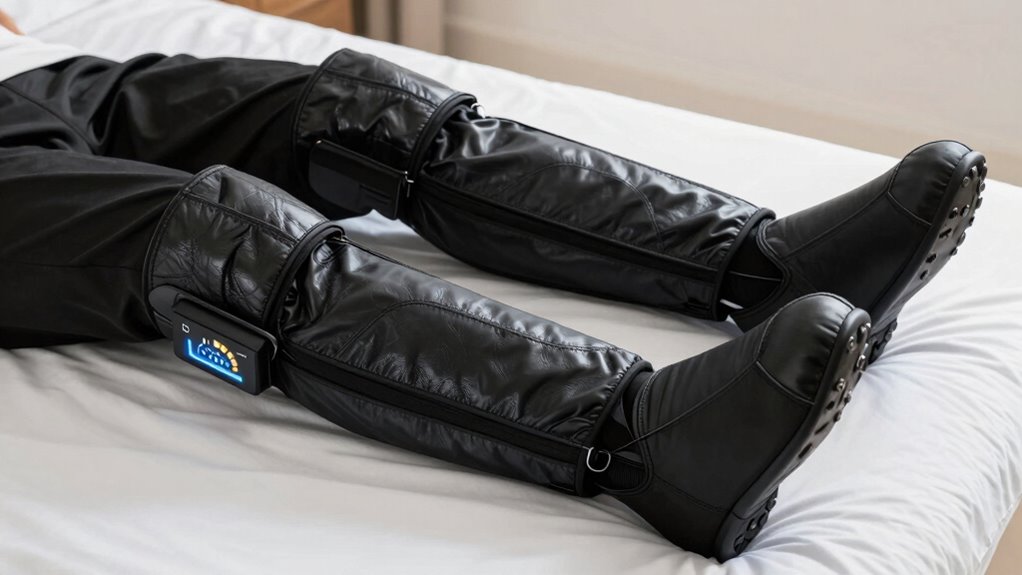
Understanding compression boot pressure settings is key to maximizing their benefits safely. Most devices let you adjust the pressure based on your goals, comfort, and activity level. Generally, lower settings improve circulation and relaxation, while higher levels target muscle recovery. It’s important to start low, make gradual adjustments, and listen to your body. If you want to know how to set the right levels for you, keep exploring these helpful tips.
Key Takeaways
- Compression boots typically use pressure ranges from 30 to 100 mmHg, depending on activity and recovery goals.
- Lower pressures (30-50 mmHg) promote relaxation, while higher pressures (50-80 mmHg) enhance circulation and recovery.
- Start with a moderate setting, then gradually increase or decrease based on comfort and desired effects.
- Proper fit and snugness are crucial; adjust straps and pressure to avoid discomfort or restricted blood flow.
- Always listen to your body: reduce pressure if you experience tingling, numbness, or pain during use.
What Are Compression Boot Pressure Settings and Why Do They Matter?
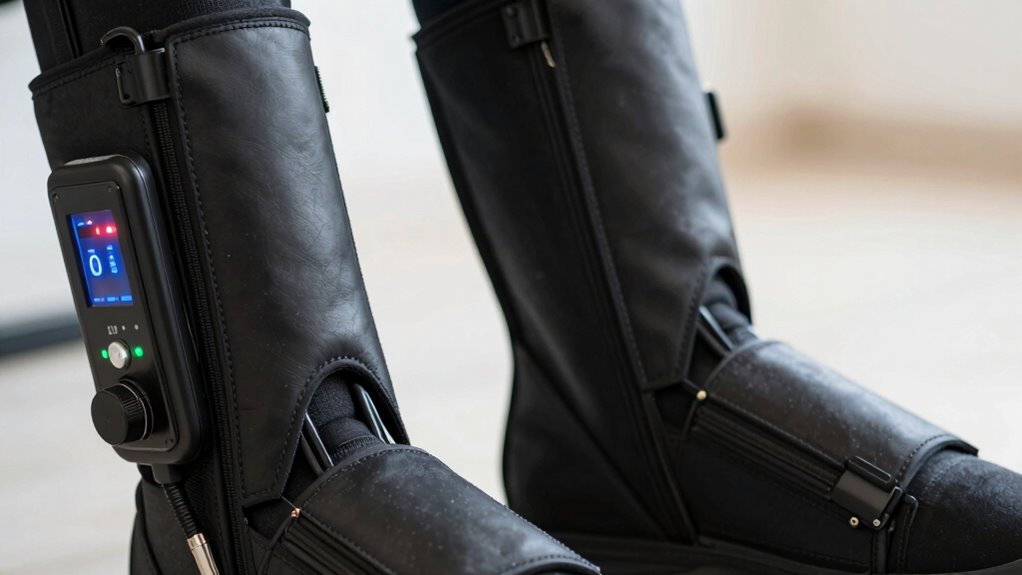
Understanding compression boot pressure settings is essential because they directly impact how effective the therapy is and how comfortable you feel during use. These settings control the amount of pressure applied by the boots, which can vary depending on your needs. Modern compression technology often includes fitness tracking features that help monitor your progress and optimize settings for your goals. Proper pressure levels ensure you get the benefits of improved circulation without discomfort or overexertion. When you comprehend how pressure settings work, you can tailor your sessions for recovery or performance enhancement. Knowing how pressure levels are determined can help you make informed decisions about your therapy. Additionally, knowing about individualized pressure adjustments allows you to customize your experience for maximum benefit. This knowledge helps you make the most of your compression boots, ensuring therapy is both safe and effective, while integrated fitness tracking keeps you informed about your progress.
How to Choose the Right Pressure Level for Your Goals
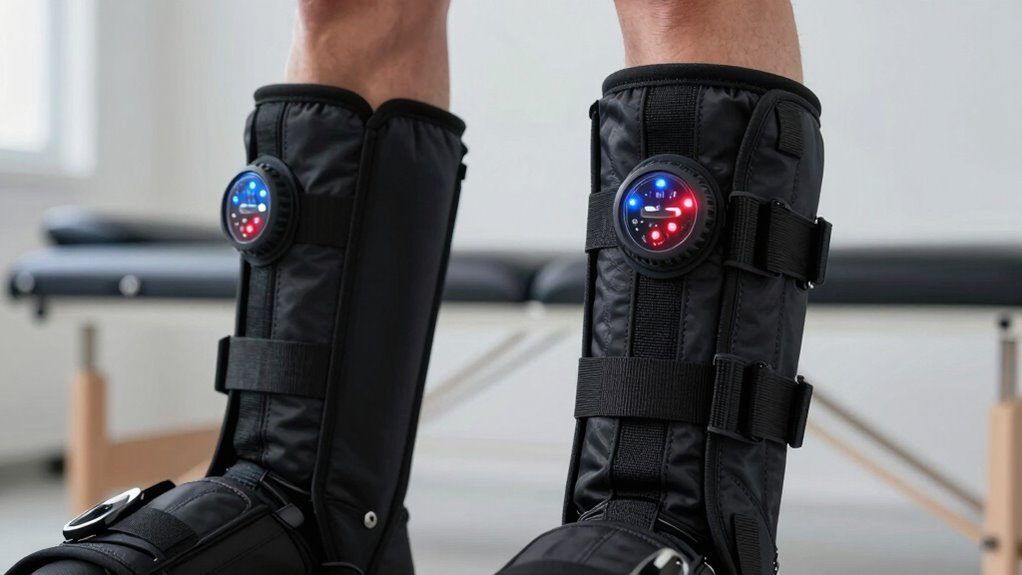
Choosing the right pressure level depends on your specific recovery goals and comfort. You can adjust targeted pressure settings to focus on sore muscles or improve circulation. Consider what you want to achieve to determine the appropriate intensity for your needs.
Targeted Pressure Adjustments
Selecting the right pressure level is essential for maximizing the benefits of compression boots without causing discomfort. When adjusting targeted pressure, think of balloon inflation — you want just enough to stimulate circulation without over-tightening. Start with moderate settings to ensure pressure comfort and gradually increase if needed. Pay attention to how your legs feel; if you notice tingling or numbness, reduce the pressure. Focus on specific areas that need more support, adjusting the pressure accordingly. Remember, different zones may require different levels of compression based on your goals. Fine-tuning these targeted pressure adjustments helps you avoid unnecessary discomfort while ensuring effective therapy. Additionally, considering the sustainable manufacturing practices of your compression device can contribute to more environmentally friendly textile use and reduce pollution. Being aware of manufacturing practices can help you select products aligned with eco-friendly values. It is also beneficial to monitor device performance regularly to ensure it functions efficiently and safely. Regularly assessing the device’s durability can help extend its lifespan and ensure consistent treatment quality. To optimize your experience, also pay attention to user feedback and make adjustments accordingly. Always listen to your body and modify the settings to strike the perfect balance between effectiveness and comfort.
Personal Recovery Goals
Ever wondered how to set your compression boots to match your recovery goals? Your choice of pressure level directly impacts blood circulation and muscle relaxation. If your goal is to boost blood flow and reduce swelling, opt for lower to moderate pressures, which gently encourage circulation without discomfort. For muscle relaxation after intense workouts, slightly higher pressures can help loosen tight muscles and promote quicker recovery. Always listen to your body—if you feel any pain or excessive tightness, decrease the pressure. Keep in mind that your personal recovery goals, whether improving circulation or relaxing muscles, guide the ideal pressure setting. Adjust accordingly to ensure a comfortable, effective session that aligns with your specific needs. Additionally, understanding contrast ratio in projectors can help you choose devices that deliver better image quality for your home cinema needs. Recognizing pressure sensitivity can also help you customize your settings more precisely for optimal recovery. Recognizing pressure distribution is essential for ensuring even compression and avoiding discomfort during use. Being aware of pressure variability can help you fine-tune your settings for consistent effectiveness throughout your session. Incorporating knowledge of pressure monitoring can help you track and optimize your compression therapy over time.
Step-by-Step: How to Adjust Your Compression Boot Pressure
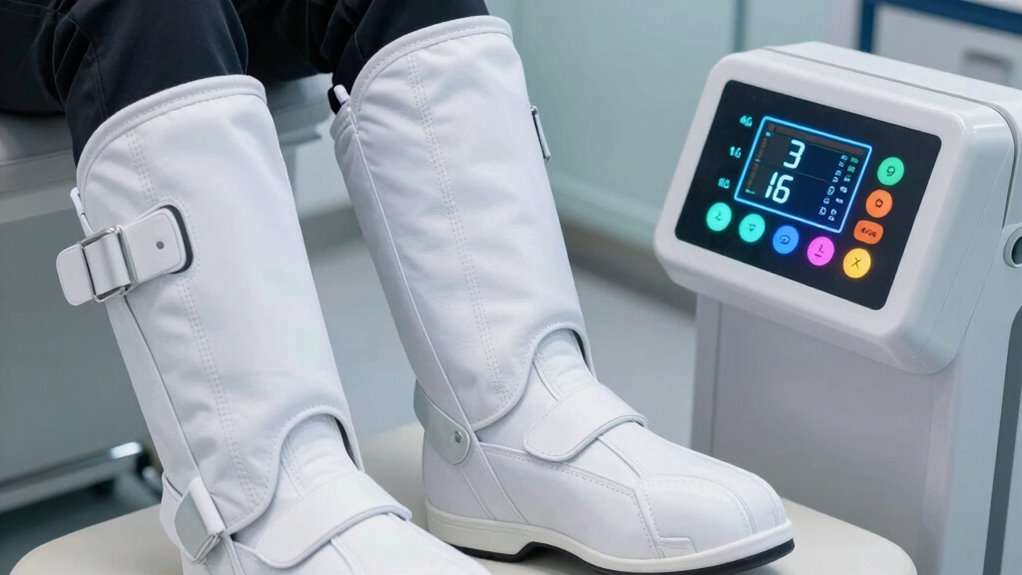
Adjusting the pressure on your compression boots is a straightforward process that guarantees you get the most benefit from your therapy. To begin, turn on your device and locate the pressure control settings. Use the interface—whether buttons, a dial, or a touchscreen—to increase or decrease pressure gradually. Focus on pressure customization to match your comfort level; start low and adjust slowly. Pay attention to user comfort, ensuring the sensation feels firm but not painful. Make small adjustments and test the fit, especially around sensitive areas. Once you find a comfortable setting, lock in your preferred pressure. Regularly reassess your comfort during sessions and adjust as needed. Proper pressure adjustment maximizes recovery benefits and minimizes discomfort. Additionally, understanding pressure settings can help you customize your experience for optimal results. Remember that user comfort plays a crucial role in achieving effective therapy without discomfort. Being aware of pressure limits can also prevent over-tightening and ensure safety during use. Monitoring pressure feedback can further refine your experience and ensure consistent results. Keeping track of your tolerance level helps prevent overexertion and promotes safer use.
What Are the Most Common Pressure Settings and When to Use Them
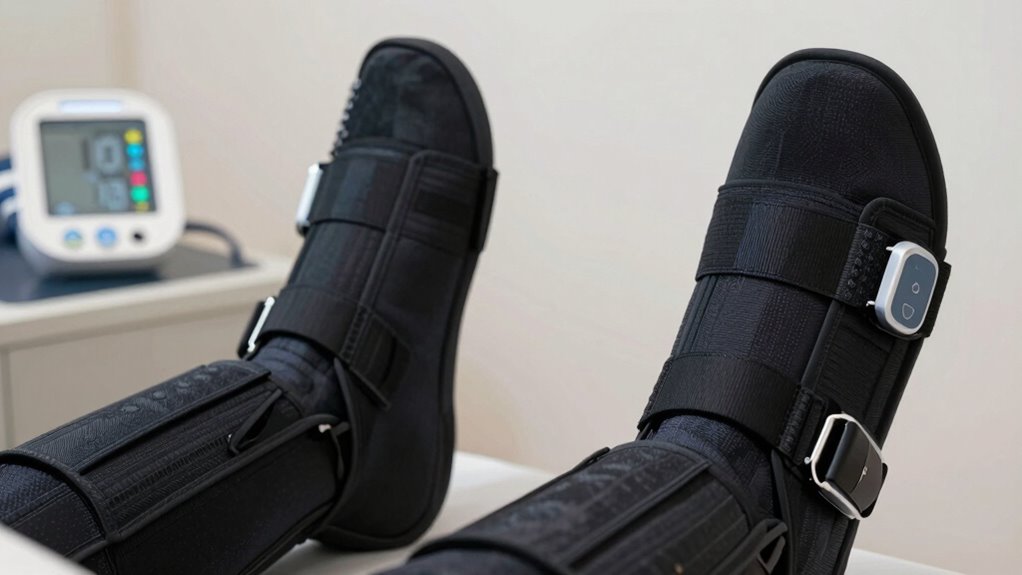
Understanding the common pressure settings helps you optimize your recovery and performance. Most devices operate within specific ranges, with ideal settings varying based on activity levels. Selecting the right pressure guarantees effective relief without discomfort, whether you’re resting or active. Proper traceability ensures consistent quality and compliance with safety standards, giving you confidence in your therapy.
Typical Pressure Ranges
Most compression boots operate within a pressure range of 30 to 100 mmHg, with the specific setting depending on your goals and comfort level. For gentle pressure that promotes pressure comfort and relaxation, starting around 30 to 50 mmHg works well. Athletes or those seeking more effective circulation may prefer settings between 50 and 80 mmHg. Higher pressures, above 80 mmHg, are typically reserved for recovery or medical purposes and should be used with caution. It’s important to stay mindful of device maintenance—regularly checking for leaks or wear helps guarantee safe, effective use. Always listen to your body, adjusting pressure as needed to avoid discomfort or excessive tightness, and consult guidelines or professionals for personalized recommendations. Additionally, understanding pressure settings can help optimize your treatment or recovery process. Knowing the pressure ranges suitable for different activities can enhance your overall experience and safety. Being aware of recommended adjustments ensures you tailor the pressure to your needs, maximizing comfort and benefits. Furthermore, understanding the pressure distribution can contribute to more balanced and effective compression therapy. Recognizing the importance of proper fit can also prevent discomfort and improve treatment outcomes.
Ideal Settings for Recovery
For recovery purposes, many users find that setting compression boots between 50 and 80 mmHg offers the best balance of effectiveness and comfort. This range promotes muscle relaxation and circulation enhancement, helping your muscles recover faster. Lower settings around 50 mmHg are ideal for gentle recovery sessions, especially if you’re sensitive. Higher settings near 80 mmHg provide more intense pressure for improved circulation and muscle relaxation after intense activity. Here’s a quick overview:
| Pressure Range | Best For | Benefits |
|---|---|---|
| 50-60 mmHg | Light recovery, sensitivity | Gentle muscle relaxation |
| 60-70 mmHg | Moderate recovery, regular use | Circulation enhancement |
| 70-80 mmHg | Intense recovery, post-workout | Deep muscle relaxation |
Additionally, understanding pressure settings can help you tailor your recovery sessions for optimal results, ensuring you choose the right level to match your activity level and sensitivity. Being aware of pressure level adjustments can also help prevent discomfort during use, especially for new users. Recognizing appropriate pressure ranges can further enhance your comfort and effectiveness during each session.
Adjusting for Activity Levels
Choosing the right pressure setting depends on your activity level and recovery needs. For light activity or maintenance, use lower pressure settings to guarantee pressure comfort while still promoting circulation. During moderate activity, such as after a workout, moderate pressure helps support activity balance and reduces soreness without feeling restrictive. If you’re engaging in intense training or recovery from heavy exertion, higher pressure settings can enhance recovery by increasing blood flow and lymphatic drainage. Always listen to your body—if pressure feels uncomfortable or causes pain, reduce it. Adjusting pressure based on activity levels ensures you get the benefits of compression without sacrificing comfort. Remember, the goal is to find a balance that supports your activity while maintaining pressure comfort.
Tips for Beginners: Setting Safe and Effective Pressure Levels
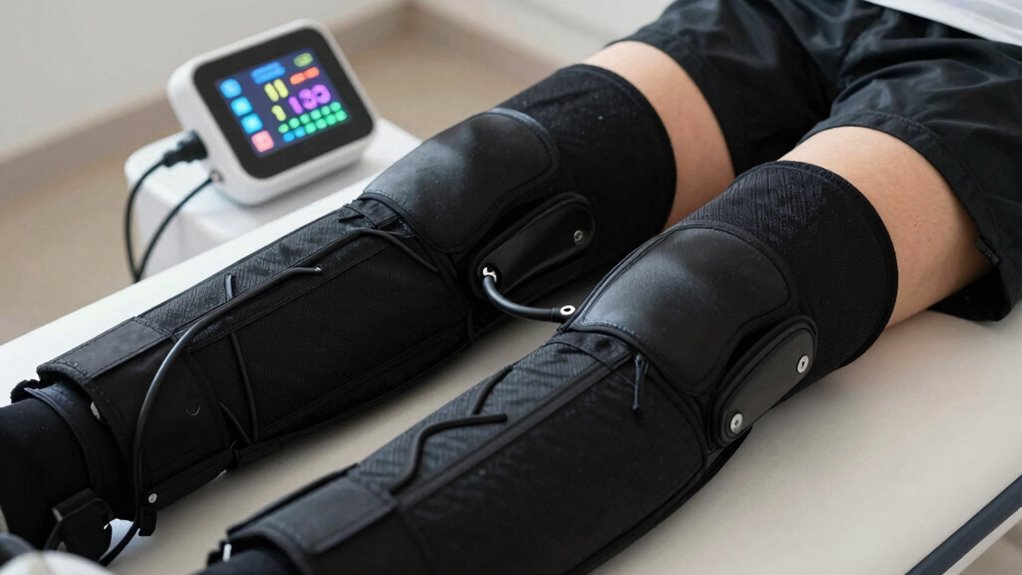
When starting with compression boots, it’s vital to set the pressure levels carefully to guarantee safety and effectiveness. Don’t fall for pressure myths that suggest higher pressure always means better results; moderation is key. To make certain of safe use, keep these tips in mind:
- Begin with the lowest pressure setting and gradually increase as needed.
- Always follow the manufacturer’s guidelines for device maintenance to prevent malfunctions.
- Consult a healthcare professional if unsure about the appropriate pressure for your needs.
Troubleshooting: What to Do if Your Boots Feel Uncomfortable or Too Tight
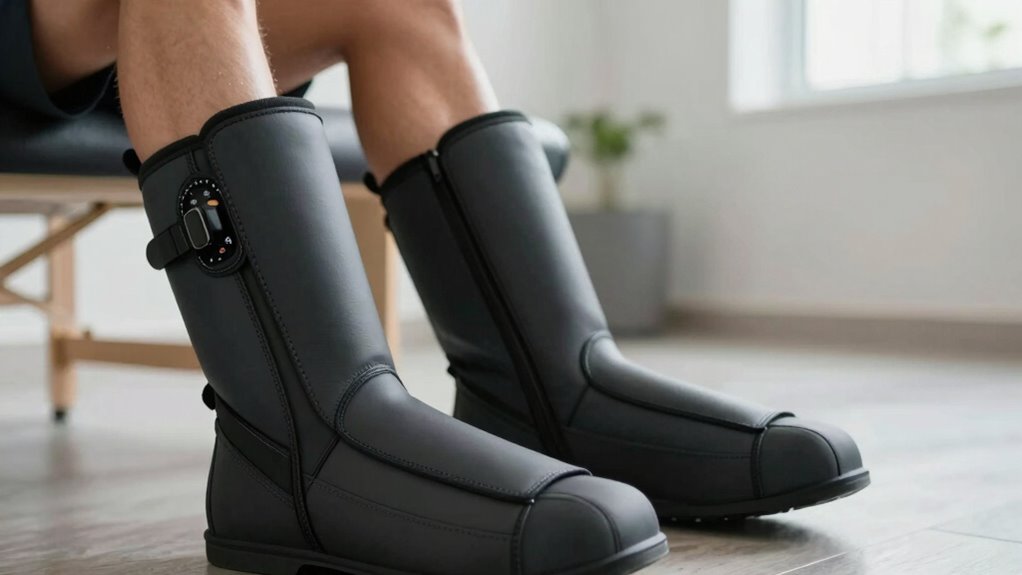
If your compression boots feel uncomfortable or too tight, it’s important to address the issue promptly to guarantee safe and effective use. First, check the fit adjustments. Many boots have straps or Velcro to help customize compression comfort. Loosen these slightly if they feel too constrictive. Ensure the boots aren’t sitting too high or too low on your legs, as improper positioning can cause discomfort. If the pressure still feels excessive, try reducing the overall pressure setting, if adjustable. Always prioritize your comfort and avoid forcing the boots tighter. Proper fit adjustments are key to maintaining comfort while still gaining benefits. Remember, feeling too tight isn’t normal and can diminish the effectiveness of your compression therapy.
How to Know if Your Pressure Is Too High or Too Low
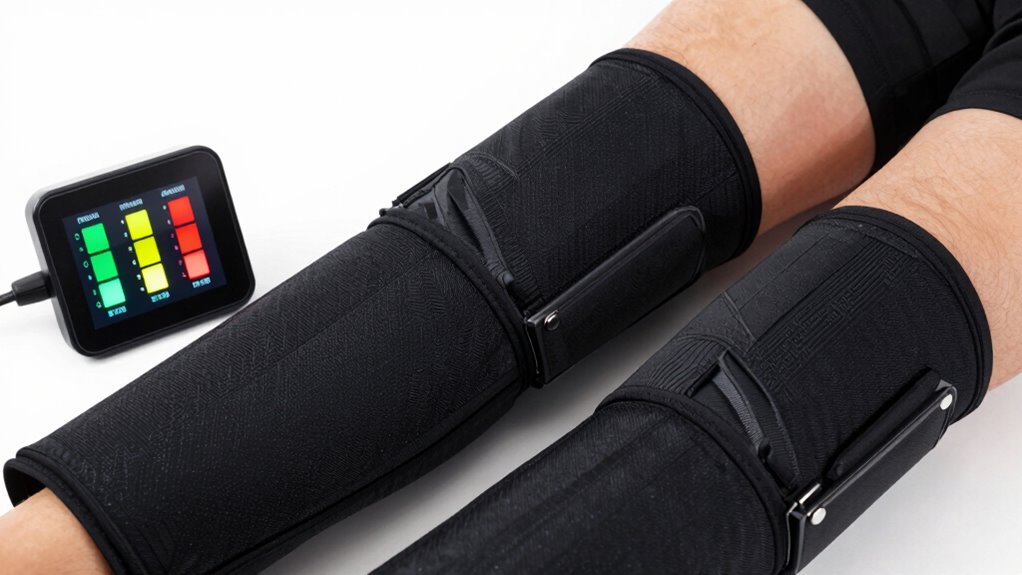
Determining whether your compression pressure is too high or too low is essential for effective therapy and comfort. Too high pressure can cause discomfort or restrict blood flow, while too low may not provide enough benefit. To gauge pressure comfort, pay attention to how your legs feel during and after use. If you experience tightness, tingling, or numbness, your pressure might be too high. Conversely, if the compression feels weak or ineffective, it could be too low. Use fitting tips to ensure proper snugness without discomfort. Adjust the settings gradually, checking for:
- Comfort level during use
- Absence of numbness or tingling
- Effective circulation improvement
Monitoring these cues helps you find the right balance for ideal results.
Frequently Asked Questions
Can I Wear Compression Boots During Exercise or Only Afterward?
You can wear compression boots during exercise, but it’s best to follow proper exercise timing and safety precautions. Using them during workouts may help improve circulation and reduce fatigue, but make sure you don’t wear them too tightly or for too long. Always listen to your body and consult a healthcare professional if you experience discomfort. Wearing compression boots during post-exercise recovery is more common and generally safer.
How Long Should I Typically Wear Compression Boots per Session?
You should typically wear compression boots for a session duration of about 20 to 30 minutes. The recommended timing is after your workout or physical activity, as it helps reduce soreness and improve recovery. Avoid wearing them for too long, as extended use might cause discomfort or restrict circulation. Listen to your body, and if you feel any pain or numbness, remove the boots promptly.
Are There Any Health Conditions That Prevent Using Compression Boots?
You must be cautious; certain medical restrictions and contraindications can make compression boots dangerous for you. If you have heart issues, blood clots, or circulation problems, using them might do more harm than good. Always consult with your healthcare provider before trying compression therapy. Ignoring these restrictions can lead to serious health risks, so don’t skip professional advice—your safety is more important than any workout.
How Often Should I Replace or Maintain My Compression Boots?
You should replace or maintain your compression boots according to the manufacturer’s recommended maintenance schedule and replacement timeline. Typically, you’ll want to check the boots regularly for signs of wear, such as leaks or tears, and clean them after each use. Most brands suggest replacing the boots every 1-2 years to ensure peak performance and hygiene. Staying on top of these steps helps prolong their lifespan and keeps your therapy effective.
Can I Use Compression Boots With Other Recovery or Therapy Devices?
Think of your recovery routine as a symphony—you can blend devices for harmony. Yes, you can use compression boots with other therapy devices, but check their compatibility first. Many models support multi-therapy use, enhancing your recovery. Just make certain your devices don’t interfere with each other’s functions, and follow the manufacturer’s guidelines. Combining treatments can boost circulation and reduce soreness, helping you hit your peak faster.
Conclusion
Now that you know how to tweak your compression boots, go ahead—play with those settings like a pro. Just remember, if your legs start feeling like a vice or you’re questioning your life choices, maybe dial it back. Because nothing says “I’ve got this” quite like turning up the pressure until you’re wondering if you’ll ever walk again. Happy compressing, and don’t say I didn’t warn you!