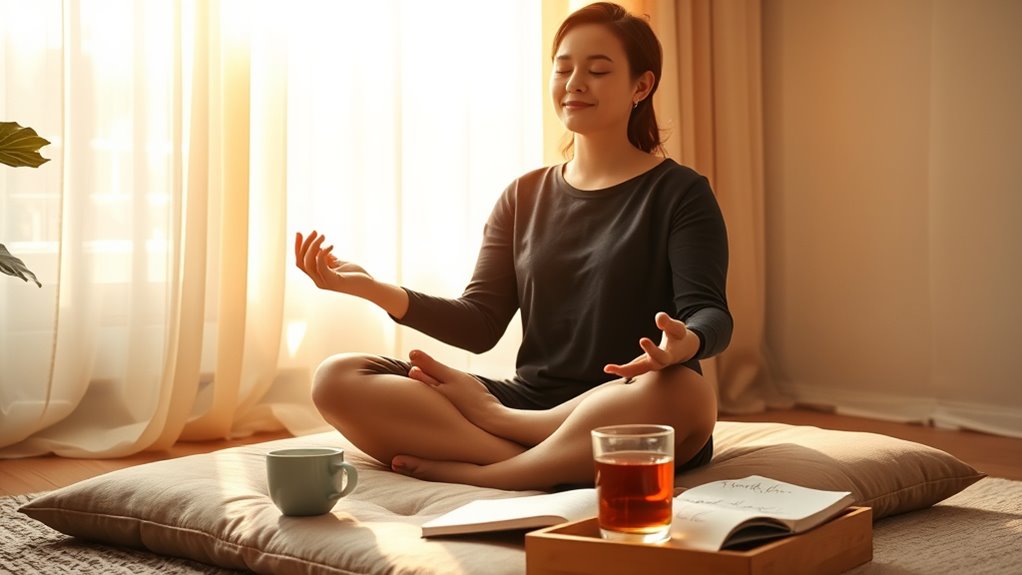

Practicing mindfulness through meditation, breathwork, and gratitude can greatly improve your daily life. By focusing on the present moment, using simple breathing techniques, and reflecting on what you’re grateful for, you build emotional resilience and reduce stress. These easy-to-implement practices fit into busy routines and lead to greater calm, focus, and overall well-being. If you keep exploring, you’ll uncover more ways to incorporate these mindful habits into your routine.
Key Takeaways
- Mindfulness practices like meditation, breathwork, and gratitude enhance emotional balance, reduce stress, and improve overall well-being.
- Techniques such as focused breathing and body awareness help anchor attention and foster calmness in daily life.
- Regular reflection on gratitude shifts perspective, promotes positivity, and builds resilience over time.
- These practices are simple, adaptable, and can be integrated into routines like commuting, breaks, or bedtime.
- Consistent mindfulness leads to increased clarity, emotional regulation, and a more balanced response to life’s challenges.

Have you ever wondered how simple mindfulness practices can transform your daily life? Incorporating mindfulness exercises into your daily routines can make a noticeable difference in how you handle stress, stay focused, and find moments of calm amidst chaos. These practices aren’t complicated or time-consuming; they’re straightforward tools you can easily fit into your busy schedule. Whether you’re at work, at home, or on the go, small adjustments can lead to greater awareness and emotional balance.
Starting with mindfulness exercises, the key is to bring your attention fully to the present moment. This might mean focusing on your breath, noticing the sensations in your body, or observing your surroundings without judgment. For example, during a quick break, you could close your eyes and take several deep breaths, feeling the air fill your lungs and then gently release it. This simple act helps ground you and resets your mental state. Incorporating these exercises into your daily routines—like during your commute, while waiting in line, or before bedtime—creates a habit of mindfulness that gradually enhances your overall well-being.
Focus on the present moment through simple breathing and awareness practices daily.
Breathwork is another powerful mindfulness practice that can be seamlessly integrated into your day. It involves consciously controlling your breathing to promote relaxation and mental clarity. You might try inhaling slowly for a count of four, holding your breath for a moment, then exhaling gently for a count of six. Repeating this pattern a few times can reduce stress, lower blood pressure, and clear your mind. Breathwork isn’t about deep or complicated techniques; it’s about tuning into your breath and using it as an anchor whenever you feel overwhelmed or distracted. Over time, this practice becomes second nature, empowering you to regain focus and calm with just a few mindful breaths.
Gratitude, too, plays a key role in mindfulness. Taking a moment each day to reflect on what you’re thankful for shifts your perspective and cultivates positivity. You could jot down three things that went well that day or simply pause to acknowledge a kind gesture from someone. This gentle practice encourages you to stay present and appreciate the small, often overlooked, moments that bring joy or comfort. When you make gratitude a regular part of your routine, it helps you develop a more balanced outlook and fosters resilience during challenging times.
Incorporating mindfulness exercises, breathwork, and gratitude into your daily routines may seem simple, but their effects compound over time. You’ll likely find yourself more centered, less reactive, and better equipped to navigate life’s ups and downs. The beauty of these practices lies in their accessibility—you don’t need special equipment or long hours. With consistency, they become natural parts of your day, transforming how you experience each moment and enhancing your overall sense of peace and clarity.
Frequently Asked Questions
How Long Should I Practice Each Mindfulness Activity Daily?
You should aim for about 10 to 20 minutes daily for each mindfulness activity, following general duration guidelines. Practice meditation, breathwork, and gratitude regularly—preferably once or twice a day—to build consistency. If you’re new, start with shorter sessions and gradually increase them. Activity frequency is key; consistency helps deepen your mindfulness experience and enhances overall well-being.
Can Mindfulness Practices Replace Therapy or Medical Treatment?
Mindfulness practices can complement healing and boost emotional resilience, but they shouldn’t replace therapy or medical treatment. They support your overall well-being and help manage stress, yet professional help is essential for serious mental health issues. You should view mindfulness as a valuable addition to your healing journey, not a substitute. Always consult a healthcare professional to develop an inclusive approach tailored to your needs.
Are There Any Age Restrictions for Practicing Mindfulness?
You’re never too young or old to start mindfulness, as research shows children as young as three can benefit. Age considerations are minimal, making it accessible for beginners of all ages. Younger kids might need simpler techniques, while older adults can explore deeper practices. With beginner accessibility in mind, you can tailor mindfulness to suit your age and experience, helping improve your mental well-being regardless of your stage in life.
How Do I Stay Consistent With My Mindfulness Routine?
To stay consistent with your mindfulness routine, focus on habit formation by setting a specific time each day. Use motivation strategies like tracking your progress and rewarding yourself for streaks. Make it easy to stick to your practice—start with just a few minutes—and gradually increase. Remind yourself of the benefits, and keep your environment supportive. Consistency builds momentum, making mindfulness a natural part of your daily life.
What Are Common Challenges Beginners Face in Mindfulness Practices?
You might struggle with maintaining focus during mindful breathing or finding the right meditation posture. It’s common to get distracted or feel restless, but don’t be discouraged. Start with short sessions and set a comfortable posture. Remember, consistency matters more than perfection. Over time, your mind will settle, and mindful breathing will become easier. Keep practicing patiently, and you’ll gradually overcome these initial challenges.
Conclusion
As you weave these mindfulness practices into your daily routine, remember you’re sculpting your mind like a master artist shaping a masterpiece. Just as the calm after a storm reveals a clearer sky, your consistent effort brings serenity and clarity. Embrace each moment—like a gentle breeze or a whispering wind—and watch as your inner peace blossoms, turning everyday life into a tranquil garden where mindfulness blooms and guides you effortlessly forward.