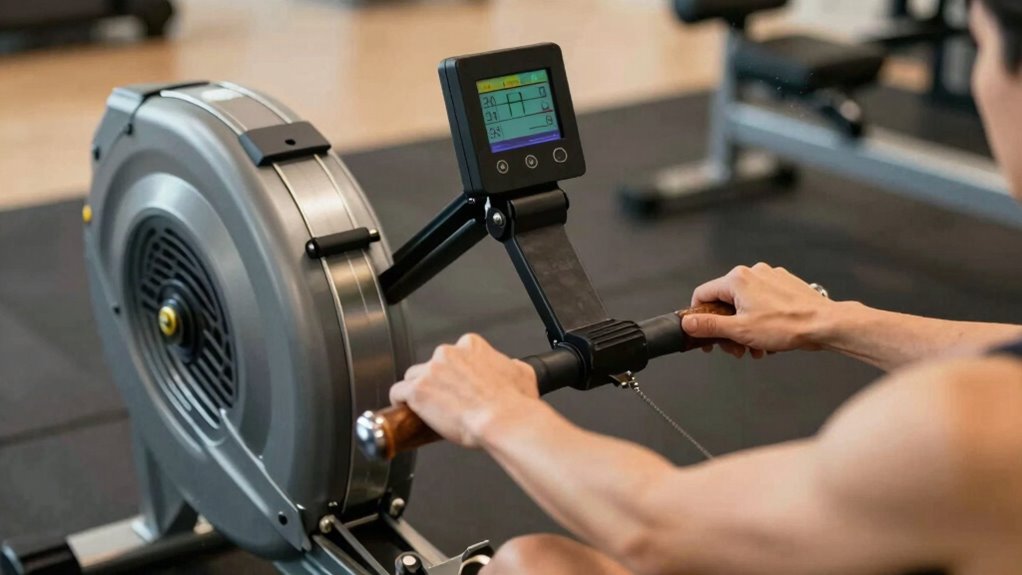

Different rowing machines offer various resistance types, affecting your stroke feel and noise level. Water and air models provide a natural, dynamic feeling but tend to be louder, while magnetic machines deliver smoother, quieter workouts. Hydraulic models are more affordable but feel less fluid. Choosing the right depends on your space, noise preferences, and fitness goals. Keep exploring to find out which option best matches your workout style and environment.
Key Takeaways
- Different resistance types (magnetic, air, water, hydraulic) affect the stroke feel, with water and air providing a more natural, responsive sensation.
- Water and magnetic resistance machines operate quietly, while air and hydraulic models tend to produce more noise during use.
- Magnetic resistance offers smooth, adjustable, and near-silent operation, ideal for home environments.
- Water resistance provides a realistic, immersive rowing experience with natural sound cues and progressive resistance.
- The stroke feel varies based on resistance type, ergonomics, and machine quality, impacting comfort and workout effectiveness.

Merach R280 Water Rowing Machine, Foldable & Space-Saving, 400lbs Capacity
- Foldable Design: 180° foldable with wheels for easy storage
- High Weight Capacity: Supports up to 400 lbs for all users
- Leak-Proof Water Tank: Aerospace-grade sealing prevents leaks
As an affiliate, we earn on qualifying purchases.
As an affiliate, we earn on qualifying purchases.
What Are the Main Types of Resistance in Rowing Machines?
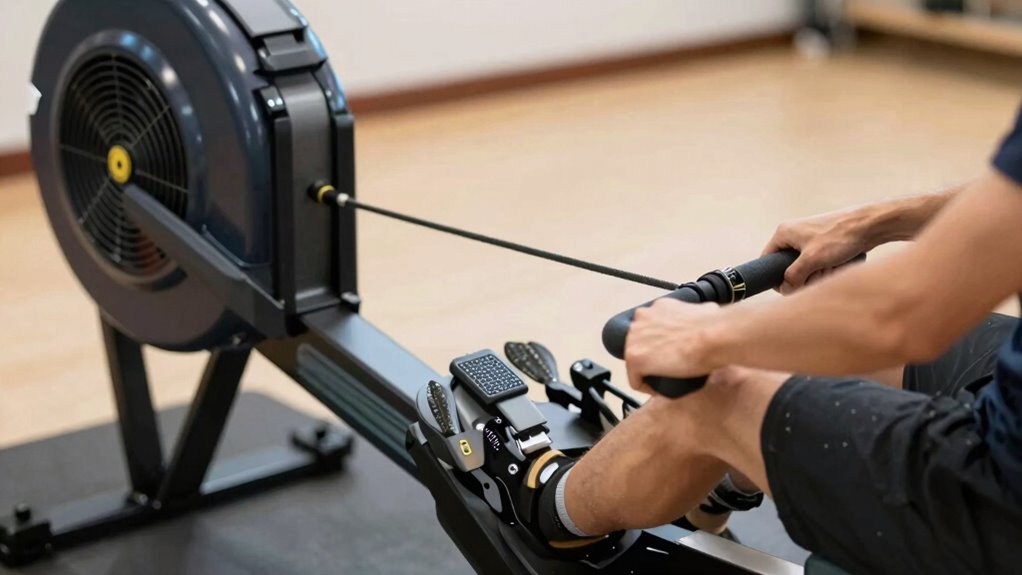
Have you ever wondered how rowing machines create resistance to simulate real rowing? The answer lies in the main types of resistance used in these machines. Magnetic resistance employs magnets positioned near a metal flywheel, allowing smooth, quiet operation and easy resistance adjustments. Magnetic resistance is especially popular for its low noise levels and precise control, making it ideal for home use. Air resistance uses a flywheel that spins faster as you row harder, mimicking real water resistance, but requires regular rowing machine maintenance to keep it smooth. Water resistance models contain a water tank that creates natural, progressive resistance, providing an immersive feel. The ergonomic design of each resistance type impacts comfort and effectiveness, so choosing the right system depends on your goals. Proper maintenance ensures consistent performance, regardless of resistance type, helping you get the most out of every workout. Additionally, some systems incorporate adjustable resistance settings, allowing users to customize their workout intensity for optimal recovery and performance. Understanding the types of resistance can help you select the most suitable rowing machine for your fitness journey, especially as different resistance mechanisms influence the overall stroke feel and workout experience. Recognizing how each system affects workout effectiveness can help you tailor your exercise routine for better results.
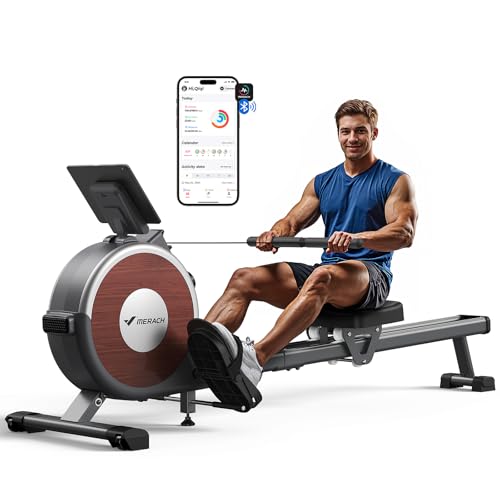
Merach Rowing Machine, Magnetic Rower Machine for Home, 16 Levels of Quiet Resistance, Dual Slide Rail with Max 350lb Weight Capacity, App Compatible with LCD Monitor, Q1S
- App Compatibility: Includes Merach and KINOMAP apps
- Workout Data Tracking: Displays distance, time, calories, and more
- Quiet Magnetic Resistance: Smooth, silent rowing experience
As an affiliate, we earn on qualifying purchases.
As an affiliate, we earn on qualifying purchases.
How Does Resistance Type Affect the Feel of Your Rowing Stroke?
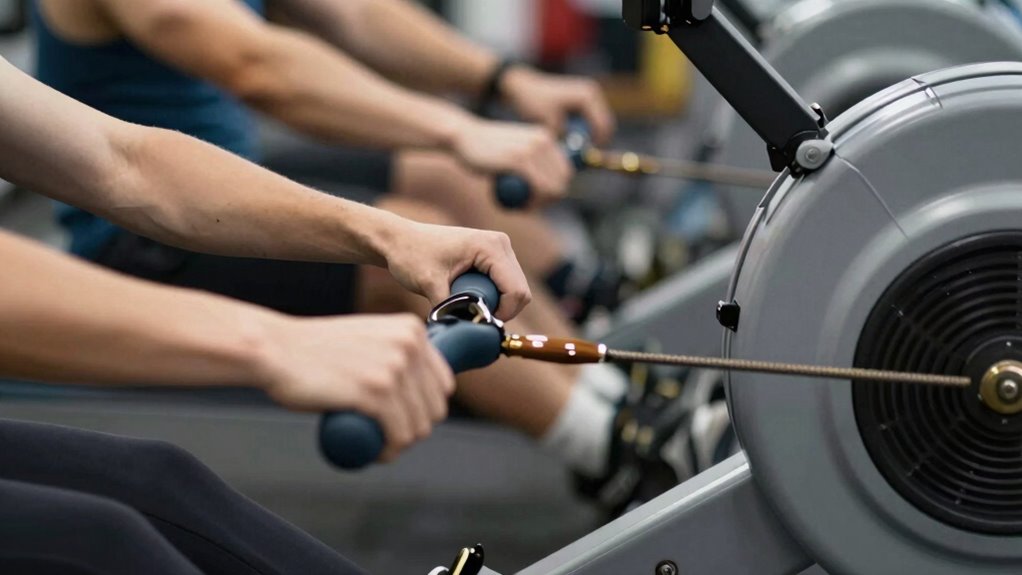
The type of resistance in your rowing machine substantially shapes how your stroke feels during each session. With air resistance, you’ll notice a smooth, natural feel that responds to your effort, making the stroke more intuitive. Water resistance offers a quiet, realistic sensation, often enhanced by ergonomic grips that reduce strain during intense pulls. Magnetic resistance provides a consistent, adjustable feel, allowing you to customize your workout and enjoy added comfort features like padded handles. Hydraulic models tend to have a more abrupt, less fluid feel, which might appeal to quick, short strokes. Your choice of resistance impacts not just the stroke’s intensity but also comfort, so look for ergonomic grips and comfort features that support your hands and wrists throughout each stroke. Additionally, understanding how hydraulics and mechanics influence resistance can help you select a model that best matches your workout preferences. Recognizing the resistance type can also guide you in selecting the appropriate intensity for your fitness level and goals. Moreover, the mechanical design of the resistance system plays a crucial role in the overall stroke experience and durability of the rowing machine. For instance, high-quality mechanical components can significantly enhance the longevity and smoothness of your rowing experience.
Merach Rowing Machine, Magnetic Rower Machine for Home, 16 Levels of Quiet Resistance, Dual Slide Rail with Max 350lb Weight Capacity, App Compatible with LCD Monitor, Q1S
- App Compatibility: Includes Merach and KINOMAP apps
- Workout Data Tracking: Displays distance, time, calories, and more
- Quiet Magnetic Resistance: Smooth, silent rowing experience
As an affiliate, we earn on qualifying purchases.
As an affiliate, we earn on qualifying purchases.
How Do Water Resistance Rowers Feel During a Workout?
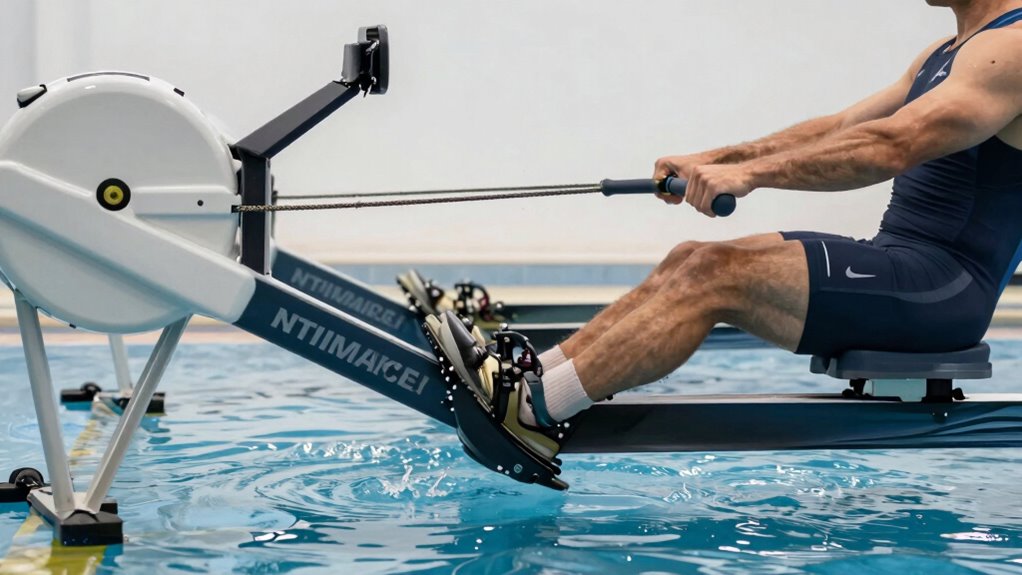
What does it feel like to row on a water resistance machine during a workout? The water resistance feel is smooth and natural, mimicking the sensation of rowing on actual water. As you pull, you’ll notice a gentle, consistent drag that intensifies with your effort, providing a dynamic workout experience. Unlike air or magnetic systems, water resistance responds to your stroke speed, making each pull uniquely challenging. This adaptive resistance creates a soothing, rhythmic flow that keeps you engaged and motivated. The sound of water splashing adds to the immersive feeling, making your workout more enjoyable. Water resistance systems are also praised for their durability and low maintenance, ensuring consistent performance over time. Additionally, the fluid stroke contributes to a more natural and comfortable rowing motion, reducing fatigue and strain. Overall, water resistance rowers offer a realistic, fluid stroke feel that adapts seamlessly to your pace, delivering a satisfying and effective workout experience every time.
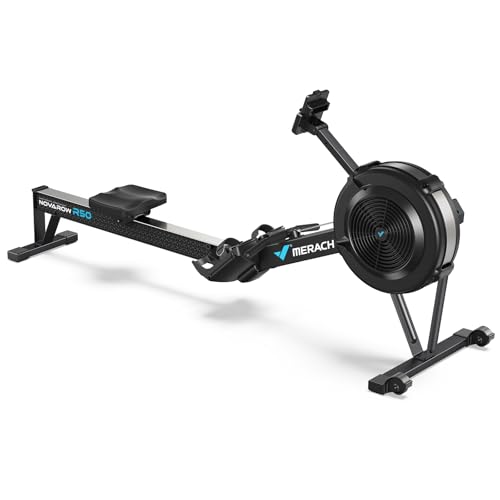
Merach R50 Pro Rowing Machine Indoor, Professional Monitor, Easy Storage
- Performance Monitor: Competition-level accuracy with 20+ modes
- Data Tracking: Syncs with MERACH App for workout history
- Air Resistance System: 10 adjustable resistance levels with 32-blade fan
As an affiliate, we earn on qualifying purchases.
As an affiliate, we earn on qualifying purchases.
What Are Air Resistance Rowers and How Do They Feel?
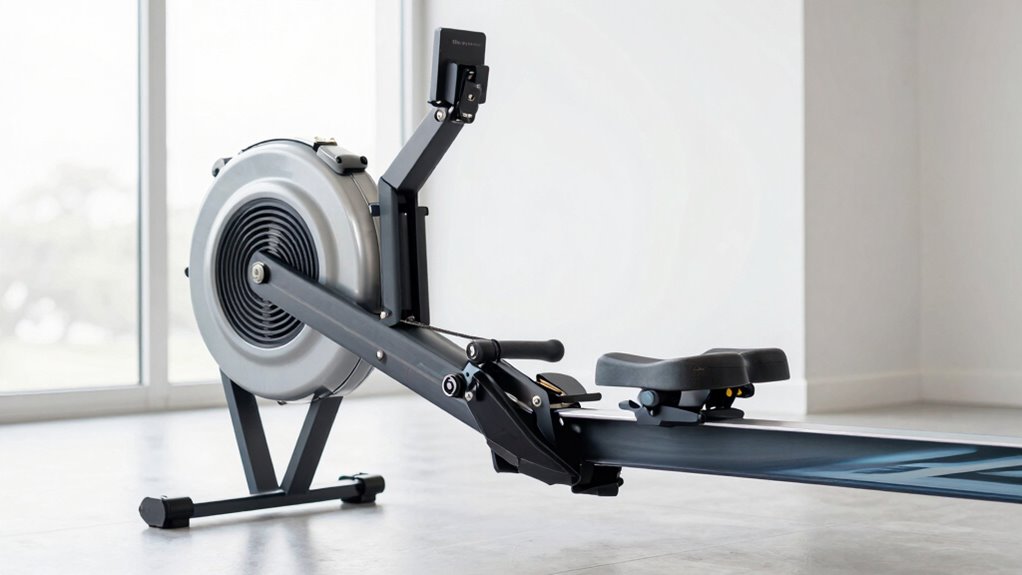
Air resistance rowers use a fan to create resistance, and the harder you pull, the more airflow you generate. This mechanic makes the stroke feel dynamic and responsive, giving you a natural rowing experience. You’ll notice the stroke’s feel changes with your effort, shaping your workout intensity and rhythm. Additionally, the adjustable resistance allows for a customized workout, accommodating both beginners and advanced users. Because of their simple design, air rowers are often praised for their smooth operation, providing a consistent and natural feel during each stroke. The resistance mechanism also ensures minimal maintenance, making them a durable choice for home gyms.
Air Resistance Mechanics
Ever wondered how air resistance rowers simulate the feeling of rowing on water? They use a flywheel that spins faster as you pull, creating resistance based on your effort. The harder you row, the greater the resistance, mimicking real water dynamics. This setup responds instantly to your rowing technique, providing a natural feel. Resistance calibration is straightforward—you simply adjust your effort to control how much resistance you experience. Unlike other types, air rowers don’t rely on magnets or water tanks; instead, resistance is generated by air moving through a fan. This design makes the rowing feel smooth and dynamic, with resistance fluctuating seamlessly as you change your pace. It’s an intuitive system that rewards consistent, powerful strokes, closely resembling actual water rowing. Additionally, understanding the resistance types can help you choose the best machine for your workout preferences. Recognizing the air resistance mechanism can enhance your ability to select equipment that matches your fitness goals. Moreover, the natural rowing feel offered by air resistance rowers makes them popular among users seeking a realistic rowing experience. Many users also appreciate how the immediate resistance changes respond to their effort, making workouts more engaging and effective. Notably, these rowers are often used in rowing clubs and gyms because of their durability and realistic feel.
Stroke Feel Dynamics
Using an air resistance rower offers a natural and responsive stroke feel that closely mimics rowing on water. As you pull, the air resistance dynamically adjusts to your effort, providing a smooth and consistent resistance. This setup helps you maintain a steady stroke rhythm, essential for effective training. The ergonomic grip ensures comfort and reduces fatigue, allowing you to focus on your technique. Because the resistance feels directly linked to your effort, your stroke feels intuitive and natural, encouraging proper form. The responsive nature of air resistance makes every stroke feel authentic, giving you a realistic water-like experience. Additionally, the stroke feel can vary slightly depending on the design of the rower, affecting your overall rowing experience. The resistance type influences how quickly the resistance responds and can impact your workout intensity. Overall, this combination enhances your connection with each pull, resulting in a more engaging and effective workout. Furthermore, the adjustability of resistance levels allows users to customize their workout difficulty to match their fitness goals.
How Do Magnetic Resistance Machines Offer Smooth and Quiet Strokes?

Magnetic resistance machines provide smooth resistance changes, so your strokes stay steady and consistent. They use electromagnetic fields to adjust the resistance quickly without abrupt shifts. Plus, their quiet operation makes your workout peaceful and distraction-free. Maintaining a clean machine is also easier because there are fewer moving parts that can collect dust or debris.
Smooth Resistance Transitions
Because magnetic resistance systems rely on electromagnetic fields to control resistance levels, they provide remarkably smooth and seamless shifts during your workout. This means you won’t feel sudden jumps or jerks, allowing for a natural rowing rhythm. The change between resistance levels is almost instantaneous, so your strokes stay consistent. As you focus on your form with an ergonomic handle and monitor your progress on the digital display, you’ll notice how smoothly the resistance adapts to your effort. This creates a more realistic rowing experience, helping you stay motivated and engaged.
| Resistance Level | Transition Speed | User Experience |
|---|---|---|
| Low | Very smooth | Gentle warm-up |
| Medium | Seamless | Steady effort |
| High | Instant switch | Intense workout |
| Custom | Precise control | Personalized |
| Cool-down | Gentle decrease | Recovery |
Quiet Operation Mechanism
A magnetic resistance system operates quietly by harnessing electromagnetic fields that adjust resistance without physical contact or mechanical friction. This design guarantees a smooth, silent operation, making your workout less disruptive and more focused. Because there are no moving parts that rub or grind, noise reduction is significant, allowing you to exercise quietly even during early mornings or late nights. The magnetic mechanism provides consistent resistance and seamless progressions between levels, enhancing stroke feel and overall comfort. With this setup, you won’t have to worry about loud clanking or squeaking sounds typical of other resistance types. Instead, you enjoy a peaceful, distraction-free workout experience that emphasizes smooth, quiet strokes, perfect for home environments where noise levels matter.
How Does Hydraulic Resistance Differ From Other Types?
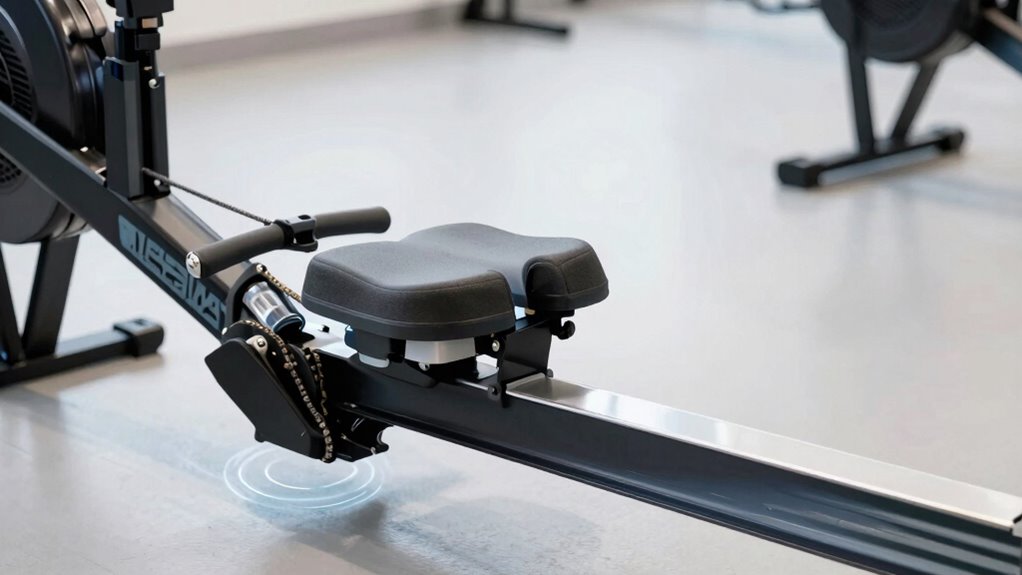
Hydraulic resistance in rowing machines operates differently than other types by using fluid-filled cylinders to create friction, which directly responds to your rowing intensity. When you pull, hydraulic fluid provides smooth, adjustable stroke resistance based on your effort. Unlike air or magnetic systems, hydraulic setups are compact and often quieter, making them ideal for small spaces.
| Resistance Type | How It Works |
|---|---|
| Hydraulic | Uses hydraulic fluid in cylinders, adjusting resistance with stroke effort. |
| Air | Resistance increases with rowing speed, using fan blades. |
| Magnetic | Resistance controlled electronically, offering consistent feel. |
What Are the Noise Levels of Different Resistance Types?
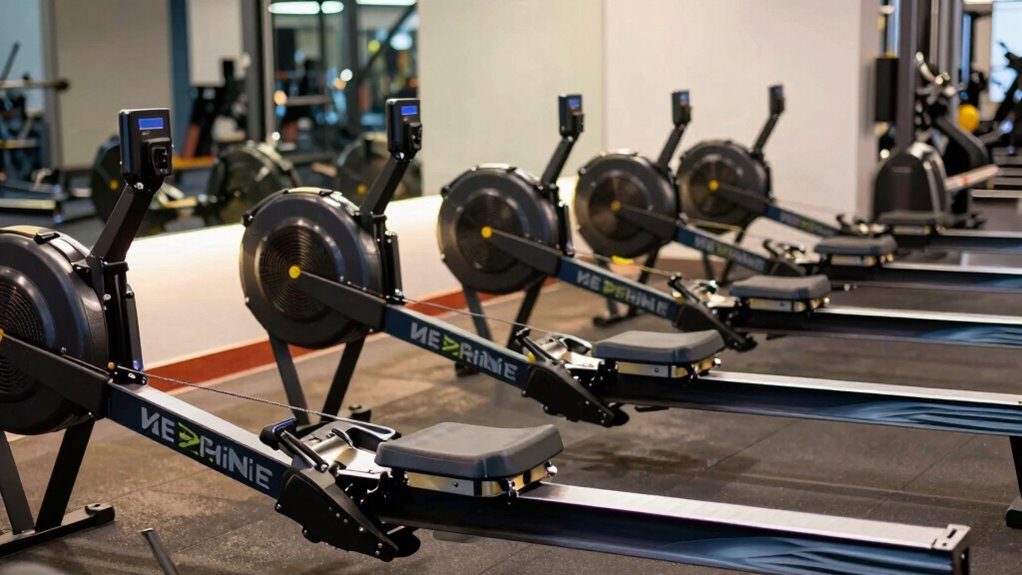
When choosing a rowing machine, noise level is an important factor to contemplate, especially if you plan to use it in shared spaces or apartments. Resistance types like air and water machines tend to produce more noise due to their moving parts and fluid dynamics, creating sounds that can be heard from neighboring rooms. On the other hand, magnetic resistance machines are generally quieter, often operating with minimal noise. Regular machine maintenance can help keep noise levels low, ensuring smooth operation. Additionally, an ergonomic design can reduce unnecessary vibrations that contribute to noise. If a quiet workout environment is your priority, consider resistance types with sound-dampening features, but keep in mind that proper maintenance and thoughtful design also play vital roles in minimizing noise during your exercise sessions.
Which Resistance Type Is Best for a Quiet Home Workout?
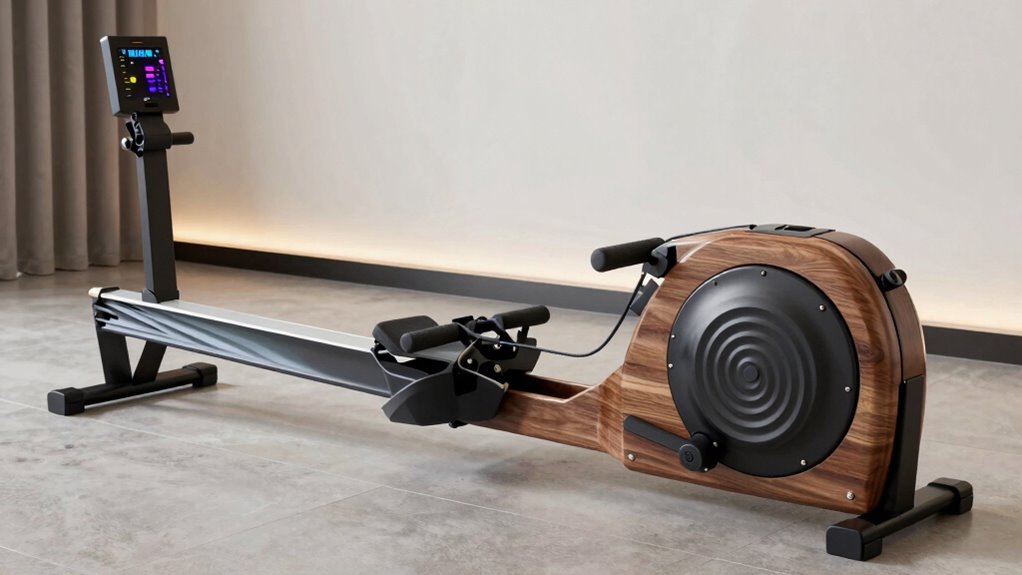
If maintaining a quiet environment is your top priority, magnetic resistance rowing machines are the best choice. They produce minimal noise pollution, making them ideal for a home gym setup where peace is essential. Unlike air or water resistance models, magnetic rowers use a flywheel with adjustable magnets to create resistance, which operates smoothly and silently. This allows you to focus on your workout without disturbing others or being affected by external noise. For a quiet home workout, magnetic resistance rowers offer consistent performance with less noise, making them perfect for early morning or late-night sessions. They help maintain a peaceful environment while delivering effective, low-noise exercise. If silence matters most, magnetic resistance is your best option.
What Factors Should You Consider When Choosing a Rowing Machine for Your Space?
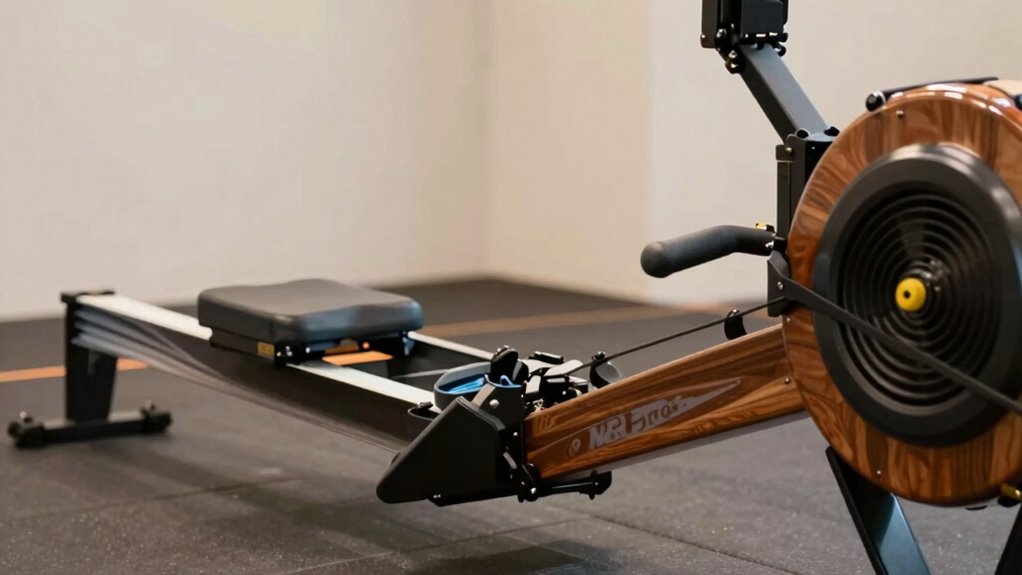
When choosing a rowing machine for your space, you need to consider its size and how much room you have available. Noise levels matter too, especially if you want privacy or to keep your workouts quiet. Don’t forget to set a budget and find a machine that offers the features you need without overspending.
Space Requirements and Size
Considering the space you have available is essential when selecting a rowing machine, as it directly impacts your comfort and workout flexibility. Measure your designated area carefully, accounting for clearance around the machine for safe movement. Think about storage solutions for when you’re not using it, such as foldable models or compact designs. Placement considerations include positioning near power outlets, ventilation, and easy access. Keep in mind:
- Room for full extension of your legs
- Space for comfortable rower access
- Easy storage when not in use
- Avoid cluttered or tight spots
- Compatibility with your workout area size
Choosing a machine that fits well guarantees you’ll enjoy regular workouts without hassle, making your fitness journey more sustainable and enjoyable.
Noise Levels and Privacy
Choosing a rowing machine involves more than just size; noise levels and privacy also play a crucial role in your workout experience. If noise is a concern, look for soundproofing options like mats or barriers that reduce sound transmission. Some machines operate quietly, which is ideal for shared living spaces or early morning workouts. Privacy considerations are equally important—if you prefer a discreet workout, opt for a model with a low profile or adjustable noise levels. Also, consider room placement; positioning your rower away from walls or windows can minimize noise disturbance. By evaluating soundproofing options and privacy factors, you can select a rowing machine that fits seamlessly into your space while maintaining a comfortable, quiet workout environment.
Budget and Cost Factors
Budget and cost factors substantially influence your selection of a rowing machine, especially when balancing space constraints and workout needs. Doing a thorough cost comparison helps guarantee you get the best value within your budget. Keep in mind that brand options vary widely in price, features, and quality. Consider these points:
- Higher-priced models often offer better durability and smoother resistance
- Budget options may lack advanced features but can still provide effective workouts
- Portable or compact models tend to be more affordable
- Look for deals or discounts from reputable brands
- Factor in long-term costs like maintenance and replacement parts
How Can You Choose the Right Rowing Machine for Your Goals?
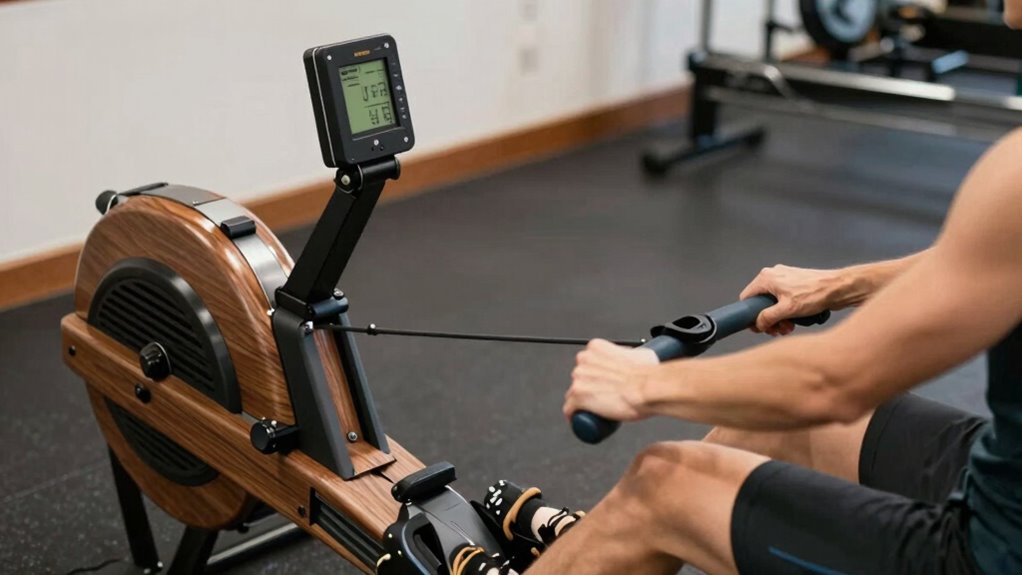
To find the right rowing machine for your goals, start by identifying what you want to achieve—whether it’s weight loss, building strength, or improving cardiovascular health. Consider the ergonomic design to guarantee comfort during longer workouts, especially if you’ll be exercising frequently. A machine with an intuitive user interface makes tracking your progress easier and keeps you motivated. Think about your space and whether you prefer a compact model or one with adjustable features. If you’re aiming for high-intensity training, look for resistance types that match your goals. Ultimately, choosing a rowing machine that aligns with your fitness objectives involves balancing comfort, ease of use, and functionality, so your workouts stay effective and enjoyable.
Frequently Asked Questions
How Does the Stroke Feel Differ Between Water and Air Resistance Rowers?
You’ll notice that water resistance rowers deliver a smoother stroke feel, mimicking real rowing with consistent resistance feedback throughout each pull. In contrast, air resistance rowers offer a more dynamic experience, with resistance increasing as you row harder, resulting in a less smooth stroke feel. Water rowers provide a calmer, more fluid motion, while air rowers respond instantly to your effort, making the stroke feel more intense and variable.
Are Hydraulic Rowers Suitable for High-Intensity Training?
Hydraulic rowers are suitable for high-intensity training, but only if you consider durability concerns. About 60% of users report that hydraulic models can handle intense workouts, yet some may find their resistance system wears out faster. If you push yourself hard, you’ll want a sturdy, well-built hydraulic rower to avoid breaking down mid-session. They’re compact and convenient, but durability varies, so choose wisely for your high-energy routines.
What Maintenance Is Required for Different Resistance Types?
You need to follow a maintenance schedule tailored to your resistance system. For hydraulic systems, check for leaks or fluid levels regularly, and replace seals if needed. Magnetic resistance machines require cleaning and occasional calibration, while air resistance models need to be kept free of dust and debris. With an appropriate maintenance routine, you’ll guarantee smooth operation, extend your rowing machine’s lifespan, and maintain excellent resistance performance.
Can Resistance Type Affect Workout Durability Over Time?
Yes, resistance type can affect workout durability over time. With magnetic resistance, you might experience less resistance wear, leading to longer-lasting components. Air resistance, however, can cause more durability concerns due to increased friction from continuous use. Damper or water resistance may also face resistance wear depending on maintenance. Choose a resistance type suited to your workout frequency to guarantee your rowing machine remains durable and reliable.
How Do Noise Levels Impact Shared Living Spaces?
Noise levels in shared living spaces are like whispers in a library—everyone notices them. You can minimize disruption by considering sound insulation and practicing shared space etiquette. Quiet rowing machines are ideal, but if your workout gets loud, use mats or place the machine on a padded surface. Keeping noise considerate helps maintain harmony, making your exercise routine a boost for you and your housemates alike.
Conclusion
Choosing the right rowing machine is like finding the perfect dance partner—you want a feel that matches your rhythm and noise level that won’t drown out your workout. Consider resistance types, noise, and your space to make the best choice. When you find that perfect fit, your rowing experience will flow smoothly, turning your workouts into a harmonious dance of strength and serenity, helping you stay motivated and consistent on your fitness journey.