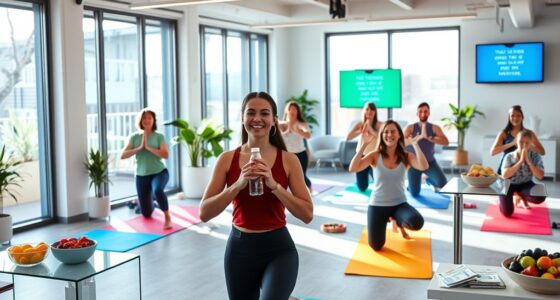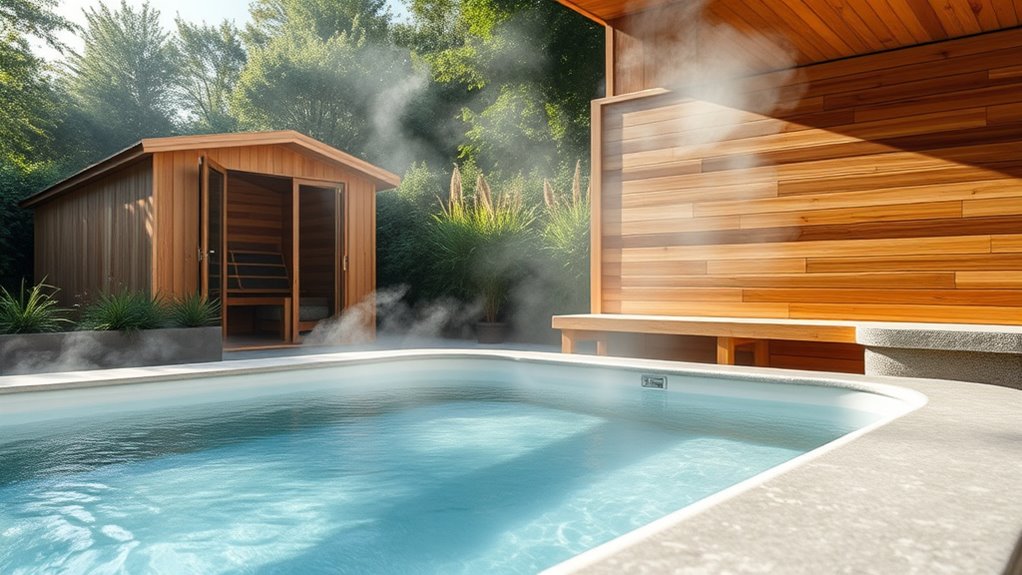

You’re embracing a growing wellness trend that combines sauna use and cold plunges to boost recovery and mental resilience. This routine increases circulation, eases muscle tension, reduces inflammation, and sharpens focus, creating a powerful sense of relaxation and mental clarity. Many find it helps manage stress and enhances emotional well-being over time. If you want to discover how these practices can transform your recovery and mental health, there’s more to explore ahead.
Key Takeaways
- Recovery zones combine sauna heat and cold plunges to enhance physical recovery and mental resilience.
- The practice promotes detoxification, muscle relaxation, and mental clarity through contrast therapy.
- Increasing popularity reflects growing awareness of holistic health benefits and mental wellness.
- These zones foster mindfulness, stress reduction, and emotional regulation through ritualistic routines.
- Integration of sauna and cold plunge routines supports overall resilience and improved mental health management.

Many wellness practices emphasize the benefits of alternating between heat and cold, and sauna culture with cold plunges is a prime example. When you immerse yourself in heat therapy through a sauna, your body responds by increasing circulation, relaxing muscles, and promoting detoxification. But the true magic happens when you follow up with a cold plunge. This sudden change in temperature triggers a cascade of physiological responses that can enhance your overall well-being. You might notice that your mood lifts, stress diminishes, and your mental wellness improves as your nervous system resets. This contrast therapy isn’t just about physical recovery; it’s a powerful method to clear mental fog, boost focus, and cultivate a sense of calm and clarity.
As you sit in a sauna, the heat encourages your body to release endorphins, which are natural mood lifters. The warmth also promotes relaxation, easing tension that might accumulate from daily stressors. When you step into a cold plunge afterward, the shock of the cold causes your blood vessels to constrict, which helps reduce inflammation and accelerates recovery. But beyond physical benefits, this rapid temperature shift can elevate your mental state. Many people find that the invigorating cold awakens their mind, sharpens their focus, and provides a fresh perspective. The mental wellness derived from these practices isn’t accidental; it’s rooted in the way heat therapy and cold exposure stimulate your nervous system, encouraging resilience and emotional regulation.
Integrating sauna sessions with cold plunges into your routine can transform your approach to recovery and mental health. The heat relaxes you, loosening tight muscles and relieving stress, while the cold invigorates your mind and resets your mood. Over time, this combination helps build mental toughness, helping you better manage anxiety and depression. It’s a simple yet powerful way to boost your overall resilience. Plus, the ritualistic aspect of alternating between hot and cold can create a meditative practice that anchors your mental wellness. The sensations of heat and cold serve as a form of mindfulness, grounding you in the present moment and fostering a sense of control over your mental state.
Frequently Asked Questions
What Are the Health Benefits of Combining Sauna Use With Cold Plunges?
Combining sauna use with cold plunges boosts your immune system and sharpens mental clarity. You activate circulation and reduce inflammation, helping your body recover faster. The heat relaxes muscles and relieves stress, while the cold invigorates and clears your mind. This contrast therapy enhances overall well-being, making you feel more energized and focused. By balancing heat and cold, you support your health and mental performance effectively.
How Often Should One Incorporate Cold Plunges Into Their Routine?
You should incorporate cold plunges into your routine 2-3 times a week to support temperature regulation and build mental resilience. Start with brief immersions of 30 seconds to a minute, gradually increasing as you get comfortable. Consistency helps your body adapt, improving recovery and mental toughness. Listen to your body, and don’t push too hard too fast—regular cold exposure can boost your overall resilience and well-being.
Are There Any Risks Associated With Cold Plunges for Beginners?
Yes, cold plunges can pose risks for beginners, especially related to cold shock and hypothermia risks. You might experience rapid breathing, dizziness, or confusion if you stay in too long or enter too cold water too quickly. To stay safe, start with shorter dips, gradually increase exposure, and listen to your body. Always consult a healthcare professional if you have underlying health issues before trying cold plunges.
What Equipment Is Needed for Safe Cold Plunges at Home?
For safe cold plunges at home, you’ll need a tub or large container that can hold water and your body comfortably. Focus on temperature control with a reliable thermometer to keep water between 50-59°F (10-15°C). Use safety accessories like non-slip mats and a thermometer, and consider gloves or a towel for handling. Always start with shorter dips, listen to your body, and never plunge alone.
How Do Sauna and Cold Plunge Practices Vary Across Different Cultures?
Like the phoenix rising from ashes, sauna and cold plunge practices reflect deep cultural rituals and traditional variations worldwide. In Finland, sauna bathing is sacred, emphasizing communal warmth and relaxation. In Japan, ice baths are part of hot spring rituals, blending nature and discipline. In Russia, banyas combine steam, cold plunges, and social bonding. You see, each culture adapts these practices to their unique values and environments, creating diverse yet similar wellness traditions.
Conclusion
As you embrace sauna culture and cold plunges, you’re tapping into a centuries-old tradition that boosts recovery and wellbeing. Imagine this: over 80% of athletes now incorporate cold therapy into their routines, experiencing faster muscle recovery and reduced soreness. By stepping into these recovery zones, you’re part of a growing movement that prioritizes health, resilience, and rejuvenation. So go ahead—dive in and feel the revitalizing power of heat and cold working together for your body.