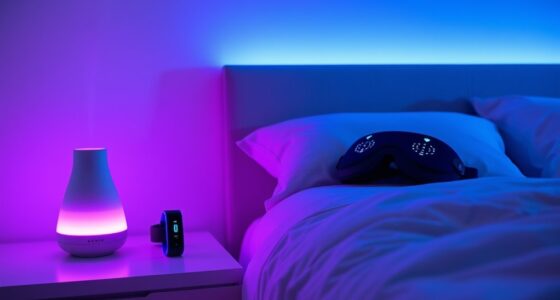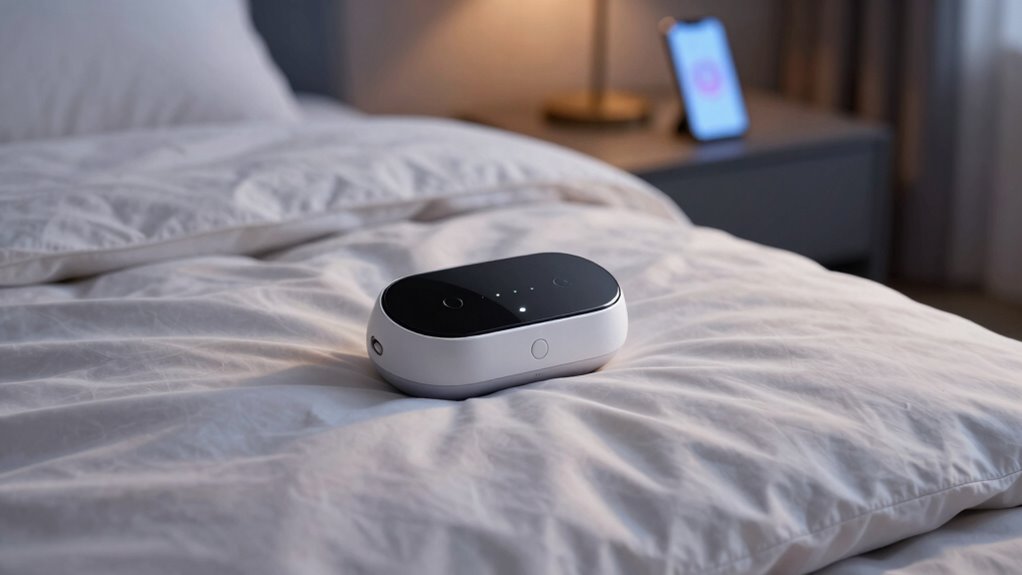

Sleep trackers can give helpful insights into your sleep patterns, but it’s important to understand their limits. They monitor movement and heart rate to estimate sleep stages, yet often misclassify light sleep or wakefulness. Data can be influenced by external factors like noise or device placement. Focus on overall trends rather than fixating on every detail. Keep in mind, genuine sleep quality also depends on habits and environment—if you want tips to improve, keep exploring.
Key Takeaways
- Trust overall sleep duration and trends over multiple nights rather than single-night snapshots.
- Be cautious about precise sleep stage detection; trackers often misclassify light and deep sleep.
- Use device insights as general guides, not definitive medical diagnoses, especially for complex conditions like sleep apnea.
- Consider environmental factors like noise and lighting that can influence device accuracy and data reliability.
- Combine tracker data with sleep logs and lifestyle observations for a comprehensive understanding of sleep quality.
How Do Sleep Trackers Work and What Data Do They Gather?

Sleep trackers work by monitoring your body’s movements and physiological signals throughout the night. They analyze your sleep cycle by detecting when you’re in light, deep, or REM sleep based on movement patterns. Many trackers also measure your heart rate, providing insights into how your body responds during sleep. This data helps identify how well you’re sleeping and whether your sleep cycle is consistent. Some trackers use accelerometers to detect movement, while others incorporate heart rate sensors or even pulse oximetry. The combination of movement and heart rate data offers a thorough view of your sleep patterns, giving you valuable information to improve your sleep habits. Additionally, understanding air quality considerations can help you create a more conducive environment for restful sleep. Factors like microplastics in dust and humidity levels can impact sleep quality, making environmental awareness an important aspect of sleep health. Monitoring air quality can also provide insights into potential disruptions caused by pollutants that may interfere with sleep cycles. Maintaining optimal sleep environment conditions can further enhance sleep quality and overall health.
What Are the Benefits of Using Sleep Trackers?

Using a sleep tracker helps you become more aware of your sleep patterns, so you can spot issues you might not notice otherwise. The data it provides encourages you to make targeted improvements for better rest. Plus, seeing progress can motivate you to stick with healthier sleep habits. Incorporating insights from your sleep data can also help you optimize your overall health, similar to how the right engine upgrades enhance vehicle performance. Sleep trackers often include features like sound masking to help improve sleep quality by reducing disruptions. Additionally, understanding your sleep patterns through reliable data can help you identify underlying issues such as sleep apnea or irregular sleep cycles that may require professional attention. Knowing your sleep environment and making adjustments based on tracker data can further enhance sleep quality. Recognizing the importance of privacy and online security can also ensure your personal information remains protected while using these devices.
Enhanced Sleep Awareness
By tracking your sleep patterns, you gain a clearer understanding of your overall sleep quality and habits. This enhanced sleep awareness helps you identify patterns that affect your rest, such as how your sleep environment influences your sleep quality. With detailed data, you can explore dream interpretation to see if recurring themes relate to your well-being. Recognizing these connections encourages you to make adjustments — like improving your sleep environment or managing stress — that promote better rest. Sleep trackers provide insights that go beyond just tracking hours; they help you become more attuned to what’s happening during the night. This awareness empowers you to develop healthier routines and create a sleep environment that supports restful, uninterrupted sleep. Incorporating free floating techniques can further optimize your sleep environment for better results, especially when understanding the influence of dream symbolism on your subconscious mind. Additionally, understanding the role of sleep cycle patterns allows you to time your sleep more effectively for restorative rest, as awareness of vetted water-based solutions can assist in creating a calming sleep setting. Gaining knowledge about sleep environment factors can also enhance your overall sleep quality by helping you identify what conditions promote or hinder restful sleep.
Data-Driven Sleep Improvements
When you harness the power of sleep trackers, you gain concrete data that helps you make targeted improvements to your sleep habits. By analyzing your sleep pattern, you can identify trends like irregular sleep times or frequent awakenings. This insight allows you to adjust your bedtime routines or environment for better rest. Sleep trackers can also provide useful dream analysis, revealing how often you experience REM sleep and how it correlates with your overall sleep quality. With this information, you can implement specific changes, such as relaxing before bed or managing stress, to enhance your sleep. Additionally, understanding the importance of accurate data collection ensures that your sleep improvements are based on reliable information. It is also important to consider the type of device used, as different trackers vary in their accuracy and features. Choosing a device with validated sensors can significantly improve the reliability of your data. Moreover, selecting a device with consistent performance helps maintain accurate tracking over time. Being aware of sensor technology can further help you select a more precise device. Ultimately, data-driven insights empower you to make informed decisions, leading to more restful nights and improved well-being.
Motivation for Better Rest
Ever wondered how tracking your sleep can motivate you to improve it? Sleep trackers can boost your sleep motivation by providing clear insights into your patterns. When you see how restful habits influence your rest, you’re more likely to stick with healthy routines. Visual feedback helps you set achievable goals and stay committed. To understand the benefits better, consider this table:
| Benefit | How It Helps | Example |
|---|---|---|
| Increased awareness | Recognize sleep disruptions | Noticing late-night wake-ups |
| Goal setting | Track progress over time | Improving sleep duration |
| Accountability | Stay motivated to improve | Consistent bedtime |
| Better sleep hygiene | Develop restful habits | Reducing screen time before bed |
Additionally, evidence-based insights can help you make informed decisions about your sleep habits. Incorporating sleep data analysis can further enhance your understanding of your individual sleep patterns and support tailored improvements. Recognizing the importance of reliable data is crucial for making meaningful progress in your sleep quality. Moreover, understanding sleep cycle patterns can provide deeper insights into optimizing your rest.
What Are the Limitations of Sleep Tracking Devices?

Sleep trackers can give you useful insights, but their data isn’t always perfectly accurate. External factors like movement or noise can interfere with their readings, leading to less reliable results. Additionally, most devices only show limited sleep stages, so you might not get the full picture of your sleep quality. For example, some devices might struggle to differentiate between light sleep and wakefulness accurately, which can affect your overall sleep analysis. Understanding sleep stage detection can sometimes be complicated, much like interpreting net worth of public figures, due to various factors influencing the numbers. Furthermore, the design and technology of different pinball machines can impact how well they measure and track gameplay, paralleling the limitations seen in sleep tracking devices.
Accuracy of Data
Have you ever wondered how accurately sleep trackers measure your sleep patterns? While they can provide useful insights, data precision varies between devices. Many trackers rely on movement and heart rate, but these signals aren’t always perfect indicators of sleep stages or quality. As a result, measurement consistency can be inconsistent, especially if you move a lot or wear the device loosely. External factors like lighting, temperature, or even skin tone can affect sensor accuracy. Keep in mind that no sleep tracker offers medical-grade data; they’re best used as general guides. While they can highlight trends over time, don’t rely solely on their readings for critical health decisions. Recognizing these limitations can help you interpret your sleep data more wisely.
Limited Sleep Stages
While sleep trackers can give you a general idea of your sleep patterns, they often fall short when it comes to accurately distinguishing different sleep stages. They mainly estimate your sleep cycle and sleep depth based on movement and heart rate, but these signals aren’t precise enough for detailed analysis. As a result, they may misclassify light, deep, or REM sleep, giving you an incomplete picture of your sleep quality. Keep in mind:
- Sleep stages are complex and require EEG data for accuracy
- Sleep depth varies within stages and isn’t reliably measured by trackers
- Device algorithms often oversimplify the transitions between sleep phases
These limitations mean you shouldn’t rely solely on sleep trackers to understand your sleep cycle fully or assess your sleep depth accurately.
External Interference
External interference can considerably impact the accuracy of sleep tracking devices, often leading to misleading data. Environmental noise, such as traffic, snoring, or loud neighbors, can disrupt sensors and confuse the device’s readings. These devices rely on movement or heart rate data, which can be affected by external factors rather than actual sleep patterns. For example, sudden noises might cause brief awakenings that the tracker interprets as sleep interruptions or wakefulness. Additionally, external interference can lead to false positives or negatives, making it harder to trust the device’s overall assessment of your sleep quality. To improve accuracy, consider sleeping in a quiet, consistent environment and minimize external noise. Recognizing these limitations helps you better interpret sleep data and avoid unnecessary concerns.
How Accurate Are Sleep Trackers in Detecting Sleep Stages?

Sleep trackers use sensors to monitor your movements, heart rate, and breathing patterns, but their ability to accurately identify sleep stages remains a subject of debate. While they can estimate when you’re in light, deep, or REM sleep, these readings aren’t always precise. Factors like irregular sleep cycles or inconsistent sleep habits can affect accuracy. Keep in mind:
- They often misclassify wakefulness as light sleep
- They struggle to detect subtle shifts between sleep stages
- External factors or device placement can skew data
Because of these limitations, sleep trackers are better suited for observing trends over time rather than pinpointing exact sleep stages. Your sleep consistency, rather than the specific stage counts, is what truly impacts overall sleep quality. Use the data as a general guide, not an absolute measure.
How to Interpret Your Sleep Data Without Overreacting

Understanding your sleep data can be helpful, but it’s easy to overreact to small fluctuations or one-night anomalies. Remember, sleep quality varies nightly due to stress, diet, or environment. Focus on trends over time rather than single nights. If your tracker shows a dip in sleep stages or shorter sleep duration, don’t panic—these can be normal variations. Dream analysis, while interesting, isn’t a reliable indicator of sleep health; don’t read too much into it. Instead, look for consistent patterns, like overall sleep duration and restfulness. Avoid obsessing over minor discrepancies, as your tracker’s data isn’t perfect. Being cautious helps you interpret your sleep data objectively and prevents unnecessary worry about occasional irregularities.
Can Sleep Trackers Wake You Up at the Optimal Time?

Sleep trackers aim to wake you during the light sleep phase for a more refreshed feeling, but their accuracy depends on how well they identify sleep stages. If the device isn’t precise, you might not wake at the best moment, leaving you groggy. Understanding how these devices work can help you judge whether they truly optimize your wake-up time.
Sleep Phases and Timing
Ever wondered if sleep trackers can wake you up at the perfect moment? They try to time your wake-up during light sleep by monitoring sleep phases, especially REM sleep. Understanding your sleep cycles helps in waking up refreshed rather than groggy. Sleep trackers analyze movement and heart rate to estimate these phases, but they’re not always precise.
- Sleep trackers aim to wake you during light sleep, near REM sleep, for ideal alertness
- Timing your wake-up during a specific sleep phase reduces grogginess
- Variability in sleep cycles means perfect timing isn’t always guaranteed
While some devices attempt to align alarms with your sleep phases, factors like inaccurate phase detection can throw off results. Knowing your sleep phases helps you better interpret your tracker’s suggestions.
Device Accuracy and Reliability
Although sleep trackers aim to wake you during light sleep for the best alertness, their accuracy in detecting the precise moments for waking is often inconsistent. Wearable devices rely on sensors and algorithms, but data accuracy can vary based on device quality and user movement. Some trackers may misinterpret REM or deep sleep stages, leading to premature or delayed alarms. This inconsistency means you might not always wake at the most suitable time, reducing the intended benefits. While many devices are improving their sensor technology, it’s important to remember that no tracker is perfectly reliable. Trusting them solely for waking purposes can be risky. For better results, combine wearable device data with your own awareness of sleep patterns and environment.
Which Sleep Trackers Are Best for Your Needs and Budget?

Choosing the right sleep tracker depends on your specific needs and budget. If you’re focused on improving sleep quality and understanding how your sleep environment impacts rest, select a device that offers accurate tracking and useful insights. Budget-friendly options like wrist-worn fitness trackers often provide basic sleep data, while more advanced devices can monitor sleep stages and environmental factors. Consider whether you prefer a wearable or non-wearable tracker, and check compatibility with your smartphone or smart home setup. Keep in mind that features vary widely, so prioritize those that match your goals. To help narrow your options, look for:
- Devices with proven accuracy for sleep quality assessment
- Trackers that monitor environmental factors affecting sleep
- Budget-friendly options offering essential insights without sacrificing key features
Tips to Improve Sleep Hygiene Using Tracker Insights

Using your sleep tracker effectively can markedly enhance your sleep hygiene. Review your sleep habits regularly to identify patterns, such as late bedtimes or inconsistent wake times, and adjust accordingly. Focus on creating a sleep environment that promotes rest—dim the lights, reduce noise, and keep your bedroom cool and comfortable. Use insights from your tracker to set consistent sleep and wake times, which helps regulate your internal clock. Avoid screens before bed, as they can disrupt melatonin production, and consider relaxing routines like reading or gentle stretches. Tracking your progress can motivate you to maintain these habits. Remember, small, consistent changes based on your data can substantially improve the quality of your sleep and overall well-being.
When Should You Question or Cross-Check Your Sleep Data?

You should question or cross-check your sleep data whenever something seems off or inconsistent with how you feel. If your tracker shows excellent sleep quality or high sleep consistency, but you wake up feeling tired or groggy, it’s worth investigating further. Discrepancies like these can indicate inaccuracies in your data or overlooked factors affecting your sleep.
Consider questioning your data if:
- Your sleep duration varies markedly day-to-day without explanation
- Your sleep stages don’t match your perceived restfulness
- Your device’s readings conflict with your experiences or sleep logs
In these cases, verifying your sleep patterns with additional methods or keeping a sleep journal can help clarify the true quality of your sleep and identify issues worth addressing.
How Do Sleep Trackers Fit Into Your Overall Sleep Health?

Sleep trackers can be valuable tools for gaining insights into your sleep patterns, but they should be integrated into a broader approach to sleep health. While they can help monitor sleep quality and identify patterns, they don’t capture every aspect of restful sleep. Your sleep environment plays a vital role in supporting good sleep; factors like lighting, noise, and temperature influence the accuracy of tracker data and your overall sleep. Use sleep trackers as a guide, not a definitive measure, and combine their insights with attention to your sleep hygiene. Focusing on creating a comfortable sleep environment and maintaining consistent routines will enhance your sleep quality beyond what devices alone can achieve. Remember, these tools are part of a bigger picture for better sleep health.
Frequently Asked Questions
Can Sleep Trackers Diagnose Sleep Disorders Accurately?
Sleep trackers can’t diagnose sleep disorders accurately, but they can give you useful insights into your sleep patterns. While the device reliability varies, many trackers offer decent sleep accuracy for tracking overall sleep duration and quality. However, if you suspect a sleep disorder, it is crucial to consult a healthcare professional rather than relying solely on your device. Use sleep trackers as helpful tools, not definitive diagnostic devices.
How Do External Factors Affect Sleep Tracker Readings?
Think of your sleep tracker as a weather vane—sensitive to environmental influences like light, noise, or temperature. These external factors can skew readings if the device isn’t properly calibrated or if conditions change overnight. For example, a sudden noise might cause you to wake briefly, but the tracker may record uninterrupted sleep. Always make sure your device is calibrated correctly and consider environmental influences to get the most accurate data.
Are There Privacy Concerns With Sleep Tracking Data?
Yes, there are privacy risks with sleep tracking data. You should be aware that your personal health information could be vulnerable if the device’s data security isn’t strong. Make sure you read the privacy policy, use secure passwords, and choose reputable brands that prioritize data protection. Being proactive helps you minimize privacy concerns and keeps your sleep data safe from unauthorized access.
Can Children or Seniors Effectively Use Sleep Trackers?
Did you know that 68% of parents find sleep trackers helpful for understanding child sleep habits? You can definitely use sleep trackers with children and seniors, but results may vary. They work best when used as a supplement to professional advice. For children, look for age-appropriate features, and for seniors, consider devices that monitor health signals. Always prioritize privacy and consult a healthcare provider for accurate interpretation.
How Long Should I Rely on Sleep Trackers for Reliable Data?
You should rely on sleep trackers for about 2 to 4 weeks to assess long-term accuracy. During this period, monitor how consistent the data is and check if the device is properly calibrated. Keep in mind that sleep trackers are useful for spotting trends, but their long-term accuracy can vary. Use their data as a guide, but consider consulting a healthcare professional for detailed sleep analysis.
Conclusion
Remember, sleep trackers are helpful tools, but they’re not magic wands. Think of them as a flashlight guiding you through the dark forest of your sleep habits—use them wisely, interpret the data thoughtfully, and don’t let minor fluctuations turn into sleepless nights. The real treasure is understanding your sleep patterns and making small, meaningful changes. With patience and a clear mind, you can discover the secret to truly restful nights—like finding the Holy Grail of sleep.