
TL;DR

Turn your wind-down time into listening time
- Thousands of audiobooks, podcasts and originals
- Listen on your phone, tablet or Echo — also offline
- Cancel anytime
A MedPage Today neurology roundup highlights new research on alcohol’s brain effects, mixed 4-year AMT-130 Huntington’s data, tau drugs as a projected $70 billion Alzheimer’s frontier, and human cortical organoids integrating into living mice.
A September 29, 2026 MedPage Today roundup by deputy managing editor Judy George collected the week’s most consequential neurology and neuroscience developments, including a New York Times examination of what alcohol does to the brain and whether any amount is safe, a report projecting tau-targeting drugs as a possible $70 billion frontier in Alzheimer’s treatment, and a Nature study showing that human stem cell-derived cortical organoids integrated into the nervous systems of living mice.
On Huntington’s disease, uniQure reported that ongoing phase I/II studies of ifezuntirgene inilparvovec (AMT-130) showed continued slowing of disease progression, but that effects were not significant at 4 years compared with a natural history cohort. The gene therapy remains in late-stage development, and the company framed the long-term data as directional rather than definitive.
Other findings in the roundup included a Canadian cohort study in the journal Neurology showing that transient ischemic attacks (TIAs) were associated with a large and sustained increase in dementia risk, and a large U.S. study, also in Neurology, finding that stroke rates among adults ages 20 to 54 nearly doubled over a 27-year period, coinciding with rising vascular risk factors and substance abuse. An international longitudinal study published in The Lancet found that epilepsy incidence rose sharply after symptomatic Alzheimer’s onset in people with Down syndrome.
Two drug-development items stood out. DNL343, a brain-penetrant drug designed to inhibit the integrated stress response, showed no benefit in amyotrophic lateral sclerosis (ALS) according to data from the HEALEY ALS platform trial published in JAMA Network Open. Separately, an investment banking firm reported via Axios that tau-targeting drugs may be the next frontier in Alzheimer’s disease treatment, with an expected value as high as $70 billion.
Why These Findings Matter for Patients
The collection highlights two opposing trends in neurology: promising biological approaches that have not yet translated into proven benefit, and mounting evidence that prevention and early intervention may carry more immediate payoff. The AMT-130 and DNL343 results illustrate how difficult it remains to show clinical benefit in neurodegenerative diseases, even with gene therapy and novel mechanisms reaching late-stage testing.
At the same time, the stroke and TIA findings point to modifiable risk. A near-doubling of stroke incidence in adults under 55, alongside rising dementia risk after TIAs, suggests that vascular health in midlife and earlier is becoming a growing public health concern. The New York Times alcohol examination adds to ongoing debate about whether even moderate drinking carries cognitive risk, a question with no settled answer.
The Nature organoid study matters for a different reason: if human cortical tissue can functionally integrate into a living animal nervous system, it could become a platform for testing brain disease therapies in conditions that are otherwise hard to model.
The Path to Tau Drugs and Organoids
Tau-targeting therapies have gained attention as a successor strategy to amyloid-directed Alzheimer’s drugs, which have shown modest clinical effects. The $70 billion expected value figure cited by Axios comes from an investment banking analysis, not from clinical data, and reflects commercial projections for the tau drug class.
AMT-130 is a one-time gene therapy that delivers a microRNA intended to silence production of the mutant huntingtin protein. Its phase I/II program, including a randomized sham-controlled trial, has followed patients for several years against a natural history comparator cohort, a common approach in rare disease trials where placebo groups are difficult to maintain long-term.
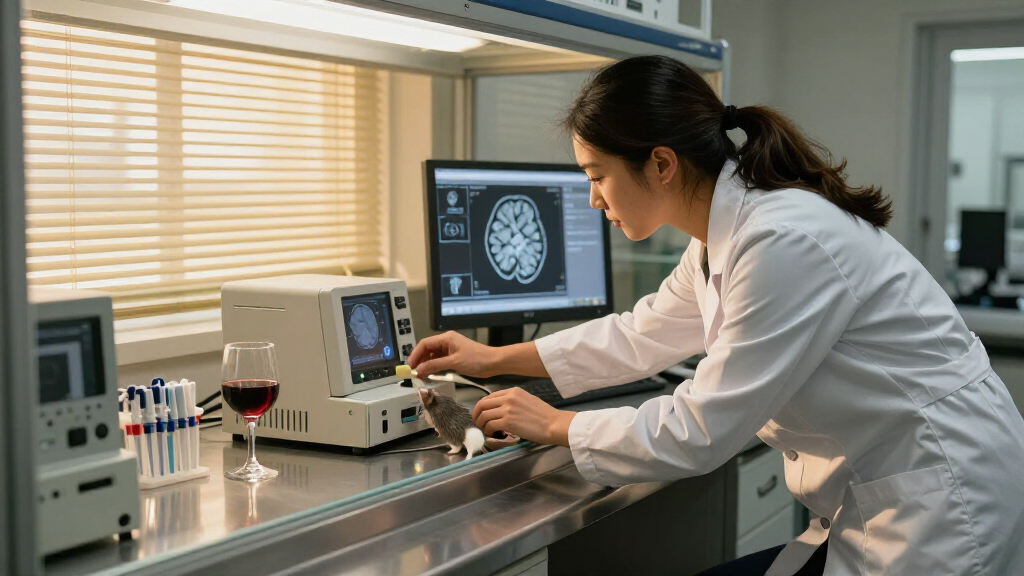
Human brain organoids — miniature, lab-grown tissue clusters derived from stem cells — have previously been used mostly in laboratory dishes. The Nature study reported that mice engineered to lack a cerebral cortex successfully integrated transplanted human cortical organoids into their nervous systems, extending the technique into living animals.
“The New York Times looked at what alcohol does to the brain and what amount, if any, may be safe.”
— Judy George, MedPage Today
Open Questions in the Research
Several key questions remain unresolved. The AMT-130 4-year data did not reach statistical significance against the natural history cohort, and it is not yet clear whether longer follow-up or the ongoing randomized trial will confirm a treatment effect. The tau-drug valuation is an investment forecast rather than evidence of efficacy, and no tau-targeting therapy has yet demonstrated decisive clinical benefit in Alzheimer’s disease.
The New York Times alcohol review addresses a question without scientific consensus — whether any level of alcohol consumption is safe for the brain — and the roundup does not report a definitive answer. For the organoid work, it remains unclear how far human-mouse neural integration can model complex human brain function or disease, and the study’s long-term implications are still being assessed by the field.
Upcoming Trials and Data to Watch
Researchers and investors will watch later-stage AMT-130 data from uniQure’s ongoing program to see whether the observed slowing of Huntington’s progression becomes statistically robust with extended follow-up. In Alzheimer’s disease, clinical readouts from tau-targeting candidates will determine whether the projected commercial interest translates into approved therapies.
For younger-onset stroke, epidemiologists are likely to investigate which specific vascular risk factors and substances are driving the near-doubling in adults 20 to 54. The organoid transplantation technique reported in Nature is expected to be applied to disease modeling and drug testing, though human clinical applications remain distant.
Key Questions
Did the AMT-130 Huntington’s gene therapy work?
According to uniQure, phase I/II studies showed continued slowing of disease progression, but the effect was not statistically significant at 4 years compared with a natural history cohort. Longer follow-up and further trials are needed to confirm benefit.
Is any amount of alcohol safe for the brain?
A New York Times examination covered in the roundup looked at this question, but no definitive safe threshold has been established. Readers concerned about alcohol and cognitive health should discuss individual risk factors with a qualified healthcare professional.
What are tau-targeting drugs?
They are experimental Alzheimer’s therapies aimed at the tau protein, which forms tangles in the brain, rather than at amyloid plaques. An investment banking analysis reported by Axios projected an expected value of up to $70 billion for the class — a commercial estimate, not proof of effectiveness.
What did the mouse study with human brain cells show?
A Nature study found that mice engineered to lack a cerebral cortex successfully integrated transplanted human stem cell-derived cortical organoids into their nervous systems, suggesting a possible platform for modeling human brain disease.
Did the experimental ALS drug DNL343 help patients?
No. Data from the HEALEY ALS platform trial published in JAMA Network Open showed DNL343, an integrated stress response inhibitor, did not show benefit in amyotrophic lateral sclerosis.
Source: rss
Fall Picks
fall essentials
As an affiliate, we earn on qualifying purchases.