
TL;DR

Turn your wind-down time into listening time
- Thousands of audiobooks, podcasts and originals
- Listen on your phone, tablet or Echo — also offline
- Cancel anytime
Mayo Clinic orthopedic specialist Kenton Kaufman says balance relies on several body systems that can change with age, and that strength and steadiness are linked to mobility and independence. The educational report suggests balance practice and professional guidance when needed; it does not establish a new treatment or make one balance test a diagnosis.
A Mayo Clinic Q&A republished by Seniors Guide explains how changes in multiple body systems can affect balance as people age, and outlines ways to practice steadiness. The report, featuring Kenton Kaufman, an orthopedic surgery, physiology and bioengineering specialist at Mayo Clinic in Rochester, Minnesota, says balance, muscle strength and walking ability contribute to independence, while serious balance problems warrant discussion with a health care professional.
Kaufman describes balance as the coordination of several systems, including muscles, vision, the inner ear, nerves, heart and blood vessels. Changes in any of these may contribute to unsteadiness. The report also lists possible causes such as inner-ear conditions, peripheral neuropathy, vision problems, neurological disorders and side effects from some medications. These are examples, not a diagnosis of any individual’s symptoms.
The Q&A identifies spinning or dizziness, feeling faint, unsteadiness, falls or fear of falling, and blurred vision as symptoms that may accompany balance problems. It says falls are the leading cause of injuries among adults aged 65 and older, attributing that point to the report’s discussion of falls; it does not provide a study citation or a date for the statistic.
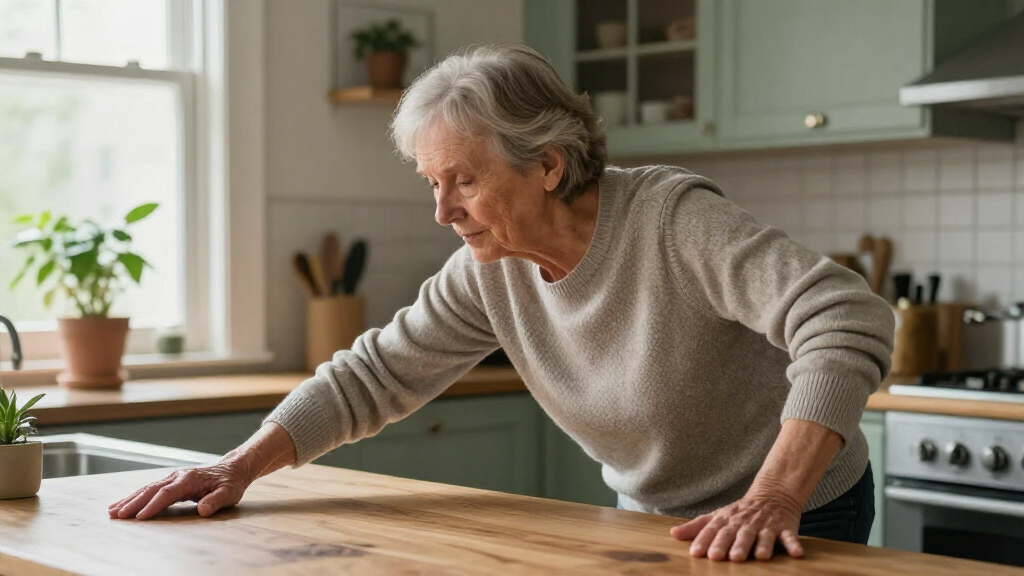
For practice, the report suggests working with a physical therapist trained in balance concerns, or trying activities such as tai chi, yoga or Pilates. At home, it recommends using a stable support, such as a counter or table, if needed. Examples include shifting weight while standing, walking heel to toe, and rising from a chair without using the arms. Kaufman advises people with serious balance problems to consult a health care professional before attempting exercises.
Balance Supports Everyday Independence
Steadiness affects more than the ability to stand on one leg: it is tied to walking, mobility and day-to-day independence. Because balance depends on several body systems, a change in gait or confidence on one’s feet can have different possible explanations. The report’s practical significance is its emphasis on recognizing symptoms and considering individualized support, rather than treating balance as a single fitness measure.
The discussion also highlights fall risk for older adults. Safe practice and professional assessment may help people address balance concerns, but the Q&A does not claim that any particular exercise prevents falls or slows aging. Its suggestions are general educational information, not a substitute for care tailored to an individual’s health and abilities.
As an affiliate, we earn on qualifying purchases.
How the Mayo Clinic Frames Balance
The article is presented as a Mayo Clinic Q&A, based on a question from a reader in their early 60s who noticed feeling less steady with age. Seniors Guide published the report, which credits Kaufman and carries a 2025 Mayo Foundation for Medical Education and Research copyright. Tribune Content Agency distributed the material.
Kaufman says Mayo Clinic Motion Analysis Laboratory research considers the ability to balance on one leg as one potential measure of how the nervous system and muscles work together with age. The Q&A does not identify a specific study, sample size or research findings, so the measure should not be read as a stand-alone clinical test. The report’s one-leg suggestions are informal guidance, not a diagnosis or a replacement for medical assessment.
““In many ways, aging is a balancing act.””
— Kenton Kaufman, Mayo Clinic
elderly balance training equipment
As an affiliate, we earn on qualifying purchases.
As an affiliate, we earn on qualifying purchases.
Limits of the Balance Guidance
The report does not specify which exercises are appropriate for particular diagnoses, how often or how long to practice, or what outcomes participants can expect. It also gives no details about the research behind its one-leg balance discussion, including how the measure was tested or how it predicts outcomes. The suggested time thresholds are presented in the Q&A, but the material does not establish them as a formal diagnostic standard.
Unsteadiness can have multiple causes, and the report does not assess any individual reader. It is unclear from the article whether a person’s symptoms reflect age-related change, a medical condition, medication effects or another issue. Anyone with substantial balance difficulties should seek advice from a qualified health care professional before beginning exercises, as the Q&A itself recommends.
walking heel to toe exercise tools
As an affiliate, we earn on qualifying purchases.
As an affiliate, we earn on qualifying purchases.
Discuss Persistent Symptoms With a Clinician
The article does not announce a new clinical program, trial or policy, and it gives no scheduled follow-up. For readers experiencing persistent or serious balance problems, the next step described in the report is to consult a health care professional; a physical therapist trained in balance issues may be able to develop an individualized exercise program. People considering home practice are advised to use stable support when needed.
The Q&A remains an educational resource rather than individual medical care. Further details about the cited research or specific recommendations for different health conditions are not provided in the published material.
As an affiliate, we earn on qualifying purchases.
Key Questions
What body systems can affect balance as people age?
The Q&A lists the muscles, eyes, inner-ear balance organ, nerves, heart and blood vessels as systems involved in balance. Changes in more than one may contribute to feeling unsteady.
What causes of unsteadiness does the report mention?
Possible causes named include inner-ear problems, peripheral neuropathy, vision issues, neurological conditions and medication side effects. The article does not determine the cause of any individual’s symptoms.
What balance activities does the Q&A suggest?
It mentions physical therapy, tai chi, yoga or Pilates, and simple home practice such as weight shifting or heel-to-toe walking. Use a stable support if needed, and seek professional guidance before exercising if balance problems are serious.
Does the one-leg balance suggestion diagnose a fall risk?
No. The report offers informal one-leg balance guidance but does not present it as a formal diagnostic test or provide research details that would establish its accuracy for an individual. A health care professional can assess personal concerns.
Source: rss
Halloween Picks
halloween
As an affiliate, we earn on qualifying purchases.