
TL;DR

Turn your wind-down time into listening time
- Thousands of audiobooks, podcasts and originals
- Listen on your phone, tablet or Echo — also offline
- Cancel anytime
Physical therapist Devin Trachman recommends the sit-to-stand exercise as a practical way to strengthen muscles used for walking and daily activities. Fit&Well reports her suggested routine is two to three sets of eight to 10 repetitions, with modifications for people who need support. The article does not report clinical trial results or evidence that this exercise alone improves walking for everyone.
Physical therapist Devin Trachman recommends sit-to-stands as a single exercise to help build strength used in walking and everyday movement, according to a Fit&Well report. Her suggested routine is two to three sets of eight to 10 repetitions, using a sturdy chair and support if needed; the report presents this as her professional recommendation, not as a finding from a clinical trial.
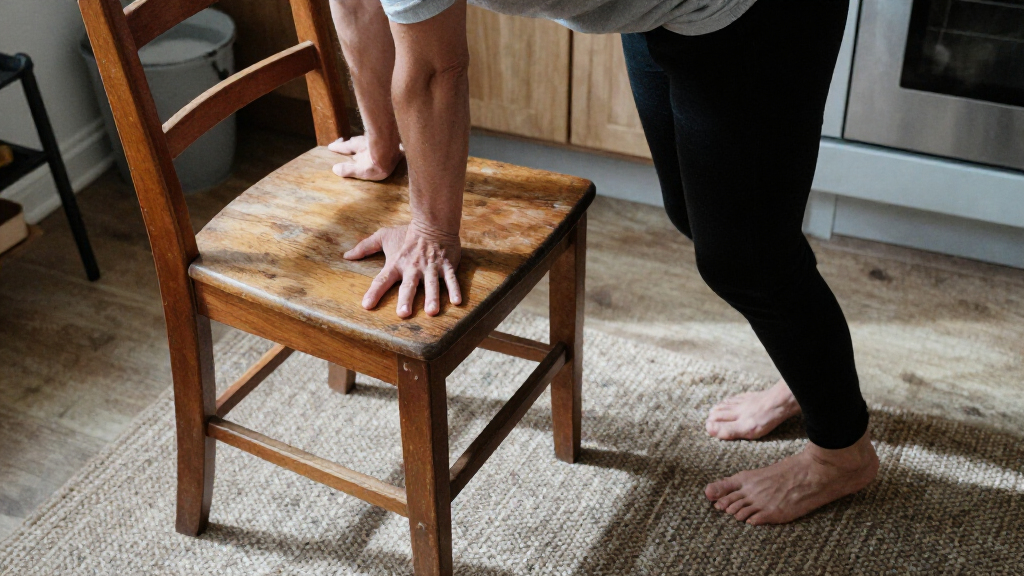
The sit-to-stand exercise involves rising from a chair and lowering back down with control. Trachman says the movement works the quadriceps, gluteus maximus and core stabilizers, muscles that contribute to standing, walking and climbing stairs. She describes standing up from a chair as a functional movement people perform in daily life.
For the exercise, the report advises sitting near the front of a sturdy chair, with feet flat and about shoulder-width apart. The person leans slightly forward while keeping the back straight, then pushes through the heels to stand upright and slowly returns to the seat. The suggested rest between sets is 60 seconds. The report says to avoid using the hands if possible, but offers alternatives for those who need assistance.
People who cannot rise without their hands can use a chair with armrests for light support, or place a table or another sturdy support in front of them, according to the report. Trachman is identified as a physical therapist and clinic director at Physical Therapy Central in West Edmond. Fit&Well’s source material does not provide a study, patient data or an independent evaluation of the exercise recommendation.
Building Strength for Everyday Walking
The recommendation focuses on strength as one factor that may make walking and other daily movements feel more manageable. In the report, Trachman describes a possible cycle: people may become less active when walking feels tiring or painful, and reduced activity can be accompanied by weaker supporting muscles, declining balance and lower endurance. She argues that strength work can help people feel more confident and capable of staying active.
That framing matters because the exercise is tied to practical tasks beyond a workout, including getting up from a chair and climbing stairs. However, the source does not establish that sit-to-stands will prevent falls, restore independence or improve walking for every person. Its value for an individual can depend on their strength, balance, pain, health and ability to exercise safely.
Offering easier versions also makes the recommendation more adaptable: hand support is presented as a modification rather than a reason to abandon the movement. Anyone who is unsure whether the exercise is appropriate for them, or who has pain or difficulty standing, can seek guidance from a qualified health professional.
chair sit-to-stand exercise equipment
As an affiliate, we earn on qualifying purchases.
As an affiliate, we earn on qualifying purchases.
Why Trachman Focuses on Chair Rises
Fit&Well’s report places Trachman’s advice against the possibility that walking may become less smooth, shorter or more tiring with age. It also reports her view that people may reduce walking because of busy routines, pain or increased effort—not simply because they have reached a particular age. These are explanations offered by Trachman, rather than findings presented from a study in the article.
Trachman’s proposed response is to build strength and confidence rather than simply telling someone to walk more. She says even small gains in strength can support walking endurance and quality of life, though the report does not quantify those gains or give a timeframe. Her recommendation centers on a familiar movement that can be performed at home with a stable chair, with support added when necessary.
The report identifies Trachman as holding a Doctor of Physical Therapy degree and as an orthopaedic clinical specialist. Those credentials provide context for her professional advice, but they do not replace evidence about how well a specific exercise works across different groups of people.
““If I could only prescribe one exercise to improve walking, this would be it.””
— Devin Trachman, physical therapist and clinic director at Physical Therapy Central, as quoted by Fit&Well
As an affiliate, we earn on qualifying purchases.
What the Report Does Not Establish
The source does not say when the Fit&Well article was published, cite research comparing sit-to-stands with other exercises, or report measured changes in participants’ walking. It also does not specify how long someone should follow the routine before expecting a change. The recommendation is attributed to Trachman, and the available material does not establish that one exercise is best for every person or condition.
Details about appropriate range of motion, chair height and progression are not provided. Nor does the article set out screening guidance for people with pain, balance problems or other health concerns. The proposed repetitions should be read as a general recommendation in the report, not an individualized exercise prescription.
As an affiliate, we earn on qualifying purchases.
How Readers Can Apply the Advice
The report does not announce a follow-up study or a new program. It gives readers a basic routine and support options: use a sturdy chair, move in a controlled way, and use the armrests or a stable support if standing without help is not possible. It does not describe a schedule beyond the recommendation of two to three sets per session.
People considering the exercise can ask a qualified physical therapist or other health professional whether it fits their abilities and how to adjust it. Further information would be needed to determine how much sit-to-stand training changes walking outcomes, which people benefit most and how the exercise compares with other strength or balance work.
home workout chair for strength training
As an affiliate, we earn on qualifying purchases.
As an affiliate, we earn on qualifying purchases.
Key Questions
Which exercise does Devin Trachman recommend for walking strength?
Trachman recommends sit-to-stands, in which a person rises from a chair and lowers back into it with control. Fit&Well reports her suggestion as two to three sets of eight to 10 repetitions.
What muscles does the sit-to-stand exercise target?
The report lists the quadriceps, gluteus maximus and core stabilizers. Trachman links the movement to strength used for walking, stair climbing and standing from a chair.
What if I need my hands to stand up?
The report suggests using a chair with armrests for light support, or a sturdy support in front of you. It does not provide individualized advice, so people with pain, balance difficulties or concerns about safety can consult a qualified professional.
Does the report prove sit-to-stands improve walking for everyone?
No. The article reports Trachman’s professional recommendation but does not cite a clinical trial or present measured walking outcomes. It does not establish that the exercise works equally well for every person.
Source: rss
Halloween Picks
halloween
As an affiliate, we earn on qualifying purchases.