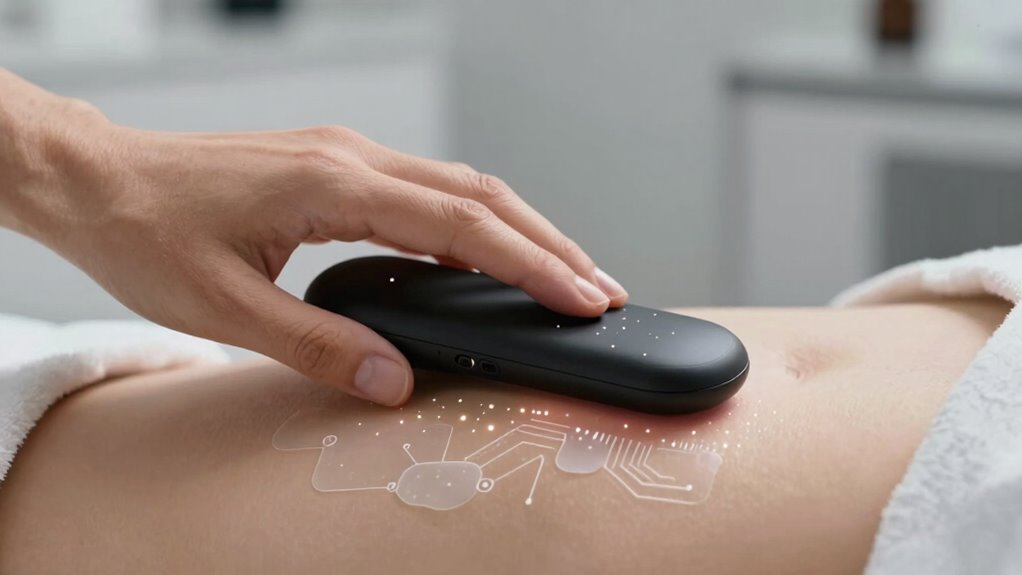

AI skin sensors make wearable beauty tech feel closer than ever by allowing your devices to monitor your skin’s temperature, moisture, and pressure in real time. They detect early signs of stress, irritation, or environmental changes, so your devices can automatically adjust for comfort and skin health. This personalized feedback helps you take better care of your skin daily. Keep exploring how these innovations are transforming your skincare routine and wellness journey.
Key Takeaways
- Advanced sensors provide real-time skin data, enabling personalized and proactive skincare routines.
- Wearable devices can automatically adjust settings based on environmental and skin condition changes.
- Continuous monitoring fosters a closer, more intuitive connection between users and their skincare needs.
- Integration of environmental sensors offers comprehensive insights, making skin health management more precise.
- Technological innovations are creating seamless, responsive beauty devices that feel like an ongoing skin conversation.
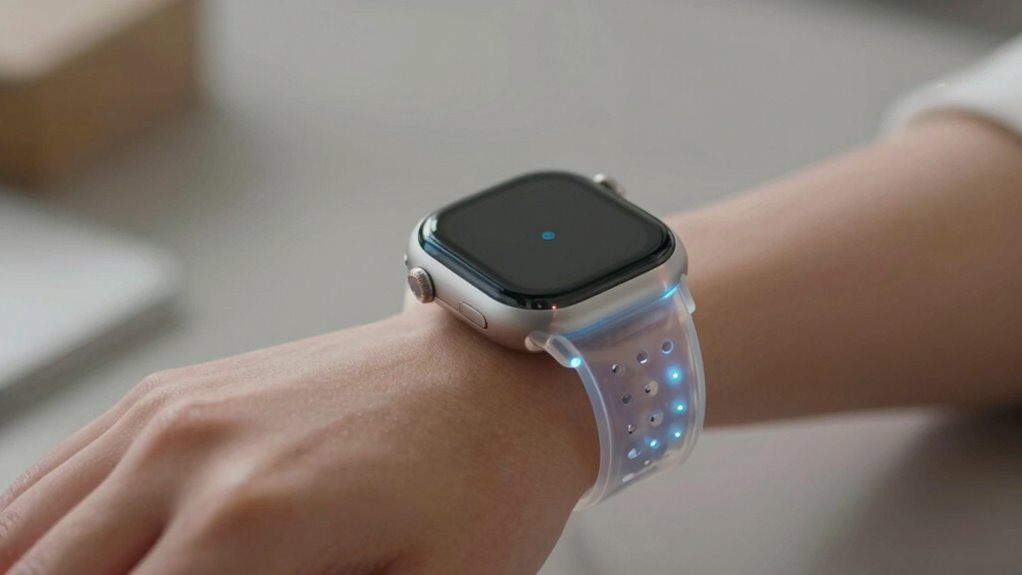
Imagine a future where your devices can sense your skin’s tiniest changes in temperature, moisture, or pressure—thanks to AI skin sensors. This technology transforms the way you understand and care for your skin, making personalized beauty and health routines more intuitive than ever. With AI skin sensors embedded in wearables, you’ll gain real-time insights that help you optimize your skin’s health throughout the day. For example, when your skin begins to lose hydration, these sensors detect subtle shifts in moisture levels, alerting you to hydrate before dryness becomes visible. This proactive approach to skin hydration means you can maintain a healthy, plump complexion without guesswork or waiting for signs of dehydration.
AI skin sensors in wearables detect hydration and temperature changes, enabling proactive, personalized skin care.
Temperature regulation becomes equally seamless. Your skin constantly responds to environmental changes, and AI skin sensors monitor these fluctuations continuously. If you step into a cooler room or face sudden heat, your wearable can adjust internal settings—such as activating cooling or warming features—helping you stay comfortable. This precise regulation ensures your skin remains balanced, preventing irritation or discomfort caused by temperature extremes. Because the sensors are so sensitive, they can even detect early signs of skin stress or irritation, prompting you to take preventive action before redness or discomfort appears. Additionally, pollutants and allergens can impact your skin’s health, and some advanced sensors are beginning to incorporate air quality monitoring to provide a more comprehensive view of environmental influences on your skin.
The beauty of this technology is that it bridges the gap between your skin’s natural needs and the devices you wear daily. Instead of generic skincare routines, you get tailored recommendations based on your skin’s real-time condition. For instance, if your sensors notice increased moisture loss during intense workouts, your device might suggest a hydrating serum or an extra layer of moisturizer. If it detects rising skin temperature, it could advise cooling techniques or soothing products to calm irritation. The result is a smarter, more responsive approach to skincare that adapts as your environment or activity levels change.
Wearable beauty tech with AI skin sensors makes self-care feel less like a routine and more like an ongoing conversation with your skin. These devices empower you to listen to your body’s subtle signals and respond promptly, enhancing your overall skin health. Over time, they help you develop a deeper understanding of your skin’s unique needs, leading to better habits and healthier results. As the technology advances, expect even more precise and personalized experiences—bringing the future of skincare and wellness closer than you ever imagined.
As an affiliate, we earn on qualifying purchases.
Frequently Asked Questions
How Accurate Are AI Skin Sensors Compared to Traditional Skin Analysis Methods?
AI skin sensors can be quite accurate, especially when properly calibrated, but they still lag slightly behind traditional skin analysis methods. Calibration guarantees precise readings, and many devices incorporate safeguards for data privacy. While traditional methods may offer more detailed insights, wearable tech provides quick, non-invasive results. As technology advances, these sensors will become even more reliable, balancing accuracy with convenience and privacy.
What Safety Concerns Exist With Continuous Skin Sensor Use?
Around 60% of users worry about privacy concerns with continuous skin sensor use. You might also experience skin irritation from prolonged contact, especially if sensors aren’t properly maintained. It’s essential to guarantee your device has strong data privacy protections and is made of skin-friendly materials. Regular cleaning and proper usage can minimize irritation, while understanding privacy policies helps you stay informed about how your data’s protected.
Can These Sensors Detect Skin Diseases Early?
Yes, these sensors can help with early detection of skin diseases by continuously monitoring your skin’s condition. They analyze data for irregularities, alerting you to potential issues sooner. However, their reliability varies depending on the technology and calibration. You should use these sensors as a supplement, not a replacement for professional diagnosis, ensuring early detection is accurate and effective for your skin health.
How Long Do Wearable Skin Sensors Typically Last?
Like a marathon runner keeps going, wearable skin sensors usually last between a week to a few months, depending on their sensor durability and battery lifespan. Some models are designed for daily use, with rechargeable batteries that last several days. Others might have more limited lifespans, often around a month, before needing replacement or recharge. Your usage habits and device quality directly influence how long these sensors serve you effectively.
Are AI Skin Sensors Suitable for All Skin Types?
AI skin sensors are generally suitable for most skin types, but you should consider skin sensitivity, especially if you have allergies or sensitive skin. These sensors usually require proper calibration to avoid irritation. If you notice redness or discomfort, remove the device and consult with a dermatologist. Regular calibration helps guarantee accurate readings and keeps your skin comfortable, making wearable tech a safe, effective addition to your beauty routine.
As an affiliate, we earn on qualifying purchases.
Conclusion
With AI skin sensors advancing, wearable beauty tech feels more integrated into your daily routine than ever before. Did you know that the global beauty tech market is projected to reach $122 billion by 2028? This growth shows how these innovations are becoming essential tools for personalized skincare. As these sensors become more accurate and accessible, you’ll find yourself effortlessly monitoring your skin health and achieving your beauty goals with greater confidence and convenience.
temperature and moisture skin sensor
As an affiliate, we earn on qualifying purchases.
As an affiliate, we earn on qualifying purchases.
As an affiliate, we earn on qualifying purchases.