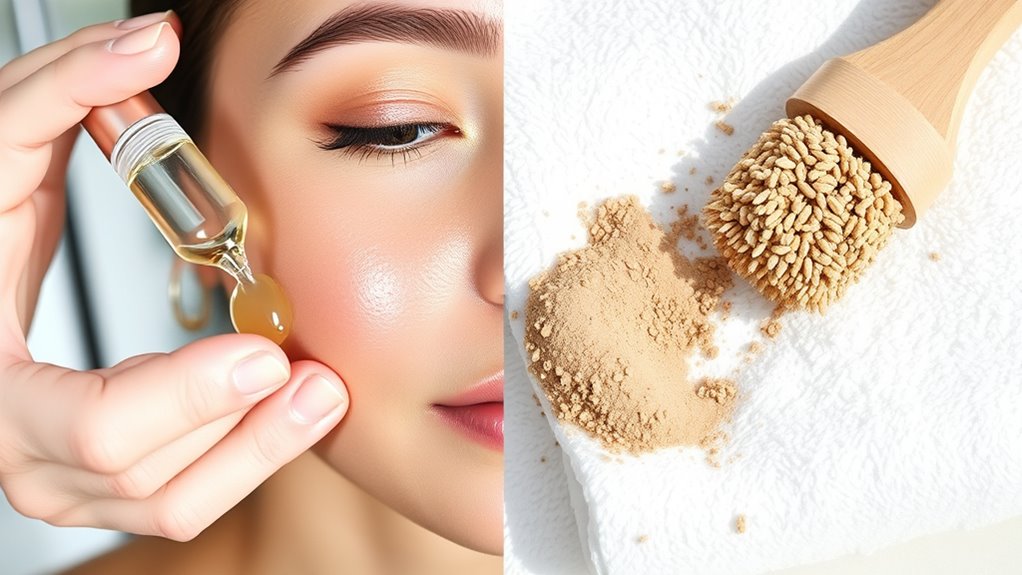

Choosing between chemical peels and physical exfoliation depends on your skin sensitivity, goals, and time commitment. Chemical peels can deliver more dramatic results but may cause irritation and require recovery, making them better for targeted, deeper improvement. Physical exfoliation is gentler, fits into your daily routine, and helps maintain skin brightness with less downtime. To find the best option tailored to your needs, explore the key factors that influence each method’s suitability.
Key Takeaways
- Chemical peels offer deeper, more dramatic results but may cause irritation and require downtime, suitable for targeted skin concerns.
- Physical exfoliation is quick, gentle, and ideal for regular maintenance, fitting easily into daily routines with minimal recovery.
- Sensitive skin types should prefer gentle physical methods over chemical peels to prevent adverse reactions and irritation.
- Advanced exfoliation tools enhance physical exfoliation effectiveness while reducing skin damage risk.
- Choose chemical peels for significant transformation and physical exfoliation for ongoing skin upkeep based on individual needs and tolerance.

When it comes to achieving smoother, brighter skin, you often have two main options: chemical peels and physical exfoliation. Understanding how each method interacts with your skin can help you make the best choice for your skincare routine. If you have sensitive skin, you’ll want to deliberate how each approach might affect your skin sensitivity. Chemical peels, especially those with stronger acids, can cause redness, irritation, or even peeling, which might be uncomfortable if your skin is prone to sensitivity. On the other hand, gentle physical exfoliants, like soft scrubs or tools with fine particles, tend to be less aggressive, but they can still cause irritation if used too harshly or too often. It’s essential to gauge your skin’s tolerance—if you notice redness or discomfort after exfoliating, you may need to switch to a milder method or reduce the frequency.
Next, think about treatment duration. Chemical peels typically require a bit more time investment, especially if you’re doing a professional peel at a clinic. These treatments often last around 15 to 30 minutes and might require a few days of recovery, during which your skin peels or becomes flaky. Over-the-counter chemical peel products tend to have a shorter application time but still require careful adherence to instructions to avoid over-exfoliation. Physical exfoliation, by contrast, is usually quick and can be integrated into your daily routine—spending just a minute or two during your cleansing step. However, the key is consistency; overdoing physical exfoliation can damage your skin barrier, leading to increased sensitivity and longer recovery.
Additionally, technological advancements like exfoliation tools are making physical exfoliation more effective and gentle, helping reduce the risk of irritation. You should also ponder how your skin responds over time. Chemical peels can deliver more pronounced results in fewer treatments, but they may also cause more downtime and irritation, especially for sensitive skin. Physical exfoliation, while gentler, might require more frequent sessions to maintain the desired brightness and smoothness. The choice ultimately depends on your skin’s specific needs and how much time you’re willing to dedicate to treatment and recovery. If you prefer quick, regular routines with minimal downtime, physical exfoliation could be your go-to. But if you’re looking for deeper, more transformative results and are willing to tolerate some initial discomfort, chemical peels might be more effective. Always listen to your skin and consult with a dermatologist to find the safest, most effective method tailored to your skin’s sensitivity and your lifestyle.
Frequently Asked Questions
Can Physical Exfoliation Cause Microtears in the Skin?
Yes, physical exfoliation can cause microtears in your skin if done too aggressively or with rough scrubs. These microtears can compromise your skin barrier, leading to increased sensitivity and irritation. To avoid this, choose exfoliation methods with controlled, gentle scrubbing and pay attention to exfoliation depth. Gentle pressure and appropriate products help protect your skin’s delicate barrier while effectively removing dead skin cells.
Are Chemical Peels Suitable for Sensitive Skin Types?
A gentle hand is better than a hurried one. Chemical peels can be suitable for sensitive skin, but you must choose milder formulations designed for delicate skin concerns. Always start with a light peel and consult a dermatologist to prevent irritation. Remember, gentle exfoliation techniques are key to maintaining your skin’s health and avoiding adverse reactions, ensuring you treat sensitive skin with care and respect.
How Often Should I Perform Chemical Peels Versus Physical Exfoliation?
You should perform chemical peels every 4 to 6 weeks, allowing your skin to undergo proper skin renewal and recovery, while physical exfoliation can be done 2 to 3 times weekly. Overdoing either method can irritate your skin, so adjust exfoliation frequency based on your skin’s sensitivity and response. Always listen to your skin and consult a professional for personalized advice.
What Are the Long-Term Effects of Regular Chemical Peels?
Regular chemical peels can be like a gentle garden rake, gradually revealing healthier skin. Over time, they stimulate collagen and improve skin texture, but excessive use might weaken your skin barrier, causing sensitivity. Long-term, they can enhance your skin’s glow and resilience if done properly. Just remember, moderation is key—overdoing it may lead to irritation or uneven tone, so listen to your skin’s needs and consult professionals regularly.
Can Combining Both Methods Improve Skin Texture Effectively?
Yes, combining chemical peels with physical exfoliation can improve your skin texture effectively. Just make sure to practice gentle skincare and monitor your exfoliation frequency to avoid over-irritation. Use chemical peels for deep renewal and physical exfoliation for regular maintenance. By balancing both methods carefully, you can achieve smoother, brighter skin without risking damage, as long as you listen to your skin’s needs and adjust accordingly.
Conclusion
So, now that you know the differences between chemical peels and physical exfoliation, the real question is: which method suits your skin’s needs best? Whether you prefer gentle chemical solutions or invigorating scrubs, choosing the right exfoliation can transform your skincare routine. Are you ready to give your skin the treatment it deserves? Remember, understanding your skin is the first step toward a healthier, more radiant you.