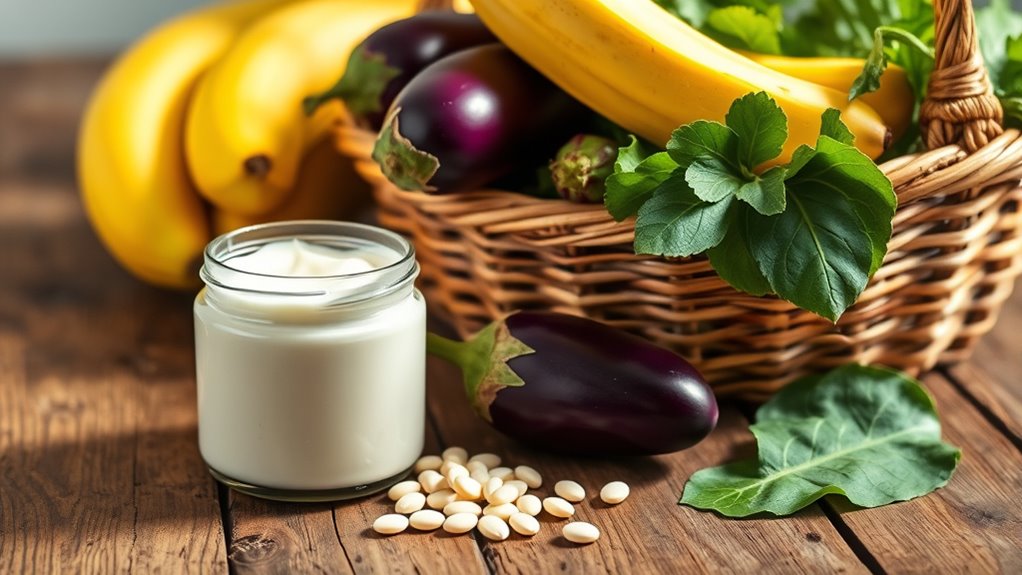

Your gut health directly affects your skin’s appearance and health. Consuming probiotics from foods like yogurt and sauerkraut, along with prebiotics in garlic and bananas, helps boost your microbiome’s diversity. A balanced microbiome reduces inflammation and prevents skin issues like redness, acne, or eczema. Prioritizing these can lead to calmer, clearer skin. Keep exploring to discover how nurturing your gut may be your best step toward healthier skin from within.

Turn your wind-down time into listening time
- Thousands of audiobooks, podcasts and originals
- Listen on your phone, tablet or Echo — also offline
- Cancel anytime
Key Takeaways
- Gut health influences skin appearance by supporting microbiome diversity and reducing systemic inflammation.
- Probiotics from fermented foods help replenish beneficial gut bacteria, improving skin health and reducing redness.
- Prebiotics like garlic and bananas fuel good gut bacteria, aiding in inflammation control and clearer skin.
- A diverse microbiome enhances immune regulation, preventing skin issues such as acne and eczema.
- Maintaining gut health through diet and probiotics promotes internal balance, leading to calmer, healthier skin.

Your gut health plays a crucial role in maintaining your skin’s appearance and overall condition. When your digestive system functions at its best, it influences the health of your microbiome, the collection of microorganisms residing in your gut. A diverse microbiome, or microbiome diversity, is essential for balancing the immune response and reducing systemic inflammation, which can directly impact your skin’s health. When your microbiome is thriving, it acts as a barrier against harmful pathogens and helps regulate inflammation that might otherwise trigger skin issues like acne, eczema, or redness. Conversely, a less diverse microbiome can lead to increased skin inflammation, making your skin more prone to irritation and breakouts.
You might not realize it, but what happens inside your gut often shows up on your skin. An imbalance in gut bacteria can cause your immune system to overreact, leading to skin inflammation. This inflammation manifests as swelling, redness, or irritation, which many people mistake for purely external skin problems. By nurturing your microbiome diversity with the right dietary choices, you can help prevent these internal triggers from escalating into visible skin concerns. Consuming foods rich in prebiotics, like garlic, onions, and bananas, provides the fuel your beneficial gut bacteria need to thrive. These prebiotics support a healthy microbiome, which in turn helps regulate inflammatory responses that might otherwise cause flare-ups on your skin.
Probiotics, the live beneficial bacteria found in fermented foods such as yogurt, kefir, sauerkraut, and kimchi, directly contribute to enhancing your microbiome diversity. When you include probiotics in your diet, you’re helping to replenish and diversify the microbial population in your gut. This boost in diversity strengthens your immune defenses and reduces the likelihood of excessive skin inflammation. Over time, you may notice improvements like fewer breakouts, less redness, and a calmer complexion. It’s worth noting that not all probiotics are created equal, so choosing strains that have been studied for gut and skin health can maximize benefits.
Ultimately, maintaining a healthy gut is a proactive way to support your skin from the inside out. By prioritizing microbiome diversity through a balanced diet that includes prebiotics and probiotics, you’re helping your body manage inflammation more effectively. This approach doesn’t just improve your gut health—it can lead to clearer, calmer skin and a more radiant appearance. So, pay attention to what you’re eating, and think of your gut as the foundation for your skin’s health. When your microbiome is diverse and your inflammation is under control, your skin reflects that inner balance. Regularly consuming beneficial bacteria from fermented foods can further enhance your microbiome diversity and skin health.
Frequently Asked Questions
Can Probiotics Improve Skin Conditions Like Acne or Eczema?
Yes, probiotics can improve skin conditions like acne and eczema. Specific probiotic strains help reduce skin inflammation by balancing your gut bacteria, which influences your skin’s health. When you take the right strains, they can lower inflammation and support your skin’s barrier. Consistent use may lead to clearer, calmer skin, as probiotics help combat the root causes of these conditions by promoting overall gut and skin health.
How Quickly Can Gut Health Changes Affect Skin Appearance?
They say “good things come to those who wait,” but gut health changes can show some immediate effects on your skin. Typically, you might notice initial improvements within a few days to a week, thanks to the gut-skin timeline. While more significant results may take several weeks, consistent use of probiotics and prebiotics can help your skin look clearer and more radiant sooner than you think.
Are All Probiotics Beneficial for Skin Health?
Not all probiotics benefit your skin health. The key is specific probiotic strains that support your skin microbiome, such as Lactobacillus and Bifidobacterium. These strains can help reduce inflammation, improve barrier function, and promote clearer skin. When choosing probiotics, look for those with targeted strains proven to influence skin health. Not every supplement offers these benefits, so select products backed by research to maximize skin improvements.
Do Prebiotics Have Any Side Effects on the Skin?
Think of prebiotic fermentation as a gentle gardener tending your gut, strengthening the gut barrier. Usually, prebiotics don’t cause skin side effects; instead, they support healthy gut bacteria, which can improve skin clarity. However, in some cases, excess prebiotics may lead to gas or bloating, indirectly affecting your skin’s appearance. Monitor your body’s response, and consult a healthcare professional if you notice any adverse skin reactions.
Can Diet Alone Support Both Gut and Skin Health Effectively?
Yes, your diet alone can support both gut and skin health effectively. By focusing on dietary diversity, you introduce a range of nutrients that enhance nutrient absorption, promoting overall wellness. Consuming plenty of fiber-rich foods, fruits, and vegetables helps maintain a balanced gut microbiome, which in turn benefits your skin. However, sometimes supplements or medical advice may be necessary for specific issues, so listen to your body’s needs.
Conclusion
Think of your gut as the gardener of your skin’s garden—tend it with probiotics and prebiotics, and watch your skin bloom with health and radiance. When you nurture your gut, you’re fundamentally watering the roots of your beauty from within. So, nourish your inner world, and let your skin shine like a vibrant, sun-kissed bloom. Your journey to glowing skin starts deep inside—cultivate it with care, and watch the magic unfold.
Fall Picks
fall essentials
As an affiliate, we earn on qualifying purchases.