Your skin’s barrier is essential for protecting against pollutants, irritants, and moisture loss. Ceramides rebuild and strengthen this barrier, keeping your skin hydrated and resilient. Prebiotics nourish beneficial bacteria, supporting your skin’s natural defenses. Niacinamide calms redness, reduces sensitivity, and boosts barrier function. Combining these ingredients maximizes repair and protection. Recognizing signs of damage helps you take action. Keep exploring how these ingredients work together to restore your skin’s health and resilience.
Key Takeaways
- Ceramides restore and strengthen the skin’s lipid barrier, preventing moisture loss and reducing sensitivity.
- Prebiotics nourish beneficial skin bacteria, supporting a healthy microbiome and enhancing natural defense mechanisms.
- Niacinamide improves barrier function, calms irritation, and boosts skin resilience against environmental stressors.
- Combining these ingredients offers synergistic protection, accelerating barrier repair and maintaining skin health.
- Proper formulation and application optimize their effectiveness, promoting a resilient, hydrated, and protected skin barrier.
Understanding the Importance of Your Skin’s Protective Layer
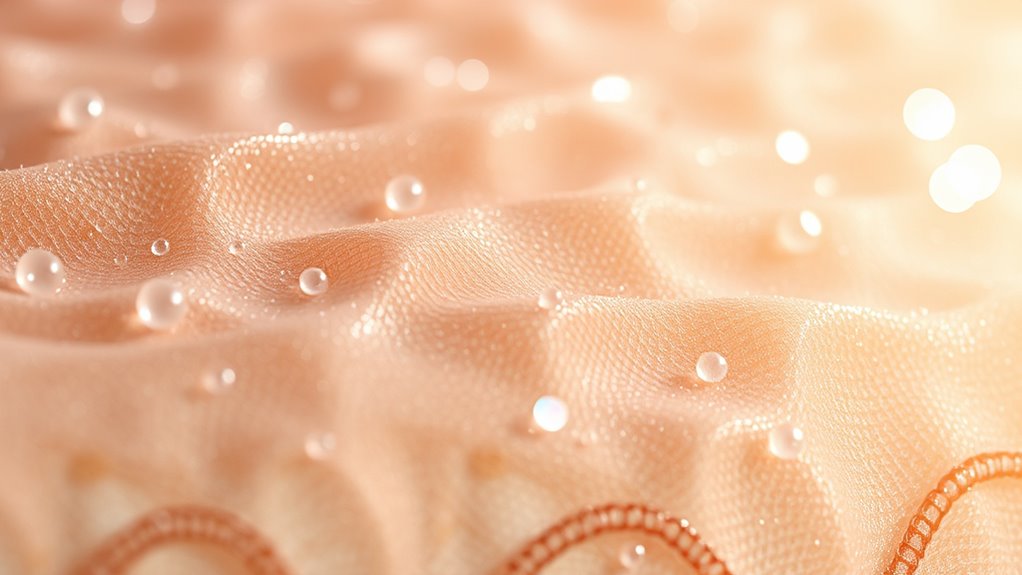
Your skin’s protective layer, known as the outermost barrier, plays a crucial role in keeping harmful environmental factors like bacteria, pollutants, and irritants out of your body. If you have sensitive skin, this barrier is often weaker, making you more vulnerable to environmental damage.
Your skin’s outermost layer protects against bacteria, pollutants, and irritants, especially important for sensitive skin.
When your skin’s barrier is compromised, it can lead to redness, irritation, and increased sensitivity. Environmental damage from sun, pollution, and harsh weather can break down this barrier further, causing more problems.
Protecting this layer is essential for maintaining healthy skin. By strengthening your skin’s outermost barrier, you help prevent irritants from penetrating and reduce the risk of reactions.
A resilient barrier keeps your skin calmer, more balanced, and better equipped to face daily environmental challenges.
How Ceramides Help Reinforce the Skin Barrier

Ceramides are key lipids that help restore and strengthen the skin’s protective barrier. They play a crucial role in ceramide synthesis, which maintains the integrity of your lipid barrier. When your ceramide levels are balanced, your skin becomes more resistant to environmental stressors and moisture loss. Conversely, a deficiency can weaken the lipid barrier, leading to dryness, irritation, and increased sensitivity. By replenishing ceramides through targeted skincare, you support the natural renewal process of your skin’s barrier. This reinforcement helps lock in moisture and prevents harmful elements from penetrating. Additionally, research shows that incorporating professional-grade ingredients can further enhance barrier repair and overall skin health. Essentially, ceramides act as the foundation of a resilient, healthy skin barrier that keeps your skin smooth, hydrated, and protected against daily aggressors.
The Role of Prebiotics in Supporting Skin Health

Prebiotics play a vital role in supporting skin health by nourishing the beneficial bacteria that reside on the skin’s surface. When your microbiome balance is maintained, it helps protect against irritants and reduces inflammation, promoting a healthier skin barrier. Additionally, maintaining proper skin microbiome balance through prebiotics can enhance your skin’s natural defenses against environmental stressors. Good gut health directly influences your skin, as some prebiotics support the growth of helpful bacteria both in your gut and on your skin. This balance can prevent issues like dryness, sensitivity, and breakouts.
Niacinamide’s Benefits for Strengthening and Soothing Skin

Niacinamide is a powerful ingredient that can help reduce skin redness and calm irritation. It also strengthens your skin’s barrier, making it more resistant to environmental damage. In addition, sleep quality influences skin repair processes, supporting overall skin health and resilience. Incorporating it into your routine can improve both the comfort and resilience of your skin. Essential oils, when used properly, can also support skin health by providing soothing and antibacterial properties.
Reduces Skin Redness
When your skin becomes red and irritated, it’s often a sign that its barrier is compromised. If you have sensitive skin, you may notice persistent redness or flushing that seems hard to soothe.
Niacinamide helps reduce skin redness by calming inflammation and strengthening your skin’s natural barrier. It diminishes the appearance of redness caused by environmental triggers, irritation, or skin conditions like rosacea. Choosing the right skincare ingredients can further support your skin’s health and reduce reactivity.
By supporting your skin’s resilience, niacinamide ensures that your skin stays calmer and less reactive over time. Its soothing properties help you feel more comfortable in your skin, especially during flare-ups or exposure to harsh elements. Incorporating skin barrier repair into your routine can reinforce your skin’s defenses and improve overall comfort. Additionally, understanding the role of contrast ratio in skin appearance can help you better assess how your skin responds to various treatments. Leveraging advanced filtration systems in skincare devices can also enhance your skin’s protection and recovery.
Incorporating niacinamide into your routine can make a noticeable difference in how your skin looks and feels, promoting a more even and less irritated complexion. Environmental factors can often exacerbate redness, making it important to protect your skin from harsh conditions.
Enhances Barrier Function
Building on its ability to calm redness, niacinamide also actively strengthens your skin’s barrier, making it more resilient against environmental stressors. By improving hydration techniques, it helps maintain your skin’s moisture levels, which is essential for barrier health. WWE Raw’s Financial Impact supports this by highlighting how reinforcement of foundational structures benefits overall resilience. Niacinamide supports the production of ceramides, key lipids that reinforce the skin’s protective layer. Consistent use enhances your skin’s ability to fend off irritants and pollutants. Don’t forget sun protection—wearing broad-spectrum SPF daily shields your barrier from UV damage that can weaken it over time. When your barrier is fortified, your skin feels calmer, looks healthier, and resists damage more effectively. Incorporating exfoliation products like glycolic acid can also help remove dead skin cells that hinder barrier function, further supporting skin renewal. Combining niacinamide with proper hydration and sun protection creates a powerful defense, promoting a stronger, more resilient skin barrier.
Combining Key Ingredients for Optimal Barrier Repair
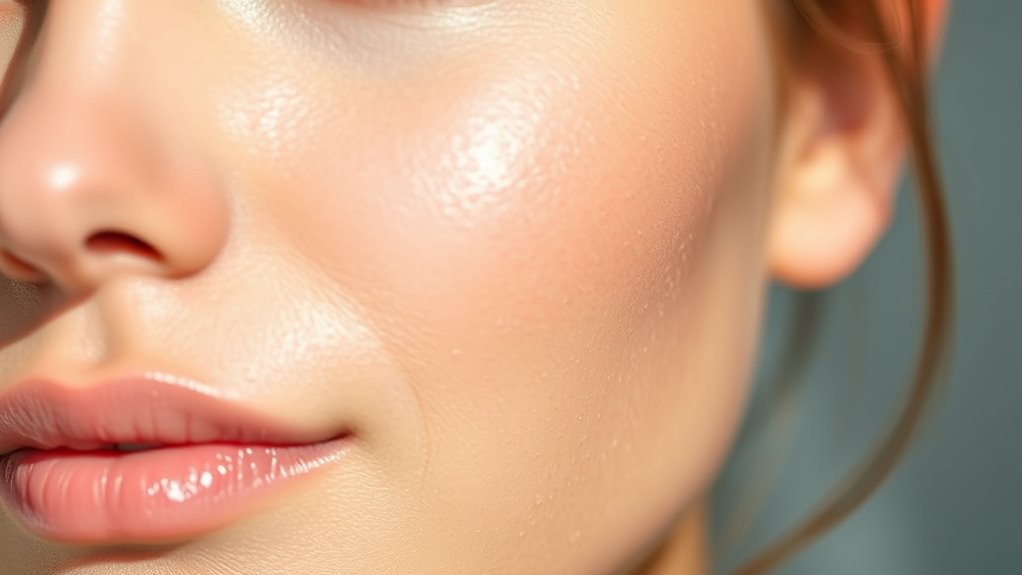
Combining ingredients effectively can boost your skin’s barrier resilience by creating synergistic effects. To do this well, you need to take into account formulation compatibility and how ingredients interact. Vetted products with appropriate formulations ensure that key components work together without causing irritation or diminishing effectiveness. Additionally, understanding the impact of AI in business can help skincare companies optimize their product development and marketing strategies for better consumer engagement. Incorporating insights from well-being tips can also inform product positioning, emphasizing the holistic benefits of skin health. Moreover, selecting ingredients like ceramides, prebiotics, and niacinamide that are known for their skin barrier repair properties can further enhance the efficacy of formulations. When done right, you’ll notice stronger, healthier skin that resists environmental stressors better.
Synergistic Ingredient Effects
Ideal skin barrier repair often relies on the strategic pairing of ingredients that work together to enhance their individual effects. When ingredients like ceramides, prebiotics, and niacinamide are combined, their ingredient synergy boosts skin recovery more effectively. Incorporating ingredient synergy can help maximize these benefits by promoting more effective absorption and activity of each component.
To achieve this, formulation compatibility is key, ensuring ingredients interact positively without neutralizing each other.
Consider these points:
- Pair ceramides with fatty acids for improved barrier reinforcement.
- Combine prebiotics with soothing agents to strengthen microbiome support.
- Use niacinamide alongside antioxidants to enhance anti-inflammatory effects.
- Ensure ingredients are compatible within the formulation to maximize synergy and minimize irritation.
- Incorporating skincare customization can further optimize barrier repair based on individual skin needs.
Formulation Compatibility Tips
Achieving effective skin barrier repair depends not only on selecting the right ingredients but also on guaranteeing they work well together within your formulation. To optimize results, consider ingredient stability and formulation pH, which impact how ingredients interact and perform. For example, ceramides require a stable environment to prevent degradation, while niacinamide thrives in a slightly acidic pH. Combining ingredients with incompatible pH levels or unstable formulations can reduce efficacy or cause irritation. Use this table as a quick reference:
| Ingredient | Compatibility Tip |
|---|---|
| Ceramides | Keep pH neutral to maintain stability |
| Niacinamide | Use in formulations with pH 5-7 |
| Prebiotics | Ensure stable in aqueous environments |
| Antioxidants | Protect from oxidation with proper pH |
| Humectants | Combine with occlusives for barrier support |
This approach ensures your formulations maximize barrier repair benefits. Additionally, understanding formulation compatibility is crucial for skincare efficacy and safety.
Enhanced Barrier Resilience
To strengthen your skin’s barrier resilience, integrating multiple ingredients that work synergistically is essential. Combining hydrating agents, antioxidants, and barrier-repair components enhances hydration levels and offers better environmental protection. Here are four key strategies:
- Use ceramides to restore lipid layers, improving hydration and preventing moisture loss. Ceramide-rich formulations can significantly enhance the skin’s natural barrier function. Regular monitoring of skin health can help identify when these ingredients are most needed. Incorporating filtration methods that effectively remove airborne irritants can further support barrier health by reducing environmental stressors.
- Incorporate niacinamide to boost skin resilience and reduce sensitivity to environmental stressors.
- Add prebiotics to support your skin’s microbiome, strengthening its natural defenses. Proper beneficiary designation can help maintain these benefits over the long term.
- Apply antioxidants to neutralize free radicals, shielding your skin from environmental damage. Implementing cost-effective methods for product formulation can also make barrier repair more accessible.
Signs Indicating a Damaged Skin Barrier
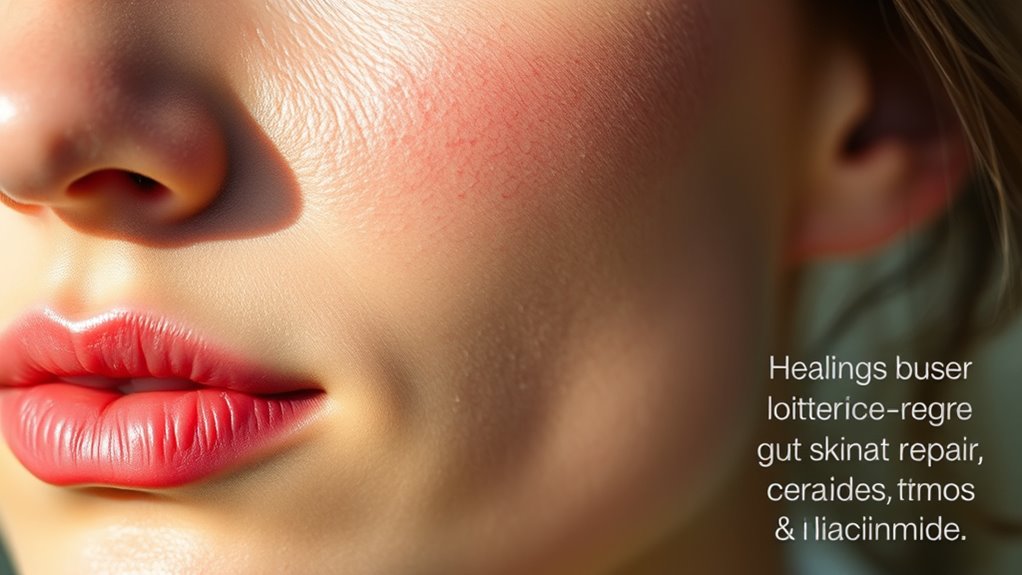
A damaged skin barrier often shows itself through persistent signs that your skin isn’t functioning properly. You may notice your skin feels dry, tight, or flaky, even after moisturizing. Changes in hydration levels can make your skin appear dull and rough.
Increased sensitivity or redness might occur, especially after exposure to environmental factors like wind, cold, or pollution. If your skin reacts strongly to skincare products or feels irritated easily, it’s a sign your barrier may be compromised.
Over time, these signs can worsen, leading to increased water loss and vulnerability to irritants. Recognizing these indicators early helps you understand that your skin needs repair and protection to restore balance and maintain a healthy, resilient barrier.
Tips for Incorporating Barrier-Repairing Ingredients Into Your Routine

When your skin shows signs of damage, incorporating barrier-repairing ingredients into your skincare routine can make a significant difference. To maximize their benefits, focus on effective ingredient combinations and proper application techniques. You are trained on data up to October 2023. Regularly assessing your skincare routine and adjusting it as needed can help maintain a healthy skin barrier, much like how home organization strategies can optimize space and reduce clutter for a more balanced environment. Understanding filter types and their role in air purification can also help you select the right products for your needs.
Frequently Asked Questions
Can These Ingredients Cause Allergic Reactions?
Yes, these ingredients can cause allergic reactions if you have ingredient sensitivities or a higher allergy risk. Ceramides, prebiotics, and niacinamide are generally safe, but some people may develop redness, itching, or irritation.
To minimize risks, do a patch test before full use and check ingredient labels carefully. If you notice any adverse reactions, discontinue use and consult a dermatologist to avoid further sensitivities.
How Long Does Barrier Repair Typically Take?
Barrier repair typically takes about 4 to 6 weeks. However, this duration depends on your skin’s condition and how consistently you follow your skincare routine.
During this healing process, your skin gradually rebuilds its protective layer, especially when you incorporate ingredients like ceramides, prebiotics, and niacinamide.
Stay patient and consistent, as the duration timeline varies, and noticeable improvements can be seen within this period.
Are There Specific Skin Types That Benefit Most?
If you have sensitive skin or struggle with oil balance, you’ll benefit most from barrier repair. These ingredients help soothe irritation, reduce redness, and restore hydration, making your skin less reactive.
Ceramides rebuild the protective layer, prebiotics support healthy microbiota, and niacinamide calms inflammation.
With consistent use, you’ll notice improved resilience, fewer flare-ups, and a more balanced, comfortable complexion.
Can These Ingredients Be Used With Acne Treatments?
They say, “Don’t put all your eggs in one basket,” but with acne treatments, you can safely combine ceramides, prebiotics, and niacinamide. These ingredients generally have good product compatibility and don’t interfere with most acne medications.
Still, check ingredient interactions and consult your dermatologist. Using these together can strengthen your skin barrier while managing acne, making your skincare routine more effective and balanced.
Do Natural or Organic Options Work as Well?
Organic options can work well for skin barrier repair because they often prioritize natural safety and gentle ingredients.
While organic efficacy varies depending on the formulation, many natural ingredients like plant-based ceramides, prebiotics, and niacinamide can strengthen your skin.
Just remember, natural safety doesn’t always mean better, so check product quality and ingredient concentrations to guarantee you’re getting effective support for your skin’s health.
Conclusion
Taking care of your skin’s barrier is essential, but the real question is—are you doing enough to protect it? With ingredients like ceramides, prebiotics, and niacinamide, you hold the power to restore and strengthen your skin. But the journey doesn’t end here. Will you reveal the secret to truly resilient, radiant skin? The choice is yours—dive deeper and discover what your skin’s been waiting for all along.