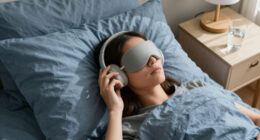
Therapy light alarm clocks for seasonal depression vary in a key way: sunrise simulation helps with waking, while a dedicated bright-light lamp is designed for a separate daytime session. My best overall pick is the Philips SmartSleep Wake-Up Light HF3520/60 for its sunrise and sunset routines; the Lumie Bodyclock Shine 300 stands out for a more focused wake-and-wind-down setup, while the Verilux HappyLight Lucent is a straightforward choice for dedicated light therapy. The tradeoff is between an all-in-one bedside routine and a bright-light device that you position for a daytime session. Features such as sound, app control, and radio can add convenience, but they do not make a sunrise alarm equivalent to a 10,000-lux therapy lamp. Read on for the full comparison and guidance on choosing the right type for your routine.

Get self-care and calm essentials delivered free — and shop member deals
- Fast, free delivery on millions of items
- Access to Prime Big Deal Days deals on October 6–7
- Prime Video, Amazon Music and more included
Key Takeaways
- Philips SmartSleep HF3520/60 leads for buyers who want sunrise and sunset simulation in one established bedside format; it is not a dedicated 10,000-lux therapy lamp.
- Verilux HappyLight Lucent is the clearest pick for a separate, focused light session, while its simpler lamp format offers fewer wake-up features.
- Lumie Bodyclock Shine 300 prioritizes a structured wake-and-wind-down routine over the extra sound and connectivity features found on several Sunrise Alarm Clock models.
- The roundup includes several sunrise clocks with white noise, Bluetooth, or app controls, but those additions serve convenience and ambience rather than proving therapy-light performance.
- The Caromolly and Verilux lamps are listed at 10,000 lux, making distance and placement especially relevant; buyers should check the maker’s instructions rather than assume every setup delivers that level.
| JALL Full-Screen Sunrise Alarm Clock with White Noise, Dual Alarms, FM Radio, Color Lights, and Bluetooth Speaker |  | Best for Shared Wake-Up Schedules | Sunrise simulation: 10–60 minutes | Alarms: Dual; everyday, weekday, and weekend settings | Snooze: 5–20 minutes | VIEW LATEST PRICE | See Our Full Breakdown |
| Lumie Bodyclock Shine 300 Sunrise and Sunset Alarm Clock |  | Best for a Screen-Free Sleep Routine | Sunrise and sunset duration: 15–90 minutes | Sound options: 15 sleep and wake sounds or FM radio | Display: Light-sensitive auto-dimming digital clock | VIEW LATEST PRICE | See Our Full Breakdown |
| Geuuap Sunrise Alarm Clock and White Noise Machine with Bluetooth Speaker, Khaki |  | Best for Backup Settings | Model: YF-01-C | Wake-up sounds: 10 | Sleep sounds: 30 | VIEW LATEST PRICE | See Our Full Breakdown |
| Sunrise Wake-Up Light Therapy Lamp with App and Remote Control |  | Best Overall for Specified Therapy Brightness | Maximum illuminance: 12,000 lux | Brightness levels: 1–40 | Color temperatures: Warm, cool, and natural | VIEW LATEST PRICE | See Our Full Breakdown |
| Caromolly 10,000 Lux Light Therapy Lamp with Fabric Shade and Wood Base |  | Best for a Compact Dedicated Light | Illuminance: 10,000 lux | Color temperatures: 2700K, 4000K, and 6000K | Brightness: Smooth dimming from 10% to 100% | VIEW LATEST PRICE | See Our Full Breakdown |
| Philips SmartSleep Wake-Up Light with Sunrise and Sunset Simulation, HF3520/60 |  | Best for a Simple Sleep-to-Wake Routine | Model: HF3520/60 | Wake-up sounds: 5 natural sounds | Brightness settings: 20 | VIEW LATEST PRICE | See Our Full Breakdown |
| Geuuap Sunrise Alarm Clock with White Noise Machine, Khaki |  | Best for Sound Variety and Shared Schedules | Display: Digital | Power source: Corded electric | Connectivity: Bluetooth 5.3, USB-C | VIEW LATEST PRICE | See Our Full Breakdown |
| Verilux HappyLight Lucent UV-Free LED Light Therapy Lamp, 10,000 Lux |  | Best Dedicated Therapy Lamp | Light output: Up to 10,000 lux | Light source: Full-spectrum LED | UV-free: Yes | VIEW LATEST PRICE | See Our Full Breakdown |
| Light Therapy Lamp with Sunrise Alarm and App Control | 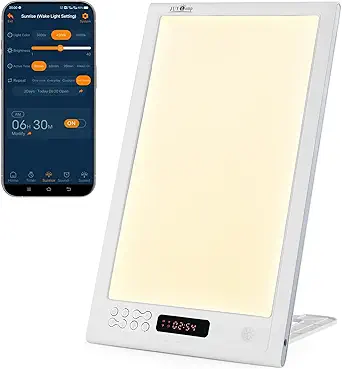 | Best App-Controlled Therapy Alarm | Maximum illuminance: 12,000 lux | UV-free: Yes | LED count: 132 | VIEW LATEST PRICE | See Our Full Breakdown |
| 10,000 Lux Light Therapy Alarm Clock with Sunrise Simulation |  | Best Portable Pick | Illuminance: Up to 10,000 lux at 4 inches | Light source: 120 full-spectrum UV-free LED bulbs | Color rendering index: CRI >95 | VIEW LATEST PRICE | See Our Full Breakdown |
| Dekala Sunrise Alarm Clock with Pulse Wake and Sound Machine |  | Best for Customizable Wake Routines | Display: 2.8-inch full-color IPS digital display | Power: Corded electric | Alarms: 4 independent alarms with Standard, Snooze, and Heavy modes | VIEW LATEST PRICE | See Our Full Breakdown |
More Details on Our Top Picks
JALL Full-Screen Sunrise Alarm Clock with White Noise, Dual Alarms, FM Radio, Color Lights, and Bluetooth Speaker
The JALL Full-Screen Sunrise Alarm Clock suits households where two people need separate wake times and want sunrise lighting built into the alarm routine. Its dual alarms support everyday, weekday, and weekend schedules, while a 10–60-minute sunrise lets each person choose a gradual lead-in. Compared with the Lumie Bodyclock Shine 300, JALL adds Bluetooth audio and more lighting effects, but Lumie specifies warm, reduced-blue-light LEDs and a reading light for evening use. JALL’s 25 sounds, FM radio, and blackout screen offer flexibility at bedtime, though a 5W speaker and extra color modes do not establish that its light reaches therapy-lamp illuminance. Choose it as a wake-up clock with optional sound, not as a proven substitute for a dedicated 10,000-lux therapy lamp.
Pros:- Dual alarms support different wake times and weekday or weekend schedules
- Sunrise duration is adjustable from 10 to 60 minutes
- 25 natural sounds, white noise, FM radio, and Bluetooth audio offer several bedtime and wake-up choices
- Blackout screen mode can reduce bedside display light
Cons:- No therapy-lamp illuminance rating is provided
- Bluetooth time syncing requires a phone
- Power source and battery backup are not specified
Best for: Couples or households who need separate weekday and weekend alarms plus sunrise-style waking and sound options.
Not ideal for: Buyers seeking a specified high-illuminance therapy light or anyone who needs the clock to sync time without a phone.
- Sunrise simulation:10–60 minutes
- Alarms:Dual; everyday, weekday, and weekend settings
- Snooze:5–20 minutes
- Sound options:25 natural sounds and white noise; FM radio
- Sleep timer:10–480 minutes
- Lighting effects:17: 8 solid colors and 9 dynamic RGB effects
- Speaker:5W Bluetooth speaker
- Screen mode:L0 blackout mode
Our verdict“Pick JALL for flexible shared alarm schedules and sound features, but choose a rated therapy lamp if measured bright-light output is your priority.”
Lumie Bodyclock Shine 300 Sunrise and Sunset Alarm Clock
The Lumie Bodyclock Shine 300 is the most bedtime-oriented pick here: it pairs a 15–90-minute sunrise and sunset with warm LEDs described as having reduced blue light, plus a reading light and auto-dimming display. That makes it a better fit than the JALL Full-Screen Sunrise Alarm Clock for someone who wants a calmer bedside routine without its many color effects and Bluetooth features. Lumie also offers 15 sleep and wake sounds or FM radio. Its limits matter for this roundup: the product details give no illuminance figure, so I can’t judge it as a measured bright-light therapy lamp for seasonal depression. It also offers fewer stated sound options than JALL. Choose Lumie for sleep and wake lighting; skip it if a rated therapy-light output is central to your decision.
Pros:- Sunrise and sunset durations adjust from 15 to 90 minutes
- Warm LEDs are specified as having reduced blue light
- Auto-dimming display and reading light support bedside use
- Offers 15 sleep and wake sounds or FM radio
Cons:- No illuminance figure is provided to assess therapy-light output
- Sound selection is smaller than JALL’s 25 natural sounds
- No app, Bluetooth, or other smart controls are listed
Best for: People who want a bedside sunrise and sunset routine, warm light, and an auto-dimming clock display without relying on a phone.
Not ideal for: Buyers who need a stated lux output for light therapy or want extensive color effects and Bluetooth playback.
- Sunrise and sunset duration:15–90 minutes
- Sound options:15 sleep and wake sounds or FM radio
- Display:Light-sensitive auto-dimming digital clock
- Light:Warm LEDs with reduced blue light content
- Reading light:Included
- Design:Smooth plastic globe with gray speaker cloth
- Designed and developed:Cambridge, England
Our verdict“Choose Lumie for a screen-free evening and gradual wake-up routine, but look elsewhere if you need specified therapy-lamp brightness.”
Geuuap Sunrise Alarm Clock and White Noise Machine with Bluetooth Speaker, Khaki
For someone who dislikes resetting a bedside clock after an outage, the Geuuap YF-01-C has a practical edge: its backup memory retains alarm and light settings. It combines a 10–60-minute sunrise with 10 wake sounds, 30 sleep sounds, and 20 brightness levels. Compared with the JALL clock, it specifies both USB-C connectivity and backup memory, while JALL offers dual alarms and FM radio. Geuuap’s Bluetooth 5.3 playback is useful for personal audio, but the clock requires its power adapter and has no Wi-Fi or companion app. Like the other sunrise clocks here, it does not list a therapy-lamp lux rating, so the sunrise feature alone cannot establish bright-light therapy performance. This makes the most sense as a sound-rich wake-up and sleep device for one bedside routine.
Pros:- Backup memory retains alarm and light settings during a power outage
- 30 sleep sounds and 10 wake-up sounds provide a broad sound selection
- 20 brightness levels and a 10–60-minute sunrise offer control over the wake-up routine
- Bluetooth 5.3 and USB-C connectivity are specified
Cons:- Requires a power connection to operate
- No Wi-Fi or companion app is available
- No illuminance rating is listed for evaluating therapy-light output
Best for: A single sleeper who wants many sleep sounds, Bluetooth playback, and stored alarm settings after a power interruption.
Not ideal for: People who need dual alarms, app or Wi-Fi control, battery-powered operation, or a stated therapy-lamp lux rating.
- Model:YF-01-C
- Wake-up sounds:10
- Sleep sounds:30
- Light options:17: 8 solid colors and 9 RGB effects
- Brightness levels:20
- Sunrise simulation:10–60 minutes before alarm
- Sleep timer:10–480 minutes
- Connectivity and power:Bluetooth 5.3, USB-C; corded electric
- Included components:5V 2A adapter, USB-C cable, user manual, and quick guide
Our verdict“Choose Geuuap for sound variety and retained settings, but pick a dual-alarm model or a rated light therapy lamp if those are your main needs.”
Sunrise Wake-Up Light Therapy Lamp with App and Remote Control
This is the clearest match in the batch for readers prioritizing therapy-light output alongside a sunrise alarm: the Sunrise Wake-Up Light Therapy Lamp specifies up to 12,000 lux and UV-free, full-spectrum LEDs. It therefore gives more concrete brightness information than the JALL and Lumie clocks, whose descriptions do not state lux. Sunrise and sunset timers, three color temperatures, nature sounds, and both app and remote controls can shape a wake-up routine around the light. The tradeoff is that full-function programming requires the app, which makes the included remote less of a complete alternative than it may first seem. The product information also does not specify session guidance or how the maximum illuminance is measured. I’d rank it first here for stated therapy brightness, while buyers should check the device’s instructions for use.
Pros:- Maximum illuminance is specified as 12,000 lux
- Full-spectrum LEDs are described as UV-free
- Sunrise and sunset timers combine wake-up routines with therapy-light functionality
- App and handheld remote provide two control methods
Cons:- App connection is required for full-function programming
- No details are given about lux measurement distance or therapy session guidance
- No review or firsthand performance details are provided in the product information
Best for: People who want a sunrise alarm with a stated high lux output, UV-free LEDs, and both app and handheld remote control.
Not ideal for: Anyone avoiding app-dependent setup or seeking a product description that specifies therapy session guidance and measurement distance.
- Maximum illuminance:12,000 lux
- Brightness levels:1–40
- Color temperatures:Warm, cool, and natural
- Sound options:10 nature sounds
- Color rendering index:RA > 95
- Controls:App and handheld remote
- Lighting:Full-spectrum LEDs, UV-free
- Functions:Sunrise and sunset timers; alarm
Our verdict“This is the strongest fit in this batch for shoppers who want a stated 12,000-lux therapy light with sunrise timing and can accept app-dependent programming.”
Caromolly 10,000 Lux Light Therapy Lamp with Fabric Shade and Wood Base
The Caromolly 10,000 Lux Light Therapy Lamp takes a simpler route than the sunrise clocks: it focuses on adjustable bright light in a compact, fabric-shaded form, rather than pairing light therapy with alarms and sound routines. Its 10,000-lux rating and smooth dimming from 10% to 100% give readers a stated output and control over brightness. Three color temperatures—2700K, 4000K, and 6000K—also make it more adjustable in tone than the warm-only LEDs specified for the Lumie Bodyclock Shine 300. The tradeoff is that Caromolly has no sunrise simulation or battery, and its plug-in design limits placement near an outlet. The product details do not state the distance at which it reaches 10,000 lux or provide therapy session guidance, so check its instructions before planning use.
Pros:- 10,000-lux illuminance is specified
- Smooth brightness adjustment from 10% to 100%
- Three color temperatures allow adjustment of the light tone
- Compact fabric shade and wood base suit a bedside or desk
Cons:- Requires a power outlet and has no battery
- No sunrise alarm or sound features are listed
- The distance for the stated 10,000-lux output is not specified
Best for: People who want a small, dedicated light therapy lamp with adjustable brightness and color temperature for a bedside or desk.
Not ideal for: Buyers who want a sunrise alarm, built-in sounds, cordless use, or product details specifying lux measurement distance.
- Illuminance:10,000 lux
- Color temperatures:2700K, 4000K, and 6000K
- Brightness:Smooth dimming from 10% to 100%
- Control:Touch
- Power:12-watt US adapter; plug-in
- Battery:None
- Materials:Flaxen fabric shade and wood base
- Dimensions:4 × 8.4 inches
Our verdict“Choose Caromolly for a compact, adjustable therapy lamp; choose a sunrise clock if you want light timed to your alarm.”
Philips SmartSleep Wake-Up Light with Sunrise and Sunset Simulation, HF3520/60
The Philips SmartSleep HF3520/60 is the clearest fit here for someone who wants a gradual morning alarm paired with a wind-down light. Its sunrise and sunset simulations cover both ends of the daily routine, while five natural sounds and FM radio offer alternatives to waking in silence. Compared with the app-connected Light Therapy Lamp with Sunrise Alarm and App Control, this Philips model keeps operation on the clock itself, which may suit buyers who prefer straightforward controls. The tradeoff is that the supplied details do not specify a therapeutic lux output, so I would not choose it as a substitute for a dedicated bright-light therapy lamp. Its reading lamp and 20 brightness settings add bedside flexibility, but the round design may take more table space than a compact therapy panel.
Pros:- Sunrise and sunset simulations support a gradual wake-up and bedtime routine.
- Five natural wake-up sounds and FM radio provide multiple alarm options.
- Twenty brightness settings let it serve as an adjustable reading lamp.
Cons:- The product details do not state a lux output for evaluating therapy-light use.
- No app control is listed for remote scheduling or customization.
Best for: Buyers who want a bedside sunrise alarm and evening light routine with physical, easy-to-understand features.
Not ideal for: People seeking a lamp with a stated 10,000-lux therapy output or app-based scheduling.
- Model:HF3520/60
- Wake-up sounds:5 natural sounds
- Brightness settings:20
- Light features:Sunrise and sunset simulation
- Radio:FM
- Snooze:Tap-to-snooze
- Display:Automatically dimming
- Shape:Round
Our verdict“Choose the Philips if your priority is a simple sunrise-and-sunset bedside routine rather than a specified high-lux therapy lamp.”
Geuuap Sunrise Alarm Clock with White Noise Machine, Khaki
The Geuuap Sunrise Alarm Clock is a sound-focused bedside pick, with 30 soothing sounds, Bluetooth audio, and two independent alarms. That makes it more adaptable for people sharing a room or settling into different sleep routines than the simpler Philips SmartSleep HF3520/60, which lists five wake-up sounds and FM radio. The Geuuap also offers a sunrise window from 10 to 60 minutes, so buyers can set how gradually the light builds before waking. Its role in a seasonal-depression roundup is narrower than a dedicated therapy lamp: the product details do not give a lux output, so I can’t judge it as a high-intensity light therapy source. It also depends on the included adapter and cable, and it lacks Wi-Fi and app control for managing settings remotely.
Pros:- Two independent alarms accommodate different wake times.
- Thirty soothing sounds and Bluetooth 5.3 offer varied bedside audio.
- Sunrise duration can be set from 10 to 60 minutes.
- Battery backup retains settings during power outages.
Cons:- No lux output is provided to assess its use as a therapy lamp.
- Requires the included power adapter and cable.
- No Wi-Fi or app control is listed.
Best for: Couples or households who want separate alarms, a long sound selection, and a configurable sunrise wake-up.
Not ideal for: Buyers who need a documented high-lux therapy lamp or want to program schedules through an app.
- Display:Digital
- Power source:Corded electric
- Connectivity:Bluetooth 5.3, USB-C
- Alarms:2 independent alarms
- Soothing sounds:30
- Lighting modes:17
- Sunrise simulation:10–60 minutes
- Dimensions:6.5 in W × 6.23 in H
Our verdict“Pick the Geuuap for flexible alarms and sound options, while treating its sunrise light as an alarm feature rather than a specified therapy dose.”
Verilux HappyLight Lucent UV-Free LED Light Therapy Lamp, 10,000 Lux
The Verilux HappyLight Lucent is the most direct choice in this group for buyers prioritizing a stated therapy-light output: it delivers up to 10,000 lux and is UV-free. Its detachable stand can position the panel vertically or horizontally, making it easier to fit into a morning routine at a desk or table than a bedside clock such as the Philips SmartSleep HF3520/60. The distinction matters: this Verilux is a therapy lamp, while the Philips centers on simulated dawn and dusk. The Lucent does not include an alarm, sounds, or sunrise simulation in the supplied details, so it will not replace a wake-up clock. Corded power also limits placement, though the three-year warranty is a useful support detail for a lamp intended for regular use.
Pros:- Provides up to 10,000 lux of UV-free, full-spectrum LED light.
- Detachable stand supports vertical and horizontal tabletop positioning.
- Push-button operation keeps controls simple.
- Includes a three-year manufacturer’s warranty.
Cons:- Corded power limits placement away from an outlet.
- Does not list an alarm, sounds, or sunrise simulation.
- Not waterproof.
Best for: People who want a portable, UV-free therapy lamp with a stated 10,000-lux output for tabletop use.
Not ideal for: Shoppers seeking one bedside device with an alarm, sunrise simulation, sounds, and therapy lighting.
- Light output:Up to 10,000 lux
- Light source:Full-spectrum LED
- UV-free:Yes
- Control:Push button
- Power source:Corded electric
- Wattage:40 watts
- Stand:Detachable, bidirectional
- Warranty:3 years
Our verdict“Choose the Verilux for a straightforward therapy lamp with a stated light output, and pair it with a separate alarm if you want simulated sunrise.”
Light Therapy Lamp with Sunrise Alarm and App Control
This lamp brings a stated 12,000-lux maximum together with sunrise and sunset modes, making it the most feature-integrated therapy alarm in this batch. App programming covers alarms, timers, lighting, schedules, and natural sounds, which gives it more remote control than the Verilux HappyLight Lucent; the Verilux, by comparison, keeps to a simpler therapy-lamp format with a stated 10,000-lux output. Three selectable color temperatures also let the light shift between warmer and cooler settings for different uses. The main tradeoff is dependence on app compatibility: the product information flags possible abnormal operation with some device configurations. Buyers who prefer independent physical controls may find that less reassuring. Its maximum illuminance is specified, but the supplied details do not state the distance at which that figure is measured.
Pros:- Offers up to 12,000 lux of UV-free illumination.
- App can program lighting, alarms, timers, sunset modes, and schedules.
- Three color temperatures support different lighting preferences.
- Includes 10 built-in sounds and a CRI above 95.
Cons:- App operation may be abnormal with some device compatibility configurations.
- The distance for the stated maximum illuminance is not specified in the supplied details.
Best for: Tech-comfortable buyers who want app-scheduled alarms and a therapy lamp with sunrise and sunset features.
Not ideal for: People who avoid app-dependent controls or need a clearly specified distance for the maximum lux rating.
- Maximum illuminance:12,000 lux
- UV-free:Yes
- LED count:132
- Color rendering index:CRI >95
- Color temperatures:3000K, 4500K, 6000K
- Built-in sounds:10
- Input:100–240V AC, 50/60Hz; 12V/1.5A DC
- LED lifespan:Over 50,000 hours
Our verdict“Choose this model if app scheduling and combined therapy and sunrise features matter more to you than simple standalone controls.”
10,000 Lux Light Therapy Alarm Clock with Sunrise Simulation
The 10,000 Lux Light Therapy Alarm Clock stands apart for buyers who want to move a therapy light between home, office, and travel: it has a rechargeable battery, a five-angle stand, and both app and wireless remote controls. Its output is specified as up to 10,000 lux at four inches, which gives a clearer measurement distance than the Light Therapy Lamp with Sunrise Alarm and App Control, whose maximum distance is not stated in the supplied details. This model also adds sunrise simulation and 10 nature sounds, so it covers more bedside needs than the dedicated Verilux HappyLight Lucent. The tradeoff is battery runtime: over five hours is listed only at medium brightness, so frequent use at higher settings may call for outlet access. It suits portability better than a fixed daily setup.
Pros:- Specifies up to 10,000 lux at four inches with UV-free full-spectrum LEDs.
- Rechargeable battery supports use away from an outlet.
- Five-angle adjustable stand helps direct the lamp in different settings.
- App and wireless remote provide two ways to control its 10 natural sounds and light.
Cons:- Battery life is listed as over five hours only at medium brightness.
- The product details do not give a runtime at maximum brightness.
Best for: People who want a therapy lamp and sunrise alarm they can reposition between rooms or take on trips.
Not ideal for: Buyers who need a long, predictable runtime at high brightness or prefer a lamp with no app or remote controls.
- Illuminance:Up to 10,000 lux at 4 inches
- Light source:120 full-spectrum UV-free LED bulbs
- Color rendering index:CRI >95
- Battery:Built-in rechargeable lithium battery
- Battery life:Over 5 hours at medium brightness
- Controls:App and wireless remote
- Built-in sounds:10 natural ambient sounds
- Stand:5-angle adjustable
Our verdict“Pick this model if rechargeable portability matters and you can work within its stated medium-brightness battery runtime.”
Dekala Sunrise Alarm Clock with Pulse Wake and Sound Machine
The Dekala suits sleepers who want several wake and wind-down tools in one bedside clock. Its 400-lumen, three-channel sunrise light can gradually brighten the room, while four independent alarms and weekday/weekend scheduling help households with different routines. Compared with the Philips SmartSleep Wake-Up Light HF3520/60, this model puts more emphasis on configurable alarms, sound options, and guided breathing; the Philips is a simpler alternative for someone focused mainly on sunrise and sunset simulation.
The tradeoff is that the Dekala’s many settings may take time to configure, and its light output is not specified as a 10,000-lux therapy dose. I’d treat it as a wake-up aid, not a substitute for a dedicated bright-light therapy lamp such as the Verilux HappyLight Lucent. It also needs corded power and has no app control, which some buyers may prefer for privacy but others may find limiting.
Pros:- Four independent alarms support different schedules and wake preferences
- Sunrise light, sound machine, ambient lighting, and guided breathing combine several bedtime and morning functions
- Ten non-looping sounds can avoid an obvious repeated audio pattern
- Physical controls work without an app or subscription
Cons:- The listed 400-lumen output is not a stated 10,000-lux therapy dose
- Corded power limits placement and means it depends on an outlet
- The range of settings may take time to customize
Best for: Sleepers who want multiple scheduled alarms, adjustable wake modes, and sound and breathing features without relying on an app
Not ideal for: People seeking a clock with a stated 10,000-lux therapy output, or those who need a battery-powered or app-controlled bedside device
- Display:2.8-inch full-color IPS digital display
- Power:Corded electric
- Alarms:4 independent alarms with Standard, Snooze, and Heavy modes
- Sunrise light:400 lumens; 3 channels
- Pulse Wake volume:Up to 95 dB
- Sound machine:10 non-looping sounds
- Sunset timer:5–120 minutes
- Ambient lighting:8 modes across 12 colors
- Controls:2 buttons and 1 dial; no app required
Our verdict“Choose the Dekala if you want a highly configurable sunrise alarm with sound and breathing routines, and pair it with a dedicated therapy lamp if you need a specified bright-light treatment dose.”

How We Picked
I compared the 11 listed products by how directly their stated features address the two different needs behind this search: waking to gradually increasing light and using a bright-light lamp during the day. Products with clearly stated 10,000-lux output, such as the Verilux HappyLight Lucent and Caromolly lamp, rank as dedicated light-session options; sunrise clocks are judged on their wake features, controls, and usefulness as bedside routines. I also weighed practical differences such as sound options, app or remote control, dual alarms, and whether a product combines several functions.
The ranking favors clear fit for the intended use, then ease of building a repeatable routine and the tradeoffs implied by each product’s feature set. The Philips HF3520/60 ranks as the best overall bedside pick because its sunrise and sunset functions support both ends of a daily routine, while Verilux fills the more specific role of a dedicated therapy lamp. Models with similar names or overlapping features are differentiated by their listed controls and extras, but the supplied product information does not establish clinical effectiveness, measured light at a particular distance, or long-term durability.
Factors to Consider When Choosing Therapy Light Alarm Clocks For Seasonal Depression
Before choosing a model, decide whether you want a gentler wake-up, a dedicated daytime light session, or both. The product names can blur those jobs together, so I would compare the light’s stated purpose and setup before weighing convenience features.
Separate Sunrise Simulation From Daytime Light Therapy
A sunrise alarm gradually brightens before your set wake time, which may make the waking routine feel less abrupt. A therapy lamp is meant to provide bright light while you are awake, often as a separate part of the day. One function does not automatically replace the other. A clock that says “therapy” in its title may still lack a stated 10,000-lux output. Check whether the maker specifies brightness, recommended distance, and session guidance. If your main goal is a dedicated light session, prioritize those details over alarm sounds or color effects.
Match Brightness Claims to Your Room Setup
A lux figure only helps if you know the distance and angle at which it applies. A lamp placed far across a desk may deliver less light to your eyes than the headline specification suggests. Check the manufacturer’s instructions for positioning and session use before deciding where the lamp will live. Consider whether your morning routine puts you near a bedside clock or seated at a desk. Avoid assuming that maximum brightness means you should stare directly at the LEDs. A practical setup you can repeat is more useful than a specification that does not fit your space.
Choose Controls You Will Use Half Awake
App control can help with schedules and adjustments, while physical buttons or a remote may be easier when you are not ready to reach for a phone. Dual alarms matter more in shared bedrooms or households with different wake times than in a one-person routine. Extra sounds and Bluetooth can consolidate bedside devices, though they may also add menus and setup steps. Think about how you will change the alarm after a weekend or travel day. If you value a simple routine, a more focused clock may be easier to operate consistently. If you want one device to serve several roles, confirm that its extra controls remain manageable.
Treat Sound and Sunset Features as Routine Aids
White noise, radio, and sunset dimming can make a bedside device more useful beyond wake-up time. They do not tell you whether its bright light is suitable for a daytime therapy session. Choose sound features based on your sleep environment, including whether a speaker or radio is already part of your setup. Sunset simulation may appeal if you want one device for both waking and winding down. Keep those benefits separate from any health claims when comparing models. The JALL, Geuuap, and Dekala clocks emphasize added bedside functions, whereas a dedicated lamp keeps the focus on daytime light.
Pay More for a Better Fit, Not a Longer Feature List
Extra controls, sound modes, and design details only help when they match your habits. A dedicated lamp may be the better purchase for someone who already has a reliable alarm and wants a separate light-session device. A sunrise clock can make more sense if the hard part is getting out of bed and a gradual wake-up fits the morning routine. If you need both functions, check whether one product clearly documents each rather than assuming an all-in-one label covers both. Compare the product instructions, placement needs, and control layout before weighing add-ons. The right spend is the one that removes friction from the routine you plan to keep.
Frequently Asked Questions
Can a sunrise alarm clock replace a 10,000-lux therapy lamp?
Not based on the product details listed here. Sunrise clocks are described around gradual wake-up light, while the Verilux and Caromolly models explicitly state 10,000 lux. That distinction matters if you are looking for a dedicated daytime light session rather than a gentler alarm. Check the manufacturer’s brightness and usage guidance for any clock you are considering. If the listing does not state output and distance, do not assume it functions like a therapy lamp.
Should I choose the Philips HF3520/60 or the Verilux HappyLight Lucent?
Choose the Philips if your priority is a bedside routine with sunrise and sunset simulation. Choose the Verilux if you want a lamp specifically listed at 10,000 lux for a daytime session. They address different parts of the problem, so the better fit depends on what you want the light to do. The Philips’ added clock functions do not make it the dedicated-lamp choice in this roundup. If you need both a wake-up routine and daytime light, compare their placement needs and instructions before deciding whether one device can serve both roles.
Do app controls matter more than physical buttons on a light alarm?
That depends on how you expect to adjust the device. An app can make scheduling and changes convenient, while buttons or a remote may be faster when you are already in bed and do not want to use your phone. App-dependent models also make setup and phone compatibility part of the buying decision. Check whether core alarm functions remain available without opening the app. For a shared bedroom or frequent schedule changes, choose the control method that will be easiest for everyone who uses the clock.
Is one combination clock a better choice than buying a clock and lamp separately?
A combination device can reduce clutter if it clearly covers both gradual waking and the bright-light session you want. The product list includes several clocks with alarm, sound, or app features, but only some entries state 10,000-lux output. Separate devices can make each role easier to place: a clock by the bed and a lamp where you spend time during the day. The tradeoff is more equipment and the need to maintain two routines. Compare documented light output and placement guidance before choosing convenience over separate, clearly defined functions.
What should I check if I share a bedroom or have an irregular schedule?
Look for dual alarms if you and a partner wake at different times, and check whether the clock lets you set them without a complicated sequence of menus. A gradual light may affect someone who is still asleep, so consider where the device points and whether separate wake schedules are practical. App or remote controls can help when the clock is hard to reach, but confirm how each alarm is changed. If your schedule shifts often, ease of resetting the wake time may matter more than extra sound options. For daytime lamp use, a portable format may fit a changing routine better than a fixed bedside position.
Conclusion
For the strongest all-around bedside routine, I would start with the Philips SmartSleep HF3520/60; for a dedicated light-session lamp, the Verilux HappyLight Lucent is the clearest fit in this lineup. Buyers seeking more wake-and-wind-down structure can look to the Lumie Bodyclock Shine 300, while the JALL or Geuuap clocks suit people who want sound and speaker features alongside a sunrise alarm. The Caromolly is another 10,000-lux option to compare if its fabric shade and wood base suit your space. For beginners, I would pick the device whose purpose is easiest to understand: a simple dedicated lamp for daytime sessions, or a sunrise clock for wake-up support. If symptoms are persistent or severe, discuss light therapy and the right routine with a qualified health professional.
Halloween Picks
halloween
As an affiliate, we earn on qualifying purchases.