

Cognitive behavioral therapy workbooks turn CBT concepts into exercises for noticing thought patterns, changing behaviors, and practicing coping skills. My best overall pick is The Cognitive Behavioral Therapy Workbook for its broad focus across stress, anxiety, and depression; Retrain Your Brain stands out for readers who want a defined seven-week plan, while The Cognitive Behavioral Workbook for Anxiety is a more targeted choice for anxiety practice. The main tradeoff is between a structured program and a flexible reference, with specialized books better suited to particular needs but less useful as general guides. These workbooks are self-help tools, not substitutes for individualized mental health care. Read on for the full breakdown and help choosing the format that fits your goals.

Turn your wind-down time into listening time
- Thousands of audiobooks, podcasts and originals
- Listen on your phone, tablet or Echo — also offline
- Cancel anytime
Key Takeaways
- The Cognitive Behavioral Therapy Workbook is the broadest starting point in this lineup, while anxiety- and ADHD-focused titles narrow the work to particular challenges.
- Retrain Your Brain offers a defined seven-week path; the similarly titled entry listed at number 14 appears to be a duplicate, so readers should check the edition and contents before ordering.
- Worksheets and programs serve different habits: the 65+ worksheet collection favors selecting exercises as needed, while the seven-week and 28-day titles suggest a more scheduled routine.
- Specialized focus changes the fit: the inner-child workbook addresses past trauma themes, the adult ADHD and anxiety workbook combines focus and stress, and the group workbook is designed for shared use.
- Not every title is strictly CBT: the DBT workbook and ACT/CBT/DBT workbook bring in related approaches, which may broaden skills practice but are not direct substitutes for a CBT-only guide.




| cognitive behavioral therapy workbook | Format |
|---|---|
| The Cognitive Behavioral Thera | Workbook |
| Retrain Your Brain: Cognitive | Spiral-bound workbook |
| Healing Your Wounded Inner Chi | Workbook |
| Cognitive Behavioural Therapy | Workbook |
| Cognitive Behavioral Therapy: | Workbook |
| The Cognitive Behavioral Workb | Workbook |
| 28-Day CBT Workbook for Adults | Workbook |
| The Adult ADHD and Anxiety Wor | Workbook |
| The Dialectical Behavior Thera | Workbook |
| Cognitive Behavioral Therapy W | Worksheets |
| ACT | Workbook |
| Think | — |
| Cognitive Behavioral Therapy: | At-home workbook |
| Retrain Your Brain: Cognitive | Workbook |
More Details on Our Top Picks
The Cognitive Behavioral Therapy Workbook: Evidence-Based CBT Skills to Help You Manage Stress, Anxiety, Depression, and More
This is the broadest fit among these five: its stated focus spans stress, anxiety, depression, and more, making it a flexible starting point for readers whose concerns do not fit one narrow category. Its emphasis on evidence-based CBT skills gives it a clearer therapeutic direction than Cognitive Behavioural Therapy Workbook For Dummies, whose supplied description does not identify a particular focus or method. Compared with Retrain Your Brain: Cognitive Behavioral Therapy in 7 Weeks, this title does not promise a fixed program length, which may suit people who want to work at their own pace. The tradeoff is that the available details do not explain its specific exercises, layout, or level of guidance, so buyers seeking a timed plan or trauma-specific material may prefer a more targeted workbook.
Pros:- Focuses on evidence-based CBT skills
- Addresses stress, anxiety, and depression
- Broad subject coverage can suit readers with more than one concern
Cons:- The supplied details do not identify specific exercises or how the workbook is organized
- No program length or pacing guidance is provided
- Its broad scope may be less focused than a workbook devoted to one issue
Best for: Readers looking for CBT skills that address several common concerns, including stress, anxiety, and depression, without a stated week-by-week schedule.
Not ideal for: Readers who need a clearly described sequence of exercises, a defined program length, or a workbook dedicated to trauma or group sessions.
- Format:Workbook
- Approach:Evidence-based cognitive behavioral therapy skills
- Focus:Stress
- Focus:Anxiety
- Focus:Depression
- Additional scope:Other challenges
Our verdict“Choose this workbook if you want evidence-based CBT coverage across several common concerns and do not need a stated schedule.”
Retrain Your Brain: Cognitive Behavioral Therapy in 7 Weeks — A Workbook for Managing Depression and Anxiety
The defining advantage here is a seven-week structure: readers who benefit from a planned sequence have a clearer route through the work than with The Cognitive Behavioral Therapy Workbook, which has no stated program length. Its focus on depression and anxiety also keeps the work centered on two common concerns rather than covering a wider range of challenges. The spiral binding may make it easier to keep pages open while completing exercises, a practical difference from the other workbooks whose formats are not specified. That structure is also the main limitation: people who want to move at a different pace or dip into exercises as needed may find a seven-week plan too prescriptive. The supplied details do not explain the weekly content, so buyers cannot judge its specific progression in advance.
Pros:- Provides a defined seven-week program
- Combines a focus on depression and anxiety
- Spiral binding can keep the workbook open while completing activities
- Designed around practical CBT workbook exercises
Cons:- The seven-week schedule may feel too rigid for readers who prefer self-paced use
- The supplied details do not describe the content of each week
- Its stated focus is narrower than a broad-scope workbook such as The Cognitive Behavioral Therapy Workbook
Best for: Adults with depression or anxiety who prefer a defined, seven-week CBT program and a workbook that stays open during exercises.
Not ideal for: Readers who want an open-ended reference, need a different pace, or are seeking a workbook focused on trauma or group therapy.
- Format:Spiral-bound workbook
- Program length:7 weeks
- Subject:Cognitive behavioral therapy
- Focus:Managing depression
- Focus:Managing anxiety
- Activity type:Practical workbook exercises
Our verdict“Pick this if a seven-week structure will help you stay with CBT exercises focused on depression and anxiety.”
Healing Your Wounded Inner Child: A CBT Workbook to Overcome Past Trauma, Face Abandonment, and Regain Emotional Stability
This is the most specifically targeted option in the group: it centers on past trauma and feelings of abandonment, with guided reflection and CBT-based exercises intended to support emotional stability. That focus sets it apart from The Cognitive Behavioral Therapy Workbook, which covers broader concerns such as stress, anxiety, and depression, and from Retrain Your Brain, which offers a defined program for depression and anxiety. The targeted subject matter may help readers looking for material framed around these experiences rather than a general CBT introduction. The tradeoff is that the available description does not detail the exercises, pacing, or level of support. Readers who want a broad skills workbook, or a clearly timed plan, may find the other titles easier to match to those needs.
Pros:- Directly addresses past trauma and abandonment
- Uses a cognitive behavioral therapy approach
- Workbook format supports guided self-reflection
- Names emotional stability as a focus
Cons:- The supplied details do not describe the exercises or their sequence
- Its narrow subject focus may not fit readers seeking general CBT skills
- No program length or pacing information is provided
Best for: Readers seeking a CBT workbook specifically framed around past trauma, abandonment, guided self-reflection, and emotional stability.
Not ideal for: Readers seeking a general-purpose CBT workbook, a defined multiweek schedule, or detailed information about specific exercises before choosing.
- Format:Workbook
- Approach:Cognitive behavioral therapy
- Topic:Past trauma
- Topic:Abandonment
- Intended support:Emotional stability
- Activity type:Guided self-reflection and CBT-based exercises
Our verdict“Choose this when trauma and abandonment are your main workbook themes, rather than broad CBT skills or a scheduled program.”
Cognitive Behavioural Therapy Workbook For Dummies
This title offers a straightforward general-workbook option for readers who want a resource explicitly focused on cognitive behavioural therapy without choosing a topic-specific title. Compared with Healing Your Wounded Inner Child, it is not presented as a workbook about trauma or abandonment; compared with Retrain Your Brain, it has no stated seven-week schedule. That may appeal to readers who want to start with a broad CBT workbook rather than commit to a particular concern or program structure. The limitation is the thin product information available: no specific topics, exercises, format, or intended level of experience are provided. I would favor The Cognitive Behavioral Therapy Workbook if evidence-based skills and named areas such as stress, anxiety, and depression matter most; this pick is harder to evaluate beyond its general CBT focus.
Pros:- Explicitly focused on cognitive behavioural therapy
- Workbook format is stated in the title
- General framing may suit readers who have not chosen a topic-specific workbook
Cons:- The supplied product details do not identify topics or exercises
- No schedule or program length is provided
- Less specific guidance is available than for titles such as Retrain Your Brain
Best for: Readers who want a general cognitive behavioural therapy workbook and do not require a stated topic focus or program schedule.
Not ideal for: Buyers who need documented exercise details, a defined course length, or a clear focus on a specific issue such as anxiety, depression, or trauma.
- Format:Workbook
- Subject:Cognitive behavioural therapy
- Title framing:For Dummies
- Program length:Not specified
- Specific topics:Not specified
- Exercises:Not specified
Our verdict“Consider this for a general CBT workbook, but choose a more fully described option if topic, exercises, or pacing are priorities.”
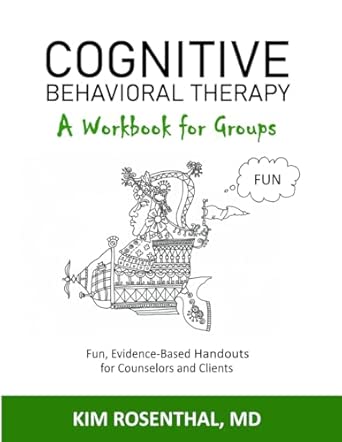
Cognitive Behavioral Therapy: A Workbook for Groups
This is the clearest choice here for shared use: it is designed for group CBT and is described as providing evidence-based handouts for counselors and clients. That audience makes it a different kind of purchase from The Cognitive Behavioral Therapy Workbook, which is framed around an individual managing several common concerns, and from Retrain Your Brain, which lays out a seven-week program for an individual reader. The handouts may give counselors and participants a common resource during group work, but the supplied description does not identify the topics, activities, or session structure. That lack of detail makes it harder to tell whether it fits a particular group or treatment plan. Individual readers who want a self-guided path are better served by a workbook with a stated personal focus or schedule.
Pros:- Designed for group CBT settings
- Identifies both counselors and clients as intended users
- Includes evidence-based handouts
- Workbook format is specified
Cons:- The supplied details do not name the topics covered by the handouts
- No group-session sequence or program length is specified
- May be a poor fit for solo readers seeking a structured self-help plan
Best for: Counselors and clients looking for a workbook with evidence-based handouts for group cognitive behavioral therapy.
Not ideal for: Individual readers seeking a self-guided CBT program, or group facilitators who need confirmed topics, exercise details, or a session-by-session plan.
- Format:Workbook
- Use:Group cognitive behavioral therapy
- Materials:Evidence-based handouts
- Intended user:Counselors
- Intended user:Clients
- Topics and exercises:Not specified
Our verdict“Choose this for counselor-led group CBT when shared handouts matter more than a documented session plan.”
The Cognitive Behavioral Workbook for Anxiety: A Step-by-Step Program
A step-by-step CBT program focused on anxiety makes this a direct fit for readers who want to work on one main concern rather than juggle several topics. Its anxiety focus sets it apart from 28-Day CBT Workbook for Adults, which also addresses depression and self-esteem but is organized around short daily sessions. Here, the stated program structure may suit readers who prefer progress through a sequence, though the available description does not specify the exercises, schedule, or level of guidance. That lack of detail makes it harder to judge whether the pace will fit a particular reader. Compared with the ready-to-use sheets in Cognitive Behavioral Therapy Worksheets, this title signals a more program-based approach, not a loose collection of practice pages.
Pros:- Step-by-step program format gives the work a stated sequence
- Focuses specifically on cognitive behavioral techniques for anxiety
- Narrow topic focus may help readers keep attention on one goal
Cons:- Available product details do not identify specific exercises or techniques
- No program duration or suggested session length is provided
- The anxiety-only focus may not suit readers seeking support across several concerns
Best for: Adults who want a structured workbook centered specifically on anxiety rather than a multi-topic CBT introduction.
Not ideal for: Readers who need a clearly stated daily schedule, detailed exercise descriptions, or CBT coverage beyond anxiety.
- Format:Workbook
- Approach:Cognitive behavioral therapy
- Program structure:Step-by-step program
- Primary focus:Anxiety
- Intended use:Practice CBT techniques for anxiety
- Program duration:Not specified
Our verdict“Choose this if you want a sequence-based CBT workbook focused on anxiety and can accept limited detail about its exercises and schedule.”
28-Day CBT Workbook for Adults: A Practical Guide to Cognitive Behavioral Therapy
A 28-day plan with sessions of about 15 minutes gives this workbook the clearest daily rhythm in this group. That makes it a stronger fit for adults who want a modest, regular practice than The Cognitive Behavioral Workbook for Anxiety, whose duration and session length are not specified. Its coverage of anxiety, depression, and self-esteem also reaches beyond anxiety-specific titles, although the product information does not spell out which exercises address each topic. That leaves less to judge about the workbook’s methods before choosing it. Compared with Cognitive Behavioral Therapy Worksheets, this is presented as a time-bounded program rather than a large set of standalone pages, so readers gain a schedule but may have less flexibility to choose what to work on each day.
Pros:- 28-day structure gives readers a defined period of practice
- Short suggested sessions may fit into a busy routine
- Addresses anxiety, depression, and self-esteem
- Designed for adult readers learning CBT techniques
Cons:- Available details do not identify the workbook’s specific exercises
- A fixed daily plan may feel restrictive to readers who want to choose topics as needed
- The suggested 15-minute sessions may not provide enough time for every reader’s practice
Best for: Adults who can set aside about 15 minutes a day and want a month-long introduction spanning anxiety, depression, and self-esteem.
Not ideal for: Readers who want to inspect the specific exercises in advance or prefer a flexible worksheet collection without a fixed 28-day sequence.
- Format:Workbook
- Program length:28 days
- Suggested daily time:About 15 minutes
- Intended readers:Adults
- Topics:Anxiety, depression, and self-esteem
- Approach:Cognitive behavioral therapy
Our verdict“Pick this for a brief, daily CBT routine across several common concerns, but skip it if you need clearly described exercises before committing.”
The Adult ADHD and Anxiety Workbook: Cognitive Behavioral Therapy Skills to Manage Stress, Find Focus, and Reclaim Your Life
Its dual focus on adult ADHD and anxiety gives this workbook the most specific audience in the lineup. The stated aims—managing stress and improving focus—connect CBT skills to concerns that may overlap, rather than treating anxiety as the only problem. That makes it a more targeted choice than The Cognitive Behavioral Workbook for Anxiety, which is framed around anxiety alone. The tradeoff is that readers without ADHD may find the focus less relevant, while the available description does not reveal the workbook’s exercises or how it balances its two subjects. Compared with 28-Day CBT Workbook for Adults, this title is tailored to a particular combination of needs rather than broad coverage across anxiety, depression, and self-esteem.
Pros:- Addresses both adult ADHD and anxiety
- Connects CBT skills with stress management
- Includes focus as a stated area of support
- More tailored to overlapping concerns than general anxiety workbooks
Cons:- The combined focus may be less relevant to readers with anxiety but no ADHD
- Available details do not specify the exercises or program structure
- No suggested session length or duration is provided
Best for: Adults who identify with both ADHD and anxiety and want CBT-oriented support aimed at stress management and focus.
Not ideal for: Readers without ADHD, or those seeking a general CBT workbook with a stated schedule and clearly described exercises.
- Format:Workbook
- Intended readers:Adults with ADHD and anxiety
- Approach:Cognitive behavioral therapy skills
- Topics:ADHD and anxiety
- Stated goals:Manage stress and improve focus
- Program duration:Not specified
Our verdict“Choose this for CBT skills aimed at the overlap of adult ADHD, anxiety, stress, and focus, rather than for a broad or time-structured introduction.”
The Dialectical Behavior Therapy Skills Workbook
This is a DBT workbook, not a standard CBT workbook, so it earns a place as a related skills-based alternative rather than a direct substitute. Its practical exercises cover mindfulness, interpersonal effectiveness, emotion regulation, and distress tolerance—four distinct areas for readers who want structured ways to practice skills. In contrast, The Cognitive Behavioral Workbook for Anxiety is explicitly centered on CBT techniques for anxiety, making it the closer match for someone seeking conventional CBT work. This title’s broader DBT skill set may suit readers focused on emotional and interpersonal skills, but it may not meet a buyer’s needs if they specifically want cognitive restructuring or an anxiety-focused CBT program. The description also does not state a schedule or the depth of individual exercises.
Pros:- Covers four core DBT skill areas
- Includes practical exercises rather than presenting skills only as topics
- Offers a distinct alternative to the CBT-focused workbooks in this roundup
Cons:- Uses a DBT approach rather than a specifically CBT framework
- May not match readers seeking explicit anxiety-focused CBT techniques
- Available details do not specify a program schedule or duration
Best for: Readers who want practical DBT exercises across mindfulness, emotion regulation, distress tolerance, and interpersonal skills.
Not ideal for: Buyers specifically seeking a traditional CBT workbook, particularly one centered on anxiety or a defined CBT program.
- Format:Workbook
- Therapy approach:Dialectical behavior therapy (DBT)
- Content type:Practical exercises
- Skill area:Mindfulness
- Skill area:Interpersonal effectiveness
- Skill area:Emotion regulation
- Skill area:Distress tolerance
Our verdict“Choose this if DBT skills are your priority; if you want cognitive behavioral therapy specifically, select a CBT-focused workbook instead.”
Cognitive Behavioral Therapy Worksheets: 65+ Ready-to-Use CBT Worksheets to Motivate Change, Practice New Behaviors, and Regulate Emotions
More than 65 ready-to-use worksheets make this the most collection-oriented pick here. It suits readers who want pages to practice behavior change and emotional regulation without following a stated multiweek plan. That format contrasts with 28-Day CBT Workbook for Adults, which offers a 28-day rhythm and suggested 15-minute sessions; this title instead emphasizes variety and flexibility. The quantity may help readers return to different exercises as their needs change, but the available information does not describe the worksheet topics or how they are ordered. Readers who benefit from a guided sequence may find it less directive than The Cognitive Behavioral Workbook for Anxiety, whose step-by-step program signals a clearer progression. Its broad worksheet format is the main advantage and the main tradeoff.
Pros:- Includes more than 65 ready-to-use worksheets
- Supports practicing new behaviors
- Addresses emotional regulation
- Worksheet collection allows readers to work without a stated daily schedule
Cons:- Available details do not specify the individual worksheet topics
- No program sequence or suggested session schedule is provided
- Readers wanting a focused anxiety course may prefer a dedicated workbook
Best for: Readers who prefer selecting individual CBT worksheets for behavior practice and emotional regulation over following a fixed daily program.
Not ideal for: People who need a step-by-step course, a stated schedule, or worksheets confirmed to address a particular concern such as anxiety.
- Format:Worksheets
- Number of worksheets:65+
- Subject:Cognitive behavioral therapy
- Stated purpose:Motivate change
- Practice focus:Practice new behaviors
- Practice focus:Emotional regulation
Our verdict“Pick this for a flexible supply of CBT practice pages, but choose a guided program if you want a defined sequence or topic-specific plan.”
ACT, CBT & DBT Workbook: A Guide to Overcoming Anxiety and Depression
This workbook stands apart from CBT-only options by combining ACT, CBT, and DBT in one collection, giving readers several therapeutic lenses for anxiety, depression, and personal growth. Its 180+ exercises suggest plenty of material to work through, while a focused program such as Retrain Your Brain: Cognitive Behavioral Therapy in 7 Weeks offers a clearer week-by-week path. The tradeoff is that the available description does not explain how exercises are organized or which approach suits which concern, so readers who want a carefully sequenced introduction may find this less straightforward. I’d choose it for variety and breadth, not for a clearly mapped course or detailed guidance about choosing exercises.
Pros:- Combines ACT, CBT, and DBT approaches in one workbook.
- Includes more than 180 exercises to choose from.
- Addresses both anxiety and depression.
- Also includes personal growth as a focus.
Cons:- Available details do not describe the exercise formats or sequence.
- The intended audience and experience level are not specified.
Best for: Readers who want a large selection of exercises spanning CBT, ACT, and DBT for both anxiety and depression.
Not ideal for: People who prefer a defined weekly plan or need clear descriptions of exercise formats and intended skill level.
- Therapy approaches:ACT, CBT, and DBT
- Exercise count:More than 180
- Primary focus:Anxiety
- Additional focus:Depression
- Additional topic:Personal growth
- Format:Workbook
Our verdict“Choose this for broad, multi-approach practice; pick Retrain Your Brain instead if a defined seven-week structure matters more.”
Think, Act, and Feel Better with CBT: Practical Cognitive Behavioral Therapy Tools for Life’s Ups and Downs
The title positions this as a practical CBT guide for handling a range of life challenges, making it a possible fit for readers who want tools that extend beyond a single concern. That broad framing differs from Retrain Your Brain: Cognitive Behavioral Therapy in 7 Weeks, which specifies a seven-week program focused on depression and anxiety. Here, however, the available product information gives no detail about exercises, layout, length, or how the tools are taught. That makes the promise of practical support harder to judge than the clearly stated 32 strategies in Cognitive Behavioral Therapy: 32 Strategies to Master Your Mind. I’d shortlist this for its everyday-life emphasis, but readers who need a known exercise count or structured workbook plan have stronger evidence in this lineup.
Pros:- Focuses on practical CBT tools.
- Frames CBT around a range of life’s challenges.
- The title connects thinking, actions, and feelings.
Cons:- Available product details do not describe the contents or exercises.
- Format, length, and intended audience are unspecified.
- The scope and structure are difficult to compare with more fully described workbooks.
Best for: Readers seeking a CBT-focused guide framed around day-to-day challenges rather than one named condition.
Not ideal for: Buyers who want a confirmed workbook format, specific exercises, or a clearly described program before choosing.
- Topic:Cognitive behavioral therapy
- Stated emphasis:Practical CBT tools
- Scope:Life’s ups and downs
- ASIN:0593886011
- Format details:Not specified in the provided product data
- Exercise details:Not specified in the provided product data
Our verdict“Consider it for a broad everyday-CBT focus, but choose Cognitive Behavioral Therapy: 32 Strategies to Master Your Mind if you want a stated strategy count and beginner framing.”
Cognitive Behavioral Therapy: 32 Strategies to Master Your Mind
For someone starting CBT at home, the clearest signal here is its beginner-friendly framing and a stated set of 32 strategies. The description connects those strategies to understanding emotions, challenging negative thoughts, and reducing overthinking, giving new readers a concrete set of aims. Compared with ACT, CBT & DBT Workbook, which offers more than 180 exercises across three approaches, this title keeps its focus on CBT; that narrower scope may be easier to approach, though the actual strategies are not identified in the available details. The product is described as an at-home workbook, but its length and page-by-page format are not supplied. I’d favor it for a first, self-guided introduction, not for readers seeking a detailed curriculum or a specialized anxiety program.
Pros:- Designed with beginners in mind.
- Provides a stated set of 32 strategies.
- Intended for at-home use.
- Targets emotions, negative thoughts, and overthinking.
Cons:- The available description does not identify the individual strategies.
- Workbook length and exercise format are not specified.
Best for: Adults new to CBT who want an at-home starting point focused on emotions, negative thoughts, and overthinking.
Not ideal for: Readers who need named techniques, a specified course schedule, or a detailed description of workbook length and layout.
- Format:At-home workbook
- Therapy approach:Cognitive behavioral therapy
- Strategy count:32
- Intended audience:Beginners
- Focus:Understanding emotions
- Additional focus:Challenging negative thoughts and reducing overthinking
Our verdict“Pick this for a CBT-focused beginner introduction at home, while choosing Retrain Your Brain if you prefer an explicit seven-week path.”
Retrain Your Brain: Cognitive Behavioral Therapy in 7 Weeks: A Workbook for Managing Depression and Anxiety
The main advantage here is a defined seven-week program: readers who want CBT exercises arranged into a time-bound course have a clearer route than with Cognitive Behavioral Therapy: 32 Strategies to Master Your Mind, whose description gives a strategy count but no schedule. The focus on depression and anxiety also makes the intended use easy to identify. That structure asks for regular participation, though, so it may feel restrictive to readers who want to select occasional exercises or work at an open-ended pace. Compared with ACT, CBT & DBT Workbook, this is narrower in therapeutic approach but more explicit about program length. I’d rank it highest for readers willing to follow a guided sequence, rather than those looking for a broad collection of techniques.
Pros:- Provides a defined seven-week structure.
- Focuses on CBT strategies for anxiety and depression.
- Workbook format supports guided exercise work.
- Program length makes the intended commitment clear.
Cons:- The program requires ongoing participation and work through its exercises.
- Its fixed timeframe may not suit readers seeking a flexible reference.
- The description does not specify the individual exercises.
Best for: Readers managing anxiety or depression who want CBT exercises organized into a defined seven-week program.
Not ideal for: People who prefer flexible, occasional practice or do not want to commit to working through a scheduled sequence.
- Format:Workbook
- Program length:7 weeks
- Therapy approach:Cognitive behavioral therapy
- Primary topic:Depression
- Additional topic:Anxiety
- Use:Guided CBT exercises and strategies
Our verdict“Choose this if you want a time-bound CBT program for anxiety or depression; choose the 32-strategy workbook for a less explicitly scheduled introduction.”

How We Picked
I compared these titles by how clearly their stated focus matches a reader’s likely goal, how much structure they appear to offer, and whether their format suits independent, targeted, or group practice. A useful workbook should make it possible to turn a concept into a repeatable exercise; a named time frame, step-by-step program, or ready-to-use worksheets can help readers who want direction, while a broad workbook may work better as a flexible resource.
The ranking gives the lead position to a general CBT title with wide relevance, then distinguishes structured programs and focused workbooks from reference-style, group, and integrative options. Specialized books rank well for the readers they serve, not as universal choices. I also account for scope: DBT and ACT/CBT/DBT titles are included because they may appeal to buyers comparing skills-based workbooks, but their different therapeutic frameworks matter. The seventh- and fourteenth-listed Retrain Your Brain entries share a title, so I treat them as a possible duplicate rather than as clearly distinct choices.
| cognitive behavioral therapy workbook | Format |
|---|---|
| The Cognitive Behavioral Thera | Workbook |
| Retrain Your Brain: Cognitive | Spiral-bound workbook |
| Healing Your Wounded Inner Chi | Workbook |
| Cognitive Behavioural Therapy | Workbook |
| Cognitive Behavioral Therapy: | Workbook |
| The Cognitive Behavioral Workb | Workbook |
| 28-Day CBT Workbook for Adults | Workbook |
| The Adult ADHD and Anxiety Wor | Workbook |
| The Dialectical Behavior Thera | Workbook |
| Cognitive Behavioral Therapy W | Worksheets |
| ACT | Workbook |
| Think | — |
| Cognitive Behavioral Therapy: | At-home workbook |
| Retrain Your Brain: Cognitive | Workbook |
Factors to Consider When Choosing Cognitive Behavioral Therapy Workbooks
Choosing among CBT workbooks is less about picking the broadest title and more about matching the book’s structure to the way you will use it. These factors can help you judge fit beyond a title or subject label.
Match the workbook’s focus to your main goal
Start with the problem you most want to work on, rather than assuming a general CBT book will cover every need in equal depth. Broad guides may provide more room to explore different patterns, while anxiety-specific or ADHD-focused workbooks can keep examples and exercises closer to a particular concern. A specialized title can feel more relevant, but it may leave less space for unrelated goals. If your needs overlap, check whether the book addresses both directly or only mentions one in its title. A workbook is also a poor fit if its subject matter feels too intense to tackle without support. Let relevance and emotional readiness guide the choice.
Choose a pace you can sustain
A weekly or daily plan can reduce the effort of deciding what to do next, but a calendar-based structure may feel restrictive if your schedule changes often. A workbook with a stated program length can suit readers who want milestones; a collection of standalone exercises may be easier to revisit when a particular issue comes up. Avoid treating a missed day as failure or trying to complete a program faster than you can reflect on it. Before buying, ask whether you prefer a short, regular practice or the freedom to work at your own pace. The best structure is one you can return to after interruptions. Consistency matters more than speed.
Check how much guidance the exercises provide
Some readers are comfortable working from prompts, while others need examples that show how to fill in a thought record or plan a behavior change. A title described as step-by-step may offer more direction, whereas a worksheet pack can assume you already know how to use its tools. If CBT is new to you, look for clear explanations alongside exercises rather than choosing by worksheet count alone. More pages do not automatically mean more useful practice. Readers already familiar with CBT may prefer a compact set of targeted tools instead of repeating introductory material. Match the level of instruction to your starting point.
Decide whether you want a self-help book or a companion to care
A workbook can support reflection between therapy sessions, but it cannot assess your circumstances or tailor treatment to you. For readers dealing with trauma-related material, intense distress, or symptoms that interfere with daily life, working through exercises with a qualified professional may be a safer fit than going alone. A general workbook may help organize questions to discuss in therapy, while a focused title may provide prompts for a specific topic. Do not assume that a book’s clinical language means it is a treatment plan. If an exercise increases distress, pause and seek appropriate support. Use the workbook at a pace that feels manageable.
Distinguish CBT from related approaches
Several titles in this lineup include DBT or ACT alongside CBT, and one is explicitly a DBT skills workbook. These approaches can share practical exercises, but they are not interchangeable labels for the same method. If you specifically want cognitive restructuring and behavior experiments, check that CBT is the book’s central framework. If your aim is a broader skills toolkit, an integrative title may be appealing, though its methods may be less focused. Readers following a clinician’s recommendation should confirm that the workbook’s approach matches the plan. A familiar keyword in the title is not enough to judge the contents.
Compare format and intended setting
Think about where you will use the book: privately at home, alongside a therapist, or with a group. A group workbook is built for shared discussion and may not be the most natural choice for solo practice. A ready-to-use worksheet collection may be convenient for printing or selecting a single exercise, but a guided program can provide more continuity from one session to the next. Also consider whether you prefer writing directly in a book or keeping reusable pages separate. If you are comparing editions or near-identical titles, verify the author, edition, and table of contents before purchasing. Those checks can prevent choosing a format or version that does not match your plan.
Frequently Asked Questions
Can a CBT workbook replace therapy?
A workbook can teach exercises and support self-reflection, but it cannot provide a professional assessment, personalized treatment, or feedback on how you are applying the material. Some readers use one independently for everyday skill practice, while others bring exercises to therapy. If symptoms are severe, worsening, or disrupting daily life, a book alone may not provide enough support. Trauma-focused exercises can also bring up difficult feelings, so consider using them with a qualified clinician. Treat a workbook as a tool, not a guarantee of treatment.
Should I choose a general CBT workbook or one focused on anxiety?
Choose a general workbook if you want to explore several concerns or are not sure which patterns you want to target first. An anxiety-focused workbook may make more sense when anxiety is the clear priority and you want exercises framed around it. A narrower subject can improve relevance but may offer less guidance for other challenges. Consider whether you want one book to revisit across different situations or a focused program for a specific goal. If you are working with a therapist, their recommendation can help settle the choice.
Is a seven-week or 28-day workbook better for building a routine?
Neither schedule is automatically better; the useful choice depends on how much time you can set aside and whether deadlines help or pressure you. A defined program can make progress easier to organize, while a shorter calendar may feel approachable for someone who wants a near-term routine. Check whether the book’s pace leaves room to repeat exercises or pause when needed. Do not assume that finishing on schedule means the skills have taken hold. Pick a format that allows steady practice without turning missed sessions into a reason to quit.
Can I use a CBT workbook with a therapist or in a group?
Many readers can use workbook exercises as a starting point for discussion with a therapist, though the professional can advise whether a particular book suits their care plan. A group workbook is a more natural match for facilitated shared exercises than a solo guide, but group use depends on the setting and the leader’s approach. Before using a book in a group, check whether its exercises assume private reflection or invite discussion. For therapy, bring questions about any exercise that feels confusing or upsetting. The workbook should support the work, not dictate it.
What should I check before buying a workbook with a similar or duplicate title?
Compare the full title, author, edition, publication details, and table of contents rather than relying on the cover wording alone. This roundup lists two entries called Retrain Your Brain: Cognitive Behavioral Therapy in 7 Weeks, so they may refer to the same book or different editions. Confirm which version includes the features you expect, such as a particular program structure or updated material. If the listing does not make the difference clear, check the publisher’s information before ordering. This small check can prevent paying for a second copy of content you already have.
Conclusion
For a broad starting point, I’d choose The Cognitive Behavioral Therapy Workbook as the best overall option. For best value in practical variety, the 65+ CBT Worksheets title is the clearest fit for readers who want to select exercises as needed, though it may offer less step-by-step teaching. Beginners who want a plan should look first at Retrain Your Brain or the 28-Day CBT Workbook; compare their contents and pacing before deciding. There is no clearly premium-priced pick to distinguish here, but for a more specialized investment of attention, the anxiety workbook, adult ADHD and anxiety workbook, or inner-child title may fit a specific goal better than a general guide. For group use, choose Cognitive Behavioral Therapy: A Workbook for Groups; for broader skills beyond CBT, compare the ACT/CBT/DBT and DBT workbooks. Since two listings repeat the Retrain Your Brain title, verify the edition before buying.