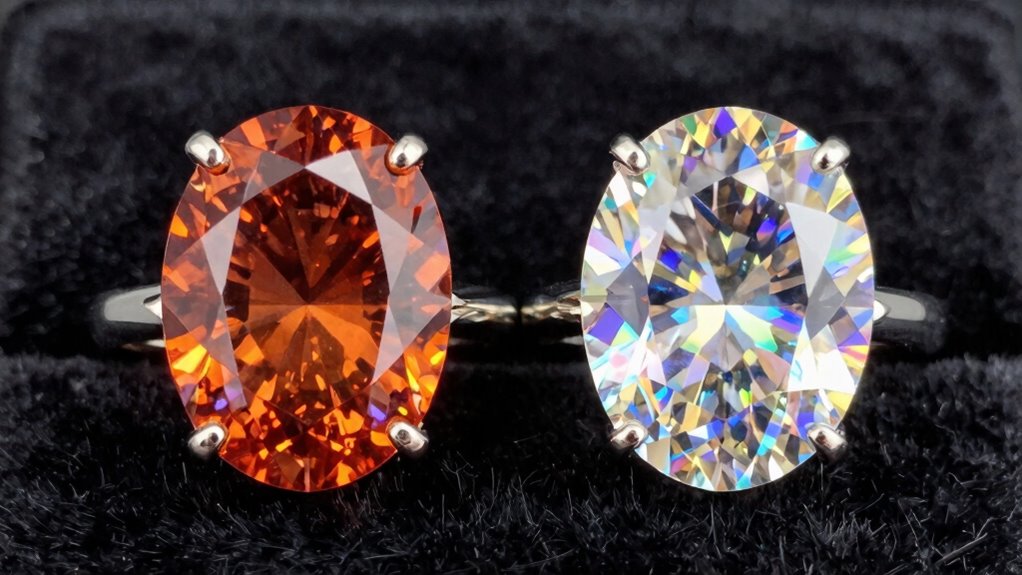

When choosing between moissanite and diamonds, consider their origins, brilliance, durability, and cost. Diamonds are natural and rarer, offering a timeless look, while moissanite is lab-created, more affordable, and shines with intense fire and brilliance. Both are durable, but moissanite is slightly tougher and easier to care for. If you want eco-friendly options with great sparkle, moissanite is worth exploring. Keep going to discover more details on how each stone suits different styles and values.

Turn your wind-down time into listening time
- Thousands of audiobooks, podcasts and originals
- Listen on your phone, tablet or Echo — also offline
- Cancel anytime
Key Takeaways
- Moissanite is lab-created with higher brilliance and fire, offering a more dazzling appearance than the classic sparkle of diamonds.
- Diamonds are naturally occurring, rarer, and more expensive, while moissanite provides a cost-effective, ethical alternative.
- Moissanite ranks slightly below diamonds in hardness but is more resistant to chipping and scratches for daily wear.
- Both stones are durable, but moissanite’s affordability allows for larger or higher-quality stones within budget.
- Choosing between them depends on preferences for optical properties, budget, and ethical or environmental considerations.
As an affiliate, we earn on qualifying purchases.
What Are Moissanite and Diamonds? An Overview
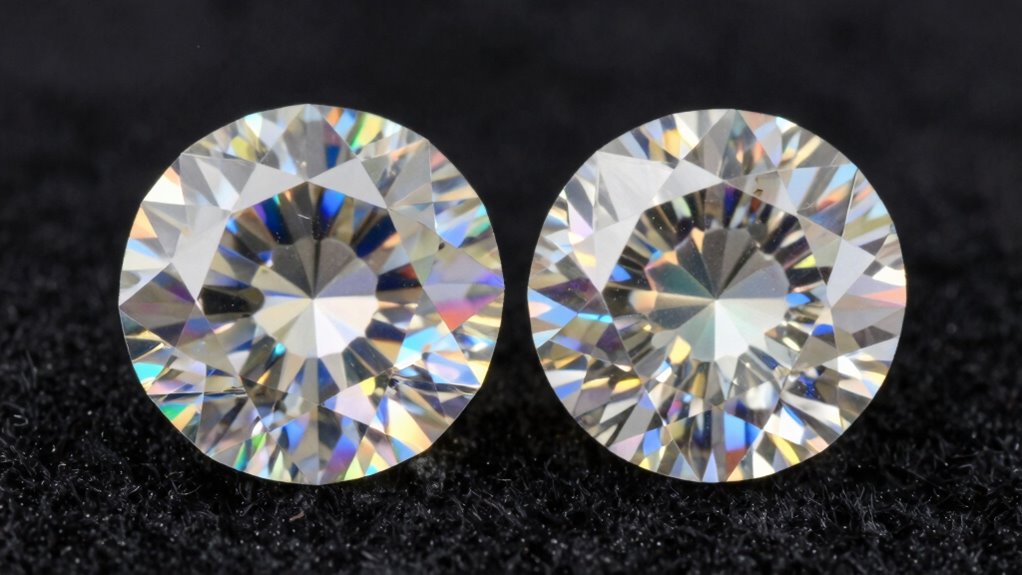
Diamonds and moissanite are two popular gemstones often used in jewelry, but they are quite different in origin and composition. Diamonds form deep within the Earth through intense heat and pressure, a process called gemstone formation, which can take billions of years. In contrast, moissanite is created in labs using a synthetic process that mimics natural conditions, making it more accessible. Market availability also varies: diamonds are rarer and often more expensive due to their natural scarcity, while moissanite is widely produced and available at a lower cost. This difference influences buying choices, with many opting for moissanite as a stylish, sustainable alternative. Understanding these origins helps you appreciate what makes each gemstone unique and how they fit into the jewelry market.
As an affiliate, we earn on qualifying purchases.
How Do Moissanite and Diamonds Compare in Brilliance and Fire?
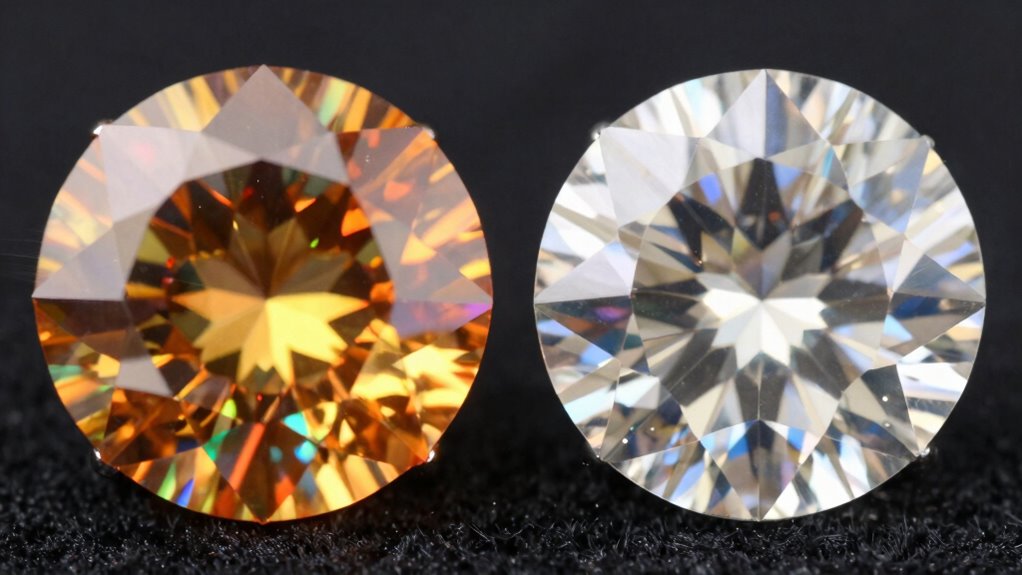
While both moissanite and diamonds are renowned for their brilliance, they differ markedly in how they reflect and refract light. In a brilliance comparison, moissanite generally appears more dazzling due to its higher refractive index, creating a lively sparkle that catches your eye. Its fire intensity is also especially greater, producing colorful flashes that seem more vibrant and dispersed across the stone. Diamonds, on the other hand, tend to have a more subtle, classic brilliance, with a balanced sparkle that emphasizes clarity and clarity’s natural shine. If you’re seeking a stone with maximum fire and a striking, energetic sparkle, moissanite might be your choice. For a more subdued, elegant shimmer, diamonds offer a timeless appeal rooted in traditional brilliance. Additionally, understanding the refractive index of each gemstone can help you predict how they will interact with light and influence their overall brilliance. Moreover, light interaction plays a crucial role in how viewers perceive the beauty and sparkle of each stone, varying based on their unique optical properties. Recognizing the optical properties of these gemstones can further assist in making an informed decision about their visual appeal. Furthermore, the spectral dispersion of moissanite contributes to its vibrant fire, setting it apart from the more subdued dispersion seen in diamonds. In addition, factors like cut quality can significantly impact how light is reflected and refracted within each gemstone, affecting overall brilliance and fire.
As an affiliate, we earn on qualifying purchases.
Which Is More Durable: Moissanite or Diamond?
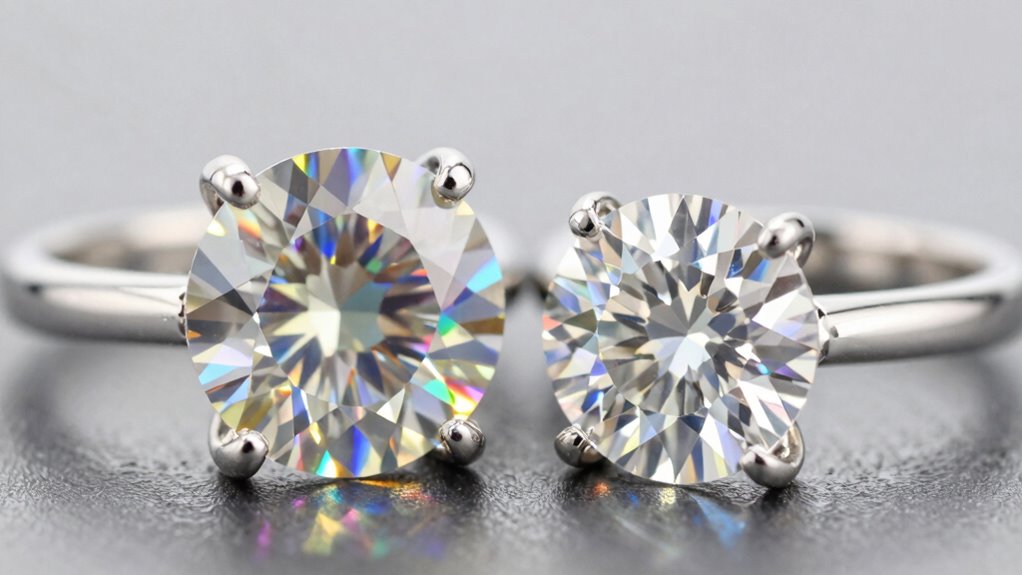
When it comes to durability, moissanite often outperforms other gemstones in everyday wear, thanks to its exceptional hardness and toughness. Its durability comparison with diamonds shows that moissanite ranks very high on the Mohs scale, scoring 9.25, while diamonds top it at 10. This means moissanite has excellent scratch resistance, resisting everyday scratches better than many other stones. Although diamonds are slightly harder, moissanite’s toughness makes it less prone to chipping or breaking. If you’re looking for a gemstone that maintains its beauty with active lifestyles, moissanite’s durability gives it an advantage. Additionally, the gemstone toughness is a crucial factor to consider when choosing jewelry for daily use. Moreover, the cost of moissanite is generally lower than that of diamonds, making it an attractive option for budget-conscious buyers. Its resilience to everyday damage also enhances its suitability for daily wear. Understanding the wear resistance of gemstones helps you make informed choices for durable jewelry. For example, abrasion resistance is essential in selecting gemstones for rings and bracelets that will withstand regular contact and friction. Overall, both stones are durable, but moissanite’s scratch resistance and toughness make it particularly well-suited for daily wear.
As an affiliate, we earn on qualifying purchases.
How Do Costs of Moissanite and Diamonds Differ?
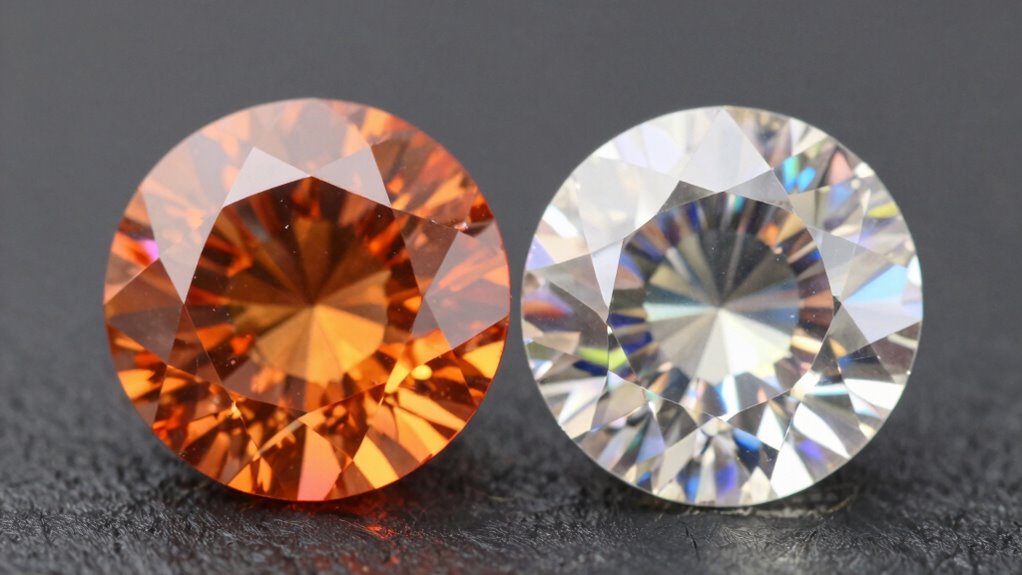
Moissanite typically costs considerably less than diamonds, making it an attractive option for budget-conscious buyers. The pricing differences are significant—moissanite often costs about 10% of a diamond’s price for a similar size and quality. This affordability allows you to get a larger or higher-quality stone without overspending. When you compare the value, moissanite offers impressive brilliance and durability at a fraction of the cost. Diamonds, however, command higher prices due to their rarity, brand value, and natural origin. If budget is a priority, moissanite provides a compelling value comparison by delivering stunning appearance and resilience without the hefty price tag. Additionally, moissanite’s flashing brilliance often surpasses that of diamonds, making it an eye-catching choice. The natural origin of diamonds significantly influences their market value and perception among consumers. Understanding the pricing differences between these stones helps you make an informed decision aligned with your financial goals. Moreover, the market demand for diamonds continues to drive up their prices, while moissanite remains a more accessible alternative. Market trends also play a role in how these stones are valued and perceived in the jewelry industry.
What Factors Should You Consider When Choosing?
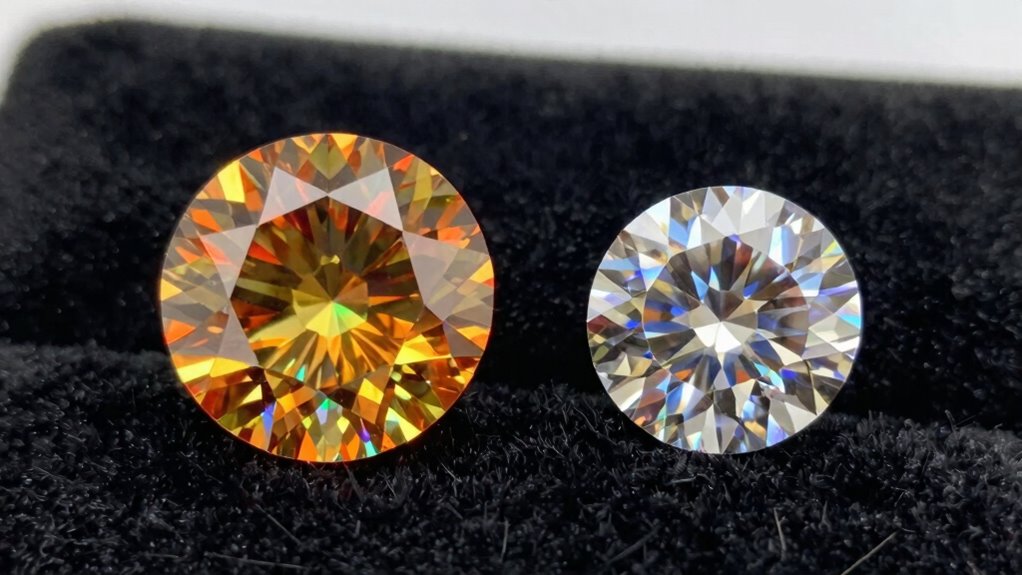
Choosing the right jewelry stone involves considering several key factors to guarantee it meets both your aesthetic preferences and practical needs. Brand reputation plays a crucial role—reliable brands ensure quality, authenticity, and good customer service. Cultural significance can also influence your choice; certain stones may hold special meaning or symbolism within your culture or personal beliefs. Additionally, think about how the stone aligns with your style, its durability for everyday wear, and its maintenance requirements. Moissanite and diamonds differ in perceived prestige and cultural value, so understanding these aspects helps you make an informed decision. Assessing stone durability and how it fits into your lifestyle is essential for long-term satisfaction. Moreover, understanding the comparative value of each stone can help you prioritize your investment based on long-term appreciation or affordability. When considering Brand reputation, researching customer reviews and industry recognition can provide further assurance of your choice. Recognizing the Cultural significance behind certain stones can also deepen your personal connection to your jewelry. Exploring ethical sourcing practices can ensure your purchase aligns with your values and promotes sustainable practices. Ultimately, weighing brand reputation and cultural significance guarantees your jewelry choice resonates personally and stands the test of time.
Are There Environmental or Ethical Benefits to Moissanite?
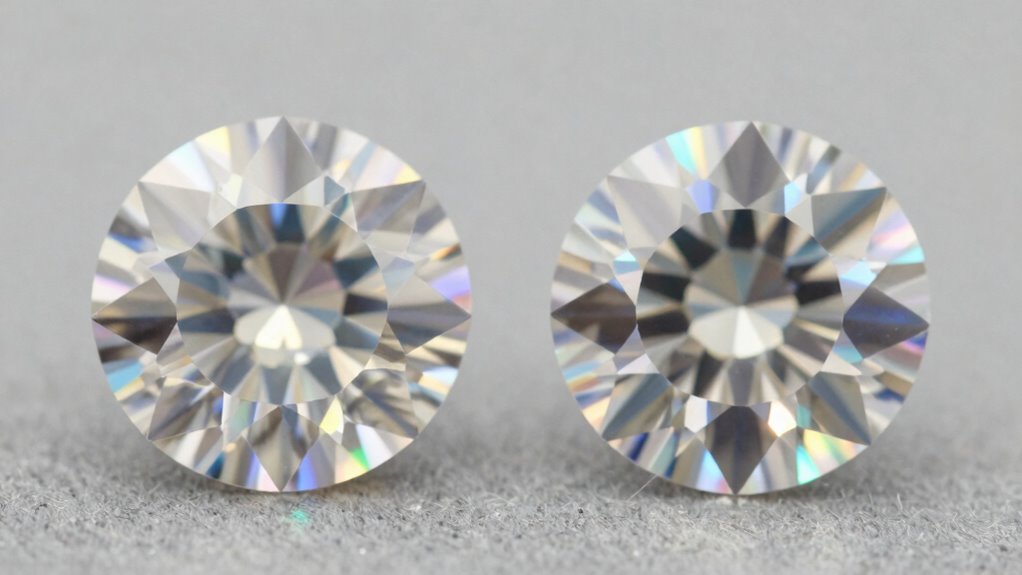
Since ethical considerations and environmental impact are increasingly important in jewelry choices, many consumers explore alternatives to mined stones. Moissanite offers notable benefits here. It’s created in labs, reducing the need for mining and lowering environmental impact. Plus, ethical sourcing is easier to verify, as lab-grown stones avoid issues like conflict minerals. To visualize, consider this comparison:
| Aspect | Moissanite | Diamond |
|---|---|---|
| Environmental Impact | Minimal, lab-grown process | Higher, mining involved |
| Ethical Sourcing | Easier to verify, conflict-free | Can be complex, mining issues |
| Sustainability | More sustainable, reusable | Less sustainable, resource-intensive |
Additionally, vehicle battery trickle chargers exemplify eco-friendly technology by maintaining batteries efficiently and reducing waste. Recognizing the broader environmental benefits of lab-created gemstones can further influence responsible consumer choices. Furthermore, advancements in lab-grown gemstone production continue to improve sustainability and quality across the industry.
Which Jewelry Styles Suit Moissanite or Diamonds Best?
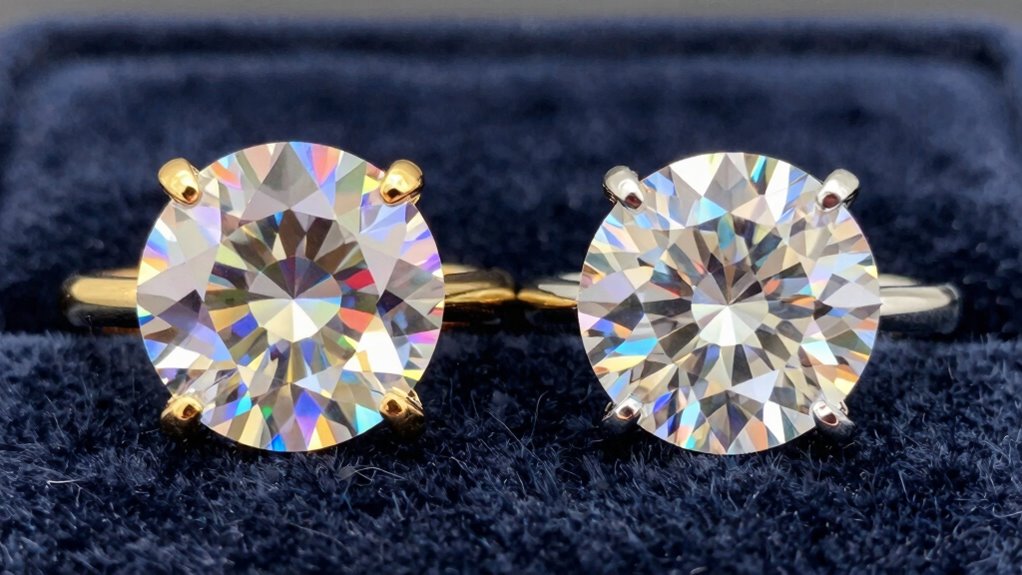
When selecting jewelry styles, it’s important to think about how the stone complements the overall design. Moissanite often suits modern minimalism with clean lines and sleek settings, highlighting its brilliance without overpowering the look. If you prefer a contemporary vibe, choose simple bands or geometric designs that let the stone shine. Conversely, diamonds excel in vintage elegance styles, where intricate settings and ornate details enhance their timeless appeal. For those drawn to classic beauty, diamond jewelry with filigree or antique-inspired designs can evoke a sense of history and sophistication. Ultimately, consider whether you want a modern, understated look or a piece that exudes vintage charm, as both stones can beautifully adapt to different styles depending on the setting and design. Understanding the properties of each stone can help you make a more informed choice that aligns with your style preferences.
Frequently Asked Questions
Can Moissanite Be Resized or Repaired Easily?
Moissanite can be resized or repaired, but resizing challenges exist because it’s a harder stone, which can make delicate work tricky. You should take it to a jeweler experienced with moissanite repairs, as they can often handle simple repairs or resizing with proper techniques. However, complex repairs or resizing might be limited compared to diamonds, so it’s best to discuss your options with a professional jeweler before proceeding.
How Do Lab-Grown Diamonds Compare to Natural Diamonds?
Think of lab-grown diamonds as a mirror reflecting your values—offering a clear choice for ethical sourcing and a smaller environmental impact. They match natural diamonds in brilliance and durability, but without the mining footprint. You get the same sparkle and status, yet feel better about your impact on the planet. Choosing lab-grown diamonds allows you to shine ethically, symbolizing progress and responsibility in every facet.
Are There Hypoallergenic Considerations for Moissanite?
Moissanite has hypoallergenic properties, making it a great choice if you have skin sensitivity or allergies. Unlike some metals used in jewelry, moissanite itself generally doesn’t cause allergic reactions. You should still consider the metal setting—for example, platinum or gold is usually hypoallergenic—since the metal can sometimes trigger sensitivities. Overall, if you’re concerned about skin sensitivity, moissanite is a safe and beautiful option for your jewelry.
What Is the Resale Value Difference Between Moissanite and Diamonds?
You’ll find that diamonds generally have a higher resale value due to their established investment potential. Moissanite, while beautiful and affordable, tends to depreciate more and lacks the same market demand. If resale value matters to you, diamonds are a smarter choice for long-term investment, as they hold their value better. Moissanite offers savings upfront but won’t give you the same return if you decide to resell later.
How Does Each Stone Perform in Different Lighting Conditions?
In different lighting conditions, you’ll notice that diamonds exhibit superior lighting brilliance, creating a mesmerizing sparkle due to their unique refractive index. Moissanite also shines brightly but tends to display a fiery, rainbow-like sparkle under direct light, which can affect its perceived color appearance. Whether indoors or outdoors, diamonds maintain a more consistent look, while moissanite’s brilliance may appear more vibrant or colorful depending on the lighting.
Conclusion
So, whether you choose the dazzling sparkle of a diamond or the eco-friendly charm of moissanite, remember—you’re still getting a gemstone that’s just as stunning. Ironically, the more affordable option might actually last longer, while the classic allure of a diamond can come with a hefty price tag. Whichever you pick, the real beauty lies in knowing you’ve made a choice that suits your style—and your values—perfectly.
Fall Picks
fall essentials
As an affiliate, we earn on qualifying purchases.