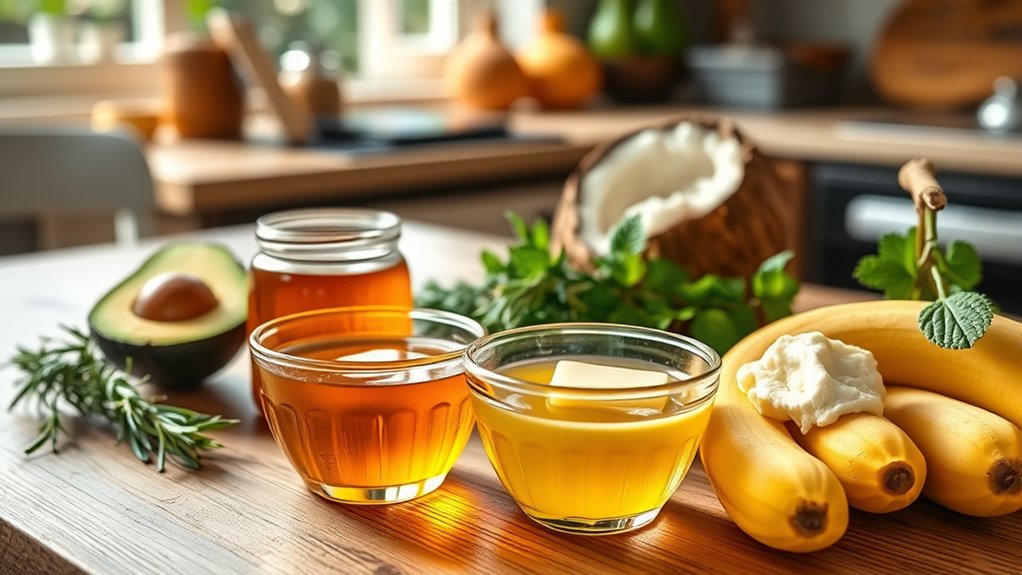

To create DIY hair masks with natural ingredients, mix honey with olive oil for a shine-boosting treatment, or combine aloe vera gel with coconut oil to hydrate your scalp deeply. You can also mash ripe bananas or avocados to nourish and strengthen your hair while adding moisture. Regularly applying these simple masks can improve your hair’s health, shine, and resilience. Keep exploring for more tips to uncover even better hair care solutions.
Key Takeaways
- Combine natural ingredients like honey and olive oil to create nourishing masks that enhance shine and moisture.
- Use aloe vera and coconut oil to hydrate the scalp, promoting healthier hair growth and reducing dryness.
- Incorporate nutrient-rich fruits such as avocado and banana with carrier oils for strengthening and conditioning hair.
- Apply DIY masks to damp hair, focusing on ends, and leave for 20-30 minutes before rinsing for optimal results.
- Regular use of homemade masks offers a cost-effective way to improve hair health and achieve a natural, shiny appearance.

Have you ever wondered how to nourish your hair naturally without spending a fortune at the salon? The good news is, you can achieve healthy, shiny hair right at home with simple, natural ingredients. One of the most important steps in any hair care routine is ensuring your scalp stays hydrated. When your scalp is properly moisturized, it promotes healthier hair growth and prevents dryness that can lead to breakage. Using ingredients like aloe vera or coconut oil can do wonders for scalp hydration. Aloe vera, with its soothing and moisturizing properties, penetrates deep into the scalp, providing essential moisture and reducing itchiness or flakiness. Coconut oil, rich in fatty acids, helps lock in moisture, creating a hydrated environment that supports strong, resilient hair. Applying these ingredients regularly can markedly improve your scalp’s health, making your hair look more vibrant and lively. Additionally, advances in hair care technology are making DIY treatments even more effective by enhancing ingredient absorption and results.
In addition to scalp hydration, boosting your hair’s natural shine is another benefit of using DIY masks. Natural ingredients like honey and olive oil are excellent for enhancing hair shine. Honey acts as a humectant, drawing moisture from the air into your hair shaft, which results in a glossy, luminous look. Olive oil, packed with antioxidants and healthy fats, smooths the hair cuticle, reflecting light better and giving your hair a radiant appearance. When you combine these ingredients into a mask, you not only nourish your scalp but also leave your hair looking visibly shinier and healthier. You can create a simple mask by mixing honey with a little olive oil and applying it to damp hair, focusing on the ends. Leave it on for about 20-30 minutes before rinsing thoroughly. With consistent use, you’ll notice your hair becoming more reflective and full of life.
Another effective approach is incorporating ingredients like avocado or banana, which are rich in vitamins and nutrients to strengthen your hair from the inside out. These fruits help improve the overall health of your hair, making it more resilient and less prone to damage. When combined with carrier oils such as castor or jojoba, they create nourishing masks that deeply condition and add a natural shine. The key is to tailor your DIY masks to your hair’s specific needs—whether it’s hydration, shine, or strength. Regularly treating your hair with these natural, homemade remedies can lead to long-term improvements, boosting your confidence without the need for costly salon treatments. So, go ahead and experiment with these simple ingredients, and enjoy the benefits of naturally healthy, shiny hair every day.
natural hair mask with honey and olive oil
As an affiliate, we earn on qualifying purchases.
As an affiliate, we earn on qualifying purchases.
Frequently Asked Questions
Can DIY Hair Masks Cause Allergic Reactions?
Yes, DIY hair masks can cause allergic reactions if you’re not careful. It’s crucial to do an allergy test first by applying a small amount of the ingredient to your skin and waiting 24 hours. Always prioritize ingredient safety by choosing fresh, natural items and avoiding known allergens. This way, you reduce the risk of irritation and ensure your hair care routine stays safe and effective.
How Often Should I Use Natural Hair Masks?
Did you know that over 60% of people experience improved hair health with proper application? For natural hair masks, you should typically apply them once or twice a week. Your application frequency depends on your hair type considerations; for example, dry hair benefits from more frequent treatments, while oily hair needs less. Always listen to your hair’s response to avoid overdoing it and causing damage.
Are There Any Ingredients to Avoid in DIY Masks?
You should avoid ingredients like chemical preservatives and artificial fragrances in your DIY hair masks, as they can irritate your scalp or cause allergies. Stick to natural, fresh ingredients and skip any products with synthetic chemicals. Always do a patch test first to check for sensitivities. By choosing pure, wholesome ingredients, you protect your hair and scalp, ensuring your mask is both safe and effective.
Can Hair Masks Repair Damaged Hair Permanently?
While hair masks can help heal and hydrate, they can’t permanently repair severe hair damage. You might notice a noticeable improvement in texture and shine, boosting your hair’s bounce and brilliance. However, the repair potential is limited—deep damage often needs professional intervention. So, regular nourishing masks can help manage damage and maintain healthy hair, but they won’t completely undo serious harm. Consistency is key to seeing the best results!
Do Natural Hair Masks Work for All Hair Types?
Natural hair masks can work for all hair types if you consider hair type compatibility and ingredient selection. You should choose ingredients suited to your specific hair needs—like honey for moisture or avocado for nourishment. By tailoring your mask to your hair type, you increase the chances of seeing positive results. Always test new ingredients first to guarantee they suit your hair, and adjust your mask recipes accordingly for the best outcomes.
coconut oil and aloe vera hair treatment
As an affiliate, we earn on qualifying purchases.
As an affiliate, we earn on qualifying purchases.
Conclusion
Now that you know how to make your own hair masks with simple, natural ingredients, there’s no excuse to skip self-care. These DIY treatments are easy, affordable, and effective, so you can give your hair the love it deserves without breaking the bank. Remember, a little effort goes a long way—don’t wait for your hair to scream for help before taking action. When it comes to healthy hair, it’s better to be safe than sorry.
As an affiliate, we earn on qualifying purchases.
As an affiliate, we earn on qualifying purchases.