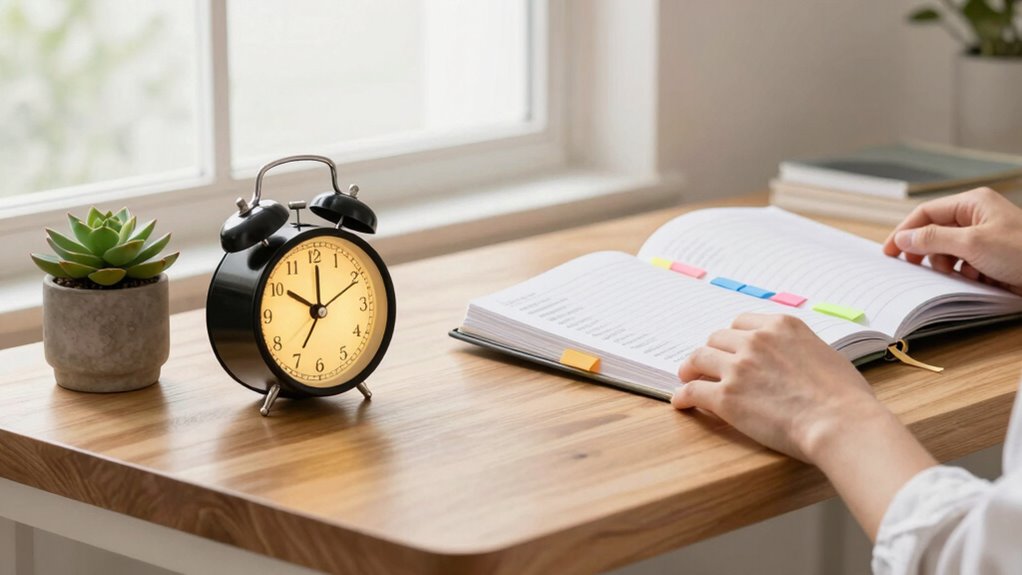

To build a smarter routine without tracking everything, focus on creating habits that naturally fit into your daily life. Anchor new activities to existing routines, and keep things simple to avoid decision fatigue. Prioritize high-impact tasks and allocate specific time blocks for important activities. Regularly review and adjust your routines to guarantee they serve your needs without becoming overwhelming. If you want practical tips on maintaining momentum, keep exploring this approach for more insights.

Turn your wind-down time into listening time
- Thousands of audiobooks, podcasts and originals
- Listen on your phone, tablet or Echo — also offline
- Cancel anytime
Key Takeaways
- Focus on establishing small, consistent habits linked to existing routines for effortless integration.
- Prioritize high-impact activities and dedicate specific time blocks to ensure meaningful progress.
- Automate routines and prepare in advance to reduce daily decision-making and mental effort.
- Regularly review and adjust routines naturally to ensure they remain aligned with your evolving needs.
- Simplify routines by minimizing unnecessary steps, emphasizing ease and sustainability over detailed tracking.

Have you ever wondered how some people manage to stay productive and balanced while others struggle to keep up? The secret often lies in building a smarter routine, one that relies less on obsessive tracking and more on effective habit formation and good time management. Instead of obsessing over every minute detail, you can create a routine that naturally supports your goals, reducing stress and increasing consistency.
A smarter routine balances habit, time management, and simplicity to boost productivity and reduce stress effortlessly.
The first step is understanding that habit formation is your best ally. When you develop habits around your daily activities, they become automatic, requiring less mental effort and decision-making. For example, if you decide to read for 10 minutes every morning, eventually it becomes a seamless part of your routine. You don’t need to track every session; your brain recognizes the pattern, and the habit sticks. Focus on anchoring new habits to existing routines—like brushing your teeth—to make them easier to adopt. The key is consistency, not perfection. Doing something regularly, even if it’s small, will compound over time and create a smoother, more sustainable routine.
Time management is equally essential, but it doesn’t mean filling every hour with tasks or obsessing over schedules. Instead, think of it as prioritizing what truly matters. Identify your most important tasks and allocate dedicated blocks of time for them. This way, you guarantee that you’re investing your energy in high-impact activities without feeling overwhelmed. Use simple techniques like the Pomodoro Technique—working in focused 25-minute intervals with short breaks—to maintain momentum. These methods help you stay present and productive without the need for elaborate tracking systems. Incorporating effective time management strategies can make your routine more adaptable and less stressful. Additionally, understanding habit formation can help you design routines that are easier to stick with over the long term. Recognizing the role of routine consistency can further reinforce your commitment and make your habits more resilient.
Another way to build a smarter routine is to reduce decision fatigue by automating or simplifying choices. For instance, prepare your outfit or meals ahead of time, so you don’t waste mental energy deciding. When routines become streamlined, they require less conscious effort, freeing up mental space for creativity and problem-solving. Incorporating automation into your daily activities can further support consistency by minimizing the number of decisions you need to make each day. Remember, routines should serve you, not control you. Regularly review your activities and adjust as needed, but avoid making drastic changes too often. Routine review and adjustment helps your routine evolve naturally, making it easier to stick with in the long run.
In the end, building a smarter routine isn’t about tracking everything meticulously. It’s about habit formation, smart time management, and simplifying your daily choices. When you focus on these principles, you’ll find yourself more productive and balanced, without the constant need to monitor every detail. Your routine becomes a supportive framework that propels you forward, effortlessly integrating into your life.
As an affiliate, we earn on qualifying purchases.
Frequently Asked Questions
Can I Customize My Routine for Different Days?
Yes, you can customize your routine for different days. By allowing for daily flexibility, you can adapt your schedule to fit your specific needs or priorities on any given day. Creating personalized schedules helps you stay productive while accommodating varying tasks or energy levels. This approach guarantees you remain efficient and balanced, making your routine more effective and enjoyable without feeling rigid or overwhelming.
How Long Should I Stick to a New Routine?
You should stick with a new routine for at least 21 to 30 days to see real results. Habit consistency is key, but remember, routine flexibility helps you adapt without feeling overwhelmed. If you slip up, don’t throw in the towel—adjust your plan and keep going. Usually, it takes about a month to solidify a habit, so give yourself time and stay committed.
What if I Miss a Day or Fall Behind?
If you miss a day or fall behind, don’t stress. Embrace flexibility and see it as an opportunity to adapt your routine instead of a setback. Reach out for accountability support from friends or mentors to stay motivated. Remember, consistency matters more than perfection. By adjusting your approach and maintaining a positive mindset, you’ll get back on track and continue progressing toward your goals.
Is It Better to Focus on Fewer Habits at Once?
Focusing on fewer habits at once is better because it allows you to master each one more effectively. Use habit stacking to connect new habits with existing routines, making them easier to integrate. This approach also promotes adaptability in routines, so if life gets busy, you can adjust without feeling overwhelmed. By simplifying your focus, you’re more likely to stay consistent and build sustainable, lasting habits.
How Do I Stay Motivated Without Tracking?
Sometimes, the gentle nudge of intrinsic motivation keeps you going when tracking slips away. To stay motivated, focus on the small wins and how habit formation makes daily life smoother. Remind yourself of your deeper reasons for change, connecting emotionally to your goals. Celebrate progress without the need for constant data, trusting that your internal drive and the joy of growth will naturally inspire you to continue building better routines.
As an affiliate, we earn on qualifying purchases.
Conclusion
So, next time you’re tempted to track every tiny detail, remember—sometimes the smartest routine is the one you don’t overthink. Irony’s on your side: by trying to control everything, you might just miss the freedom of a simpler, more intuitive flow. Instead of obsessing over perfection, trust yourself and let your habits evolve naturally. After all, the best routines often come from doing less, not more—who would’ve thought?
As an affiliate, we earn on qualifying purchases.
As an affiliate, we earn on qualifying purchases.
Halloween Picks
halloween
As an affiliate, we earn on qualifying purchases.