
TL;DR

Turn your wind-down time into listening time
- Thousands of audiobooks, podcasts and originals
- Listen on your phone, tablet or Echo — also offline
- Cancel anytime
Dartmouth Health and the Geisel School of Medicine plan to launch Dartmouth Health at Home in January 2027, backed by a $20 million gift from alumnus Richard “Dick” Levy. The pilot will serve 10 to 20 patients, with plans to expand to more than 1,000 patients and families annually; long-term financial sustainability and the pace of expansion remain unsettled.
Dartmouth Health and the Geisel School of Medicine at Dartmouth are preparing to launch an in-home primary and palliative care program backed by a $20 million gift from Dartmouth alumnus Richard “Dick” Levy. Called Dartmouth Health at Home, the program is scheduled to begin as a 10-to-20-patient pilot in January 2027, with planned expansion across New Hampshire and Vermont.
The program is intended to bring coordinated medical services to people who have difficulty traveling to appointments, including older adults who are frail and patients managing chronic health conditions. Dartmouth Health plans to grow the service over several years to reach more than 1,000 patients and their families annually. At full scale, it is expected to employ about 30 clinicians and staff, according to Dr. Nathan Goldstein, chair of Dartmouth Health’s department of medicine and a co-CEO of Dartmouth Health at Home.
Goldstein told Home Health Care News that the initial services will begin locally so the organizations can adapt them using feedback from patients and caregivers. The stated longer-term goal is to expand across New Hampshire and Vermont and ultimately serve patients who receive care from Dartmouth Health. The source report does not provide a timetable for reaching that wider footprint.
Planned services also include the Family Caregiver Institute at Dartmouth Health, which is intended to provide caregiver education, support, services and access to home care aides. The Dartmouth Institute for Health Policy & Clinical Practice will study which home-based services work and examine their costs and potential revenue, Goldstein said.
Care Moves From Clinics Into Homes
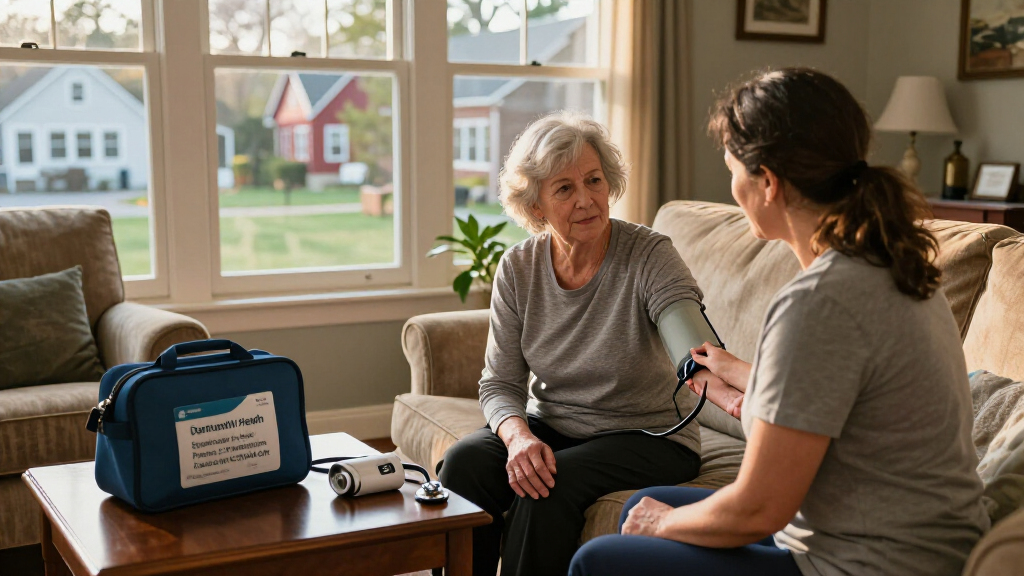
For patients who struggle to reach a clinic, home visits could reduce the practical burden of arranging transportation and taking a family member away from work to accompany them. Goldstein said clinicians visiting patients at home may also be able to see factors relevant to care, such as medication use, food availability and potential fall hazards. These are expected benefits described by the program’s leaders, not outcomes established by the pilot.
The model could also shift some care away from hospitals and ambulatory settings. Goldstein said earlier diagnosis and treatment may prevent some conditions from becoming acute, potentially avoiding emergency visits or hospital stays. He also cited medication management as a possible source of savings. Whether the program improves outcomes or lowers costs will need to be evaluated as it operates.
For caregivers, the institute adds a support component alongside direct clinical services. Dartmouth Health says the program will use interdisciplinary teams, rather than relying on a single provider at isolated visits. That structure is intended to coordinate medical and social support for patients and their families, particularly in rural communities where travel to care can be difficult.
As an affiliate, we earn on qualifying purchases.
A Gift Starts a Longer Buildout
The $20 million donation is enough to begin the program, but Goldstein told Home Health Care News it will not finance Dartmouth Health at Home indefinitely. The Dartmouth Institute will examine program costs, revenue and expected financial margins as the service develops. Goldstein said the aim is to make services attractive to both private and government payers.
The plan is being presented as a potential model for rural health care, but that broader ambition remains a goal rather than a demonstrated result. Goldstein told HealthLeaders that coordinated services delivered at home are a central feature of the program. He said Dartmouth Health and Geisel hope their approach could eventually be shared with rural areas elsewhere in the country.
Safety and coordination are part of the proposed design. Goldstein said care teams will include physicians, advanced practice providers, social workers and home health aides, and will meet at least weekly to review patients’ care. The program is also expected to offer home safety assessments and round-the-clock phone support for patients and families.
As an affiliate, we earn on qualifying purchases.
Costs and Results Still Need Testing
The program has not yet begun, so its effects on access, patient outcomes, caregiver needs or health care spending are not established. The source report gives no results from a pilot or projections tied to a stated measurement period. It is also unclear which patients will be selected for the initial cohort, what specific services each patient will receive, and how success will be measured.
The $20 million gift will support the launch but is not described as covering long-term operating costs. Dartmouth Health has not provided a detailed funding plan, payer agreements or a schedule for reaching the goal of more than 1,000 patients annually. The proposed wider expansion and possible adoption elsewhere remain ambitions, not confirmed commitments.
As an affiliate, we earn on qualifying purchases.
Pilot Begins in January 2027
Dartmouth Health at Home is scheduled to start with 10 to 20 patients in January 2027. The organizations say they will use early patient and caregiver feedback to refine the services before expanding. Dartmouth Health has not announced specific pilot evaluation measures or intermediate enrollment targets.
As the program develops, the Dartmouth Institute is expected to examine costs, revenue and financial margins, while interdisciplinary teams provide care reviews and safety support. Those findings and the program’s ability to secure ongoing payer revenue will help show whether the planned regional growth can be sustained.
As an affiliate, we earn on qualifying purchases.
Key Questions
What is Dartmouth Health at Home?
It is a planned Dartmouth Health and Geisel School of Medicine program offering in-home primary and palliative care, along with caregiver support and other home-based services.
When does the program start?
The pilot is scheduled to begin in January 2027 with 10 to 20 patients.
Who is funding the program?
A $20 million gift from Dartmouth alumnus Richard “Dick” Levy will support the launch. Dr. Nathan Goldstein has said the gift will not sustain the program financially over the long term.
How large could the program become?
Dartmouth Health plans to grow it over several years to serve more than 1,000 patients and families annually, with about 30 clinicians and staff at full scale. The organizations have not given a schedule for reaching those goals.
Will the program reduce hospital visits or costs?
Goldstein said earlier treatment and stronger medication management could help avoid some emergency visits, hospitalizations and costs. Those are expected benefits; the program has not yet produced results showing that it will do so.
Source: rss
Fall Picks
fall essentials
As an affiliate, we earn on qualifying purchases.