
TL;DR

Turn your wind-down time into listening time
- Thousands of audiobooks, podcasts and originals
- Listen on your phone, tablet or Echo — also offline
- Cancel anytime
Fit&Well published a yoga therapist’s seven-part seated movement sequence for older adults and people who find floor-based exercise difficult or uncomfortable. The therapist describes the gentle movements as potentially uplifting, but the report does not provide clinical evidence that this specific routine improves health outcomes.
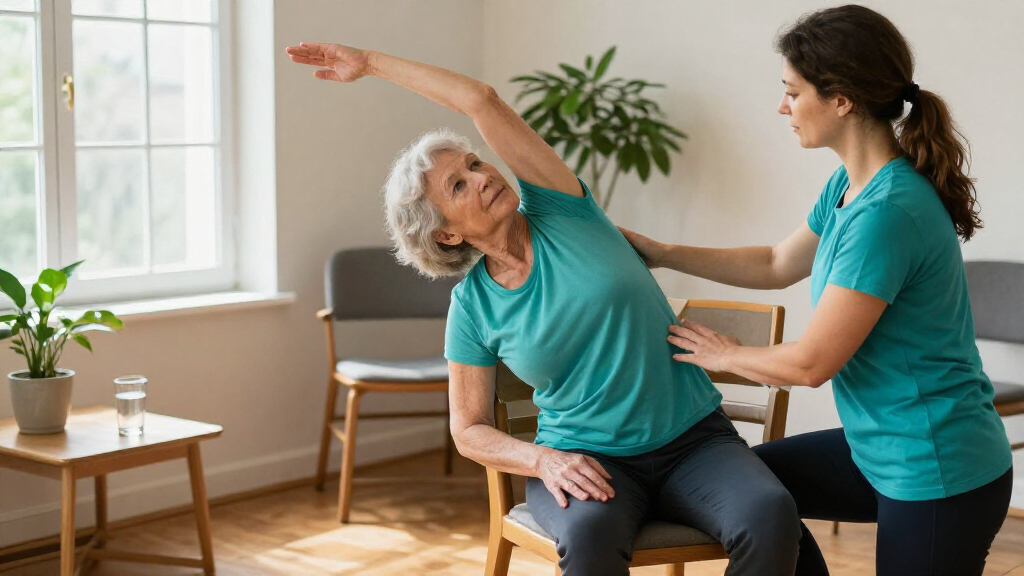
Fit&Well has published a seven-part chair-based movement sequence recommended by a yoga therapist who works with older adults, including people with Parkinson’s, other movement disorders and chronic health conditions. The routine is designed for people who have limited mobility for floor exercises or simply feel more comfortable moving while seated, and the therapist advises participants to work within their own range and capacity.
The sequence begins with a one-minute seated settling period: sit toward the back of a sturdy chair, place both feet on the floor, keep the chest upright and let the breath find a natural rhythm. The remaining movements are brief, with repetitions generally ranging from three to five, or three on each side for the twisting and side-bending exercises.
The routine moves through overhead arm sweeps into a prayer position, seated torso twists, single-arm and double-arm raises, side bends, a seated cat-cow movement and a forward fold. Each exercise is paired with breathing cues. For example, the therapist’s instructions coordinate an inhale with raising the arms and an exhale with lowering them; the seated cat-cow alternates between opening the chest and rounding the back.
The report includes ways to adapt two movements: people seeking more stability during side bends can hold the chair instead of extending an arm downward, and those needing additional support during a forward fold can keep their hands on their knees. It also says participants should have a sturdy chair and enough clear space to raise their arms. The therapist’s guidance is to explore accessible movement rather than try to achieve a particular pose.
A Seated Option for Gentle Movement
The sequence offers a practical format for readers who may not be able to get down to the floor, or who prefer to exercise from a chair. Its instructions combine upper-body movement, gentle spinal motion and breathing in a short routine that can be followed without specialist equipment beyond a stable chair and clear space.
The therapist says mindful movement can stretch muscles, mobilize joints and help people feel calmer, and describes her groups as leaving both rested and uplifted. Those are the practitioner’s account of her experience, not findings from a study of this particular sequence. The report does not establish that the exercises treat Parkinson’s, other movement disorders or chronic conditions, nor does it quantify health effects.
For readers, the most directly useful point is the emphasis on adjusting the movements to individual ability. A chair-supported alternative is included for side bends, and the forward fold can be made more supported by keeping the hands on the knees. The article does not present a universal routine suitable for every person; it stresses choosing movement that feels accessible.
Products Worth Considering

Oura Ring 4 Smart Ring – Silver – Size 8

Garmin Forerunner 55 GPS Running Smartwatch, Black

Garmin Forerunner 70 GPS Running Smartwatch, 43 mm, Black
As an affiliate, we earn on qualifying purchases.
How the Chair Sequence Is Designed
The recommendations come from a yoga therapist writing about her work with groups that include older adults living with Parkinson’s, movement disorders and chronic health conditions. She says she uses chair-based yoga with people who lack the mobility for floor-based movement and with those who are more comfortable exercising from a chair. The source material does not name the therapist or give details about her credentials, the groups’ size or where they meet.
The reported sequence is organized as a short flow rather than a set of performance targets. It starts by settling into the chair, then alternates arm movements, torso mobility and forward bending. The source offers breathing and repetition instructions but does not provide a required pace, a weekly schedule or guidance on how the exercises should change over time.
“I encourage everyone to move within the range and capacity of their body—there’s no particular shape or position to achieve.”
— The yoga therapist quoted in Fit&Well
Evidence and Individual Suitability
The source report does not cite a clinical trial or other research assessing this exact seven-part sequence. It also does not say how often participants should do it, how long a full session takes, or whether the routine has been evaluated for specific diagnoses. The therapist’s comments about feeling calmer, rested or uplifted should be read as her observations about participants, not guaranteed effects.
The article does not give detailed instructions for people who experience pain, dizziness, balance concerns or other symptoms while moving. It does not explain how to assess whether each exercise is appropriate for a particular person. The source’s general advice is to stay within individual capacity and use the suggested chair support, but it does not replace individualized guidance from a qualified health professional.
Using the Routine Safely
The published report presents the sequence as an option readers can try with a sturdy chair and room to move their arms, while following the therapist’s breathing cues and adaptations. It does not announce a follow-up study, a formal program or a planned update. No next research or publication milestone is specified in the source material.
Readers considering the exercises can use the therapist’s stated approach—move within a comfortable, accessible range and avoid trying to force a particular position. Anyone unsure whether the movements suit their health or mobility needs should seek individualized advice from a qualified professional; the report does not provide a clinical screening process.
Key Questions
What exercises are included in the chair-based sequence?
The seven parts are a seated settling period, an overhead arm sweep into prayer, seated twists, single- and double-arm raises, side bends, seated cat-cow and a forward fold. Most movements have instructions for three to five repetitions, with twists and side bends performed on both sides.
Who is the sequence intended for?
The therapist describes using chair-based yoga with people who have difficulty with floor-based movement or prefer to exercise seated. Her groups include older adults with Parkinson’s, other movement disorders and chronic health conditions. The report does not say the routine is appropriate for everyone in those groups.
What equipment is needed?
The report calls for a sturdy chair and enough space to raise the arms comfortably. It suggests holding the side of the chair during side bends for added stability and keeping the hands on the knees during a forward fold for more support.
Does the report show that the exercises treat a health condition?
No. The source describes the therapist’s approach and her observations, but does not cite research showing that this particular sequence treats Parkinson’s or any other condition. Its comments about feeling calmer or uplifted are attributed to the therapist.
How should readers adapt the movements?
The therapist advises moving within each person’s range and capacity, without trying to achieve a particular pose. The report gives chair support options for side bends and forward folds, but does not provide individualized medical guidance. People uncertain about suitability can ask a qualified professional.
Source: fitandwell.com