TL;DR

Turn your wind-down time into listening time
- Thousands of audiobooks, podcasts and originals
- Listen on your phone, tablet or Echo — also offline
- Cancel anytime
Fit&Well published five Pilates exercises recommended by teacher Claire Seager for women in their 60s and 70s: rocking cat and cow, reverse tabletop, knee circles, triceps push-ups and thread the needle. The report describes them as beginner-friendly and offers modifications, but does not provide clinical evidence that they correct posture or establish that every move is suitable for every person.
Fit&Well has published five Pilates moves recommended by teacher Claire Seager for women in their 60s and 70s seeking strength and posture-focused exercise. The list includes easier versions of each movement, though the report does not present clinical evidence that the routine corrects posture or is appropriate for every individual.
The five exercises are rocking cat and cow, reverse tabletop, knee circles, triceps push-ups and thread the needle. Seager, founder of Pilatify, shared the selection with Fit&Well and described it as a blend of strength, flexibility and posture work. The source recommends 10 repetitions for most exercises; knee circles are listed as 10 in each direction on each side, and thread the needle as 10 on each side.
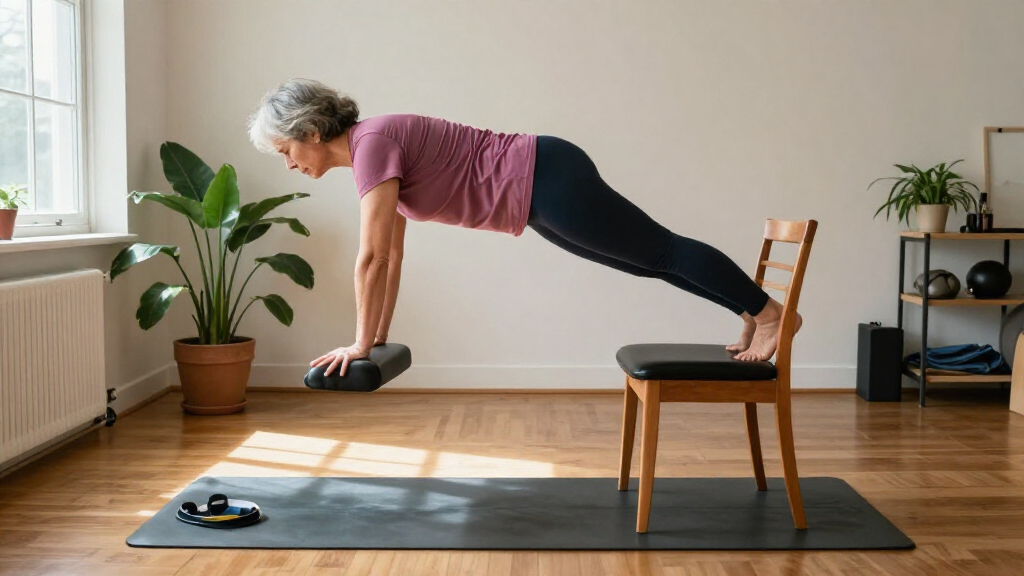
The instructions use body weight and floor-based positions. Rocking cat and cow moves between a rounded and arched spine on hands and knees. Reverse tabletop lifts the hips from a seated position. Knee circles involve lifting a bent leg and drawing circles with the knee, while the triceps push-up lowers and raises the body with elbows held close to the sides. Thread the needle combines a leg extension with a torso twist and an arm reaching beneath the body.
Each exercise has an adjustment in the report: skip the rocking motion for cat and cow; bend the knees for reverse tabletop; lift and lower the leg rather than circling it if the pelvis shifts; perform triceps push-ups with knees down; and keep both knees on the floor for thread the needle. These options change the movements, but the report does not compare their effects or say how to progress them over time.
How the Moves Are Adapted
The list gives readers a specific routine to try and names a lower-demand variation for each exercise, which may help people who want alternatives to high-impact workouts or heavy lifting. It also covers several movement patterns—spinal motion, hip lifting, leg control, pushing and rotation—rather than focusing on one muscle group.
That practical value should not be confused with a guarantee of benefit. Seager attributes strength, balance, stress and posture benefits to Pilates generally, but Fit&Well’s report is an exercise recommendation, not a clinical trial. It does not establish that these five moves will correct an individual’s posture, prevent falls or produce a particular strength improvement.
As an affiliate, we earn on qualifying purchases.
Why Seager Chose These Exercises
Fit&Well framed the list for women in their 60s and 70s, noting that Pilates classes vary and that some formats may be more suitable for younger participants. The publication asked Seager, a 51-year-old Pilates teacher who founded a program designed with women over 50 in mind, to suggest beginner-friendly exercises.
Seager said Pilates aims to balance the body by working and stretching muscles. She also said modern life and age can contribute to a head-forward or stooped posture, and that Pilates aims to counter that pattern. Those are Seager’s explanations; the source does not provide research or medical assessments supporting a specific outcome from this routine.
“Pilates brings the whole body into balance and once we’ve worked one set of muscles, we will stretch them.”
— Claire Seager, Pilates teacher and Pilatify founder, as quoted by Fit&Well
posture corrector for women over 60
As an affiliate, we earn on qualifying purchases.
As an affiliate, we earn on qualifying purchases.
What the Report Does Not Establish
Fit&Well does not identify the routine as having been tested in a study, report measured outcomes or explain how long someone should follow it. It also does not clarify what evidence supports the claim of posture correction or whether the exercises have been assessed for people with particular health conditions, pain, balance limitations or mobility needs. Suitability can vary, and the article is not an individualized exercise assessment.
As an affiliate, we earn on qualifying purchases.
How Readers Can Approach the Routine
The published report supplies the movement instructions and simpler options, but no follow-up schedule, progression plan or additional expert guidance. Readers considering the exercises can review the modifications and, if they have a medical condition, pain or concerns about balance, ask a qualified health or exercise professional whether the movements are suitable for them. Any later claims about effectiveness would require evidence beyond the recommendations in this report.
floor Pilates workout equipment for seniors
As an affiliate, we earn on qualifying purchases.
As an affiliate, we earn on qualifying purchases.
Key Questions
Which five Pilates moves does the report recommend?
Rocking cat and cow, reverse tabletop, knee circles, triceps push-ups and thread the needle are the five exercises selected by Claire Seager for Fit&Well.
Does the report say the exercises correct posture?
Seager says Pilates aims to counter a head-forward or stooped posture, and describes the selection as including posture correction. The report does not provide clinical evidence that these particular moves correct posture for every person.
Are easier versions included?
Yes. The report suggests options such as bent knees for reverse tabletop, knee-supported triceps push-ups, and lifting and lowering the leg instead of making circles during knee circles.
How many repetitions are recommended?
Most moves are listed at 10 repetitions. Knee circles are listed at 10 in each direction on each side, and thread the needle at 10 per side.
Are these exercises suitable for everyone over 60?
The report does not say that they are suitable for everyone. People with health conditions, pain or balance concerns can ask a qualified health or exercise professional for guidance before trying them.
Source: rss
Halloween Picks
halloween
As an affiliate, we earn on qualifying purchases.