
TL;DR

Get self-care and calm essentials delivered free — and shop member deals
- Fast, free delivery on millions of items
- Access to Prime Big Deal Days deals on October 6–7
- Prime Video, Amazon Music and more included
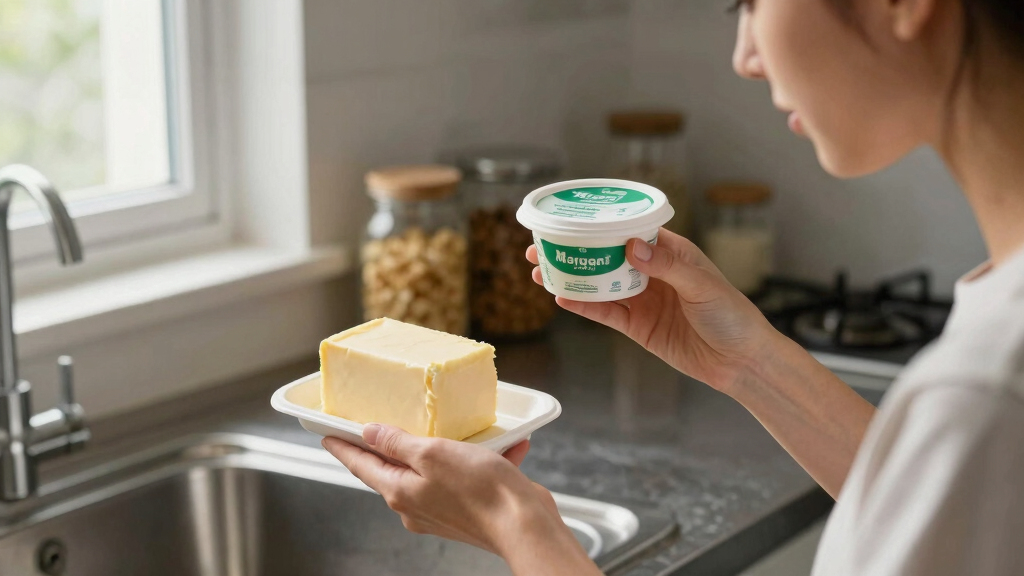
Butter and margarine look alike but differ significantly in their chemical makeup. This affects their health impacts and suitability for cooking. The key differences are confirmed by food scientists.
Scientists confirm that butter and margarine, despite their similar appearance, have fundamentally different chemical structures, which influence their health effects and culinary properties. This distinction is important for consumers making dietary choices and for food industry practices.
Recent studies and expert analyses highlight that butter is a natural dairy product composed mainly of saturated fats, while margarine is a processed fat product made from vegetable oils, often hydrogenated. These chemical differences affect not only their nutritional profiles but also their behavior in cooking and baking.
Food scientists explain that butter’s saturated fats are more stable at high temperatures, making it suitable for certain cooking methods. In contrast, margarine’s fats, which can include trans fats if hydrogenated, have different melting points and stability, impacting texture and flavor.
Health authorities have expressed concern over trans fats found in some margarine formulations, linking them to increased cardiovascular risk. Meanwhile, butter’s saturated fats are also under scrutiny, though recent research suggests moderation is key.
Implications for Consumer Health and Cooking Choices
This distinction matters because consumers often choose between butter and margarine based on appearance and taste, unaware of the underlying chemical differences. Understanding these differences can influence dietary decisions and public health outcomes, especially given ongoing debates about fats and heart health.
Food manufacturers may also reconsider formulations to reduce trans fats or improve stability, affecting product labeling and regulations. Ultimately, awareness of these chemical differences can lead to more informed choices and better health outcomes.
As an affiliate, we earn on qualifying purchases.
Historical and Scientific Background on Butter and Margarine
Butter has been used for centuries as a natural dairy product, primarily composed of saturated fats. Margarine was developed in the 19th century as a cheaper, plant-based alternative, with its chemical makeup evolving over time, especially with the advent of hydrogenation to improve shelf life.
In recent decades, health concerns about trans fats in hydrogenated margarine led to regulatory changes and reformulations. Meanwhile, ongoing research continues to refine understanding of how different fats impact cardiovascular health and metabolism.
Recent scientific analyses emphasize that, despite similarities in appearance, the chemical structures of these fats are markedly different, influencing their behavior and health effects.
“Butter’s natural saturated fats are more stable at high temperatures, whereas margarine’s processed fats can contain trans fats if hydrogenated, which have been linked to health risks.”
— Dr. Emily Carter, Food Scientist
hydrogenated margarine trans fat free
As an affiliate, we earn on qualifying purchases.
As an affiliate, we earn on qualifying purchases.
Unanswered Questions About Long-Term Health Effects
While it is confirmed that butter and margarine differ chemically, the full long-term health impacts of consuming various types of margarine, especially those with trans fats, remain under study. Regulatory changes have reduced trans fats in many products, but some formulations still contain them, and ongoing research continues to evaluate their effects.
Additionally, the impact of newer, reformulated margarines with alternative fats is still being assessed, and consumer health outcomes are being monitored.
As an affiliate, we earn on qualifying purchases.
Future Research and Regulatory Developments in Fats
Researchers plan to further investigate the long-term health effects of different fats in butter and margarine, including emerging formulations. Regulatory agencies may update guidelines and labeling requirements based on new scientific evidence. Consumers can expect clearer information about fat types and health implications in the coming years.
Manufacturers may also reformulate products to reduce harmful fats, potentially leading to new options in the marketplace that balance health and culinary qualities.
high temperature stable cooking fats
As an affiliate, we earn on qualifying purchases.
As an affiliate, we earn on qualifying purchases.
Key Questions
Are trans fats in margarine harmful?
Yes, trans fats have been linked to increased risk of heart disease. Many countries have regulations to limit or ban trans fats in food products, and consumers are advised to check labels for trans fat content.
Is butter healthier than margarine?
Both have health considerations: butter contains saturated fats, while some margarine may contain trans fats if hydrogenated. Moderation and choosing products with healthier fat profiles are recommended. Consult health professionals for personalized advice.
Can I substitute butter with margarine in cooking?
Yes, but their different melting points and stability may affect cooking outcomes. Use unsaturated fat margarine for a healthier option, and select formulations without trans fats when possible.
Have regulations reduced harmful fats in margarine?
Yes, many countries have implemented regulations to reduce trans fats, leading to reformulated margarines with healthier fat profiles. Consumers should still read labels carefully.
What should I look for on food labels?
Check for trans fat content and saturated fat levels. Products labeled as ‘trans fat-free’ or with minimal saturated fats are generally healthier options.
Source: rss
Fall Picks
fall essentials
As an affiliate, we earn on qualifying purchases.